






"SADC" region includes following countries:
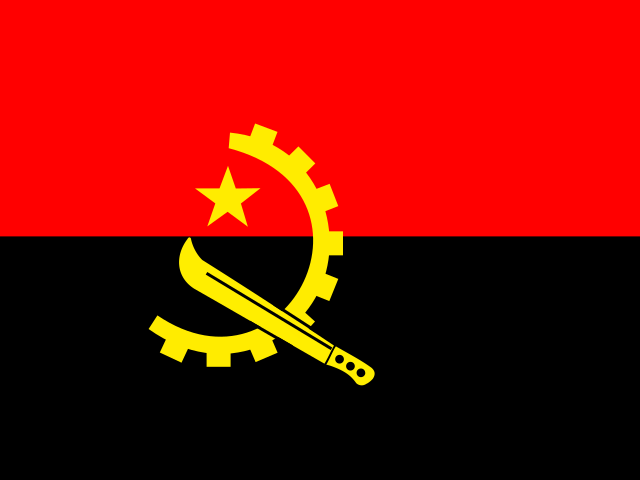 Angola
 Botswana
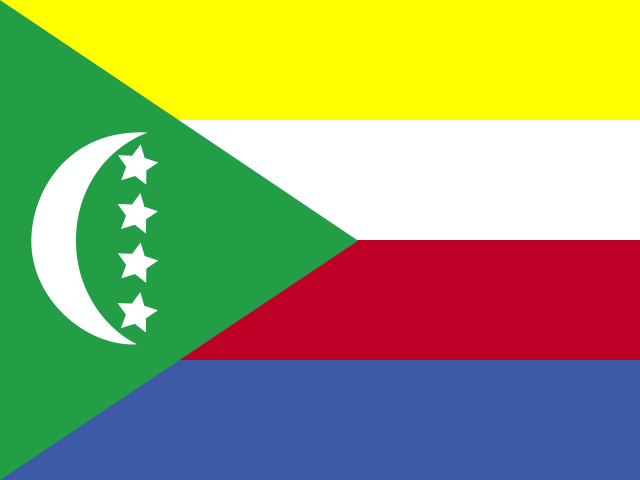 Comoros
 Democratic Republic of the Congo
 Eswatini
 Lesotho
 Madagascar
 Malawi
 Mauritius
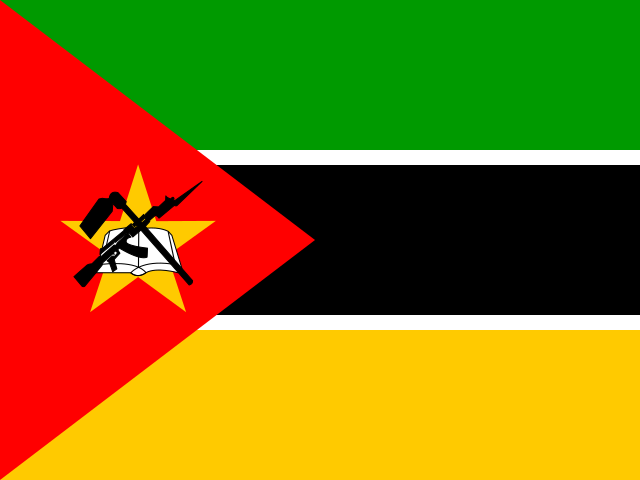 Mozambique
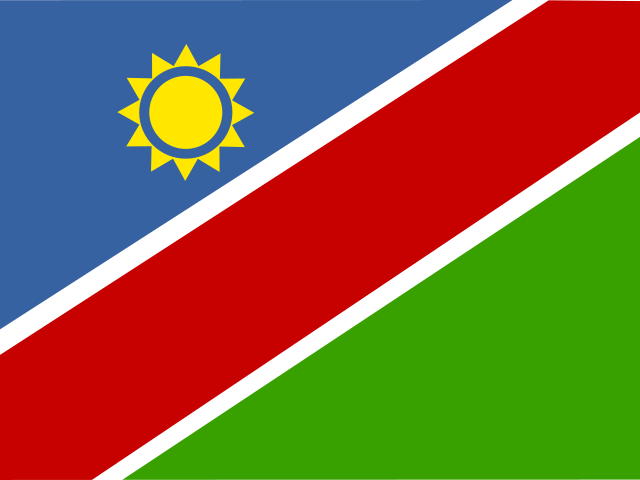 Namibia
 Seychelles
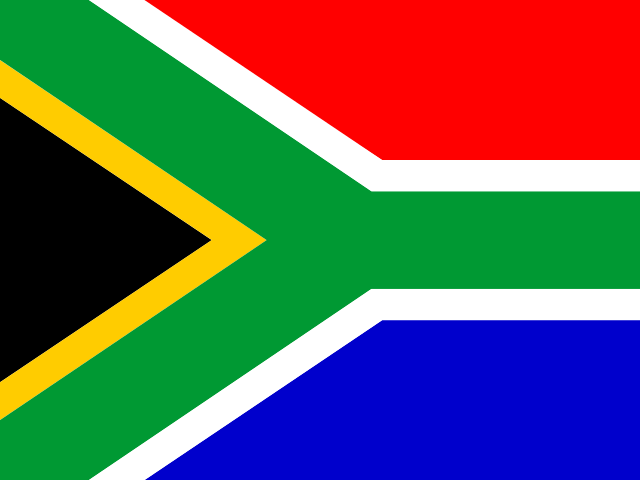 South Africa
 Tanzania
 Zambia
 Zimbabwe
Earlier Report Observations
The turkey meat market in SADC entered a period of sustained contraction starting in 2018, with volume falling to 73 747 t. This initial decline was primarily triggered by an avian flu outbreak in key Northern Hemisphere supplier countries during 2017, which prompted South Africa to restrict imports of frozen turkey products. As the region lacks significant domestic production and relies heavily on imports from countries like the US and Brazil, these constraints sharply reduced supply. A concurrent shift in consumer preferences toward traditional braai dishes also contributed to weaker demand.
Market volume continued to decrease steadily, dropping to 68 433 t in 2019 and 67 594 t in 2020. The downward trend accelerated significantly in 2022, with volume plunging 18% to 54 529 t, before reaching 50 759 t in 2023. This multi-year contraction was directly driven by a continuous fall in imports, which declined from 58 866 t in 2018 to 34 797 t in 2023, far outweighing the modest growth in local production. Major retailers' enforcement of stringent quality standards further shaped the market by limiting the range of available products.
Table of content
- 1. Disclaimer
- 2. Terms of use of the report
- 3. Product codes in the statistical classifications used in the report
-
4. Key Market Indicators and Trends
-
4.1. Key Market Indicators
-
4.1.1. In kind
- 4.1.1.1. Production, 2018-2023
- 4.1.1.2. Imports, 2018-2024
- 4.1.1.3. Exports, 2018-2024
- 4.1.1.4. Market size, 2018-2023
-
4.1.1. In kind
- 4.2. Market Trends and Factors
-
4.1. Key Market Indicators
-
5. Production
-
5.1. Production in SADC
- 5.1.1. Annual dynamics of production in SADC in kind, 2018-2023, t
-
5.2. Global production by Country, 2018-2023
- 5.2.1. Annual dynamics of production by macroregions in kind, 2018-2023, t
- 5.2.2. Dynamics of production structure by macroregions in kind, 2018-2023
- 5.2.3. Annual dynamics of production by country in kind, 2018-2023, t
- 5.2.4. Structure of production by countries in kind, 2018-2023
- 5.2.5. Dynamics of peoduction structure by countries in kind, 2018-2023
-
5.1. Production in SADC
-
6. Imports
-
6.1. Imports (Direct Data*)
- 6.1.1. Imports - Total information
-
6.1.2. Imports in kind, t
- 6.1.2.1. Annual dynamics of product's imports to Angola in kind, 2018-2024, t
- 6.1.2.2. Dynamics of product's imports in kind to Angola by countries, 2018-2024, t
- 6.1.2.3. Structure of product's imports in kind by countries, 2018-2024
-
6.1.3. Imports in value, K $ US
- 6.1.3.1. Annual dynamics of product's imports to Angola in value, 2018-2024, K $ US
- 6.1.3.2. Dynamics of product's imports in value to Angola by countries, 2018-2024, K $ US
- 6.1.3.3. Structure of product's imports in value by countries, 2018-2024
-
6.1.4. Average price of product's imports, $ US/t
- 6.1.4.1. Annual dynamics of average price of product's imports to Angola, 2018-2024, $ US/t
- 6.1.4.2. Dynamics of average price of product's imports to Angola by countries, 2018-2024, $ US/t
-
6.2. Imports (Mirror Data)
- 6.2.1. Imports - Total information
-
6.2.2. Imports in kind, t
- 6.2.2.1. Annual dynamics of product's imports to Angola in kind, 2018-2024, t
- 6.2.2.2. Dynamics of product's imports in kind to Angola by countries, 2018-2024, t
- 6.2.2.3. Structure of product's imports in kind by countries, 2018-2024
-
6.2.3. Imports in value, K $ US
- 6.2.3.1. Annual dynamics of product's imports to Angola in value, 2018-2024, K $ US
- 6.2.3.2. Dynamics of product's imports in value to Angola by countries, 2018-2024, K $ US
- 6.2.3.3. Structure of product's imports in value by countries, 2018-2024
-
6.2.4. Average price of product's imports, $ US/t
- 6.2.4.1. Annual dynamics of average price of product's imports to Angola, 2018-2024, $ US/t
- 6.2.4.2. Dynamics of average price of product's imports to Angola by countries, 2018-2024, $ US/t
-
6.1. Imports (Direct Data*)
-
7. Exports
-
7.1. Exports (Direct Data*)
- 7.1.1. Exports - Total information
-
7.1.2. Exports in kind, t
- 7.1.2.1. Annual dynamics of product's exports from Angola in kind, 2018-2024, t
- 7.1.2.2. Dynamics of product's exports in kind from Angola by countries, 2018-2024, t
- 7.1.2.3. Structure of product's exports in kind by countries, 2018-2024
-
7.1.3. Exports in value, K $ US
- 7.1.3.1. Annual dynamics of product's exports from Angola in value, 2018-2024, K $ US
- 7.1.3.2. Dynamics of product's exports in value from Angola by countries, 2018-2024, K $ US
- 7.1.3.3. Structure of product's exports in value by countries, 2018-2024
-
7.1.4. Average price of product's exports, $ US/t
- 7.1.4.1. Annual dynamics of average price of product's exports from Angola, 2018-2024, $ US/t
- 7.1.4.2. Dynamics of average price of product's exports from Angola by countries, 2018-2024, $ US/t
-
7.2. Exports (Mirror Data)
- 7.2.1. Exports - Total information
-
7.2.2. Exports in kind, t
- 7.2.2.1. Annual dynamics of product's exports from Angola in kind, 2018-2024, t
- 7.2.2.2. Dynamics of product's exports in kind from Angola by countries, 2018-2024, t
- 7.2.2.3. Structure of product's exports in kind by countries, 2018-2024
-
7.2.3. Exports in value, K $ US
- 7.2.3.1. Annual dynamics of product's exports from Angola in value, 2018-2024, K $ US
- 7.2.3.2. Dynamics of product's exports in value from Angola by countries, 2018-2024, K $ US
- 7.2.3.3. Structure of product's exports in value by countries, 2018-2024
-
7.2.4. Average price of product's exports, $ US/t
- 7.2.4.1. Annual dynamics of average price of product's exports from Angola, 2018-2024, $ US/t
- 7.2.4.2. Dynamics of average price of product's exports from Angola by countries, 2018-2024, $ US/t
-
7.1. Exports (Direct Data*)
-
8. Trade balance
-
8.1. Trade balance (Direct Data)
- 8.1.1. In kind, t
- 8.1.2. In value, K $ US
-
8.2. Trade balance (Mirror Data)
- 8.2.1. In kind, t
- 8.2.2. In value, K $ US
-
8.1. Trade balance (Direct Data)
-
9. Top buying and selling countries, 2018-2024
-
9.1. Direct Data
- 9.1.1. Import in Value by Countries-buyers
- 9.1.2. Export in Value by Countries-suppliers
-
9.2. Mirror Data
- 9.2.1. Import in Value by Countries-buyers
- 9.2.2. Export in Value by Countries-suppliers
-
9.1. Direct Data
Production turkey meat and offal in SADC
In kind, 2017-2020, t
Top producers of turkey meat and offal, 2017-2020
World map of production of turkey meat and offal, 2017-2020
Turkey meat and offal production in SADC has grown for the third year in a row. In 2020, the region produced 15 826 tonnes, marking a slight increase of 0.8% compared to 2019. Over the 2017-2020 period, production rose by 2.4%, with an average annual growth rate of 0.8%.
Annual dynamics of production in SADC in kind, 2017-2020, t
| Parameter | 2018 | 2019 | 2020 | CAGR | |
|---|---|---|---|---|---|
| 1 | Change from last year | 0.7% | 0.8% | 0.8% | 0.8% |
Exports turkey meat and offal from SADC
Exports in kind, t
SADC exported 578 tonnes of turkey meat and offal in 2020, which was 11.0% higher than in 2019. Over the 2017-2020 period, exports increased by 2.4%, with an average annual growth rate of 0.8%. The lowest export volume was recorded in 2019 at 521 tonnes, while the highest was in 2018 at 684 tonnes. The largest decline occurred in 2019, dropping by 23.9%, and the largest increase was in 2018, rising by 21.2%.
Annual dynamics of product's exports from SADC in kind, 2017-2020, t
| Parameter | 2018 | 2019 | 2020 | CAGR | |
|---|---|---|---|---|---|
| 1 | Change from last year | 21.2% | (23.9%) | 11.0% | 0.8% |
From 2017 to 2020, Brazil was the leading destination for SADC's turkey meat and offal exports in volume terms, accounting for 0.6% of the total.
Structure of product's exports in kind by countries, 2017-2020
World map of product's exports from SADC in kind, 2017-2020
Exports in value, K $ US
In 2020, SADC's turkey meat and offal export value stood at 3 423 thousand US dollars, representing a significant decline of 15.2% compared to 2019. Between 2017 and 2020, exports increased by 6.1%, equating to an average annual growth rate of 2.0%. The lowest value was recorded in 2018 at 2 648 thousand US dollars, while the highest was in 2019 at 4 035 thousand US dollars. The largest decline occurred in 2018, falling by 17.9%, and the largest increase was in 2019, rising by 52.4%.
Annual dynamics of product's exports from SADC in value, 2017-2020, K $ US
| Parameter | 2018 | 2019 | 2020 | CAGR | |
|---|---|---|---|---|---|
| 1 | Change from last year | (17.9%) | 52.4% | (15.2%) | 2.0% |
Throughout 2017-2020, Brazil remained the primary buyer of turkey meat and offal from SADC in value terms, taking 0.5% of total exports.
Structure of product's exports in value by countries, 2017-2020
World map of product's exports from SADC in value, 2017-2020
Imports turkey meat and offal to SADC
Imports in kind, t
Turkey meat and offal imports into SADC have declined for the third consecutive year. In 2020, imports amounted to 52 346 tonnes, showing a reduction of 1.7% compared to the previous year. Over the 2017-2020 period, imports decreased by 14.3%, with an average annual decline rate of 5.0%.
Annual dynamics of product's imports to SADC in kind, 2017-2020, t
| Parameter | 2018 | 2019 | 2020 | CAGR | |
|---|---|---|---|---|---|
| 1 | Change from last year | (3.7%) | (9.5%) | (1.7%) | (5.0%) |
From 2017 to 2020, Brazil, the United States, and Canada were the main sources of turkey meat and offal imports into SADC in volume terms. Brazil accounted for 33.1% of imports, the United States for 13.2%, and Canada for 12.1%, together making up 58.5% of total import flows.
Structure of product's imports in kind by countries, 2017-2020
World map of product's imports to SADC in kind, 2017-2020
Imports in value, K $ US
Turkey meat and offal imports into SADC have declined for the second consecutive year. In 2020, SADC imported turkey meat and offal valued at 3 423 thousand US dollars, indicating a strong decline of 14.4% compared to the previous year. Over the 2017-2020 period, imports decreased by 24.8%, with an average annual decline rate of 9.1%. The highest import value was recorded in 2018 at 73 807 thousand US dollars. The largest decline occurred in 2019, dropping by 16.2%, and the largest increase was in 2018, rising by 4.8%.
Annual dynamics of product's imports to SADC in value, 2017-2020, K $ US
| Parameter | 2018 | 2019 | 2020 | CAGR | |
|---|---|---|---|---|---|
| 1 | Change from last year | 4.8% | (16.2%) | (14.4%) | (9.1%) |
In 2017-2020, Brazil, the United States, and Canada were the principal sources of turkey meat and offal imports into SADC in value terms. Brazil accounted for 38.7% of imports, the United States for 16.5%, and Canada for 11.9%, together representing 67.1% of total import flows.
Structure of product's imports in value by countries, 2017-2020
World map of product's imports to SADC in value, 2017-2020
Related Reports

Turkey meat and offal market in Europe
2026-03-27
Turkey meat and offal market in Mexico
2026-03-27
Turkey meat and offal market in Jordan
2026-03-27
Chicken meat and offal market in SADC
2026-03-27

2026-03-30

Poultry meat and offal market in SADC
2026-03-27
2026-03-27
Why Choose Us?
Only Verified Data
No Hidden Costs or Separate Fees
Smarter Subscription Pricing
Contact Our Team
Submit your inquiry using the form below — our team will get back to you within 24 hours.