






"Africa" region includes following countries:
 Algeria
 Libya
Libya Morocco
 Sudan
Sudan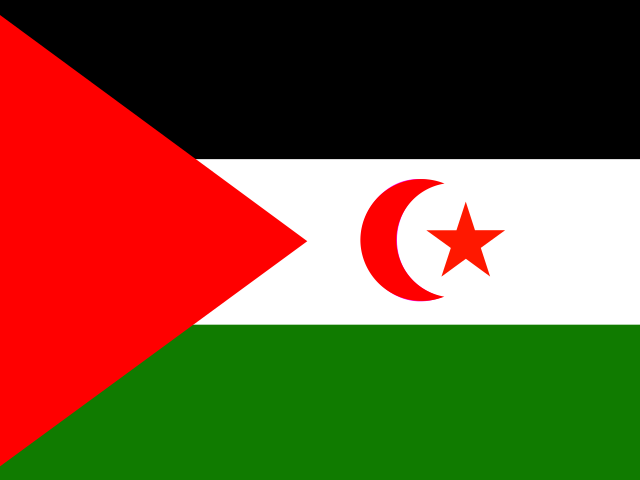 Western Sahara
 Tunisia
 Egypt
Egypt Cabo Verde
 Benin
Benin Gambia
 Ghana
Ghana Guinea
 Côte d'Ivoire
 Liberia
 Mali
Mali Mauritania
 Niger
Niger Nigeria
 Guinea-Bissau
 Saint Helena, Ascension and Tristan da Cunha
 Senegal
 Sierra Leone
 Togo
Togo Burkina Faso
 British Indian Ocean Territory
 Burundi
 Comoros
 Mayotte
 Ethiopia
 Eritrea
 French Southern Territories
 Djibouti
 Kenya
Kenya Madagascar
 Malawi
 Mauritius
 Mozambique
 Reunion
 Rwanda
 Seychelles
 Somalia
 Zimbabwe
 South Sudan
 Uganda
 Tanzania
 Zambia
 Angola
 Cameroon
 Central African Republic
 Chad
Chad Congo
Congo Democratic Republic of the Congo
 Equatorial Guinea
 Gabon
Gabon Sao Tome and Principe
 Botswana
 Lesotho
 Namibia
 South Africa
 Eswatini
Earlier Report Observations
The market volume for bran, sharps and residues from cereal and legume processing in Africa expanded from 17 577 тыс. т in 2018 to 19 861 тыс. т in 2023. This growth was primarily supported by the expansion of planted areas for key grains and oilseeds, such as the over 500 000 hectare increase in wheat, barley and canola area in 2019, which raised grain processing activity and the output of milling by-products.
Year-to-year fluctuations reflected the impact of climatic conditions on grain harvests. In 2021, wheat production fell to a seven-year low due to record declines in summer rainfall and reduced irrigated areas, leading to a temporary dip in the bran market volume. The market recovered in 2022, aided by a strong supply of winter grains and oilseeds that kept raw material availability high.
By 2023, the market's growth pace moderated as higher input costs, particularly for fertilizers and fuel linked to international crude oil price movements, increased processing expenses. Nevertheless, consumption demand and the ongoing presence of major players like Tiger Brands and RCL Foods helped sustain a slight increase, with the market reaching 19 861 тыс. т.
Table of content
- 1. Disclaimer
- 2. Terms of use of the report
- 3. Product codes in the statistical classifications used in the report
-
4. Key Market Indicators and Trends
-
4.1. Key Market Indicators
-
4.1.1. In kind
- 4.1.1.1. Production, 2018-2023
- 4.1.1.2. Imports, 2018-2024
- 4.1.1.3. Exports, 2018-2024
- 4.1.1.4. Market size, 2018-2023
-
4.1.1. In kind
- 4.2. Market Trends and Factors
-
4.1. Key Market Indicators
-
5. Production
-
5.1. Production in Africa
- 5.1.1. Annual dynamics of production in Africa in kind, 2018-2023, K t
-
5.2. Global production by Country, 2018-2023
- 5.2.1. Annual dynamics of production by macroregions in kind, 2018-2023, K t
- 5.2.2. Dynamics of production structure by macroregions in kind, 2018-2023
- 5.2.3. Annual dynamics of production by country in kind, 2018-2023, K t
- 5.2.4. Structure of production by countries in kind, 2018-2023
- 5.2.5. Dynamics of peoduction structure by countries in kind, 2018-2023
-
5.1. Production in Africa
-
6. Imports
-
6.1. Imports (Direct Data*)
- 6.1.1. Imports - Total information
-
6.1.2. Imports in kind, K t
- 6.1.2.1. Annual dynamics of product's imports to Algeria in kind, 2018-2024, K t
- 6.1.2.2. Dynamics of product's imports in kind to Algeria by countries, 2018-2024, K t
- 6.1.2.3. Structure of product's imports in kind by countries, 2018-2024
-
6.1.3. Imports in value, M $ US
- 6.1.3.1. Annual dynamics of product's imports to Algeria in value, 2018-2024, M $ US
- 6.1.3.2. Dynamics of product's imports in value to Algeria by countries, 2018-2024, M $ US
- 6.1.3.3. Structure of product's imports in value by countries, 2018-2024
-
6.1.4. Average price of product's imports, $ US/t
- 6.1.4.1. Annual dynamics of average price of product's imports to Algeria, 2018-2024, $ US/t
- 6.1.4.2. Dynamics of average price of product's imports to Algeria by countries, 2018-2024, $ US/t
-
6.2. Imports (Mirror Data)
- 6.2.1. Imports - Total information
-
6.2.2. Imports in kind, K t
- 6.2.2.1. Annual dynamics of product's imports to Algeria in kind, 2018-2024, K t
- 6.2.2.2. Dynamics of product's imports in kind to Algeria by countries, 2018-2024, K t
- 6.2.2.3. Structure of product's imports in kind by countries, 2018-2024
-
6.2.3. Imports in value, M $ US
- 6.2.3.1. Annual dynamics of product's imports to Algeria in value, 2018-2024, M $ US
- 6.2.3.2. Dynamics of product's imports in value to Algeria by countries, 2018-2024, M $ US
- 6.2.3.3. Structure of product's imports in value by countries, 2018-2024
-
6.2.4. Average price of product's imports, $ US/t
- 6.2.4.1. Annual dynamics of average price of product's imports to Algeria, 2018-2024, $ US/t
- 6.2.4.2. Dynamics of average price of product's imports to Algeria by countries, 2018-2024, $ US/t
-
6.1. Imports (Direct Data*)
-
7. Exports
-
7.1. Exports (Direct Data*)
- 7.1.1. Exports - Total information
-
7.1.2. Exports in kind, K t
- 7.1.2.1. Annual dynamics of product's exports from Algeria in kind, 2018-2024, K t
- 7.1.2.2. Dynamics of product's exports in kind from Algeria by countries, 2018-2024, K t
- 7.1.2.3. Structure of product's exports in kind by countries, 2018-2024
-
7.1.3. Exports in value, M $ US
- 7.1.3.1. Annual dynamics of product's exports from Algeria in value, 2018-2024, M $ US
- 7.1.3.2. Dynamics of product's exports in value from Algeria by countries, 2018-2024, M $ US
- 7.1.3.3. Structure of product's exports in value by countries, 2018-2024
-
7.1.4. Average price of product's exports, $ US/t
- 7.1.4.1. Annual dynamics of average price of product's exports from Algeria, 2018-2024, $ US/t
- 7.1.4.2. Dynamics of average price of product's exports from Algeria by countries, 2018-2024, $ US/t
-
7.2. Exports (Mirror Data)
- 7.2.1. Exports - Total information
-
7.2.2. Exports in kind, K t
- 7.2.2.1. Annual dynamics of product's exports from Algeria in kind, 2018-2024, K t
- 7.2.2.2. Dynamics of product's exports in kind from Algeria by countries, 2018-2024, K t
- 7.2.2.3. Structure of product's exports in kind by countries, 2018-2024
-
7.2.3. Exports in value, M $ US
- 7.2.3.1. Annual dynamics of product's exports from Algeria in value, 2018-2024, M $ US
- 7.2.3.2. Dynamics of product's exports in value from Algeria by countries, 2018-2024, M $ US
- 7.2.3.3. Structure of product's exports in value by countries, 2018-2024
-
7.2.4. Average price of product's exports, $ US/t
- 7.2.4.1. Annual dynamics of average price of product's exports from Algeria, 2018-2024, $ US/t
- 7.2.4.2. Dynamics of average price of product's exports from Algeria by countries, 2018-2024, $ US/t
-
7.1. Exports (Direct Data*)
-
8. Trade balance
-
8.1. Trade balance (Direct Data)
- 8.1.1. In kind, K t
- 8.1.2. In value, M $ US
-
8.2. Trade balance (Mirror Data)
- 8.2.1. In kind, K t
- 8.2.2. In value, M $ US
-
8.1. Trade balance (Direct Data)
-
9. Top buying and selling countries, 2018-2024
-
9.1. Direct Data
- 9.1.1. Import in Value by Countries-buyers
- 9.1.2. Export in Value by Countries-suppliers
-
9.2. Mirror Data
- 9.2.1. Import in Value by Countries-buyers
- 9.2.2. Export in Value by Countries-suppliers
-
9.1. Direct Data
Production bran, sharps and residues from cereal or legume processing in Africa
In kind, 2017-2020, K t
Top producers of bran, sharps and residues from cereal or legume processing, 2017-2020
World map of production of bran, sharps and residues from cereal or legume processing, 2017-2020
Africa's production of bran, sharps, and residues from cereal or legume processing has grown for the third year in a row. In 2020, the continent produced 19 880 thousand tons of these products, marking an 8.2% increase from 2019. Looking at the period from 2017 to 2020, production rose by 14%, which translates to an average annual growth rate of 4.5%.
Annual dynamics of production in Africa in kind, 2017-2020, K t
| Parameter | 2018 | 2019 | 2020 | CAGR | |
|---|---|---|---|---|---|
| 1 | Change from last year | 2.7% | 2.6% | 8.2% | 4.5% |
In value, 2017-2020, M $ US
In contrast, the monetary value of Africa's production of bran, sharps, and residues from cereal or legume processing has fallen for the second consecutive year. In 2020, the output was valued at 5 956 million US dollars, down 4.8% compared to 2019. From 2017 to 2020, production value decreased by 10.5%, averaging a 3.6% annual decline. The peak value was recorded in 2018 at 8 128 million US dollars, with the largest drop occurring in 2019 at 23.1%, while the biggest increase was seen in 2018 at 22.2%.
Annual dynamics of production in Africa in value, 2017-2020, M $ US
| Parameter | 2018 | 2019 | 2020 | CAGR | |
|---|---|---|---|---|---|
| 1 | Change from last year | 22.2% | (23.1%) | (4.8%) | (3.6%) |
Exports bran, sharps and residues from cereal or legume processing from Africa
Exports in kind, K t
After two years of growth, Africa's exports of bran, sharps, and residues from cereal or legume processing in volume terms declined in 2020. The continent exported 1 108 thousand tons that year, a 1.1% decrease from the previous year. Over the 2017–2020 period, exports increased by 27.2%, with an average annual rate of 8.4%. The highest volume was recorded in 2019 at 1 120 thousand tons, which also saw the largest increase of 26.7%.
Annual dynamics of product's exports from Africa in kind, 2017-2020, K t
| Parameter | 2018 | 2019 | 2020 | CAGR | |
|---|---|---|---|---|---|
| 1 | Change from last year | 1.6% | 26.7% | (1.1%) | 8.4% |
From 2017 to 2020, Africa's exports of bran, sharps, and residues from cereal or legume processing in volume terms were not highly concentrated. Vietnam accounted for 9.8% of exports, the United Arab Emirates for 8.1%, and Oman for 5.7%, with these three countries together making up only 23.6% of total flows.
Structure of product's exports in kind by countries, 2017-2020
World map of product's exports from Africa in kind, 2017-2020
Exports in value, M $ US
Africa's exports of bran, sharps, and residues from cereal or legume processing in value terms also declined for the second year in a row. In 2020, exports reached 189.3 million US dollars, a 5.9% drop from the previous year. Between 2017 and 2020, exports grew by 21.8%, averaging 6.8% per year. The peak value was in 2018 at 221.2 million US dollars, with the largest decline of 9.0% in 2019 and the biggest increase of 42.3% in 2018.
Annual dynamics of product's exports from Africa in value, 2017-2020, M $ US
| Parameter | 2018 | 2019 | 2020 | CAGR | |
|---|---|---|---|---|---|
| 1 | Change from last year | 42.3% | (9.0%) | (5.9%) | 6.8% |
During 2017–2020, Vietnam, the United Arab Emirates, and Qatar played significant but not dominant roles as buyers of Africa's bran, sharps, and residues from cereal or legume processing in value terms. Vietnam accounted for 19.0% of exports, the UAE for 6.5%, and Qatar for 5.7%, with their combined share reaching only 31.2% of total export value.
Structure of product's exports in value by countries, 2017-2020
World map of product's exports from Africa in value, 2017-2020
Imports bran, sharps and residues from cereal or legume processing to Africa
Imports in kind, K t
Following two years of decline, Africa's imports of bran, sharps, and residues from cereal or legume processing in volume terms increased in 2020. Imports amounted to 607 thousand tons, a 14.4% rise from 2019. Over the 2017–2020 period, imports decreased by 33.2%, averaging a 12.6% annual decline. The lowest volume was recorded in 2019 at 530 thousand tons, with the largest drop of 39.0% occurring in 2018.
Annual dynamics of product's imports to Africa in kind, 2017-2020, K t
| Parameter | 2018 | 2019 | 2020 | CAGR | |
|---|---|---|---|---|---|
| 1 | Change from last year | (39.0%) | (4.3%) | 14.4% | (12.6%) |
From 2017 to 2020, the import landscape for bran, sharps, and residues from cereal or legume processing in volume terms was diverse. The United States accounted for 13.1% of imports, Yemen for 6.3%, and Italy for 5.5%, with these three countries together forming only 24.8% of total flows, while the remaining 75.2% came from many other countries.
Structure of product's imports in kind by countries, 2017-2020
World map of product's imports to Africa in kind, 2017-2020
Imports in value, M $ US
Africa's imports of bran, sharps, and residues from cereal or legume processing in value terms have risen for the second consecutive year. In 2020, imports totaled 168.7 million US dollars, showing a strong 14.6% year-over-year improvement. Between 2017 and 2020, imports increased by 9%, with an average annual growth rate of 2.9%. The lowest value was recorded in 2018 at 168.7 million US dollars, which also saw the largest decline of 5.0%.
Annual dynamics of product's imports to Africa in value, 2017-2020, M $ US
| Parameter | 2018 | 2019 | 2020 | CAGR | |
|---|---|---|---|---|---|
| 1 | Change from last year | (5.0%) | 0.1% | 14.6% | 2.9% |
Over the 2017–2020 period, no single market dominated Africa's imports of bran, sharps, and residues from cereal or legume processing in value terms. The United States accounted for 17.9% of imports, Yemen for 6.5%, and Italy for 6.0%, with these three together taking only 30.4% of total import value, while many smaller partners each held modest individual shares.
Structure of product's imports in value by countries, 2017-2020
World map of product's imports to Africa in value, 2017-2020
Related Reports




Why Choose Us?
Only Verified Data
No Hidden Costs or Separate Fees
Smarter Subscription Pricing
Contact Our Team
Submit your inquiry using the form below — our team will get back to you within 24 hours.