






"Sub-Saharan Africa" region includes following countries:
 Cabo Verde
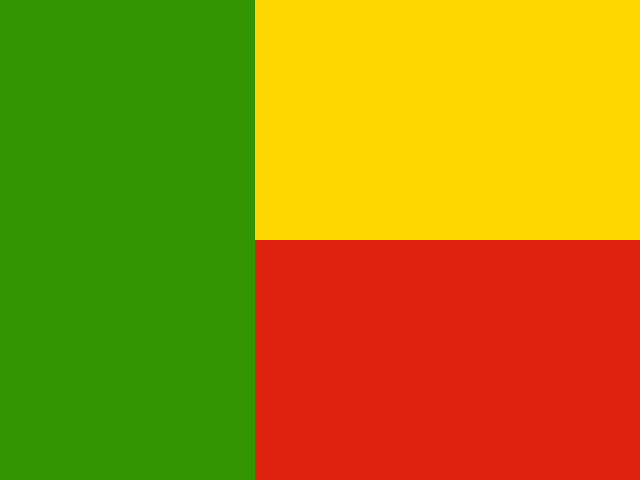 Benin
Benin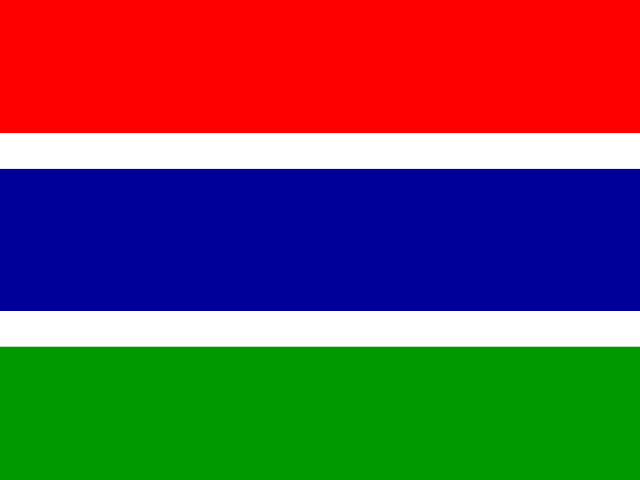 Gambia
 Ghana
Ghana Guinea
 Côte d'Ivoire
 Liberia
 Mali
Mali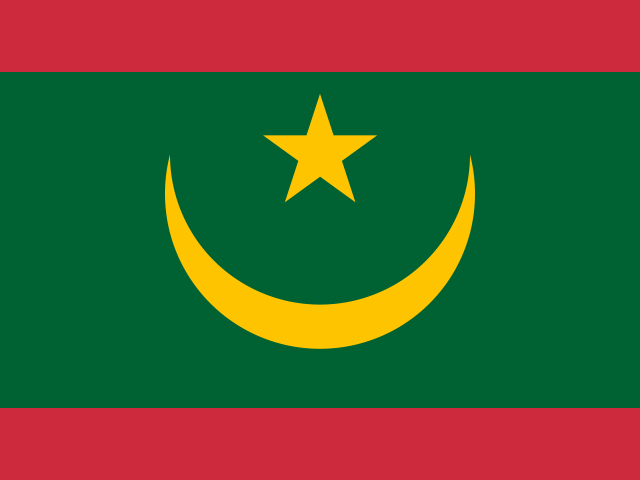 Mauritania
 Niger
Niger Nigeria
 Guinea-Bissau
 Saint Helena, Ascension and Tristan da Cunha
 Senegal
 Sierra Leone
 Togo
Togo Burkina Faso
 British Indian Ocean Territory
 Burundi
 Comoros
 Mayotte
 Ethiopia
 Eritrea
 French Southern Territories
 Djibouti
 Kenya
Kenya Madagascar
 Malawi
 Mauritius
 Mozambique
 Reunion
 Rwanda
 Seychelles
 Somalia
 Zimbabwe
 South Sudan
 Uganda
 Tanzania
 Zambia
 Angola
 Cameroon
 Central African Republic
 Chad
Chad Congo
Congo Democratic Republic of the Congo
 Equatorial Guinea
 Gabon
Gabon Sao Tome and Principe
 Botswana
 Lesotho
 Namibia
 South Africa
 Eswatini
Earlier Report Observations
Market size for unroasted, not decaffeinated coffee in Sub-Saharan Africa fluctuated between 2018 and 2023, declining to 990 thousand tons in 2019. This reduction aligned with challenges in Ethiopia, where insufficient access to finance for small-scale farmers and traditional harvesting practices limited production efficiency and quality, constraining regional supply.
A notable recovery pushed the market to 1 221 thousand tons in 2022, supported by coffee sector reforms in Ethiopia. These reforms, including the planting of 9 billion seedlings and renovation of 700 000 hectares, enhanced productivity. Ethiopia also diversified its exports to 20 new countries, helping stabilize trade flows and increase domestic availability.
The market contracted to 1 132 thousand tons in 2023 as global coffee prices rose due to supply constraints in major producers like Vietnam and Brazil. Concurrently, consumer preferences in South Africa shifted towards premium, convenient formats with sustainable packaging, though higher prices moderated volume consumption.
Table of content
- 1. Disclaimer
- 2. Terms of use of the report
- 3. Product codes in the statistical classifications used in the report
-
4. Key Market Indicators and Trends
-
4.1. Key Market Indicators
-
4.1.1. In kind
- 4.1.1.1. Production, 2018-2023
- 4.1.1.2. Imports, 2018-2024
- 4.1.1.3. Exports, 2018-2024
- 4.1.1.4. Market size, 2018-2023
-
4.1.1. In kind
- 4.2. Market Trends and Factors
-
4.1. Key Market Indicators
-
5. Production
-
5.1. Production in Sub-Saharan Africa
- 5.1.1. Annual dynamics of production in Sub-Saharan Africa in kind, 2018-2023, K t
-
5.2. Global production by Country, 2018-2023
- 5.2.1. Annual dynamics of production by macroregions in kind, 2018-2023, K t
- 5.2.2. Dynamics of production structure by macroregions in kind, 2018-2023
- 5.2.3. Annual dynamics of production by country in kind, 2018-2023, K t
- 5.2.4. Structure of production by countries in kind, 2018-2023
- 5.2.5. Dynamics of peoduction structure by countries in kind, 2018-2023
-
5.1. Production in Sub-Saharan Africa
-
6. Imports
-
6.1. Imports (Direct Data*)
- 6.1.1. Imports - Total information
-
6.1.2. Imports in kind, K t
- 6.1.2.1. Annual dynamics of product's imports to Cabo Verde in kind, 2018-2024, K t
- 6.1.2.2. Dynamics of product's imports in kind to Cabo Verde by countries, 2018-2024, K t
- 6.1.2.3. Structure of product's imports in kind by countries, 2018-2024
-
6.1.3. Imports in value, M $ US
- 6.1.3.1. Annual dynamics of product's imports to Cabo Verde in value, 2018-2024, M $ US
- 6.1.3.2. Dynamics of product's imports in value to Cabo Verde by countries, 2018-2024, M $ US
- 6.1.3.3. Structure of product's imports in value by countries, 2018-2024
-
6.1.4. Average price of product's imports, $ US/t
- 6.1.4.1. Annual dynamics of average price of product's imports to Cabo Verde, 2018-2024, $ US/t
- 6.1.4.2. Dynamics of average price of product's imports to Cabo Verde by countries, 2018-2024, $ US/t
-
6.2. Imports (Mirror Data)
- 6.2.1. Imports - Total information
-
6.2.2. Imports in kind, K t
- 6.2.2.1. Annual dynamics of product's imports to Cabo Verde in kind, 2018-2024, K t
- 6.2.2.2. Dynamics of product's imports in kind to Cabo Verde by countries, 2018-2024, K t
- 6.2.2.3. Structure of product's imports in kind by countries, 2018-2024
-
6.2.3. Imports in value, M $ US
- 6.2.3.1. Annual dynamics of product's imports to Cabo Verde in value, 2018-2024, M $ US
- 6.2.3.2. Dynamics of product's imports in value to Cabo Verde by countries, 2018-2024, M $ US
- 6.2.3.3. Structure of product's imports in value by countries, 2018-2024
-
6.2.4. Average price of product's imports, $ US/t
- 6.2.4.1. Annual dynamics of average price of product's imports to Cabo Verde, 2018-2024, $ US/t
- 6.2.4.2. Dynamics of average price of product's imports to Cabo Verde by countries, 2018-2024, $ US/t
-
6.1. Imports (Direct Data*)
-
7. Exports
-
7.1. Exports (Direct Data*)
- 7.1.1. Exports - Total information
-
7.1.2. Exports in kind, K t
- 7.1.2.1. Annual dynamics of product's exports from Cabo Verde in kind, 2018-2024, K t
- 7.1.2.2. Dynamics of product's exports in kind from Cabo Verde by countries, 2018-2024, K t
- 7.1.2.3. Structure of product's exports in kind by countries, 2018-2024
-
7.1.3. Exports in value, M $ US
- 7.1.3.1. Annual dynamics of product's exports from Cabo Verde in value, 2018-2024, M $ US
- 7.1.3.2. Dynamics of product's exports in value from Cabo Verde by countries, 2018-2024, M $ US
- 7.1.3.3. Structure of product's exports in value by countries, 2018-2024
-
7.1.4. Average price of product's exports, $ US/t
- 7.1.4.1. Annual dynamics of average price of product's exports from Cabo Verde, 2018-2024, $ US/t
- 7.1.4.2. Dynamics of average price of product's exports from Cabo Verde by countries, 2018-2024, $ US/t
-
7.2. Exports (Mirror Data)
- 7.2.1. Exports - Total information
-
7.2.2. Exports in kind, K t
- 7.2.2.1. Annual dynamics of product's exports from Cabo Verde in kind, 2018-2024, K t
- 7.2.2.2. Dynamics of product's exports in kind from Cabo Verde by countries, 2018-2024, K t
- 7.2.2.3. Structure of product's exports in kind by countries, 2018-2024
-
7.2.3. Exports in value, M $ US
- 7.2.3.1. Annual dynamics of product's exports from Cabo Verde in value, 2018-2024, M $ US
- 7.2.3.2. Dynamics of product's exports in value from Cabo Verde by countries, 2018-2024, M $ US
- 7.2.3.3. Structure of product's exports in value by countries, 2018-2024
-
7.2.4. Average price of product's exports, $ US/t
- 7.2.4.1. Annual dynamics of average price of product's exports from Cabo Verde, 2018-2024, $ US/t
- 7.2.4.2. Dynamics of average price of product's exports from Cabo Verde by countries, 2018-2024, $ US/t
-
7.1. Exports (Direct Data*)
-
8. Trade balance
-
8.1. Trade balance (Direct Data)
- 8.1.1. In kind, K t
- 8.1.2. In value, M $ US
-
8.2. Trade balance (Mirror Data)
- 8.2.1. In kind, K t
- 8.2.2. In value, M $ US
-
8.1. Trade balance (Direct Data)
-
9. Top buying and selling countries, 2018-2024
-
9.1. Direct Data
- 9.1.1. Import in Value by Countries-buyers
- 9.1.2. Export in Value by Countries-suppliers
-
9.2. Mirror Data
- 9.2.1. Import in Value by Countries-buyers
- 9.2.2. Export in Value by Countries-suppliers
-
9.1. Direct Data
Production unroasted, not decaffeinated coffee in Sub-Saharan Africa
In kind, 2017-2020, K t
Top producers of unroasted, not decaffeinated coffee, 2017-2020
World map of production of unroasted, not decaffeinated coffee, 2017-2020
Sub-Saharan Africa's production of unroasted, non-decaffeinated coffee has grown for the third year in a row. In 2020, the region produced 1 883 thousand tons, marking a 3.8% increase from the previous year. Looking at the period from 2017 to 2020, production rose by 29.7%, which translates to an average annual growth rate of 9.1%.
Annual dynamics of production in Sub-Saharan Africa in kind, 2017-2020, K t
| Parameter | 2018 | 2019 | 2020 | CAGR | |
|---|---|---|---|---|---|
| 1 | Change from last year | 14.4% | 9.2% | 3.8% | 9.1% |
In value, 2017-2020, M $ US
Sub-Saharan Africa's production value for unroasted, non-decaffeinated coffee has increased for the second consecutive year. In 2020, the output was valued at 4 481 million US dollars, showing a modest rise of 8.9% compared to 2019. From 2017 to 2020, production value grew by 8.1%, averaging 2.6% per year. The lowest value was recorded in 2018 at 3 932 million US dollars, which also saw the largest decline of 5.1%.
Annual dynamics of production in Sub-Saharan Africa in value, 2017-2020, M $ US
| Parameter | 2018 | 2019 | 2020 | CAGR | |
|---|---|---|---|---|---|
| 1 | Change from last year | (5.1%) | 4.7% | 8.9% | 2.6% |
Exports unroasted, not decaffeinated coffee from Sub-Saharan Africa
Exports in kind, K t
Sub-Saharan Africa exported 814.7 thousand tons of unroasted, non-decaffeinated coffee in 2020, reflecting a measured decline of 4.2% from 2019. Over the 2017-2020 period, exports increased by 18.3%, with a compound annual growth rate of 5.8%. The lowest export volume was in 2018 at 584.9 thousand tons, which experienced the largest decline of 15.1%. In contrast, 2019 saw the highest export volume at 850.7 thousand tons, with the largest increase of 45.4%.
Annual dynamics of product's exports from Sub-Saharan Africa in kind, 2017-2020, K t
| Parameter | 2018 | 2019 | 2020 | CAGR | |
|---|---|---|---|---|---|
| 1 | Change from last year | (15.1%) | 45.4% | (4.2%) | 5.8% |
From 2017 to 2020, the export destinations for unroasted, non-decaffeinated coffee from Sub-Saharan Africa were highly dispersed. Germany accounted for 13.5% of exports in volume, Italy for 11.5%, and Belgium for 8.6%, together making up just 33.7% of total flows. The remaining 66.3% was distributed among a wide range of other countries.
Structure of product's exports in kind by countries, 2017-2020
World map of product's exports from Sub-Saharan Africa in kind, 2017-2020
Exports in value, M $ US
Cross-border shipments of unroasted, non-decaffeinated coffee from Sub-Saharan Africa have increased for the second consecutive year. In 2020, exports amounted to 1 939 million US dollars, remaining nearly unchanged from 2019. The lowest value was recorded in 2018 at 1 385 million US dollars, which saw the largest decline of 29.6%. The largest increase occurred in 2019, with a rise of 39.4%.
Annual dynamics of product's exports from Sub-Saharan Africa in value, 2017-2020, M $ US
| Parameter | 2018 | 2019 | 2020 | CAGR | |
|---|---|---|---|---|---|
| 1 | Change from last year | (29.6%) | 39.4% | 0.4% | (0.5%) |
Between 2017 and 2020, the buyer portfolio for unroasted, non-decaffeinated coffee from Sub-Saharan Africa was broad. Germany contributed 13.1% of exports in value, the United States 10.7%, and Belgium 9.1%, together accounting for only 32.9% of total export value. Many other countries held smaller but significant shares.
Structure of product's exports in value by countries, 2017-2020
World map of product's exports from Sub-Saharan Africa in value, 2017-2020
Imports unroasted, not decaffeinated coffee to Sub-Saharan Africa
Imports in kind, K t
Imports of unroasted, non-decaffeinated coffee into Sub-Saharan Africa have risen for the second consecutive year. In 2020, import volume reached 33.9 thousand tons, representing a 26.9% year-over-year increase. Over the 2017-2020 period, imports grew by 38.7%, with a compound annual growth rate of 11.5%. The lowest volume was in 2018 at 21.5 thousand tons, which experienced the largest decline of 12.0%.
Annual dynamics of product's imports to Sub-Saharan Africa in kind, 2017-2020, K t
| Parameter | 2018 | 2019 | 2020 | CAGR | |
|---|---|---|---|---|---|
| 1 | Change from last year | (12.0%) | 24.2% | 26.9% | 11.5% |
From 2017 to 2020, the geographical structure of imports in volume was highly diversified. Brazil accounted for 18.5% of imports, Vietnam for 11.9%, and Indonesia for 5.2%, together making up only 35.6% of total flows. The remaining 64.4% was distributed among numerous smaller partner countries.
Structure of product's imports in kind by countries, 2017-2020
World map of product's imports to Sub-Saharan Africa in kind, 2017-2020
Imports in value, M $ US
In 2020, Sub-Saharan Africa's imports of unroasted, non-decaffeinated coffee amounted to 87 million US dollars, marking a 12.1% increase from the previous year. Between 2017 and 2020, imports rose by 6.7%, averaging 2.2% per year. The lowest value was recorded in 2019 at 77 million US dollars, which saw the largest decline of 7.5%.
Annual dynamics of product's imports to Sub-Saharan Africa in value, 2017-2020, M $ US
| Parameter | 2018 | 2019 | 2020 | CAGR | |
|---|---|---|---|---|---|
| 1 | Change from last year | 2.9% | (7.5%) | 12.1% | 2.2% |
Over the 2017-2020 period, the geographical structure of imports in value terms was highly diversified. Brazil accounted for 18.9% of imports in value, Vietnam for 12.4%, and Indonesia for 7.2%, together contributing only 38.4% of total flows. The remaining 61.6% was distributed among numerous smaller partner countries.
Structure of product's imports in value by countries, 2017-2020
World map of product's imports to Sub-Saharan Africa in value, 2017-2020
Related Reports


Cinnamon market in Sub-Saharan Africa
2026-03-28


Ginger market in Sub-Saharan Africa
2026-03-28

Tea market in Sub-Saharan Africa
2026-03-28
Why Choose Us?
Only Verified Data
No Hidden Costs or Separate Fees
Smarter Subscription Pricing
Contact Our Team
Submit your inquiry using the form below — our team will get back to you within 24 hours.