






"Sub-Saharan Africa" region includes following countries:
 Cabo Verde
 Benin
Benin Gambia
 Ghana
Ghana Guinea
 Côte d'Ivoire
 Liberia
 Mali
Mali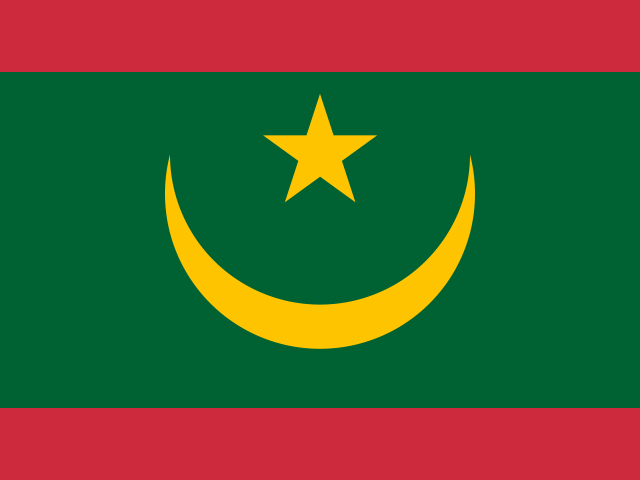 Mauritania
 Niger
Niger Nigeria
 Guinea-Bissau
 Saint Helena, Ascension and Tristan da Cunha
 Senegal
 Sierra Leone
 Togo
Togo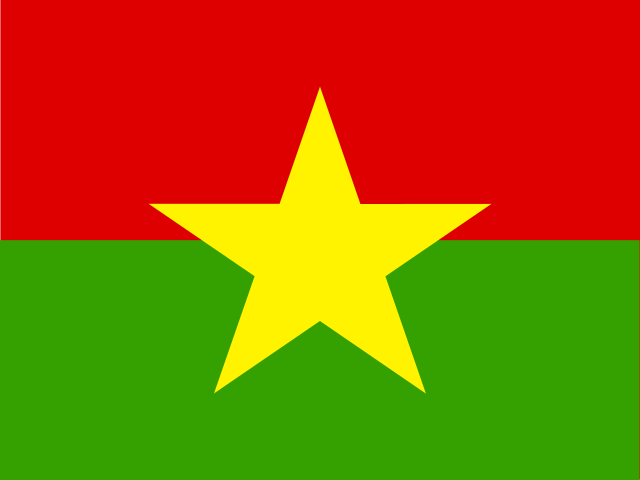 Burkina Faso
 British Indian Ocean Territory
 Burundi
 Comoros
 Mayotte
 Ethiopia
 Eritrea
 French Southern Territories
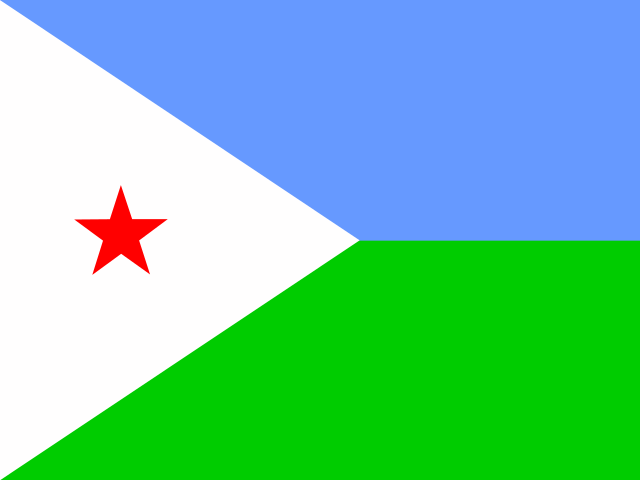 Djibouti
 Kenya
Kenya Madagascar
 Malawi
 Mauritius
 Mozambique
 Reunion
 Rwanda
 Seychelles
 Somalia
 Zimbabwe
 South Sudan
 Uganda
 Tanzania
 Zambia
 Angola
 Cameroon
 Central African Republic
 Chad
Chad Congo
Congo Democratic Republic of the Congo
 Equatorial Guinea
 Gabon
Gabon Sao Tome and Principe
 Botswana
 Lesotho
 Namibia
 South Africa
 Eswatini
Earlier Report Observations
From 2018 to 2019, the ginger market volume in Sub-Saharan Africa remained stable at around 772-773 thousand tonnes, with no major shifts in production or trade.
The COVID-19 pandemic abruptly altered market dynamics in 2020. Demand for ginger surged due to its perceived health benefits, driving prices sharply higher and encouraging farmers to expand plantings. This led to a rise in production to 797 thousand tonnes in 2020 and a further increase to 825 thousand tonnes in 2021, with the total market volume growing to 810 thousand tonnes.
In the post-pandemic period of 2022, the market volume temporarily declined to 798 thousand tonnes. This occurred despite production rising to 869 thousand tonnes, as a sharp increase in exports to 79 thousand tonnes redirected supply abroad. Concurrently, ample rains improved crop quality and larger volumes entered the market, causing ginger prices to fall to about a tenth of their COVID-19 peak levels. By 2023, the market volume recovered to 810 thousand tonnes alongside continued production growth.
Table of content
- 1. Disclaimer
- 2. Terms of use of the report
- 3. Product codes in the statistical classifications used in the report
-
4. Key Market Indicators and Trends
-
4.1. Key Market Indicators
-
4.1.1. In kind
- 4.1.1.1. Production, 2018-2023
- 4.1.1.2. Imports, 2018-2024
- 4.1.1.3. Exports, 2018-2024
- 4.1.1.4. Market size, 2018-2023
-
4.1.1. In kind
- 4.2. Market Trends and Factors
-
4.1. Key Market Indicators
-
5. Production
-
5.1. Production in Sub-Saharan Africa
- 5.1.1. Annual dynamics of production in Sub-Saharan Africa in kind, 2018-2023, K t
-
5.2. Global production by Country, 2018-2023
- 5.2.1. Annual dynamics of production by macroregions in kind, 2018-2023, K t
- 5.2.2. Dynamics of production structure by macroregions in kind, 2018-2023
- 5.2.3. Annual dynamics of production by country in kind, 2018-2023, K t
- 5.2.4. Structure of production by countries in kind, 2018-2023
- 5.2.5. Dynamics of peoduction structure by countries in kind, 2018-2023
-
5.1. Production in Sub-Saharan Africa
-
6. Imports
-
6.1. Imports (Direct Data*)
- 6.1.1. Imports - Total information
-
6.1.2. Imports in kind, t
- 6.1.2.1. Annual dynamics of product's imports to Cabo Verde in kind, 2018-2024, t
- 6.1.2.2. Dynamics of product's imports in kind to Cabo Verde by countries, 2018-2024, t
- 6.1.2.3. Structure of product's imports in kind by countries, 2018-2024
-
6.1.3. Imports in value, K $ US
- 6.1.3.1. Annual dynamics of product's imports to Cabo Verde in value, 2018-2024, K $ US
- 6.1.3.2. Dynamics of product's imports in value to Cabo Verde by countries, 2018-2024, K $ US
- 6.1.3.3. Structure of product's imports in value by countries, 2018-2024
-
6.1.4. Average price of product's imports, $ US/t
- 6.1.4.1. Annual dynamics of average price of product's imports to Cabo Verde, 2018-2024, $ US/t
- 6.1.4.2. Dynamics of average price of product's imports to Cabo Verde by countries, 2018-2024, $ US/t
-
6.2. Imports (Mirror Data)
- 6.2.1. Imports - Total information
-
6.2.2. Imports in kind, t
- 6.2.2.1. Annual dynamics of product's imports to Cabo Verde in kind, 2018-2024, t
- 6.2.2.2. Dynamics of product's imports in kind to Cabo Verde by countries, 2018-2024, t
- 6.2.2.3. Structure of product's imports in kind by countries, 2018-2024
-
6.2.3. Imports in value, K $ US
- 6.2.3.1. Annual dynamics of product's imports to Cabo Verde in value, 2018-2024, K $ US
- 6.2.3.2. Dynamics of product's imports in value to Cabo Verde by countries, 2018-2024, K $ US
- 6.2.3.3. Structure of product's imports in value by countries, 2018-2024
-
6.2.4. Average price of product's imports, $ US/t
- 6.2.4.1. Annual dynamics of average price of product's imports to Cabo Verde, 2018-2024, $ US/t
- 6.2.4.2. Dynamics of average price of product's imports to Cabo Verde by countries, 2018-2024, $ US/t
-
6.1. Imports (Direct Data*)
-
7. Exports
-
7.1. Exports (Direct Data*)
- 7.1.1. Exports - Total information
-
7.1.2. Exports in kind, t
- 7.1.2.1. Annual dynamics of product's exports from Cabo Verde in kind, 2018-2024, t
- 7.1.2.2. Dynamics of product's exports in kind from Cabo Verde by countries, 2018-2024, t
- 7.1.2.3. Structure of product's exports in kind by countries, 2018-2024
-
7.1.3. Exports in value, K $ US
- 7.1.3.1. Annual dynamics of product's exports from Cabo Verde in value, 2018-2024, K $ US
- 7.1.3.2. Dynamics of product's exports in value from Cabo Verde by countries, 2018-2024, K $ US
- 7.1.3.3. Structure of product's exports in value by countries, 2018-2024
-
7.1.4. Average price of product's exports, $ US/t
- 7.1.4.1. Annual dynamics of average price of product's exports from Cabo Verde, 2018-2024, $ US/t
- 7.1.4.2. Dynamics of average price of product's exports from Cabo Verde by countries, 2018-2024, $ US/t
-
7.2. Exports (Mirror Data)
- 7.2.1. Exports - Total information
-
7.2.2. Exports in kind, t
- 7.2.2.1. Annual dynamics of product's exports from Cabo Verde in kind, 2018-2024, t
- 7.2.2.2. Dynamics of product's exports in kind from Cabo Verde by countries, 2018-2024, t
- 7.2.2.3. Structure of product's exports in kind by countries, 2018-2024
-
7.2.3. Exports in value, K $ US
- 7.2.3.1. Annual dynamics of product's exports from Cabo Verde in value, 2018-2024, K $ US
- 7.2.3.2. Dynamics of product's exports in value from Cabo Verde by countries, 2018-2024, K $ US
- 7.2.3.3. Structure of product's exports in value by countries, 2018-2024
-
7.2.4. Average price of product's exports, $ US/t
- 7.2.4.1. Annual dynamics of average price of product's exports from Cabo Verde, 2018-2024, $ US/t
- 7.2.4.2. Dynamics of average price of product's exports from Cabo Verde by countries, 2018-2024, $ US/t
-
7.1. Exports (Direct Data*)
-
8. Trade balance
-
8.1. Trade balance (Direct Data)
- 8.1.1. In kind, t
- 8.1.2. In value, K $ US
-
8.2. Trade balance (Mirror Data)
- 8.2.1. In kind, t
- 8.2.2. In value, K $ US
-
8.1. Trade balance (Direct Data)
-
9. Top buying and selling countries, 2018-2024
-
9.1. Direct Data
- 9.1.1. Import in Value by Countries-buyers
- 9.1.2. Export in Value by Countries-suppliers
-
9.2. Mirror Data
- 9.2.1. Import in Value by Countries-buyers
- 9.2.2. Export in Value by Countries-suppliers
-
9.1. Direct Data
Production ginger in Sub-Saharan Africa
In kind, 2017-2020, K t
Top producers of ginger, 2017-2020
World map of production of ginger, 2017-2020
Following a two-year decline, ginger production in Sub-Saharan Africa saw an increase. In 2020, the region produced 796.9 K t of ginger, marking a modest 3.5% gain compared to the previous year. However, looking at the period from 2017 to 2020, overall production fell by 14%, which translates to an annualized decrease of 4.9%. The lowest production level was recorded in 2019 at 769.8 K t, while the sharpest drop occurred in 2018 with a 16.5% decline.
Annual dynamics of production in Sub-Saharan Africa in kind, 2017-2020, K t
| Parameter | 2018 | 2019 | 2020 | CAGR | |
|---|---|---|---|---|---|
| 1 | Change from last year | (16.5%) | (0.5%) | 3.5% | (4.9%) |
In value, 2017-2020, M $ US
After two years of decrease, the value of ginger production in Sub-Saharan Africa rose. In 2020, ginger output was valued at 1 544 M $ US in the region, showing a strong 19.1% increase from the year before. Over the 2017 to 2020 period, however, production value declined by 29.6%, averaging an 11.1% annualized reduction. The minimum value was observed in 2019 at 1 297 M $ US, with the largest fall taking place in 2018 at 31.6%.
Annual dynamics of production in Sub-Saharan Africa in value, 2017-2020, M $ US
| Parameter | 2018 | 2019 | 2020 | CAGR | |
|---|---|---|---|---|---|
| 1 | Change from last year | (31.6%) | (13.6%) | 19.1% | (11.1%) |
Exports ginger from Sub-Saharan Africa
Exports in kind, t
The market displayed significant volatility during these years. Exports reached their lowest point in 2017 and peaked in 2020, with a 6.9-fold difference between these two years. In 2020, cross-border shipments of ginger from Sub-Saharan Africa totaled 9 146 t, surging by 177.3% from the previous year. The largest decline was recorded in 2019 at 14.2%, while the biggest increase occurred in 2018 with a 189.6% rise.
Annual dynamics of product's exports from Sub-Saharan Africa in kind, 2017-2020, t
| Parameter | 2018 | 2019 | 2020 | CAGR | |
|---|---|---|---|---|---|
| 1 | Change from last year | 189.6% | (14.2%) | 177.3% | 90.3% |
From 2017 to 2020, ginger exports in kind from Sub-Saharan Africa were spread across a wide range of partner countries. India accounted for 12.9% of exports, the United Arab Emirates for 7.0%, and Germany for 3.9%. Together, these three countries represented just 23.9% of total export flows, indicating a highly diversified market.
Structure of product's exports in kind by countries, 2017-2020
World map of product's exports from Sub-Saharan Africa in kind, 2017-2020
Exports in value, K $ US
The market exhibited signs of volatility over the observed period. Export values hit their minimum in 2017 and peaked in 2020, with a 5.6-fold variation between these extremes. In 2020, the value of ginger leaving Sub-Saharan Africa amounted to 17 720 K $ US, reflecting a steep 219.0% increase compared to the previous year. The largest decline was seen in 2019 at 25.6%.
Annual dynamics of product's exports from Sub-Saharan Africa in value, 2017-2020, K $ US
| Parameter | 2018 | 2019 | 2020 | CAGR | |
|---|---|---|---|---|---|
| 1 | Change from last year | 137.4% | (25.6%) | 219.0% | 78.0% |
Between 2017 and 2020, India, Germany, and the United Arab Emirates were among the largest buyers of ginger from Sub-Saharan Africa in value terms, with shares of 12.3%, 11.5%, and 9.3% respectively. However, even combined, they represented only 33.1% of total export value, highlighting a broadly diversified partner base.
Structure of product's exports in value by countries, 2017-2020
World map of product's exports from Sub-Saharan Africa in value, 2017-2020
Imports ginger to Sub-Saharan Africa
Imports in kind, t
The market showed an unstable trend throughout the timeframe. Import volumes varied 1.8 times, from a low in 2018 to a high in 2020. In 2020, Sub-Saharan Africa imported approximately 5 962 t of ginger, up by 2.7% compared to 2019. The minimum volume was recorded in 2018 at 3 371 t. The largest decline occurred in 2018 with a 23.4% drop, while the biggest increase was in 2019 with a 72.2% rise.
Annual dynamics of product's imports to Sub-Saharan Africa in kind, 2017-2020, t
| Parameter | 2018 | 2019 | 2020 | CAGR | |
|---|---|---|---|---|---|
| 1 | Change from last year | (23.4%) | 72.2% | 2.7% | 10.7% |
From 2017 to 2020, China, India, and the United Arab Emirates were the largest suppliers of ginger to Sub-Saharan Africa in kind, with shares of 20.2%, 3.4%, and 1.8% respectively. Their combined contribution was limited to 25.5% of total imports, reflecting a diversified country structure.
Structure of product's imports in kind by countries, 2017-2020
World map of product's imports to Sub-Saharan Africa in kind, 2017-2020
Imports in value, K $ US
Noticeable fluctuations characterized market performance during this period. Import values varied 2.1-fold, from a minimum in 2018 to a maximum in 2020. In 2020, the volume of ginger imports into Sub-Saharan Africa amounted to 16 525 K $ US, increasing by 78.6% compared with 2019. The minimum value was recorded in 2018 at 7 781 K $ US, with the largest decline that year at 1.6%.
Annual dynamics of product's imports to Sub-Saharan Africa in value, 2017-2020, K $ US
| Parameter | 2018 | 2019 | 2020 | CAGR | |
|---|---|---|---|---|---|
| 1 | Change from last year | (1.6%) | 18.9% | 78.6% | 27.9% |
During 2017–2020, ginger imports into Sub-Saharan Africa came from many different markets. Even the largest destinations—China, India, and Thailand—together represented only 37.2% of total imports in value terms, underscoring the region's diversified sourcing.
Structure of product's imports in value by countries, 2017-2020
World map of product's imports to Sub-Saharan Africa in value, 2017-2020
Related Reports

2026-03-28
2026-03-28
Ginger market in Eastern Africa
2026-03-28
2026-03-28

Pepper market in Sub-Saharan Africa
2026-03-28

Tea market in Sub-Saharan Africa
2026-03-28

Cinnamon market in Sub-Saharan Africa
2026-03-28

Why Choose Us?
Only Verified Data
No Hidden Costs or Separate Fees
Smarter Subscription Pricing
Contact Our Team
Submit your inquiry using the form below — our team will get back to you within 24 hours.