






"SADC" region includes following countries:
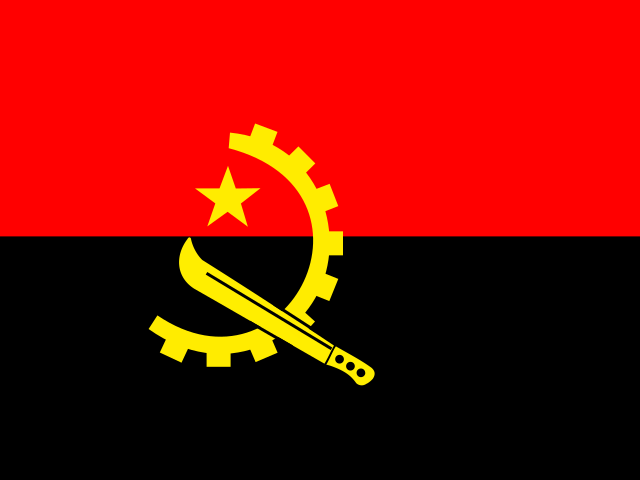 Angola
 Botswana
 Comoros
 Democratic Republic of the Congo
 Eswatini
 Lesotho
 Madagascar
 Malawi
 Mauritius
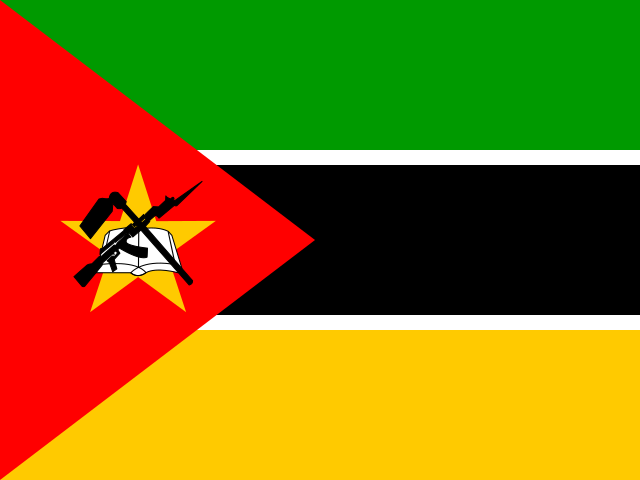 Mozambique
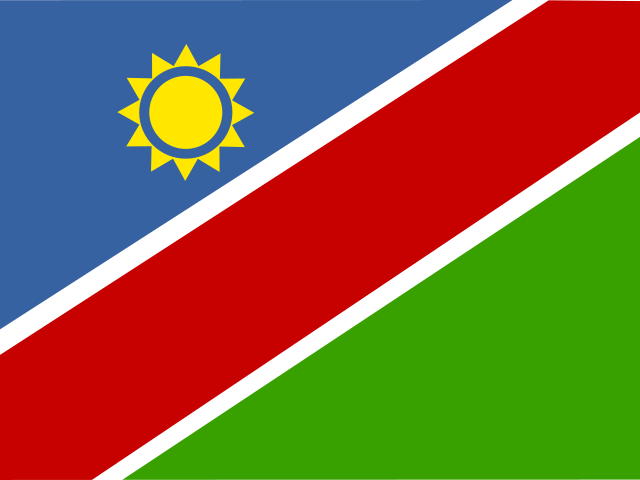 Namibia
 Seychelles
 South Africa
 Tanzania
 Zambia
 Zimbabwe
Earlier Report Observations
The starch market in the SADC region displayed initial growth from 198.2 thousand tons in 2018 to 206.4 thousand tons in 2019, followed by a contraction to 185.8 thousand tons in 2020. During the early part of the period, regional initiatives to build climate-resilient road infrastructure and enhance transport connectivity under the SADC protocol began facilitating the movement of goods, which supported market operations.
From 2021, the market entered a sustained expansion phase, reaching 350.0 thousand tons by 2023. This growth was propelled by a sharp increase in imports, which rose from 85.0 thousand tons in 2021 to 182.4 thousand tons in 2023, coupled with a recovery in domestic production. The launch of the SADC electronic Certificate of Origin in 2022 significantly reduced administrative barriers for intra-regional trade, directly stimulating cross-border flows of starch and contributing to the market's rapid enlargement.
Table of content
- 1. Disclaimer
- 2. Terms of use of the report
- 3. Product codes in the statistical classifications used in the report
-
4. Key Market Indicators and Trends
-
4.1. Key Market Indicators
-
4.1.1. In kind
- 4.1.1.1. Production, 2018-2023
- 4.1.1.2. Imports, 2018-2024
- 4.1.1.3. Exports, 2018-2024
- 4.1.1.4. Market size, 2018-2023
-
4.1.1. In kind
- 4.2. Market Trends and Factors
-
4.1. Key Market Indicators
-
5. Production
-
5.1. Production in SADC
- 5.1.1. Annual dynamics of production in SADC in kind, 2018-2023, K t
-
5.2. Global production by Country, 2018-2023
- 5.2.1. Annual dynamics of production by macroregions in kind, 2018-2023, K t
- 5.2.2. Dynamics of production structure by macroregions in kind, 2018-2023
- 5.2.3. Annual dynamics of production by country in kind, 2018-2023, K t
- 5.2.4. Structure of production by countries in kind, 2018-2023
- 5.2.5. Dynamics of peoduction structure by countries in kind, 2018-2023
-
5.1. Production in SADC
-
6. Imports
-
6.1. Imports (Direct Data*)
- 6.1.1. Imports - Total information
-
6.1.2. Imports in kind, K t
- 6.1.2.1. Annual dynamics of product's imports to Angola in kind, 2018-2024, K t
- 6.1.2.2. Dynamics of product's imports in kind to Angola by countries, 2018-2024, K t
- 6.1.2.3. Structure of product's imports in kind by countries, 2018-2024
-
6.1.3. Imports in value, K $ US
- 6.1.3.1. Annual dynamics of product's imports to Angola in value, 2018-2024, K $ US
- 6.1.3.2. Dynamics of product's imports in value to Angola by countries, 2018-2024, K $ US
- 6.1.3.3. Structure of product's imports in value by countries, 2018-2024
-
6.1.4. Average price of product's imports, $ US/t
- 6.1.4.1. Annual dynamics of average price of product's imports to Angola, 2018-2024, $ US/t
- 6.1.4.2. Dynamics of average price of product's imports to Angola by countries, 2018-2024, $ US/t
-
6.2. Imports (Mirror Data)
- 6.2.1. Imports - Total information
-
6.2.2. Imports in kind, K t
- 6.2.2.1. Annual dynamics of product's imports to Angola in kind, 2018-2024, K t
- 6.2.2.2. Dynamics of product's imports in kind to Angola by countries, 2018-2024, K t
- 6.2.2.3. Structure of product's imports in kind by countries, 2018-2024
-
6.2.3. Imports in value, K $ US
- 6.2.3.1. Annual dynamics of product's imports to Angola in value, 2018-2024, K $ US
- 6.2.3.2. Dynamics of product's imports in value to Angola by countries, 2018-2024, K $ US
- 6.2.3.3. Structure of product's imports in value by countries, 2018-2024
-
6.2.4. Average price of product's imports, $ US/t
- 6.2.4.1. Annual dynamics of average price of product's imports to Angola, 2018-2024, $ US/t
- 6.2.4.2. Dynamics of average price of product's imports to Angola by countries, 2018-2024, $ US/t
-
6.1. Imports (Direct Data*)
-
7. Exports
-
7.1. Exports (Direct Data*)
- 7.1.1. Exports - Total information
-
7.1.2. Exports in kind, K t
- 7.1.2.1. Annual dynamics of product's exports from Angola in kind, 2018-2024, K t
- 7.1.2.2. Dynamics of product's exports in kind from Angola by countries, 2018-2024, K t
- 7.1.2.3. Structure of product's exports in kind by countries, 2018-2024
-
7.1.3. Exports in value, K $ US
- 7.1.3.1. Annual dynamics of product's exports from Angola in value, 2018-2024, K $ US
- 7.1.3.2. Dynamics of product's exports in value from Angola by countries, 2018-2024, K $ US
- 7.1.3.3. Structure of product's exports in value by countries, 2018-2024
-
7.1.4. Average price of product's exports, $ US/t
- 7.1.4.1. Annual dynamics of average price of product's exports from Angola, 2018-2024, $ US/t
- 7.1.4.2. Dynamics of average price of product's exports from Angola by countries, 2018-2024, $ US/t
-
7.2. Exports (Mirror Data)
- 7.2.1. Exports - Total information
-
7.2.2. Exports in kind, K t
- 7.2.2.1. Annual dynamics of product's exports from Angola in kind, 2018-2024, K t
- 7.2.2.2. Dynamics of product's exports in kind from Angola by countries, 2018-2024, K t
- 7.2.2.3. Structure of product's exports in kind by countries, 2018-2024
-
7.2.3. Exports in value, K $ US
- 7.2.3.1. Annual dynamics of product's exports from Angola in value, 2018-2024, K $ US
- 7.2.3.2. Dynamics of product's exports in value from Angola by countries, 2018-2024, K $ US
- 7.2.3.3. Structure of product's exports in value by countries, 2018-2024
-
7.2.4. Average price of product's exports, $ US/t
- 7.2.4.1. Annual dynamics of average price of product's exports from Angola, 2018-2024, $ US/t
- 7.2.4.2. Dynamics of average price of product's exports from Angola by countries, 2018-2024, $ US/t
-
7.1. Exports (Direct Data*)
-
8. Trade balance
-
8.1. Trade balance (Direct Data)
- 8.1.1. In kind, K t
- 8.1.2. In value, K $ US
-
8.2. Trade balance (Mirror Data)
- 8.2.1. In kind, K t
- 8.2.2. In value, K $ US
-
8.1. Trade balance (Direct Data)
-
9. Top buying and selling countries, 2018-2024
-
9.1. Direct Data
- 9.1.1. Import in Value by Countries-buyers
- 9.1.2. Export in Value by Countries-suppliers
-
9.2. Mirror Data
- 9.2.1. Import in Value by Countries-buyers
- 9.2.2. Export in Value by Countries-suppliers
-
9.1. Direct Data
Production starches in SADC
In kind, 2017-2020, K t
Top producers of starches, 2017-2020
World map of production of starches, 2017-2020
SADC's starch production has declined for the second year in a row. In 2020, the region produced 166.9 thousand tons of starches, marking a 5.8% decrease from the previous year. Looking at the period from 2017 to 2020, production fell by 7.4%, which translates to an average annual decline of 2.5%. The highest production level was recorded in 2018 at 184.2 thousand tons, with the largest year-on-year increase of 2.3% also occurring that year.
Annual dynamics of production in SADC in kind, 2017-2020, K t
| Parameter | 2018 | 2019 | 2020 | CAGR | |
|---|---|---|---|---|---|
| 1 | Change from last year | 2.3% | (3.8%) | (5.8%) | (2.5%) |
In value, 2017-2020, M $ US
SADC's starch production has declined for the second consecutive year. In 2020, the output was valued at 78.3 million US dollars, representing a moderate drop of 5.4% compared to 2019. Over the 2017-2020 period, production decreased by 10%, with a compound annual growth rate of -3.4%. The peak value was reached in 2018 at 100.3 million US dollars, which saw the largest increase of 15.3%. In contrast, 2019 experienced the steepest decline of 17.5%.
Annual dynamics of production in SADC in value, 2017-2020, M $ US
| Parameter | 2018 | 2019 | 2020 | CAGR | |
|---|---|---|---|---|---|
| 1 | Change from last year | 15.3% | (17.5%) | (5.4%) | (3.4%) |
Exports starches from SADC
Exports in kind, t
Following a two-year decline, SADC's starch export volume increased in 2020. Exports reached 28 532 tons, up 2.9% from 2019. Over the 2017-2020 period, exports decreased by 5.6%, with an average annual decline of 1.9%. The lowest export volume was recorded in 2019 at 27 715 tons, which also saw the largest drop of 5.9%.
Annual dynamics of product's exports from SADC in kind, 2017-2020, t
| Parameter | 2018 | 2019 | 2020 | CAGR | |
|---|---|---|---|---|---|
| 1 | Change from last year | (2.5%) | (5.9%) | 2.9% | (1.9%) |
The partner structure for starch exports in volume terms remained fragmented from 2017 to 2020. Asia (not elsewhere specified) accounted for 20.0% of exports, Australia for 16.3%, and the Philippines for 7.6%. Together, these three partners represented just 44.0% of total flows, with no single country holding a dominant share.
Structure of product's exports in kind by countries, 2017-2020
World map of product's exports from SADC in kind, 2017-2020
Exports in value, K $ US
In 2020, starch shipments from SADC to international markets were valued at 13 380 thousand US dollars, a 3.4% increase from the previous year. Between 2017 and 2020, exports decreased by 8.2%, equivalent to an average annual decline of 2.8%. The lowest value was recorded in 2019 at 12 942 thousand US dollars, which saw the largest decline of 19.3%. In contrast, 2018 reached the highest value of 16 037 thousand US dollars, with the largest increase of 10.0%.
Annual dynamics of product's exports from SADC in value, 2017-2020, K $ US
| Parameter | 2018 | 2019 | 2020 | CAGR | |
|---|---|---|---|---|---|
| 1 | Change from last year | 10.0% | (19.3%) | 3.4% | (2.8%) |
The structure of starch exports in value terms from 2017 to 2020 can be described as diversified. Asia (not elsewhere specified) accounted for 16.6% of exports, Australia for 15.5%, and the Philippines for 6.3%. Combined, these three partners represented only 38.5% of total flows, with no country holding a clearly dominant position.
Structure of product's exports in value by countries, 2017-2020
World map of product's exports from SADC in value, 2017-2020
Imports starches to SADC
Imports in kind, t
In 2020, SADC's starch import volume stood at 47 375 tons, reflecting a sharp drop of 16.8% from the previous year. Over the 2017-2020 period, imports decreased by 14.7%, with an average annual decline of 5.1%. The lowest import volume was recorded in 2018 at 43 476 tons, which saw the largest decline of 21.7%. In contrast, 2019 reached the highest volume of 56 924 tons, with the largest increase of 30.9%.
Annual dynamics of product's imports to SADC in kind, 2017-2020, t
| Parameter | 2018 | 2019 | 2020 | CAGR | |
|---|---|---|---|---|---|
| 1 | Change from last year | (21.7%) | 30.9% | (16.8%) | (5.1%) |
From 2017 to 2020, Thailand, India, and Australia emerged as the main sources for starch imports in volume terms. Thailand accounted for 25.0% of imports, India for 16.2%, and Australia for 9.6%. Together, these three countries represented 50.8% of total import flows.
Structure of product's imports in kind by countries, 2017-2020
World map of product's imports to SADC in kind, 2017-2020
Imports in value, K $ US
SADC's starch import value increased for the second consecutive year. In 2020, imports were recorded at 26 929 thousand US dollars, up 2.6% year-over-year. The lowest value was recorded in 2018 at 24 669 thousand US dollars, which saw the largest decline of 9.5%. In contrast, 2019 experienced the largest increase of 6.4%.
Annual dynamics of product's imports to SADC in value, 2017-2020, K $ US
| Parameter | 2018 | 2019 | 2020 | CAGR | |
|---|---|---|---|---|---|
| 1 | Change from last year | (9.5%) | 6.4% | 2.6% | (0.4%) |
The partner structure for starch imports in value terms remained fragmented from 2017 to 2020. Thailand accounted for 23.5% of imports, India for 9.7%, and Australia for 8.0%. Together, these three partners represented only 41.2% of total flows, with no single country exceeding a dominant share.
Structure of product's imports in value by countries, 2017-2020
World map of product's imports to SADC in value, 2017-2020
Related Reports

2026-03-28
Starches market in Sub-Saharan Africa
2026-03-28
Starches market in Western Africa
2026-03-28
Starches market in Northern Europe
2026-03-28

2026-03-28

2026-03-28

2026-03-28
Why Choose Us?
Only Verified Data
No Hidden Costs or Separate Fees
Smarter Subscription Pricing
Contact Our Team
Submit your inquiry using the form below — our team will get back to you within 24 hours.