






"SADC" region includes following countries:
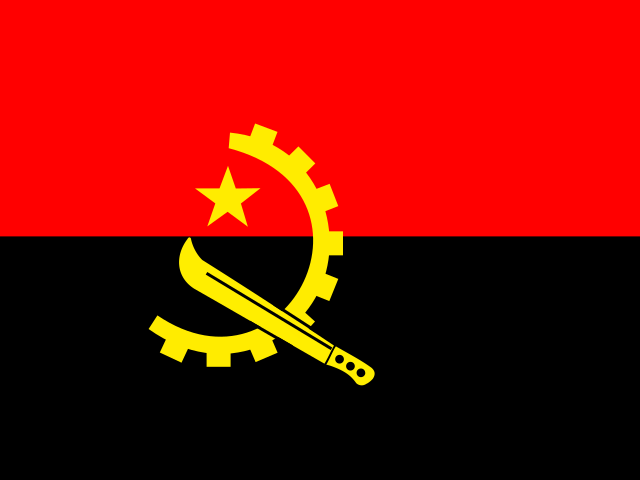 Angola
 Botswana
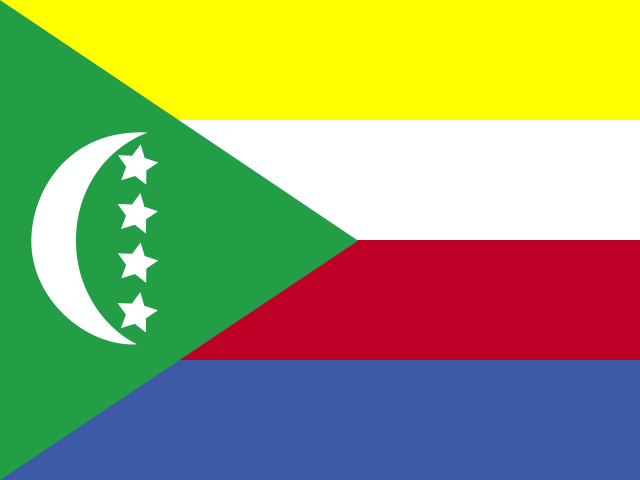 Comoros
 Democratic Republic of the Congo
 Eswatini
 Lesotho
 Madagascar
 Malawi
 Mauritius
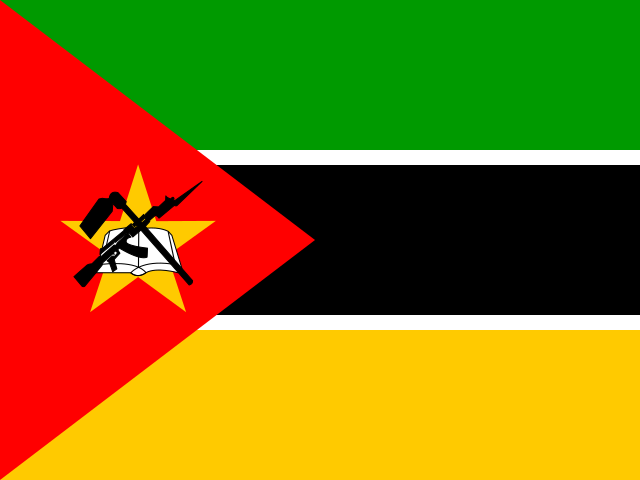 Mozambique
 Namibia
 Seychelles
 South Africa
 Tanzania
 Zambia
 Zimbabwe
Earlier Report Observations
The cottonseed oil market in SADC grew to 68 874 tons in 2019, driven by a substantial increase in domestic production. After a modest decline to 67 265 tons in 2020, the market contracted sharply to 54 395 tons in 2021 and further to 45 143 tons in 2022. A recovery began in 2023, with market volume rising to 52 529 tons, supported by a rebound in production.
This volatility was closely tied to the underlying cotton supply, which is sensitive to weather conditions affecting crop yields. The market recovery in 2023 was bolstered by growing consumer demand for healthier edible oils and the emergence of new applications in cosmetics and personal care products. Concurrently, import and export price fluctuations in key producing nations like South Africa and Tanzania reflected evolving supply-demand balances throughout the period.
Table of content
- 1. Disclaimer
- 2. Terms of use of the report
- 3. Product codes in the statistical classifications used in the report
-
4. Key Market Indicators and Trends
-
4.1. Key Market Indicators
-
4.1.1. In kind
- 4.1.1.1. Production, 2018-2023
- 4.1.1.2. Imports, 2018-2024
- 4.1.1.3. Exports, 2018-2024
- 4.1.1.4. Market size, 2018-2023
-
4.1.1. In kind
- 4.2. Market Trends and Factors
-
4.1. Key Market Indicators
-
5. Production
-
5.1. Production in SADC
- 5.1.1. Annual dynamics of production in SADC in kind, 2018-2023, t
-
5.2. Global production by Country, 2018-2023
- 5.2.1. Annual dynamics of production by macroregions in kind, 2018-2023, t
- 5.2.2. Dynamics of production structure by macroregions in kind, 2018-2023
- 5.2.3. Annual dynamics of production by country in kind, 2018-2023, t
- 5.2.4. Structure of production by countries in kind, 2018-2023
- 5.2.5. Dynamics of peoduction structure by countries in kind, 2018-2023
-
5.1. Production in SADC
-
6. Imports
-
6.1. Imports (Direct Data*)
- 6.1.1. Imports - Total information
-
6.1.2. Imports in kind, t
- 6.1.2.1. Annual dynamics of product's imports to Angola in kind, 2018-2024, t
- 6.1.2.2. Dynamics of product's imports in kind to Angola by countries, 2018-2024, t
- 6.1.2.3. Structure of product's imports in kind by countries, 2018-2024
-
6.1.3. Imports in value, K $ US
- 6.1.3.1. Annual dynamics of product's imports to Angola in value, 2018-2024, K $ US
- 6.1.3.2. Dynamics of product's imports in value to Angola by countries, 2018-2024, K $ US
- 6.1.3.3. Structure of product's imports in value by countries, 2018-2024
-
6.1.4. Average price of product's imports, $ US/t
- 6.1.4.1. Annual dynamics of average price of product's imports to Angola, 2018-2024, $ US/t
- 6.1.4.2. Dynamics of average price of product's imports to Angola by countries, 2018-2024, $ US/t
-
6.2. Imports (Mirror Data)
- 6.2.1. Imports - Total information
-
6.2.2. Imports in kind, t
- 6.2.2.1. Annual dynamics of product's imports to Angola in kind, 2018-2024, t
- 6.2.2.2. Dynamics of product's imports in kind to Angola by countries, 2018-2024, t
- 6.2.2.3. Structure of product's imports in kind by countries, 2018-2024
-
6.2.3. Imports in value, K $ US
- 6.2.3.1. Annual dynamics of product's imports to Angola in value, 2018-2024, K $ US
- 6.2.3.2. Dynamics of product's imports in value to Angola by countries, 2018-2024, K $ US
- 6.2.3.3. Structure of product's imports in value by countries, 2018-2024
-
6.2.4. Average price of product's imports, $ US/t
- 6.2.4.1. Annual dynamics of average price of product's imports to Angola, 2018-2024, $ US/t
- 6.2.4.2. Dynamics of average price of product's imports to Angola by countries, 2018-2024, $ US/t
-
6.1. Imports (Direct Data*)
-
7. Exports
-
7.1. Exports (Direct Data*)
- 7.1.1. Exports - Total information
-
7.1.2. Exports in kind, t
- 7.1.2.1. Annual dynamics of product's exports from Angola in kind, 2018-2024, t
- 7.1.2.2. Dynamics of product's exports in kind from Angola by countries, 2018-2024, t
- 7.1.2.3. Structure of product's exports in kind by countries, 2018-2024
-
7.1.3. Exports in value, K $ US
- 7.1.3.1. Annual dynamics of product's exports from Angola in value, 2018-2024, K $ US
- 7.1.3.2. Dynamics of product's exports in value from Angola by countries, 2018-2024, K $ US
- 7.1.3.3. Structure of product's exports in value by countries, 2018-2024
-
7.1.4. Average price of product's exports, $ US/t
- 7.1.4.1. Annual dynamics of average price of product's exports from Angola, 2018-2024, $ US/t
- 7.1.4.2. Dynamics of average price of product's exports from Angola by countries, 2018-2024, $ US/t
-
7.2. Exports (Mirror Data)
- 7.2.1. Exports - Total information
-
7.2.2. Exports in kind, t
- 7.2.2.1. Annual dynamics of product's exports from Angola in kind, 2018-2024, t
- 7.2.2.2. Dynamics of product's exports in kind from Angola by countries, 2018-2024, t
- 7.2.2.3. Structure of product's exports in kind by countries, 2018-2024
-
7.2.3. Exports in value, K $ US
- 7.2.3.1. Annual dynamics of product's exports from Angola in value, 2018-2024, K $ US
- 7.2.3.2. Dynamics of product's exports in value from Angola by countries, 2018-2024, K $ US
- 7.2.3.3. Structure of product's exports in value by countries, 2018-2024
-
7.2.4. Average price of product's exports, $ US/t
- 7.2.4.1. Annual dynamics of average price of product's exports from Angola, 2018-2024, $ US/t
- 7.2.4.2. Dynamics of average price of product's exports from Angola by countries, 2018-2024, $ US/t
-
7.1. Exports (Direct Data*)
-
8. Trade balance
-
8.1. Trade balance (Direct Data)
- 8.1.1. In kind, t
- 8.1.2. In value, K $ US
-
8.2. Trade balance (Mirror Data)
- 8.2.1. In kind, t
- 8.2.2. In value, K $ US
-
8.1. Trade balance (Direct Data)
-
9. Top buying and selling countries, 2018-2024
-
9.1. Direct Data
- 9.1.1. Import in Value by Countries-buyers
- 9.1.2. Export in Value by Countries-suppliers
-
9.2. Mirror Data
- 9.2.1. Import in Value by Countries-buyers
- 9.2.2. Export in Value by Countries-suppliers
-
9.1. Direct Data
Production cottonseed oil and fractions in SADC
In kind, 2017-2020, t
Top producers of cottonseed oil and fractions, 2017-2020
World map of production of cottonseed oil and fractions, 2017-2020
SADC's cottonseed oil and fractions production has grown for the third year in a row. In 2020, the region produced 72 385 tonnes, marking an 8.2% increase from the previous year. Looking at the period from 2017 to 2020, production rose by 70.8%, which translates to an average annual growth rate of 19.5%.
Annual dynamics of production in SADC in kind, 2017-2020, t
| Parameter | 2018 | 2019 | 2020 | CAGR | |
|---|---|---|---|---|---|
| 1 | Change from last year | 26.5% | 24.8% | 8.2% | 19.5% |
Exports cottonseed oil and fractions from SADC
Exports in kind, t
The export market for cottonseed oil and fractions in SADC experienced significant volatility during the observed period. Exports reached their lowest point in 2017 and peaked in 2020, with a 13.8-fold difference between these years. In 2020, exports totaled 8 781 tonnes, showing a substantial improvement of 98.5% compared to 2019. The largest decline occurred in 2019, at 23.6%, while the most significant increase was recorded in 2018, with a surge of 807.2%.
Annual dynamics of product's exports from SADC in kind, 2017-2020, t
| Parameter | 2018 | 2019 | 2020 | CAGR | |
|---|---|---|---|---|---|
| 1 | Change from last year | 807.2% | (23.6%) | 98.5% | 139.6% |
From 2017 to 2020, Saudi Arabia and Ethiopia consistently served as the primary markets for SADC's cottonseed oil and fractions exports in kind, together accounting for 15.3% of total export flows.
Structure of product's exports in kind by countries, 2017-2020
World map of product's exports from SADC in kind, 2017-2020
Exports in value, K $ US
SADC's cottonseed oil and fractions exports in value terms have increased for the second consecutive year. In 2020, exports reached 12 852 thousand US dollars, reflecting a strong advance of 40.1% compared to 2019. Over the 2017-2020 period, exports grew by 30.6%, with a compound annual growth rate of 9.3%. The minimum value was recorded in 2018 at 7 220 thousand US dollars, which also saw the largest decline of 26.6%.
Annual dynamics of product's exports from SADC in value, 2017-2020, K $ US
| Parameter | 2018 | 2019 | 2020 | CAGR | |
|---|---|---|---|---|---|
| 1 | Change from last year | (26.6%) | 27.0% | 40.1% | 9.3% |
During 2017-2020, Ethiopia and Saudi Arabia remained the key destinations for SADC's cottonseed oil and fractions exports in value terms, with a combined share of 6.2% of total export flows.
Structure of product's exports in value by countries, 2017-2020
World map of product's exports from SADC in value, 2017-2020
Imports cottonseed oil and fractions to SADC
Imports in kind, t
SADC's cottonseed oil and fractions import volume has declined for the third consecutive year. In 2020, imports stood at 3 661 tonnes, reflecting a sharp decrease of 43.0% compared to the previous year. Over the 2017-2020 period, imports fell by 69.4%, with a compound annual decline rate of 32.6%.
Annual dynamics of product's imports to SADC in kind, 2017-2020, t
| Parameter | 2018 | 2019 | 2020 | CAGR | |
|---|---|---|---|---|---|
| 1 | Change from last year | (10.4%) | (40.0%) | (43.0%) | (32.6%) |
From 2017 to 2020, Argentina, the United States, and Brazil were the principal sources for SADC's cottonseed oil and fractions imports in kind. Argentina accounted for 42.4% of imports, the United States for 17.9%, and Brazil for 5.7%, jointly making up 65.9% of total import flows.
Structure of product's imports in kind by countries, 2017-2020
World map of product's imports to SADC in kind, 2017-2020
Imports in value, K $ US
The value of cottonseed oil and fractions imports to SADC has declined for the third year in a row. In 2020, imports amounted to 3 621 thousand US dollars, corresponding to a dramatic drop of 44.1% year-over-year. Over the 2017-2020 period, imports decreased by 69.9%, with a compound annual decline rate of 33.0%.
Annual dynamics of product's imports to SADC in value, 2017-2020, K $ US
| Parameter | 2018 | 2019 | 2020 | CAGR | |
|---|---|---|---|---|---|
| 1 | Change from last year | (15.5%) | (36.3%) | (44.1%) | (33.0%) |
In 2017-2020, the leading sources for cottonseed oil and fractions imports to SADC in value terms were Argentina, the United States, and Brazil. Argentina contributed 35.9% of imports, the United States 17.6%, and Brazil 5.8%, together accounting for 59.3% of total import flows.
Structure of product's imports in value by countries, 2017-2020
World map of product's imports to SADC in value, 2017-2020
Related Reports
Cottonseed oil and fractions market in CIS
2026-03-28
Cottonseed oil and fractions market in Mali
2026-03-28

Lard and poultry fats market in SADC
2026-03-28

Sesame oil and fractions market in SADC
2026-03-28

Groundnut oil and fractions market in SADC
2026-03-28

In-depth market research on this product
Global Cottonseed Oil Market 2021–2031: Size, Share, Trends and Forecast
Global market report: size, trends and forecast to 2031 · 186 pages
Why Choose Us?
Only Verified Data
No Hidden Costs or Separate Fees
Smarter Subscription Pricing
Contact Our Team
Submit your inquiry using the form below — our team will get back to you within 24 hours.