






"Middle Africa" region includes following countries:
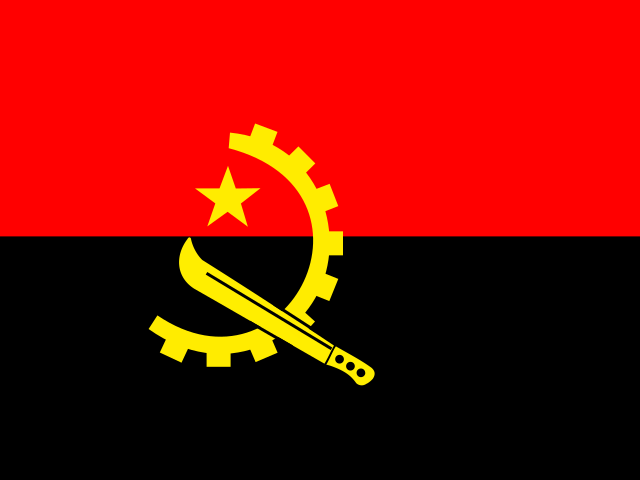 Angola
 Cameroon
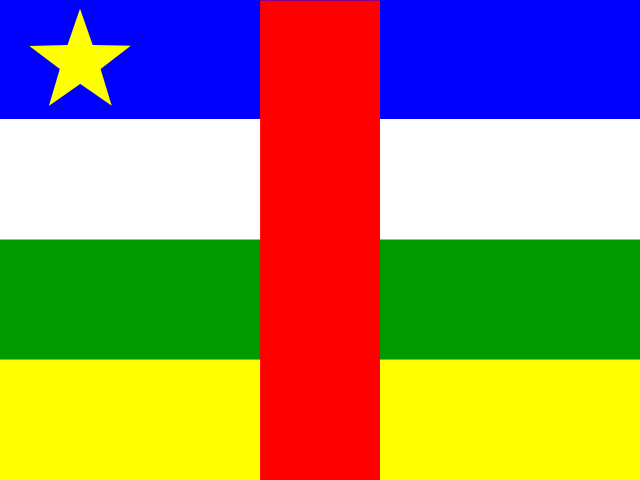 Central African Republic
 Chad
Chad Congo
Congo Democratic Republic of the Congo
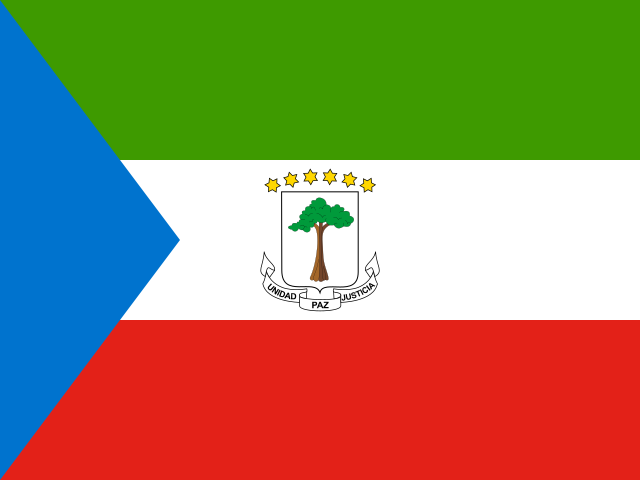 Equatorial Guinea
 Gabon
Gabon Sao Tome and Principe
Earlier Report Observations
From 2018 to 2020, the ginger market volume in Middle Africa grew from 50 thousand tons to over 55 thousand tons. This increase was supported by rising export activity from the Democratic Republic of Congo in 2019 and accelerated significantly during the Covid-19 pandemic, as consumers sought ginger for its perceived health benefits, boosting demand across the region.
After peaking in 2020, the market volume stabilized in 2021 and then declined to 52.8 thousand tons by 2023. This downturn was driven by severe supply-side constraints, including a fungal disease that damaged production in Cameroon's main growing area and a dramatic drop in output from Nigeria, which limited overall availability and contributed to the market contraction.
In 2024, industry attention turned to structural challenges and opportunities, with investment plans to develop processing infrastructure and projects aimed at empowering women farmers in Côte d'Ivoire, while competition from Chinese imports and post-Covid demand dynamics continued to shape the market environment.
Table of content
- 1. Disclaimer
- 2. Terms of use of the report
- 3. Product codes in the statistical classifications used in the report
-
4. Key Market Indicators and Trends
-
4.1. Key Market Indicators
-
4.1.1. In kind
- 4.1.1.1. Production, 2018-2023
- 4.1.1.2. Imports, 2018-2024
- 4.1.1.3. Exports, 2018-2024
- 4.1.1.4. Market size, 2018-2023
-
4.1.1. In kind
- 4.2. Market Trends and Factors
-
4.1. Key Market Indicators
-
5. Production
-
5.1. Production in Middle Africa
- 5.1.1. Annual dynamics of production in Middle Africa in kind, 2018-2023, t
-
5.2. Global production by Country, 2018-2023
- 5.2.1. Annual dynamics of production by macroregions in kind, 2018-2023, t
- 5.2.2. Dynamics of production structure by macroregions in kind, 2018-2023
- 5.2.3. Annual dynamics of production by country in kind, 2018-2023, t
- 5.2.4. Structure of production by countries in kind, 2018-2023
- 5.2.5. Dynamics of peoduction structure by countries in kind, 2018-2023
-
5.1. Production in Middle Africa
-
6. Imports
-
6.1. Imports (Direct Data*)
- 6.1.1. Imports - Total information
-
6.1.2. Imports in kind, t
- 6.1.2.1. Annual dynamics of product's imports to Angola in kind, 2018-2024, t
- 6.1.2.2. Dynamics of product's imports in kind to Angola by countries, 2018-2024, t
- 6.1.2.3. Structure of product's imports in kind by countries, 2018-2024
-
6.1.3. Imports in value, K $ US
- 6.1.3.1. Annual dynamics of product's imports to Angola in value, 2018-2024, K $ US
- 6.1.3.2. Dynamics of product's imports in value to Angola by countries, 2018-2024, K $ US
- 6.1.3.3. Structure of product's imports in value by countries, 2018-2024
-
6.1.4. Average price of product's imports, $ US/t
- 6.1.4.1. Annual dynamics of average price of product's imports to Angola, 2018-2024, $ US/t
- 6.1.4.2. Dynamics of average price of product's imports to Angola by countries, 2018-2024, $ US/t
-
6.2. Imports (Mirror Data)
- 6.2.1. Imports - Total information
-
6.2.2. Imports in kind, t
- 6.2.2.1. Annual dynamics of product's imports to Angola in kind, 2018-2024, t
- 6.2.2.2. Dynamics of product's imports in kind to Angola by countries, 2018-2024, t
- 6.2.2.3. Structure of product's imports in kind by countries, 2018-2024
-
6.2.3. Imports in value, K $ US
- 6.2.3.1. Annual dynamics of product's imports to Angola in value, 2018-2024, K $ US
- 6.2.3.2. Dynamics of product's imports in value to Angola by countries, 2018-2024, K $ US
- 6.2.3.3. Structure of product's imports in value by countries, 2018-2024
-
6.2.4. Average price of product's imports, $ US/t
- 6.2.4.1. Annual dynamics of average price of product's imports to Angola, 2018-2024, $ US/t
- 6.2.4.2. Dynamics of average price of product's imports to Angola by countries, 2018-2024, $ US/t
-
6.1. Imports (Direct Data*)
-
7. Exports
-
7.1. Exports (Direct Data*)
- 7.1.1. Exports - Total information
-
7.1.2. Exports in kind, t
- 7.1.2.1. Annual dynamics of product's exports from Angola in kind, 2018-2024, t
- 7.1.2.2. Dynamics of product's exports in kind from Angola by countries, 2018-2024, t
- 7.1.2.3. Structure of product's exports in kind by countries, 2018-2024
-
7.1.3. Exports in value, K $ US
- 7.1.3.1. Annual dynamics of product's exports from Angola in value, 2018-2024, K $ US
- 7.1.3.2. Dynamics of product's exports in value from Angola by countries, 2018-2024, K $ US
- 7.1.3.3. Structure of product's exports in value by countries, 2018-2024
-
7.1.4. Average price of product's exports, $ US/t
- 7.1.4.1. Annual dynamics of average price of product's exports from Angola, 2018-2024, $ US/t
- 7.1.4.2. Dynamics of average price of product's exports from Angola by countries, 2018-2024, $ US/t
-
7.2. Exports (Mirror Data)
- 7.2.1. Exports - Total information
-
7.2.2. Exports in kind, t
- 7.2.2.1. Annual dynamics of product's exports from Angola in kind, 2018-2024, t
- 7.2.2.2. Dynamics of product's exports in kind from Angola by countries, 2018-2024, t
- 7.2.2.3. Structure of product's exports in kind by countries, 2018-2024
-
7.2.3. Exports in value, K $ US
- 7.2.3.1. Annual dynamics of product's exports from Angola in value, 2018-2024, K $ US
- 7.2.3.2. Dynamics of product's exports in value from Angola by countries, 2018-2024, K $ US
- 7.2.3.3. Structure of product's exports in value by countries, 2018-2024
-
7.2.4. Average price of product's exports, $ US/t
- 7.2.4.1. Annual dynamics of average price of product's exports from Angola, 2018-2024, $ US/t
- 7.2.4.2. Dynamics of average price of product's exports from Angola by countries, 2018-2024, $ US/t
-
7.1. Exports (Direct Data*)
-
8. Trade balance
-
8.1. Trade balance (Direct Data)
- 8.1.1. In kind, t
- 8.1.2. In value, K $ US
-
8.2. Trade balance (Mirror Data)
- 8.2.1. In kind, t
- 8.2.2. In value, K $ US
-
8.1. Trade balance (Direct Data)
-
9. Top buying and selling countries, 2018-2024
-
9.1. Direct Data
- 9.1.1. Import in Value by Countries-buyers
- 9.1.2. Export in Value by Countries-suppliers
-
9.2. Mirror Data
- 9.2.1. Import in Value by Countries-buyers
- 9.2.2. Export in Value by Countries-suppliers
-
9.1. Direct Data
Production ginger in Middle Africa
In kind, 2017-2020, t
Top producers of ginger, 2017-2020
World map of production of ginger, 2017-2020
Ginger production in Middle Africa has increased for the third consecutive year. In 2020, the region produced 55 428 tonnes of ginger, marking an 8.6% increase compared to 2019. From 2017 to 2020, production grew by 23.2%, which translates to an average annual growth rate of 7.2%.
Annual dynamics of production in Middle Africa in kind, 2017-2020, t
| Parameter | 2018 | 2019 | 2020 | CAGR | |
|---|---|---|---|---|---|
| 1 | Change from last year | 11.0% | 2.2% | 8.6% | 7.2% |
Exports ginger from Middle Africa
Exports in kind, t
The export market for ginger from Middle Africa showed significant volatility during this period. Volumes reached their lowest point in 2018 at 9.1 tonnes and peaked in 2020 at 32.1 tonnes, representing a 3.5-fold increase. In 2020, exports surged by 56.8% year-over-year. The largest decline occurred in 2018, with a drop of 58.2%, while the most substantial increase was recorded in 2019, at 123.8%.
Annual dynamics of product's exports from Middle Africa in kind, 2017-2020, t
| Parameter | 2018 | 2019 | 2020 | CAGR | |
|---|---|---|---|---|---|
| 1 | Change from last year | (58.2%) | 123.8% | 56.8% | 13.6% |
From 2017 to 2020, the main destinations for ginger exports from Middle Africa were France, accounting for 42.9% of exports in kind, the United States with 8.5%, and Belgium at 7.9%. Together, these three countries represented 59.3% of total export flows.
Structure of product's exports in kind by countries, 2017-2020
World map of product's exports from Middle Africa in kind, 2017-2020
Exports in value, K $ US
The value of ginger exports from Middle Africa displayed an unstable trend over the timeframe. Exports hit a low in 2018 at 5.1 thousand US dollars and peaked in 2019 at 32.9 thousand US dollars, showing a 6.4-fold difference. In 2020, exports amounted to 22.0 thousand US dollars, reflecting a 33.1% decline compared to the previous year. The largest decrease was in 2018, at 55.1%, while the most significant increase occurred in 2019, soaring by 542.1%.
Annual dynamics of product's exports from Middle Africa in value, 2017-2020, K $ US
| Parameter | 2018 | 2019 | 2020 | CAGR | |
|---|---|---|---|---|---|
| 1 | Change from last year | (55.1%) | 542.1% | (33.1%) | 24.5% |
Between 2017 and 2020, the geographical structure of ginger exports in value terms was highly diversified. France led with 22.6% of exports, followed by Senegal at 16.5%, and Belgium with 2.2%. These three countries together accounted for 41.3% of total flows, while the remaining 58.7% was distributed among numerous smaller partner countries.
Structure of product's exports in value by countries, 2017-2020
World map of product's exports from Middle Africa in value, 2017-2020
Imports ginger to Middle Africa
Imports in kind, t
Ginger imports into Middle Africa declined for the third consecutive year. In 2020, the region imported 164.2 tonnes of ginger, which represents a sharp decrease of 31.1% compared to the previous year. From 2017 to 2020, imports fell by 74.3%, equating to an average annual decline of 36.4%.
Annual dynamics of product's imports to Middle Africa in kind, 2017-2020, t
| Parameter | 2018 | 2019 | 2020 | CAGR | |
|---|---|---|---|---|---|
| 1 | Change from last year | (57.2%) | (12.7%) | (31.1%) | (36.4%) |
From 2017 to 2020, China was the leading source of ginger imports into Middle Africa, accounting for 33.6% of imports in kind, followed by South Africa at 27.3%, and Portugal with 24.7%. These three countries together made up 85.7% of total import flows.
Structure of product's imports in kind by countries, 2017-2020
World map of product's imports to Middle Africa in kind, 2017-2020
Imports in value, K $ US
Ginger imports into Middle Africa declined for the third consecutive year. In 2020, the region imported approximately 158.8 thousand US dollars worth of ginger, showing a significant decrease of 35.6% compared to 2019. Over the period from 2017 to 2020, imports decreased by 76.4%, with a compound annual growth rate of -38.2%.
Annual dynamics of product's imports to Middle Africa in value, 2017-2020, K $ US
| Parameter | 2018 | 2019 | 2020 | CAGR | |
|---|---|---|---|---|---|
| 1 | Change from last year | (57.4%) | (14.0%) | (35.6%) | (38.2%) |
Between 2017 and 2020, South Africa was the largest contributor to ginger imports in value terms into Middle Africa, accounting for 32.3%, followed by China at 28.1%, and Portugal with 25.6%. Together, these three countries represented 86.0% of total import flows.
Structure of product's imports in value by countries, 2017-2020
World map of product's imports to Middle Africa in value, 2017-2020
Related Reports





Why Choose Us?
Only Verified Data
No Hidden Costs or Separate Fees
Smarter Subscription Pricing
Contact Our Team
Submit your inquiry using the form below — our team will get back to you within 24 hours.