






"SADC" region includes following countries:
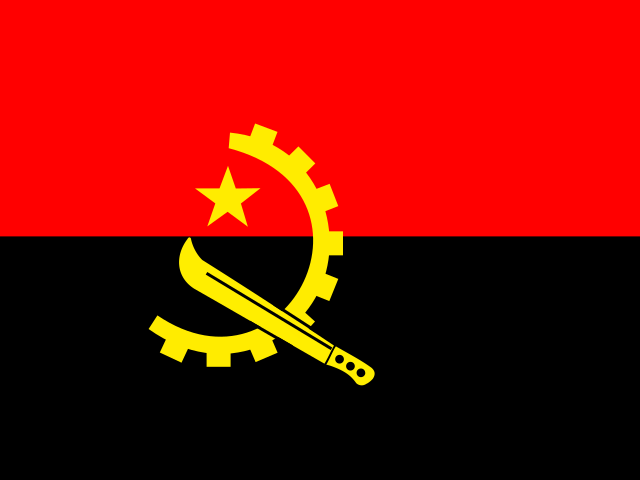 Angola
 Botswana
 Comoros
 Democratic Republic of the Congo
 Eswatini
 Lesotho
 Madagascar
 Malawi
 Mauritius
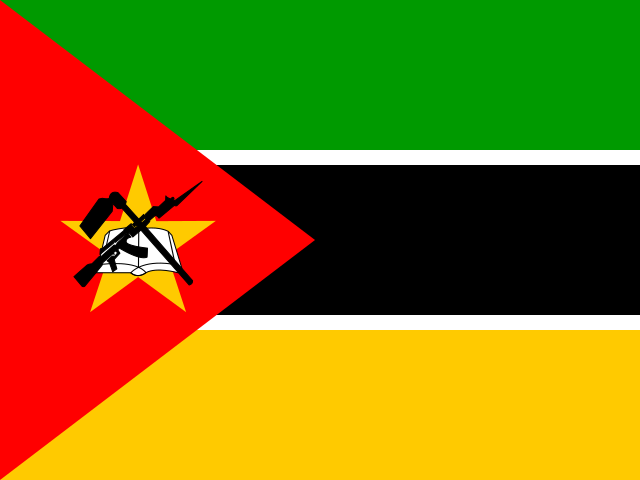 Mozambique
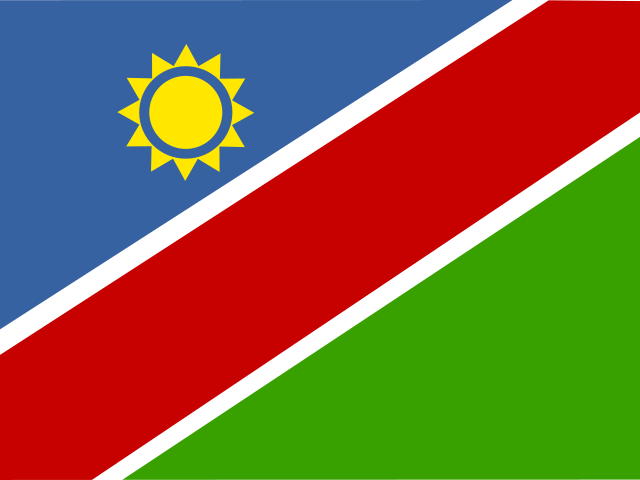 Namibia
 Seychelles
 South Africa
 Tanzania
 Zambia
 Zimbabwe
Earlier Report Observations
The market volume for coffee, husks, skins and substitutes in the SADC region experienced significant fluctuations between 2018 and 2023. Starting at 179 thousand tons in 2018, it dropped to 155 thousand tons in 2019 and further to 125 thousand tons in 2020. A recovery followed, with the market reaching 158 thousand tons in 2022, before declining again to 123 thousand tons in 2023.
In the later part of the period, the market environment began to shift. Within the region, South Africa saw growth in at-home coffee consumption, driving innovation in coffee machines and equipment, alongside a proliferation of coffee shops and specialty roasters catering to evolving tastes. By 2024, adverse weather in major global coffee-producing countries like Brazil and Vietnam led to significant price increases. This period also saw rising consumer demand for specialty coffee, ready-to-drink formats, and a shift toward instant coffee for convenience and cost reasons, shaping the overall market dynamics.
Table of content
- 1. Disclaimer
- 2. Terms of use of the report
- 3. Product codes in the statistical classifications used in the report
-
4. Key Market Indicators and Trends
-
4.1. Key Market Indicators
-
4.1.1. In kind
- 4.1.1.1. Production, 2018-2023
- 4.1.1.2. Imports, 2018-2024
- 4.1.1.3. Exports, 2018-2024
- 4.1.1.4. Market size, 2018-2023
-
4.1.1. In kind
- 4.2. Market Trends and Factors
-
4.1. Key Market Indicators
-
5. Production
-
5.1. Production in SADC
- 5.1.1. Annual dynamics of production in SADC in kind, 2018-2023, K t
-
5.2. Global production by Country, 2018-2023
- 5.2.1. Annual dynamics of production by macroregions in kind, 2018-2023, K t
- 5.2.2. Dynamics of production structure by macroregions in kind, 2018-2023
- 5.2.3. Annual dynamics of production by country in kind, 2018-2023, K t
- 5.2.4. Structure of production by countries in kind, 2018-2023
- 5.2.5. Dynamics of peoduction structure by countries in kind, 2018-2023
-
5.1. Production in SADC
-
6. Imports
-
6.1. Imports (Direct Data*)
- 6.1.1. Imports - Total information
-
6.1.2. Imports in kind, K t
- 6.1.2.1. Annual dynamics of product's imports to Angola in kind, 2018-2024, K t
- 6.1.2.2. Dynamics of product's imports in kind to Angola by countries, 2018-2024, K t
- 6.1.2.3. Structure of product's imports in kind by countries, 2018-2024
-
6.1.3. Imports in value, M $ US
- 6.1.3.1. Annual dynamics of product's imports to Angola in value, 2018-2024, M $ US
- 6.1.3.2. Dynamics of product's imports in value to Angola by countries, 2018-2024, M $ US
- 6.1.3.3. Structure of product's imports in value by countries, 2018-2024
-
6.1.4. Average price of product's imports, $ US/t
- 6.1.4.1. Annual dynamics of average price of product's imports to Angola, 2018-2024, $ US/t
- 6.1.4.2. Dynamics of average price of product's imports to Angola by countries, 2018-2024, $ US/t
-
6.2. Imports (Mirror Data)
- 6.2.1. Imports - Total information
-
6.2.2. Imports in kind, K t
- 6.2.2.1. Annual dynamics of product's imports to Angola in kind, 2018-2024, K t
- 6.2.2.2. Dynamics of product's imports in kind to Angola by countries, 2018-2024, K t
- 6.2.2.3. Structure of product's imports in kind by countries, 2018-2024
-
6.2.3. Imports in value, M $ US
- 6.2.3.1. Annual dynamics of product's imports to Angola in value, 2018-2024, M $ US
- 6.2.3.2. Dynamics of product's imports in value to Angola by countries, 2018-2024, M $ US
- 6.2.3.3. Structure of product's imports in value by countries, 2018-2024
-
6.2.4. Average price of product's imports, $ US/t
- 6.2.4.1. Annual dynamics of average price of product's imports to Angola, 2018-2024, $ US/t
- 6.2.4.2. Dynamics of average price of product's imports to Angola by countries, 2018-2024, $ US/t
-
6.1. Imports (Direct Data*)
-
7. Exports
-
7.1. Exports (Direct Data*)
- 7.1.1. Exports - Total information
-
7.1.2. Exports in kind, K t
- 7.1.2.1. Annual dynamics of product's exports from Angola in kind, 2018-2024, K t
- 7.1.2.2. Dynamics of product's exports in kind from Angola by countries, 2018-2024, K t
- 7.1.2.3. Structure of product's exports in kind by countries, 2018-2024
-
7.1.3. Exports in value, M $ US
- 7.1.3.1. Annual dynamics of product's exports from Angola in value, 2018-2024, M $ US
- 7.1.3.2. Dynamics of product's exports in value from Angola by countries, 2018-2024, M $ US
- 7.1.3.3. Structure of product's exports in value by countries, 2018-2024
-
7.1.4. Average price of product's exports, $ US/t
- 7.1.4.1. Annual dynamics of average price of product's exports from Angola, 2018-2024, $ US/t
- 7.1.4.2. Dynamics of average price of product's exports from Angola by countries, 2018-2024, $ US/t
-
7.2. Exports (Mirror Data)
- 7.2.1. Exports - Total information
-
7.2.2. Exports in kind, K t
- 7.2.2.1. Annual dynamics of product's exports from Angola in kind, 2018-2024, K t
- 7.2.2.2. Dynamics of product's exports in kind from Angola by countries, 2018-2024, K t
- 7.2.2.3. Structure of product's exports in kind by countries, 2018-2024
-
7.2.3. Exports in value, M $ US
- 7.2.3.1. Annual dynamics of product's exports from Angola in value, 2018-2024, M $ US
- 7.2.3.2. Dynamics of product's exports in value from Angola by countries, 2018-2024, M $ US
- 7.2.3.3. Structure of product's exports in value by countries, 2018-2024
-
7.2.4. Average price of product's exports, $ US/t
- 7.2.4.1. Annual dynamics of average price of product's exports from Angola, 2018-2024, $ US/t
- 7.2.4.2. Dynamics of average price of product's exports from Angola by countries, 2018-2024, $ US/t
-
7.1. Exports (Direct Data*)
-
8. Trade balance
-
8.1. Trade balance (Direct Data)
- 8.1.1. In kind, K t
- 8.1.2. In value, M $ US
-
8.2. Trade balance (Mirror Data)
- 8.2.1. In kind, K t
- 8.2.2. In value, M $ US
-
8.1. Trade balance (Direct Data)
-
9. Top buying and selling countries, 2018-2024
-
9.1. Direct Data
- 9.1.1. Import in Value by Countries-buyers
- 9.1.2. Export in Value by Countries-suppliers
-
9.2. Mirror Data
- 9.2.1. Import in Value by Countries-buyers
- 9.2.2. Export in Value by Countries-suppliers
-
9.1. Direct Data
Production coffee, husks, skins and substitutes in SADC
In kind, 2017-2020, K t
Top producers of coffee, husks, skins and substitutes, 2017-2020
World map of production of coffee, husks, skins and substitutes, 2017-2020
After two consecutive years of growth, production of coffee, husks, skins, and substitutes in SADC declined. In 2020, SADC produced 188.1 K t of these products, marking a 15.1% decrease compared to the previous year. Looking at the period from 2017 to 2020, production overall increased by 4.6%, which translates to an average annual growth rate of 1.5%. The peak production was recorded in 2019 at 221.6 K t, with the largest annual increase also occurring that year at 19.4%.
Annual dynamics of production in SADC in kind, 2017-2020, K t
| Parameter | 2018 | 2019 | 2020 | CAGR | |
|---|---|---|---|---|---|
| 1 | Change from last year | 3.1% | 19.4% | (15.1%) | 1.5% |
Exports coffee, husks, skins and substitutes from SADC
Exports in kind, t
Market performance showed significant fluctuations during this period. Exports varied considerably, with a 2.6-fold difference between the low in 2018 and the high in 2019. In 2020, SADC's export volume of coffee, husks, skins, and substitutes amounted to 91 854 t, representing a 2.6% drop year-over-year. The minimum value was recorded in 2018 at 35 905 t, while the maximum was in 2019 at 94 342 t. The largest decline occurred in 2018 at 39.2%, and the largest increase was in 2019 at 162.8%.
Annual dynamics of product's exports from SADC in kind, 2017-2020, t
| Parameter | 2018 | 2019 | 2020 | CAGR | |
|---|---|---|---|---|---|
| 1 | Change from last year | (39.2%) | 162.8% | (2.6%) | 15.8% |
From 2017 to 2020, the country breakdown of exports in kind remained diverse and scattered. Japan accounted for 14.7% of exports in kind, Germany for 12.6%, and Italy for 11.5%. Together, these three partners represented just 38.9% of total flows, with no single country emerging as clearly dominant.
Structure of product's exports in kind by countries, 2017-2020
World map of product's exports from SADC in kind, 2017-2020
Exports in value, M $ US
The data reveals irregular changes, pointing to a volatile market environment. Import levels fluctuated significantly, with a fourfold difference between the low in 2018 and the high in 2020. In 2020, SADC exported 199.2 M $ US of coffee, husks, skins, and substitutes, which remained relatively stable compared to 2019. The minimum value was recorded in 2018 at 50.2 M $ US. The largest decline occurred in 2018 at 72.6%, while the largest increase was in 2019 at 295.8%.
Annual dynamics of product's exports from SADC in value, 2017-2020, M $ US
| Parameter | 2018 | 2019 | 2020 | CAGR | |
|---|---|---|---|---|---|
| 1 | Change from last year | (72.6%) | 295.8% | 0.3% | 2.9% |
The market base for exports in value terms from 2017 to 2020 was broad. Japan accounted for 17.2% of exports in value terms, Germany for 12.3%, and Italy for 8.8%. Collectively, these three countries represented just 38.2% of total flows, with the remaining 61.8% distributed among numerous other nations.
Structure of product's exports in value by countries, 2017-2020
World map of product's exports from SADC in value, 2017-2020
Imports coffee, husks, skins and substitutes to SADC
Imports in kind, t
In 2020, SADC imported 28 972 t of coffee, husks, skins, and substitutes, indicating a moderate increase of 3.6% compared to 2019. The minimum value was recorded in 2019 at 27 972 t, while the maximum was in 2018 at 29 280 t. The largest decline occurred in 2019 at 4.5%.
Annual dynamics of product's imports to SADC in kind, 2017-2020, t
| Parameter | 2018 | 2019 | 2020 | CAGR | |
|---|---|---|---|---|---|
| 1 | Change from last year | 1.2% | (4.5%) | 3.6% | 0.0% |
The partner structure of imports in kind from 2017 to 2020 remained fragmented. Brazil accounted for 25.2% of imports in kind, Vietnam for 16.0%, and Indonesia for 7.0%. Together, these three countries represented only 48.2% of total flows, with no single nation holding a dominant share.
Structure of product's imports in kind by countries, 2017-2020
World map of product's imports to SADC in kind, 2017-2020
Imports in value, M $ US
SADC's import volume of coffee, husks, skins, and substitutes declined for the second consecutive year. In 2020, imports stood at 101.6 M $ US, reflecting a modest decline of 9.7% compared with 2019. Over the period from 2017 to 2020, imports decreased by 18.1%, equating to an average annual decline of 6.4%. The maximum value was recorded in 2018 at 130.8 M $ US. The largest decline occurred in 2019 at 14.0%, while the largest increase was in 2018 at 5.4%.
Annual dynamics of product's imports to SADC in value, 2017-2020, M $ US
| Parameter | 2018 | 2019 | 2020 | CAGR | |
|---|---|---|---|---|---|
| 1 | Change from last year | 5.4% | (14.0%) | (9.7%) | (6.4%) |
Data for 2017–2020 indicate that imports in value terms of coffee, husks, skins, and substitutes to SADC were not concentrated on a few key destinations. Switzerland accounted for 15.6% of imports in value terms, Brazil for 13.4%, and Vietnam for 8.6%. Together, these three countries represented only 37.6% of total flows.
Structure of product's imports in value by countries, 2017-2020
World map of product's imports to SADC in value, 2017-2020
Related Reports





Why Choose Us?
Only Verified Data
No Hidden Costs or Separate Fees
Smarter Subscription Pricing
Contact Our Team
Submit your inquiry using the form below — our team will get back to you within 24 hours.