






"SADC" region includes following countries:
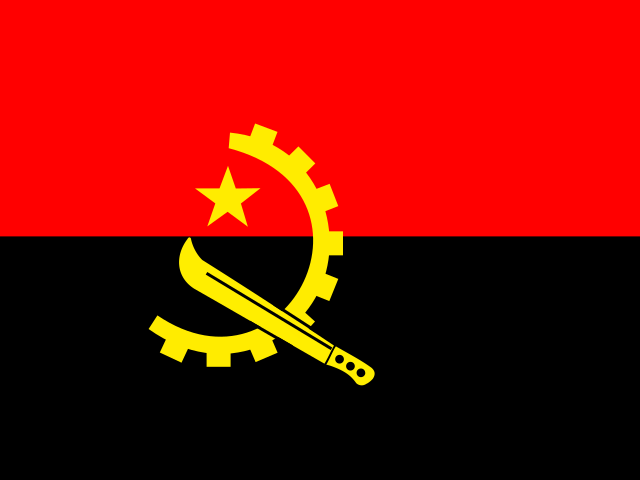 Angola
 Botswana
 Comoros
 Democratic Republic of the Congo
 Eswatini
 Lesotho
 Madagascar
 Malawi
 Mauritius
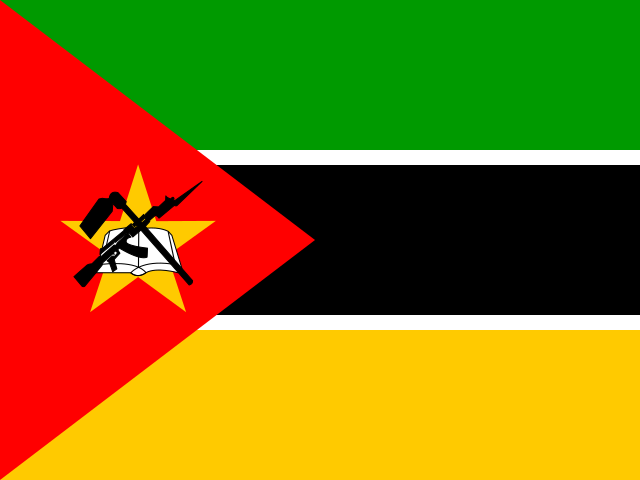 Mozambique
 Namibia
 Seychelles
 South Africa
 Tanzania
 Zambia
 Zimbabwe
Earlier Report Observations
The brown rice market in SADC contracted from 2 435 thousand tons in 2018 to 2 299 thousand tons in 2020. This decline was primarily influenced by adverse climatic conditions that reduced rice yields and constrained production across the region. The COVID-19 pandemic in 2020 further disrupted supply chains, although rising consumer interest in healthy foods like brown rice during this period helped stabilize market volume.
Market growth resumed strongly from 2021, with volume reaching 2 840 thousand tons by 2023. Regulatory shifts promoting healthy eating policies in several countries boosted demand for brown rice. Simultaneously, the expansion of modern distribution channels, including supermarkets and e-commerce platforms, significantly improved product accessibility for consumers.
This expansion was supported by key industry developments, including the launch of new organic and ready-to-cook brown rice variants by major companies like KRBL Limited. The entry of new players and continuous product innovation, catering to health-conscious and time-poor consumers, further stimulated market growth during these years.
Table of content
- 1. Disclaimer
- 2. Terms of use of the report
- 3. Product codes in the statistical classifications used in the report
-
4. Key Market Indicators and Trends
-
4.1. Key Market Indicators
-
4.1.1. In kind
- 4.1.1.1. Production, 2018-2023
- 4.1.1.2. Imports, 2018-2024
- 4.1.1.3. Exports, 2018-2024
- 4.1.1.4. Market size, 2018-2023
-
4.1.1. In kind
- 4.2. Market Trends and Factors
-
4.1. Key Market Indicators
-
5. Production
-
5.1. Production in SADC
- 5.1.1. Annual dynamics of production in SADC in kind, 2018-2023, K t
-
5.2. Global production by Country, 2018-2023
- 5.2.1. Annual dynamics of production by macroregions in kind, 2018-2023, K t
- 5.2.2. Dynamics of production structure by macroregions in kind, 2018-2023
- 5.2.3. Annual dynamics of production by country in kind, 2018-2023, K t
- 5.2.4. Structure of production by countries in kind, 2018-2023
- 5.2.5. Dynamics of peoduction structure by countries in kind, 2018-2023
-
5.1. Production in SADC
-
6. Imports
-
6.1. Imports (Direct Data*)
- 6.1.1. Imports - Total information
-
6.1.2. Imports in kind, K t
- 6.1.2.1. Annual dynamics of product's imports to Angola in kind, 2018-2024, K t
- 6.1.2.2. Dynamics of product's imports in kind to Angola by countries, 2018-2024, K t
- 6.1.2.3. Structure of product's imports in kind by countries, 2018-2024
-
6.1.3. Imports in value, M $ US
- 6.1.3.1. Annual dynamics of product's imports to Angola in value, 2018-2024, M $ US
- 6.1.3.2. Dynamics of product's imports in value to Angola by countries, 2018-2024, M $ US
- 6.1.3.3. Structure of product's imports in value by countries, 2018-2024
-
6.1.4. Average price of product's imports, $ US/t
- 6.1.4.1. Annual dynamics of average price of product's imports to Angola, 2018-2024, $ US/t
- 6.1.4.2. Dynamics of average price of product's imports to Angola by countries, 2018-2024, $ US/t
-
6.2. Imports (Mirror Data)
- 6.2.1. Imports - Total information
-
6.2.2. Imports in kind, K t
- 6.2.2.1. Annual dynamics of product's imports to Angola in kind, 2018-2024, K t
- 6.2.2.2. Dynamics of product's imports in kind to Angola by countries, 2018-2024, K t
- 6.2.2.3. Structure of product's imports in kind by countries, 2018-2024
-
6.2.3. Imports in value, M $ US
- 6.2.3.1. Annual dynamics of product's imports to Angola in value, 2018-2024, M $ US
- 6.2.3.2. Dynamics of product's imports in value to Angola by countries, 2018-2024, M $ US
- 6.2.3.3. Structure of product's imports in value by countries, 2018-2024
-
6.2.4. Average price of product's imports, $ US/t
- 6.2.4.1. Annual dynamics of average price of product's imports to Angola, 2018-2024, $ US/t
- 6.2.4.2. Dynamics of average price of product's imports to Angola by countries, 2018-2024, $ US/t
-
6.1. Imports (Direct Data*)
-
7. Exports
-
7.1. Exports (Direct Data*)
- 7.1.1. Exports - Total information
-
7.1.2. Exports in kind, K t
- 7.1.2.1. Annual dynamics of product's exports from Angola in kind, 2018-2024, K t
- 7.1.2.2. Dynamics of product's exports in kind from Angola by countries, 2018-2024, K t
- 7.1.2.3. Structure of product's exports in kind by countries, 2018-2024
-
7.1.3. Exports in value, M $ US
- 7.1.3.1. Annual dynamics of product's exports from Angola in value, 2018-2024, M $ US
- 7.1.3.2. Dynamics of product's exports in value from Angola by countries, 2018-2024, M $ US
- 7.1.3.3. Structure of product's exports in value by countries, 2018-2024
-
7.1.4. Average price of product's exports, $ US/t
- 7.1.4.1. Annual dynamics of average price of product's exports from Angola, 2018-2024, $ US/t
- 7.1.4.2. Dynamics of average price of product's exports from Angola by countries, 2018-2024, $ US/t
-
7.2. Exports (Mirror Data)
- 7.2.1. Exports - Total information
-
7.2.2. Exports in kind, K t
- 7.2.2.1. Annual dynamics of product's exports from Angola in kind, 2018-2024, K t
- 7.2.2.2. Dynamics of product's exports in kind from Angola by countries, 2018-2024, K t
- 7.2.2.3. Structure of product's exports in kind by countries, 2018-2024
-
7.2.3. Exports in value, M $ US
- 7.2.3.1. Annual dynamics of product's exports from Angola in value, 2018-2024, M $ US
- 7.2.3.2. Dynamics of product's exports in value from Angola by countries, 2018-2024, M $ US
- 7.2.3.3. Structure of product's exports in value by countries, 2018-2024
-
7.2.4. Average price of product's exports, $ US/t
- 7.2.4.1. Annual dynamics of average price of product's exports from Angola, 2018-2024, $ US/t
- 7.2.4.2. Dynamics of average price of product's exports from Angola by countries, 2018-2024, $ US/t
-
7.1. Exports (Direct Data*)
-
8. Trade balance
-
8.1. Trade balance (Direct Data)
- 8.1.1. In kind, K t
- 8.1.2. In value, M $ US
-
8.2. Trade balance (Mirror Data)
- 8.2.1. In kind, K t
- 8.2.2. In value, M $ US
-
8.1. Trade balance (Direct Data)
-
9. Top buying and selling countries, 2018-2024
-
9.1. Direct Data
- 9.1.1. Import in Value by Countries-buyers
- 9.1.2. Export in Value by Countries-suppliers
-
9.2. Mirror Data
- 9.2.1. Import in Value by Countries-buyers
- 9.2.2. Export in Value by Countries-suppliers
-
9.1. Direct Data
Production brown rice in SADC
In kind, 2017-2020, K t
Top producers of brown rice, 2017-2020
World map of production of brown rice, 2017-2020
SADC's brown rice production declined for the second year in a row. In 2020, production stood at 2 221 thousand tonnes, remaining relatively stable compared to 2019. Looking at the period from 2017 to 2020, production grew by 10.1%, which translates to an average annual increase of 3.3%. The highest production level was recorded in 2018 at 2 251 thousand tonnes. The largest year-on-year decline occurred in 2019 at 0.8%, while the biggest increase was seen in 2018 with an 11.6% rise.
Annual dynamics of production in SADC in kind, 2017-2020, K t
| Parameter | 2018 | 2019 | 2020 | CAGR | |
|---|---|---|---|---|---|
| 1 | Change from last year | 11.6% | (0.8%) | (0.5%) | 3.3% |
Exports brown rice from SADC
Exports in kind, K t
SADC's brown rice exports have increased for the third consecutive year. In 2020, exports reached 3.2 thousand tonnes, marking a 29.0% year-on-year growth. From 2017 to 2020, exports surged by 272.9%, averaging an impressive 55.1% annual increase over this period.
Annual dynamics of product's exports from SADC in kind, 2017-2020, K t
| Parameter | 2018 | 2019 | 2020 | CAGR | |
|---|---|---|---|---|---|
| 1 | Change from last year | 112.4% | 36.1% | 29.0% | 55.1% |
Between 2017 and 2020, SADC's brown rice exports were distributed across numerous markets. The top three destinations—Burundi (17.8% of exports), Kenya (8.9%), and South Sudan (4.7%)—collectively accounted for just 31.4% of total export volumes.
Structure of product's exports in kind by countries, 2017-2020
World map of product's exports from SADC in kind, 2017-2020
Exports in value, M $ US
The market showed significant volatility during these years. Exports reached their lowest point in 2017 and peaked in 2020, with a 4.4-fold difference between these two years. In 2020, the value of brown rice exports from SADC amounted to 3.3 million US dollars, representing a sharp 96.1% increase compared to the previous year. The largest decline occurred in 2019 at 20.8%, while the biggest increase was recorded in 2018 with a substantial 185.8% rise.
Annual dynamics of product's exports from SADC in value, 2017-2020, M $ US
| Parameter | 2018 | 2019 | 2020 | CAGR | |
|---|---|---|---|---|---|
| 1 | Change from last year | 185.8% | (20.8%) | 96.1% | 64.4% |
From 2017 to 2020, the export structure in value terms was relatively balanced rather than concentrated. The top three partners—Burundi (20.7% of export value), Kenya (16.1%), and the United Arab Emirates (1.7%)—together represented 38.6% of total flows, with many other countries accounting for the remaining 61.4%.
Structure of product's exports in value by countries, 2017-2020
World map of product's exports from SADC in value, 2017-2020
Imports brown rice to SADC
Imports in kind, K t
Market performance showed noticeable fluctuations during this period. Imports bottomed in 2017 and peaked in 2018, with a 6.4-fold difference between these years. In 2020, SADC imported approximately 80.9 thousand tonnes of brown rice, marking a significant 15.0% drop compared to the previous year. The highest import volume was recorded in 2018 at 185.7 thousand tonnes. The largest decline occurred in 2019 at 48.7%, while the biggest increase was seen in 2018 with a remarkable 543.6% surge.
Annual dynamics of product's imports to SADC in kind, 2017-2020, K t
| Parameter | 2018 | 2019 | 2020 | CAGR | |
|---|---|---|---|---|---|
| 1 | Change from last year | 543.6% | (48.7%) | (15.0%) | 41.0% |
Between 2017 and 2020, Thailand was the dominant source for brown rice imports to SADC, accounting for 70.9% of total import volumes, while other countries played a much smaller role.
Structure of product's imports in kind by countries, 2017-2020
World map of product's imports to SADC in kind, 2017-2020
Imports in value, M $ US
The market exhibited an unstable trend throughout this timeframe. Imports reached their lowest point in 2017 and peaked in 2018, showing a 6.4-fold difference. In 2020, SADC imported approximately 55.6 million US dollars worth of brown rice, representing a 4.3% increase compared to the previous year. The highest import value was recorded in 2018 at 119.4 million US dollars. The largest decline occurred in 2019 at 55.3%, while the biggest increase was seen in 2018 with a substantial 541.3% rise.
Annual dynamics of product's imports to SADC in value, 2017-2020, M $ US
| Parameter | 2018 | 2019 | 2020 | CAGR | |
|---|---|---|---|---|---|
| 1 | Change from last year | 541.3% | (55.3%) | 4.3% | 44.0% |
From 2017 to 2020, Thailand accounted for 80.9% of the total value of brown rice imports to SADC, with the remainder spread across a wide range of smaller markets.
Structure of product's imports in value by countries, 2017-2020
World map of product's imports to SADC in value, 2017-2020
Related Reports
Brown rice market in Burkina Faso
2026-03-28
2026-03-28
2026-03-28
Brown rice market in Middle Africa
2026-03-28

Wheat and meslin market in SADC
2026-03-28

2026-03-28

2026-03-28

2026-03-28
Why Choose Us?
Only Verified Data
No Hidden Costs or Separate Fees
Smarter Subscription Pricing
Contact Our Team
Submit your inquiry using the form below — our team will get back to you within 24 hours.