






"Northern Africa" region includes following countries:
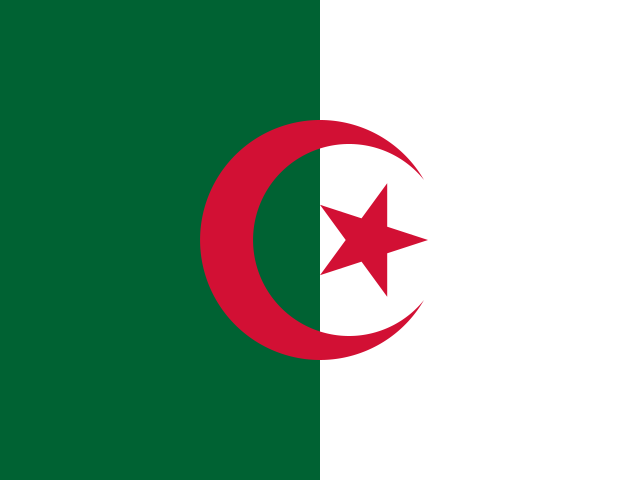 Algeria
 Libya
Libya Morocco
 Sudan
Sudan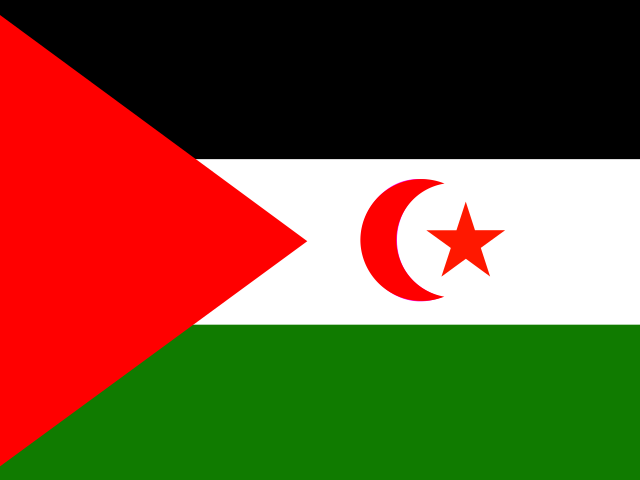 Western Sahara
 Tunisia
 Egypt
EgyptEarlier Report Observations
From 2018 to 2020, the volume of the bran and residues market in Northern Africa rose consistently, climbing from 7.4 million tons to 7.9 million tons. The market value fluctuated during this period, dropping sharply in 2019 before recovering the following year.
After a dip to 7.6 million tons in 2022, the market volume rebounded to 7.8 million tons in 2023. This recovery was supported by increased imports of barley for beer brewing and animal feed, which expanded the supply of processing by-products, while overall growth in African cereal consumption continued to drive demand.
Table of content
- 1. Disclaimer
- 2. Terms of use of the report
- 3. Product codes in the statistical classifications used in the report
-
4. Key Market Indicators and Trends
-
4.1. Key Market Indicators
-
4.1.1. In kind
- 4.1.1.1. Production, 2018-2023
- 4.1.1.2. Imports, 2018-2024
- 4.1.1.3. Exports, 2018-2024
- 4.1.1.4. Market size, 2018-2023
-
4.1.2. In value
- 4.1.2.1. Production, 2018-2023
- 4.1.2.2. Imports, 2018-2024
- 4.1.2.3. Exports, 2018-2024
- 4.1.2.4. Market size, 2018-2023
-
4.1.1. In kind
- 4.2. Market Trends and Factors
-
4.1. Key Market Indicators
-
5. Production
-
5.1. Production in Northern Africa
- 5.1.1. Annual dynamics of production in Northern Africa in kind, 2018-2023, K t
-
5.2. Global production by Country, 2018-2023
- 5.2.1. Annual dynamics of production by macroregions in kind, 2018-2023, K t
- 5.2.2. Dynamics of production structure by macroregions in kind, 2018-2023
- 5.2.3. Annual dynamics of production by country in kind, 2018-2023, K t
- 5.2.4. Structure of production by countries in kind, 2018-2023
- 5.2.5. Dynamics of peoduction structure by countries in kind, 2018-2023
-
5.1. Production in Northern Africa
-
6. Imports
-
6.1. Imports (Direct Data*)
- 6.1.1. Imports - Total information
-
6.1.2. Imports in kind, K t
- 6.1.2.1. Annual dynamics of product's imports to Algeria in kind, 2018-2024, K t
- 6.1.2.2. Dynamics of product's imports in kind to Algeria by countries, 2018-2024, K t
- 6.1.2.3. Structure of product's imports in kind by countries, 2018-2024
-
6.1.3. Imports in value, M $ US
- 6.1.3.1. Annual dynamics of product's imports to Algeria in value, 2018-2024, M $ US
- 6.1.3.2. Dynamics of product's imports in value to Algeria by countries, 2018-2024, M $ US
- 6.1.3.3. Structure of product's imports in value by countries, 2018-2024
-
6.1.4. Average price of product's imports, $ US/t
- 6.1.4.1. Annual dynamics of average price of product's imports to Algeria, 2018-2024, $ US/t
- 6.1.4.2. Dynamics of average price of product's imports to Algeria by countries, 2018-2024, $ US/t
-
6.2. Imports (Mirror Data)
- 6.2.1. Imports - Total information
-
6.2.2. Imports in kind, K t
- 6.2.2.1. Annual dynamics of product's imports to Algeria in kind, 2018-2024, K t
- 6.2.2.2. Dynamics of product's imports in kind to Algeria by countries, 2018-2024, K t
- 6.2.2.3. Structure of product's imports in kind by countries, 2018-2024
-
6.2.3. Imports in value, M $ US
- 6.2.3.1. Annual dynamics of product's imports to Algeria in value, 2018-2024, M $ US
- 6.2.3.2. Dynamics of product's imports in value to Algeria by countries, 2018-2024, M $ US
- 6.2.3.3. Structure of product's imports in value by countries, 2018-2024
-
6.2.4. Average price of product's imports, $ US/t
- 6.2.4.1. Annual dynamics of average price of product's imports to Algeria, 2018-2024, $ US/t
- 6.2.4.2. Dynamics of average price of product's imports to Algeria by countries, 2018-2024, $ US/t
-
6.1. Imports (Direct Data*)
-
7. Exports
-
7.1. Exports (Direct Data*)
- 7.1.1. Exports - Total information
-
7.1.2. Exports in kind, K t
- 7.1.2.1. Annual dynamics of product's exports from Algeria in kind, 2018-2024, K t
- 7.1.2.2. Dynamics of product's exports in kind from Algeria by countries, 2018-2024, K t
- 7.1.2.3. Structure of product's exports in kind by countries, 2018-2024
-
7.1.3. Exports in value, M $ US
- 7.1.3.1. Annual dynamics of product's exports from Algeria in value, 2018-2024, M $ US
- 7.1.3.2. Dynamics of product's exports in value from Algeria by countries, 2018-2024, M $ US
- 7.1.3.3. Structure of product's exports in value by countries, 2018-2024
-
7.1.4. Average price of product's exports, $ US/t
- 7.1.4.1. Annual dynamics of average price of product's exports from Algeria, 2018-2024, $ US/t
- 7.1.4.2. Dynamics of average price of product's exports from Algeria by countries, 2018-2024, $ US/t
-
7.2. Exports (Mirror Data)
- 7.2.1. Exports - Total information
-
7.2.2. Exports in kind, K t
- 7.2.2.1. Annual dynamics of product's exports from Algeria in kind, 2018-2024, K t
- 7.2.2.2. Dynamics of product's exports in kind from Algeria by countries, 2018-2024, K t
- 7.2.2.3. Structure of product's exports in kind by countries, 2018-2024
-
7.2.3. Exports in value, M $ US
- 7.2.3.1. Annual dynamics of product's exports from Algeria in value, 2018-2024, M $ US
- 7.2.3.2. Dynamics of product's exports in value from Algeria by countries, 2018-2024, M $ US
- 7.2.3.3. Structure of product's exports in value by countries, 2018-2024
-
7.2.4. Average price of product's exports, $ US/t
- 7.2.4.1. Annual dynamics of average price of product's exports from Algeria, 2018-2024, $ US/t
- 7.2.4.2. Dynamics of average price of product's exports from Algeria by countries, 2018-2024, $ US/t
-
7.1. Exports (Direct Data*)
-
8. Trade balance
-
8.1. Trade balance (Direct Data)
- 8.1.1. In kind, K t
- 8.1.2. In value, M $ US
-
8.2. Trade balance (Mirror Data)
- 8.2.1. In kind, K t
- 8.2.2. In value, M $ US
-
8.1. Trade balance (Direct Data)
-
9. Top buying and selling countries, 2018-2024
-
9.1. Direct Data
- 9.1.1. Import in Value by Countries-buyers
- 9.1.2. Export in Value by Countries-suppliers
-
9.2. Mirror Data
- 9.2.1. Import in Value by Countries-buyers
- 9.2.2. Export in Value by Countries-suppliers
-
9.1. Direct Data
Production bran, sharps and residues from cereal or legume processing in Northern Africa
In kind, 2017-2020, K t
Top producers of bran, sharps and residues from cereal or legume processing, 2017-2020
World map of production of bran, sharps and residues from cereal or legume processing, 2017-2020
Northern Africa's production of bran, sharps, and residues from cereal or legume processing has grown for the third year in a row. In 2020, the region produced 7 299 thousand tons, showing a modest year-over-year increase of 0.8%. Looking at the period from 2017 to 2020, production rose by 6.8%, which translates to an average annual growth rate of 2.2%.
Annual dynamics of production in Northern Africa in kind, 2017-2020, K t
| Parameter | 2018 | 2019 | 2020 | CAGR | |
|---|---|---|---|---|---|
| 1 | Change from last year | 0.7% | 5.2% | 0.8% | 2.2% |
Exports bran, sharps and residues from cereal or legume processing from Northern Africa
Exports in kind, K t
Exports of bran, sharps, and residues from cereal or legume processing from Northern Africa have increased for the third consecutive year. In 2020, the region exported 142.8 thousand tons, marking a sharp year-over-year gain of 53.7%. From 2017 to 2020, exports surged by 2 659.3%, with an annualized growth rate of 202.2%.
Annual dynamics of product's exports from Northern Africa in kind, 2017-2020, K t
| Parameter | 2018 | 2019 | 2020 | CAGR | |
|---|---|---|---|---|---|
| 1 | Change from last year | 107.4% | 765.7% | 53.7% | 202.2% |
Between 2017 and 2020, Saudi Arabia was the primary buyer of bran, sharps, and residues from cereal or legume processing from Northern Africa, accounting for 87.6% of total exports in volume. Other trading partners held relatively smaller shares during this period.
Structure of product's exports in kind by countries, 2017-2020
World map of product's exports from Northern Africa in kind, 2017-2020
Exports in value, M $ US
The value of exports for bran, sharps, and residues from cereal or legume processing from Northern Africa has risen for the third year in a row. In 2020, exports totaled 26.7 million US dollars, reflecting a dramatic increase of 63.2% compared to 2019. From 2017 to 2020, export value grew by 3 340%, averaging an annualized rate of 225.2%.
Annual dynamics of product's exports from Northern Africa in value, 2017-2020, M $ US
| Parameter | 2018 | 2019 | 2020 | CAGR | |
|---|---|---|---|---|---|
| 1 | Change from last year | 239.2% | 521.3% | 63.2% | 225.2% |
During 2017–2020, the export structure in value terms was heavily concentrated on Saudi Arabia, which represented 87.9% of total flows. Other partners made up the remainder of the export volume.
Structure of product's exports in value by countries, 2017-2020
World map of product's exports from Northern Africa in value, 2017-2020
Imports bran, sharps and residues from cereal or legume processing to Northern Africa
Imports in kind, K t
Imports of bran, sharps, and residues from cereal or legume processing into Northern Africa have increased for the second consecutive year. In 2020, imports reached 736.3 thousand tons, showing a dramatic gain of 30.8% from 2019. Over the 2017-2020 period, imports grew by 27.1%, with a compound annual growth rate of 8.3%. The lowest import volume was recorded in 2018 at 513.7 thousand tons, which also saw the largest decline of 11.3%.
Annual dynamics of product's imports to Northern Africa in kind, 2017-2020, K t
| Parameter | 2018 | 2019 | 2020 | CAGR | |
|---|---|---|---|---|---|
| 1 | Change from last year | (11.3%) | 9.6% | 30.8% | 8.3% |
From 2017 to 2020, imports in volume of bran, sharps, and residues from cereal or legume processing to Northern Africa were distributed across multiple countries. The United States (23.8% of imports), Nigeria (12.0%), and Yemen (11.5%) together accounted for 47.3% of total flows, indicating a diverse sourcing pattern.
Structure of product's imports in kind by countries, 2017-2020
World map of product's imports to Northern Africa in kind, 2017-2020
Imports in value, M $ US
Northern Africa's imports of bran, sharps, and residues from cereal or legume processing have grown for the third year in a row. In 2020, imports amounted to 137.8 million US dollars, reflecting a dramatic year-over-year rise of 30.5%. Between 2017 and 2020, import value increased by 42.3%, with an annualized growth rate of 12.5%.
Annual dynamics of product's imports to Northern Africa in value, 2017-2020, M $ US
| Parameter | 2018 | 2019 | 2020 | CAGR | |
|---|---|---|---|---|---|
| 1 | Change from last year | 2.6% | 6.3% | 30.5% | 12.5% |
Throughout 2017–2020, the United States (28.7% of imports in value), Nigeria (11.0%), and Yemen (10.4%) were the key partners for imports in value terms. Together, they accounted for 50.1% of total flows.
Structure of product's imports in value by countries, 2017-2020
World map of product's imports to Northern Africa in value, 2017-2020
Related Reports

Rapeseed oilcake market in Northern Africa
2026-03-29


Linseed oil-cake market in Northern Africa
2026-03-29

Why Choose Us?
Only Verified Data
No Hidden Costs or Separate Fees
Smarter Subscription Pricing
Contact Our Team
Submit your inquiry using the form below — our team will get back to you within 24 hours.