Vietnam Ships 3.7 Million Tonnes of Cassava to China, Now Chases Higher-Value Grades
China took about 3.7 million tonnes of Vietnamese cassava and cassava products in 2025, worth $1.17 billion, or 94.1% of the sector's export volume. Vietnam supplied 53.83% of Chinese cassava starch imports in the first quarter of 2026. Hanoi is pushing processors beyond dried chips and basic starch, but fewer than 5% of growers hold contracts with mills.
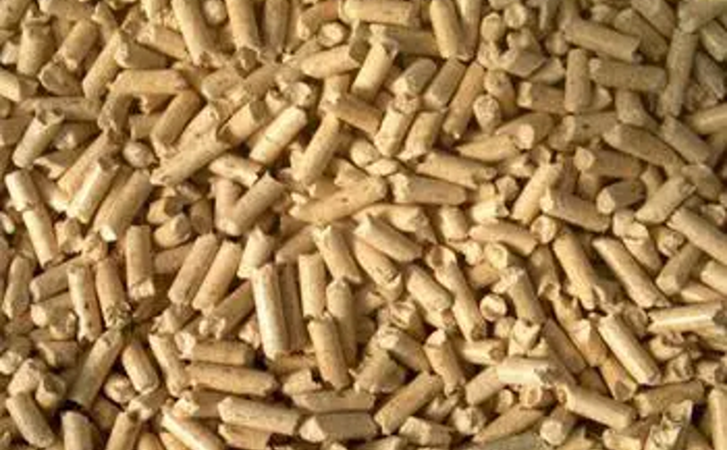
China absorbed about 3.7 million tonnes of Vietnamese cassava and cassava-based products in 2025, worth $1.17 billion, equal to 94.1% of the sector's export volume and 92.6% of its export value, the Vietnamese outlet Dan Viet reported. Most of that trade still leaves Vietnam as dried chips or basic starch. Chinese buyers, however, are moving away from a simple search for the cheapest raw material toward quality, application-specific grades and the ability to meet the production requirements of individual industries.
A structural supply gap in China
Chinese demand for cassava starch runs at roughly 3.5 million tonnes a year, while domestic output is below 190,000 tonnes, according to market research cited by Dan Viet. The gap leaves China dependent on Southeast Asian supply, above all Vietnam and Thailand.
In the first quarter of 2026 China imported 1.4249 million tonnes of cassava starch. Vietnam accounted for 767,100 tonnes, or 53.83% of the total, more than double Thailand's 26.42% share. That position gives Vietnamese processors an unusually strong base from which to move up the value chain rather than simply defend volume.
Paper mills are the second-largest outlet
China's paper and paperboard output is forecast at around 140-145 million tonnes for 2025 following a period of industry restructuring. Cassava starch consumption tied to papermaking alone exceeds 600,000 tonnes a year, about 17% of total national cassava starch demand, making paper the second-largest consuming sector after food.
In paper production, cassava starch raises sheet strength, improves printability and works as a binder in surface coating and in specialty grades such as food-packaging and medical papers. On cost and technical characteristics it is gradually displacing part of the corn starch used in industrial applications. Demand is also rising in processed food, beverages, animal feed, pharmaceuticals and bioenergy, all sectors where China maintains large-scale production and steady long-term requirements.
Policy push toward modified starch
Vietnam's Ministry of Industry and Trade has set an orientation for the sector to reduce step by step the share of exports made up of dried chips and unmodified starch, and to build up products with higher technology and value content: modified starch, ingredients for food and pharmaceuticals, industrial inputs and biofuel feedstock. The logic is commercial. Chips and standard starch compete almost entirely on price, while application-specific grades carry wider margins and are less exposed to short-term market swings.
Bottlenecks sit upstream
- Fewer than 5% of cassava growers hold direct contracts with processing plants; more than 95% of output is still traded freely through middlemen.
- Vietnam has some 350-380 cooperatives with cassava-growing members, but only about 40-50 that specialise in cassava.
- Average planted area is 0.5-0.6 hectares per household, which complicates quality control and traceability.
- Raw material imported from Laos and Cambodia accounts for around 42% of total supply to domestic processors, where growing-area records and transaction documents remain limited.
The figures were presented at the conference ‘Vietnam's cassava supply chain: current status and solutions’. Dr Ha Cong Tuan, chairman of the Vietnam Association of Agricultural Economics and Rural Development (VAERD), identified low yields, fragmented production and loose supply chains as the industry's three biggest bottlenecks, warning that unless they are addressed together the sector will struggle to meet traceability requirements and will face growing risk as international markets tighten environmental and legal standards.
For companies, the question has moved beyond adding mill capacity to securing stable raw-material zones, deepening links with farmers and cooperatives, installing traceability systems and meeting sustainability standards. China will remain the largest market for Vietnamese cassava for years to come; what is changing is the type of supplier it rewards.