Hazelnuts Drive 16% Rise in Georgian Produce Exports to the EU
Georgia’s fruit and vegetable exports to the EU rose by more than 16% to about 6,230 tonnes in the first half of 2026. Hazelnuts accounted for almost 95% of the volume, while higher prices amplified the value of shipments.
Hazelnuts account for almost all export growth
Georgia exported approximately 6,230 tonnes of fruit and vegetables to the European Union in the first half of 2026, up more than 16% from about 5,370 tonnes in the same period of 2025, according to Eurostat data reported by FreshPlaza. The increase was concentrated overwhelmingly in hazelnuts, underlining the importance of a single commodity to Georgia’s produce trade with the bloc.
Shelled hazelnut shipments rose from 4,140 tonnes to 4,880 tonnes, an increase of 18%. Exports of in-shell hazelnuts grew by a more moderate 14%. Together, the two categories represented almost 95% of all Georgian fruit and vegetable exports to the EU during the period. This concentration means that movements in hazelnut production, quality, prices and European demand have an outsized effect on the country’s overall produce export performance.
Other products remained comparatively small and followed different trends. Dried fruit exports declined from 153 tonnes to 115 tonnes. Georgian blueberry shipments reached 91 tonnes in June 2026, compared with 69 tonnes a year earlier. The blueberry increase broadened the product mix slightly, but the volumes remained far below those recorded for hazelnuts.
Italy overtakes Spain in shelled hazelnuts
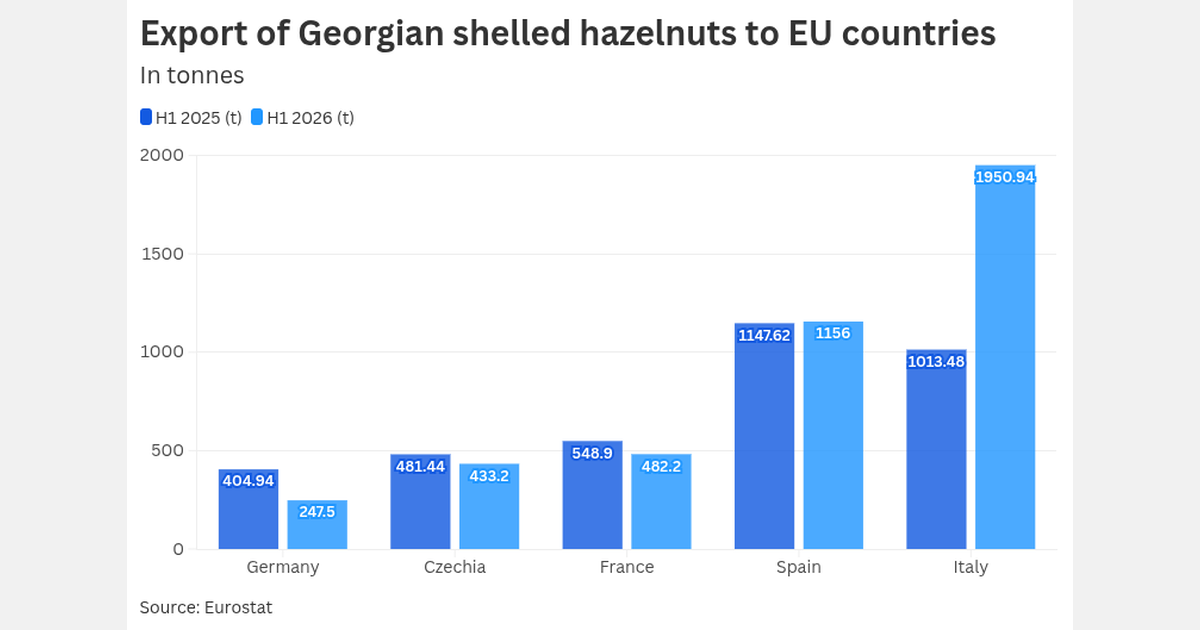
Italy became the largest EU destination for Georgian shelled hazelnuts in the first half of 2026, receiving 1,951 tonnes. Spain followed with 1,156 tonnes, while France imported 482 tonnes and the Czech Republic 433 tonnes. Italy’s purchases increased by 92% compared with the first half of 2025, allowing it to replace Spain as the leading destination.
France, the Czech Republic and Germany recorded slight declines. Even so, total exports of shelled hazelnuts increased by 17.8%, from 4,141 tonnes to 4,879 tonnes. The shift toward Italy matters for Georgian suppliers because the Italian market alone absorbed about two-fifths of the reported shelled volume, increasing its influence over sales channels and buyer relationships.
Prices strengthened alongside volumes. The average price of shelled hazelnuts rose by 36%, from €7.14 to €9.73 per kilogram. In-shell hazelnuts registered an even sharper increase, with the average price climbing by 66% from €3.73 to €6.21 per kilogram. Italy remained the principal European buyer of Georgian in-shell hazelnuts, taking 983 tonnes and accounting for 99% of the volume in both periods.
Blueberry destinations change as prices fall
The blueberry trade showed a different market pattern. In June 2026, Germany received 45 tonnes and the Netherlands 31 tonnes, with both appearing as new destinations. Austria, which had led the market a year earlier with 52 tonnes, imported only 16 tonnes. Poland disappeared from the destination list entirely.
Total Georgian blueberry volume to the EU increased by 32%, but its average price declined by 10%, from €6.84 to €6.13 per kilogram. The combination of rising volume, lower prices and changing destinations suggests that suppliers expanded access but faced weaker unit returns. For exporters and buyers, Georgia’s first-half results therefore present two distinct markets: a dominant hazelnut business benefiting from higher volumes and sharply stronger prices, and a much smaller blueberry trade growing in volume while adjusting to new customers and price pressure.