






"Africa" region includes following countries:
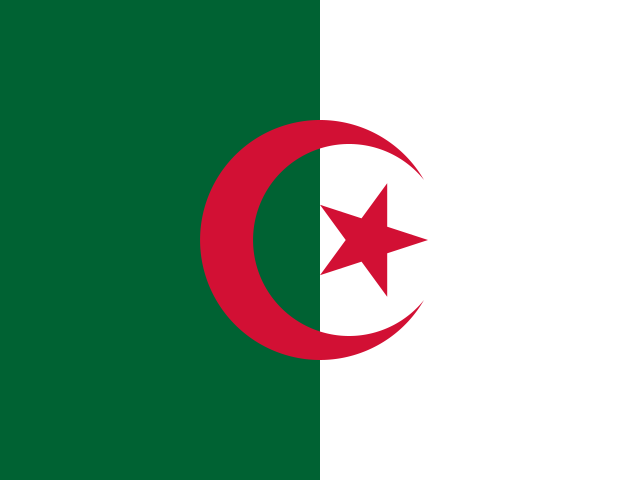 Algeria
 Libya
Libya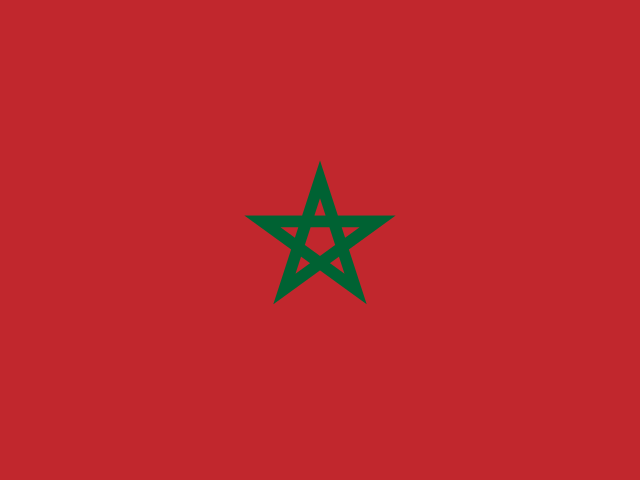 Morocco
 Sudan
Sudan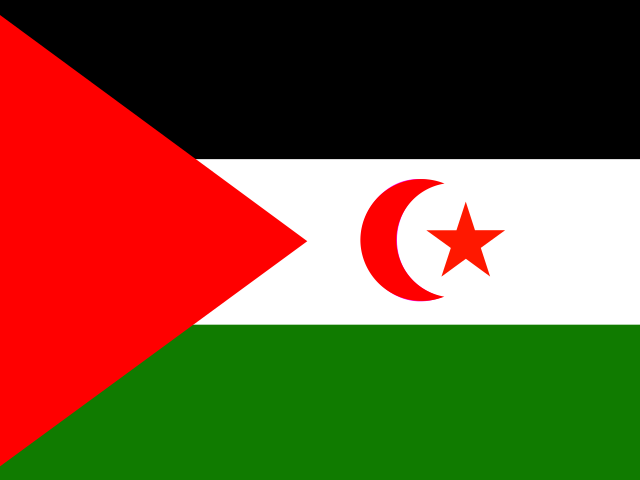 Western Sahara
 Tunisia
 Egypt
Egypt Cabo Verde
 Benin
Benin Gambia
 Ghana
Ghana Guinea
 Côte d'Ivoire
 Liberia
 Mali
Mali Mauritania
 Niger
Niger Nigeria
 Guinea-Bissau
 Saint Helena, Ascension and Tristan da Cunha
 Senegal
 Sierra Leone
 Togo
Togo Burkina Faso
 British Indian Ocean Territory
 Burundi
 Comoros
 Mayotte
 Ethiopia
 Eritrea
 French Southern Territories
 Djibouti
 Kenya
Kenya Madagascar
 Malawi
 Mauritius
 Mozambique
 Reunion
 Rwanda
 Seychelles
 Somalia
 Zimbabwe
 South Sudan
 Uganda
 Tanzania
 Zambia
 Angola
 Cameroon
 Central African Republic
 Chad
Chad Congo
Congo Democratic Republic of the Congo
 Equatorial Guinea
 Gabon
Gabon Sao Tome and Principe
 Botswana
 Lesotho
 Namibia
 South Africa
 Eswatini
Earlier Report Observations
The African watermelon market expanded from 7 157 K t in 2018 to a peak of 7 993 K t in 2020. This growth was partly driven by a near 300% surge in Moroccan production in 2018, which positioned the country as the world's third-largest producer. The crop's high profitability, with potential revenue exceeding 7 million FCFA per hectare, encouraged continued cultivation and market expansion across the continent.
After 2020, the market volume contracted, falling to 7 206 K t by 2023. The decline began in 2021, coinciding with Morocco's food safety agency, ONSSA, significantly ramping up pesticide controls and sample analyses, which may have affected farming practices. In 2023, unfavorable climatic conditions led to a 7.2% drop in Senegal's output, contributing to the overall reduction. Although Algeria emerged as the continent's top producer with 2.2 million tonnes that year, it did not offset losses elsewhere.
Looking at 2024, regulatory and environmental factors continued to shape the sector. Authorities in Morocco's Zagora province limited watermelon cultivation to one hectare per farmer for the 2024/2025 season due to water scarcity. At the same time, the market saw new investment with the launch of Twiga Fresh in Kenya, a subsidiary backed by $10 million dedicated to fresh produce including watermelons. Growing consumer demand for healthy, refreshing foods supports the market's underlying potential.
Table of content
- 1. Disclaimer
- 2. Terms of use of the report
- 3. Product codes in the statistical classifications used in the report
-
4. Key Market Indicators and Trends
-
4.1. Key Market Indicators
-
4.1.1. In kind
- 4.1.1.1. Production, 2018-2023
- 4.1.1.2. Imports, 2018-2024
- 4.1.1.3. Exports, 2018-2024
- 4.1.1.4. Market size, 2018-2023
-
4.1.2. In value
- 4.1.2.1. Production, 2018-2023
- 4.1.2.2. Imports, 2018-2024
- 4.1.2.3. Exports, 2018-2024
- 4.1.2.4. Market size, 2018-2023
-
4.1.1. In kind
- 4.2. Market Trends and Factors
-
4.1. Key Market Indicators
-
5. Production
-
5.1. Production in Africa
- 5.1.1. Annual dynamics of production in Africa in kind, 2018-2023, K t
-
5.2. Global production by Country, 2018-2023
- 5.2.1. Annual dynamics of production by macroregions in kind, 2018-2023, K t
- 5.2.2. Dynamics of production structure by macroregions in kind, 2018-2023
- 5.2.3. Annual dynamics of production by country in kind, 2018-2023, K t
- 5.2.4. Structure of production by countries in kind, 2018-2023
- 5.2.5. Dynamics of peoduction structure by countries in kind, 2018-2023
-
5.1. Production in Africa
-
6. Imports
-
6.1. Imports (Direct Data*)
- 6.1.1. Imports - Total information
-
6.1.2. Imports in kind, K t
- 6.1.2.1. Annual dynamics of product's imports to Algeria in kind, 2018-2024, K t
- 6.1.2.2. Dynamics of product's imports in kind to Algeria by countries, 2018-2024, K t
- 6.1.2.3. Structure of product's imports in kind by countries, 2018-2024
-
6.1.3. Imports in value, M $ US
- 6.1.3.1. Annual dynamics of product's imports to Algeria in value, 2018-2024, M $ US
- 6.1.3.2. Dynamics of product's imports in value to Algeria by countries, 2018-2024, M $ US
- 6.1.3.3. Structure of product's imports in value by countries, 2018-2024
-
6.1.4. Average price of product's imports, $ US/t
- 6.1.4.1. Annual dynamics of average price of product's imports to Algeria, 2018-2024, $ US/t
- 6.1.4.2. Dynamics of average price of product's imports to Algeria by countries, 2018-2024, $ US/t
-
6.2. Imports (Mirror Data)
- 6.2.1. Imports - Total information
-
6.2.2. Imports in kind, K t
- 6.2.2.1. Annual dynamics of product's imports to Algeria in kind, 2018-2024, K t
- 6.2.2.2. Dynamics of product's imports in kind to Algeria by countries, 2018-2024, K t
- 6.2.2.3. Structure of product's imports in kind by countries, 2018-2024
-
6.2.3. Imports in value, M $ US
- 6.2.3.1. Annual dynamics of product's imports to Algeria in value, 2018-2024, M $ US
- 6.2.3.2. Dynamics of product's imports in value to Algeria by countries, 2018-2024, M $ US
- 6.2.3.3. Structure of product's imports in value by countries, 2018-2024
-
6.2.4. Average price of product's imports, $ US/t
- 6.2.4.1. Annual dynamics of average price of product's imports to Algeria, 2018-2024, $ US/t
- 6.2.4.2. Dynamics of average price of product's imports to Algeria by countries, 2018-2024, $ US/t
-
6.1. Imports (Direct Data*)
-
7. Exports
-
7.1. Exports (Direct Data*)
- 7.1.1. Exports - Total information
-
7.1.2. Exports in kind, K t
- 7.1.2.1. Annual dynamics of product's exports from Algeria in kind, 2018-2024, K t
- 7.1.2.2. Dynamics of product's exports in kind from Algeria by countries, 2018-2024, K t
- 7.1.2.3. Structure of product's exports in kind by countries, 2018-2024
-
7.1.3. Exports in value, M $ US
- 7.1.3.1. Annual dynamics of product's exports from Algeria in value, 2018-2024, M $ US
- 7.1.3.2. Dynamics of product's exports in value from Algeria by countries, 2018-2024, M $ US
- 7.1.3.3. Structure of product's exports in value by countries, 2018-2024
-
7.1.4. Average price of product's exports, $ US/t
- 7.1.4.1. Annual dynamics of average price of product's exports from Algeria, 2018-2024, $ US/t
- 7.1.4.2. Dynamics of average price of product's exports from Algeria by countries, 2018-2024, $ US/t
-
7.2. Exports (Mirror Data)
- 7.2.1. Exports - Total information
-
7.2.2. Exports in kind, K t
- 7.2.2.1. Annual dynamics of product's exports from Algeria in kind, 2018-2024, K t
- 7.2.2.2. Dynamics of product's exports in kind from Algeria by countries, 2018-2024, K t
- 7.2.2.3. Structure of product's exports in kind by countries, 2018-2024
-
7.2.3. Exports in value, M $ US
- 7.2.3.1. Annual dynamics of product's exports from Algeria in value, 2018-2024, M $ US
- 7.2.3.2. Dynamics of product's exports in value from Algeria by countries, 2018-2024, M $ US
- 7.2.3.3. Structure of product's exports in value by countries, 2018-2024
-
7.2.4. Average price of product's exports, $ US/t
- 7.2.4.1. Annual dynamics of average price of product's exports from Algeria, 2018-2024, $ US/t
- 7.2.4.2. Dynamics of average price of product's exports from Algeria by countries, 2018-2024, $ US/t
-
7.1. Exports (Direct Data*)
-
8. Trade balance
-
8.1. Trade balance (Direct Data)
- 8.1.1. In kind, K t
- 8.1.2. In value, M $ US
-
8.2. Trade balance (Mirror Data)
- 8.2.1. In kind, K t
- 8.2.2. In value, M $ US
-
8.1. Trade balance (Direct Data)
-
9. Top buying and selling countries, 2018-2024
-
9.1. Direct Data
- 9.1.1. Import in Value by Countries-buyers
- 9.1.2. Export in Value by Countries-suppliers
-
9.2. Mirror Data
- 9.2.1. Import in Value by Countries-buyers
- 9.2.2. Export in Value by Countries-suppliers
-
9.1. Direct Data
Production watermelons in Africa
In kind, 2017-2020, K t
Top producers of watermelons, 2017-2020
World map of production of watermelons, 2017-2020
Watermelon production in Africa has increased for the third consecutive year. In 2020, Africa produced 8 272 K t of watermelons, marking a modest gain of 6.6% compared to 2019. Over the period from 2017 to 2020, production rose by 41.6%, with a compound annual growth rate of 12.3%.
Annual dynamics of production in Africa in kind, 2017-2020, K t
| Parameter | 2018 | 2019 | 2020 | CAGR | |
|---|---|---|---|---|---|
| 1 | Change from last year | 25.7% | 5.7% | 6.6% | 12.3% |
Exports watermelons from Africa
Exports in kind, K t
Africa's watermelon exports have grown for the third year in a row. In 2020, exports reached 285.0 K t, which is 32.6% higher than in 2019. From 2017 to 2020, exports increased by 51.7%, with a compound annual growth rate of 14.9%.
Annual dynamics of product's exports from Africa in kind, 2017-2020, K t
| Parameter | 2018 | 2019 | 2020 | CAGR | |
|---|---|---|---|---|---|
| 1 | Change from last year | 1.4% | 12.8% | 32.6% | 14.9% |
From 2017 to 2020, Spain, France, and the Netherlands remained the top buyers of watermelons from Africa. Spain accounted for 34.9% of exports in kind, France for 27.1%, and the Netherlands for 7.0%. Together, these three countries took 69.1% of total exports in kind.
Structure of product's exports in kind by countries, 2017-2020
World map of product's exports from Africa in kind, 2017-2020
Exports in value, M $ US
In 2020, Africa exported watermelons worth 186.7 M $ US, which is 45.5% more than the previous year. Between 2017 and 2020, exports increased by 68%, equating to an annualized rate of 18.9%. The largest decline occurred in 2019, at 12.5%.
Annual dynamics of product's exports from Africa in value, 2017-2020, M $ US
| Parameter | 2018 | 2019 | 2020 | CAGR | |
|---|---|---|---|---|---|
| 1 | Change from last year | 32.0% | (12.5%) | 45.5% | 18.9% |
From 2017 to 2020, Spain, France, and the Netherlands continued to lead as the main destinations for Africa's watermelon exports in value terms. Spain held 36.0% of exports in value, France 30.2%, and the Netherlands 7.5%. Combined, they represented 73.7% of total export flows.
Structure of product's exports in value by countries, 2017-2020
World map of product's exports from Africa in value, 2017-2020
Imports watermelons to Africa
Imports in kind, K t
After two years of growth, Africa's watermelon import volume declined. In 2020, imports totaled 6.5 K t, which is 22.7% lower than in 2019. Over the period from 2017 to 2020, imports increased by 35.2%, with a compound annual growth rate of 10.6%. The maximum value was recorded in 2019 at 8.4 K t, with the largest increase that year at 36.9%.
Annual dynamics of product's imports to Africa in kind, 2017-2020, K t
| Parameter | 2018 | 2019 | 2020 | CAGR | |
|---|---|---|---|---|---|
| 1 | Change from last year | 27.7% | 36.9% | (22.7%) | 10.6% |
From 2017 to 2020, the three main markets for watermelon imports to Africa were Portugal, Spain, and the United Arab Emirates. Together, they absorbed 2.6% of total imports in kind.
Structure of product's imports in kind by countries, 2017-2020
World map of product's imports to Africa in kind, 2017-2020
Imports in value, M $ US
After two years of improvement, Africa's watermelon imports declined. In 2020, imports amounted to 3.9 M $ US, marking a sharp decline of 28.8% compared to 2019. Over the period from 2017 to 2020, imports increased by 14%, with a compound annual growth rate of 4.5%. The maximum value was recorded in 2019 at 5.4 M $ US, with the largest increase in 2018 at 56.0%.
Annual dynamics of product's imports to Africa in value, 2017-2020, M $ US
| Parameter | 2018 | 2019 | 2020 | CAGR | |
|---|---|---|---|---|---|
| 1 | Change from last year | 56.0% | 2.6% | (28.8%) | 4.5% |
From 2017 to 2020, the country composition of watermelon imports to Africa in value terms was highly dispersed. Portugal accounted for 3.8% of imports in value, Australia for 2.9%, and Spain for 2.7%. Together, these three countries formed just 9.4% of total flows, with the remaining 90.6% split among a wide range of other destinations.
Structure of product's imports in value by countries, 2017-2020
World map of product's imports to Africa in value, 2017-2020
Related Reports

Watermelons market in Dominica
2026-03-28
2026-03-28
Watermelons market in Malaysia
2026-03-28

Shelled almonds market in Africa
2026-03-28


Melons and papayas market in Africa
2026-03-28

Lemons and limes market in Africa
2026-03-28
Why Choose Us?
Only Verified Data
No Hidden Costs or Separate Fees
Smarter Subscription Pricing
Contact Our Team
Submit your inquiry using the form below — our team will get back to you within 24 hours.