






"Africa" region includes following countries:
 Algeria
 Libya
Libya Morocco
 Sudan
Sudan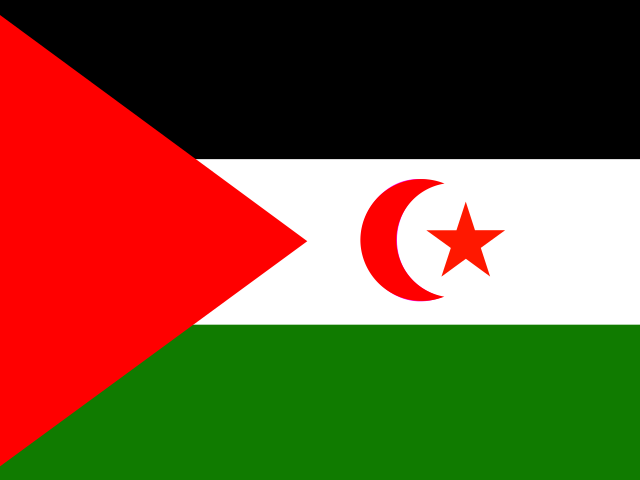 Western Sahara
 Tunisia
 Egypt
Egypt Cabo Verde
 Benin
Benin Gambia
 Ghana
Ghana Guinea
 Côte d'Ivoire
 Liberia
 Mali
Mali Mauritania
 Niger
Niger Nigeria
 Guinea-Bissau
 Saint Helena, Ascension and Tristan da Cunha
 Senegal
 Sierra Leone
 Togo
Togo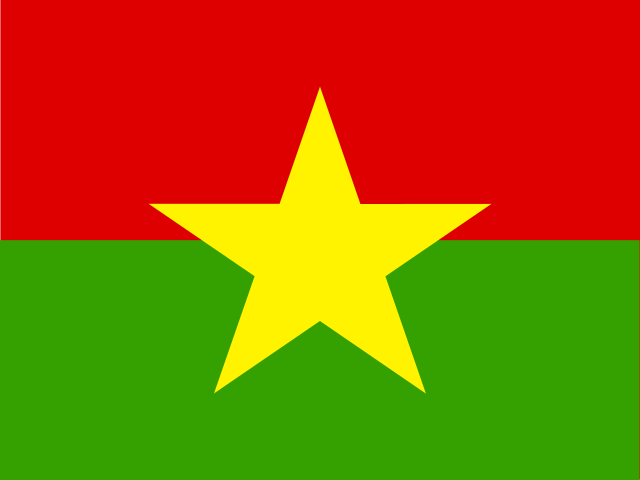 Burkina Faso
 British Indian Ocean Territory
 Burundi
 Comoros
 Mayotte
 Ethiopia
 Eritrea
 French Southern Territories
 Djibouti
 Kenya
Kenya Madagascar
 Malawi
 Mauritius
 Mozambique
 Reunion
 Rwanda
 Seychelles
 Somalia
 Zimbabwe
 South Sudan
 Uganda
 Tanzania
 Zambia
 Angola
 Cameroon
 Central African Republic
 Chad
Chad Congo
Congo Democratic Republic of the Congo
 Equatorial Guinea
 Gabon
Gabon Sao Tome and Principe
 Botswana
 Lesotho
 Namibia
 South Africa
 Eswatini
Earlier Report Observations
The market volume for fresh melons and papayas in Africa fluctuated between 2018 and 2023, starting at 10 134 thousand tons in 2018. After a slight dip to 9 858 thousand tons in 2019, volume recovered to over 10 600 thousand tons by 2022, before declining to 10 052 thousand tons in 2023. In value terms, the market experienced more pronounced swings, dropping from 9 378 million USD in 2018 to 7 440 million USD in 2019, then rising sharply to 9 894 million USD in 2021, followed by a decrease to 8 239 million USD in 2023.
The contraction in market volume in 2023 was partly influenced by broader agricultural challenges in key producing regions like Kenya. Unfavorable weather conditions and global price volatility affected agricultural commodities, reducing output and tightening supply for fresh produce including melons and papayas. Additionally, structural issues such as aging trees and soil fertility problems in the coffee sector signaled wider productivity constraints that likely impacted fruit production.
Looking ahead, the African melon and papaya market faces both headwinds and initiatives aimed at improvement. The launch of Kenya's Post-Harvest Management Strategy for 2024–2028 targets the high loss rate of fresh fruits, which could enhance supply chain efficiency if successfully implemented. However, extreme weather events linked to El Niño and ongoing logistical disruptions at ports in South Africa continue to pose risks to production stability and market volumes.
Table of content
- 1. Disclaimer
- 2. Terms of use of the report
- 3. Product codes in the statistical classifications used in the report
-
4. Key Market Indicators and Trends
-
4.1. Key Market Indicators
-
4.1.1. In kind
- 4.1.1.1. Production, 2018-2023
- 4.1.1.2. Imports, 2018-2024
- 4.1.1.3. Exports, 2018-2024
- 4.1.1.4. Market size, 2018-2023
-
4.1.2. In value
- 4.1.2.1. Production, 2018-2023
- 4.1.2.2. Imports, 2018-2024
- 4.1.2.3. Exports, 2018-2024
- 4.1.2.4. Market size, 2018-2023
-
4.1.1. In kind
- 4.2. Market Trends and Factors
-
4.1. Key Market Indicators
-
5. Production
-
5.1. Production in Africa
- 5.1.1. Annual dynamics of production in Africa in kind, 2018-2023, K t
-
5.2. Global production by Country, 2018-2023
- 5.2.1. Annual dynamics of production by macroregions in kind, 2018-2023, K t
- 5.2.2. Dynamics of production structure by macroregions in kind, 2018-2023
- 5.2.3. Annual dynamics of production by country in kind, 2018-2023, K t
- 5.2.4. Structure of production by countries in kind, 2018-2023
- 5.2.5. Dynamics of peoduction structure by countries in kind, 2018-2023
-
5.1. Production in Africa
-
6. Imports
-
6.1. Imports (Direct Data*)
- 6.1.1. Imports - Total information
-
6.1.2. Imports in kind, K t
- 6.1.2.1. Annual dynamics of product's imports to Algeria in kind, 2018-2024, K t
- 6.1.2.2. Dynamics of product's imports in kind to Algeria by countries, 2018-2024, K t
- 6.1.2.3. Structure of product's imports in kind by countries, 2018-2024
-
6.1.3. Imports in value, M $ US
- 6.1.3.1. Annual dynamics of product's imports to Algeria in value, 2018-2024, M $ US
- 6.1.3.2. Dynamics of product's imports in value to Algeria by countries, 2018-2024, M $ US
- 6.1.3.3. Structure of product's imports in value by countries, 2018-2024
-
6.1.4. Average price of product's imports, $ US/t
- 6.1.4.1. Annual dynamics of average price of product's imports to Algeria, 2018-2024, $ US/t
- 6.1.4.2. Dynamics of average price of product's imports to Algeria by countries, 2018-2024, $ US/t
-
6.2. Imports (Mirror Data)
- 6.2.1. Imports - Total information
-
6.2.2. Imports in kind, K t
- 6.2.2.1. Annual dynamics of product's imports to Algeria in kind, 2018-2024, K t
- 6.2.2.2. Dynamics of product's imports in kind to Algeria by countries, 2018-2024, K t
- 6.2.2.3. Structure of product's imports in kind by countries, 2018-2024
-
6.2.3. Imports in value, M $ US
- 6.2.3.1. Annual dynamics of product's imports to Algeria in value, 2018-2024, M $ US
- 6.2.3.2. Dynamics of product's imports in value to Algeria by countries, 2018-2024, M $ US
- 6.2.3.3. Structure of product's imports in value by countries, 2018-2024
-
6.2.4. Average price of product's imports, $ US/t
- 6.2.4.1. Annual dynamics of average price of product's imports to Algeria, 2018-2024, $ US/t
- 6.2.4.2. Dynamics of average price of product's imports to Algeria by countries, 2018-2024, $ US/t
-
6.1. Imports (Direct Data*)
-
7. Exports
-
7.1. Exports (Direct Data*)
- 7.1.1. Exports - Total information
-
7.1.2. Exports in kind, K t
- 7.1.2.1. Annual dynamics of product's exports from Algeria in kind, 2018-2024, K t
- 7.1.2.2. Dynamics of product's exports in kind from Algeria by countries, 2018-2024, K t
- 7.1.2.3. Structure of product's exports in kind by countries, 2018-2024
-
7.1.3. Exports in value, M $ US
- 7.1.3.1. Annual dynamics of product's exports from Algeria in value, 2018-2024, M $ US
- 7.1.3.2. Dynamics of product's exports in value from Algeria by countries, 2018-2024, M $ US
- 7.1.3.3. Structure of product's exports in value by countries, 2018-2024
-
7.1.4. Average price of product's exports, $ US/t
- 7.1.4.1. Annual dynamics of average price of product's exports from Algeria, 2018-2024, $ US/t
- 7.1.4.2. Dynamics of average price of product's exports from Algeria by countries, 2018-2024, $ US/t
-
7.2. Exports (Mirror Data)
- 7.2.1. Exports - Total information
-
7.2.2. Exports in kind, K t
- 7.2.2.1. Annual dynamics of product's exports from Algeria in kind, 2018-2024, K t
- 7.2.2.2. Dynamics of product's exports in kind from Algeria by countries, 2018-2024, K t
- 7.2.2.3. Structure of product's exports in kind by countries, 2018-2024
-
7.2.3. Exports in value, M $ US
- 7.2.3.1. Annual dynamics of product's exports from Algeria in value, 2018-2024, M $ US
- 7.2.3.2. Dynamics of product's exports in value from Algeria by countries, 2018-2024, M $ US
- 7.2.3.3. Structure of product's exports in value by countries, 2018-2024
-
7.2.4. Average price of product's exports, $ US/t
- 7.2.4.1. Annual dynamics of average price of product's exports from Algeria, 2018-2024, $ US/t
- 7.2.4.2. Dynamics of average price of product's exports from Algeria by countries, 2018-2024, $ US/t
-
7.1. Exports (Direct Data*)
-
8. Trade balance
-
8.1. Trade balance (Direct Data)
- 8.1.1. In kind, K t
- 8.1.2. In value, M $ US
-
8.2. Trade balance (Mirror Data)
- 8.2.1. In kind, K t
- 8.2.2. In value, M $ US
-
8.1. Trade balance (Direct Data)
-
9. Top buying and selling countries, 2018-2024
-
9.1. Direct Data
- 9.1.1. Import in Value by Countries-buyers
- 9.1.2. Export in Value by Countries-suppliers
-
9.2. Mirror Data
- 9.2.1. Import in Value by Countries-buyers
- 9.2.2. Export in Value by Countries-suppliers
-
9.1. Direct Data
Production melons and papayas in Africa
In kind, 2017-2020, K t
Top producers of melons and papayas, 2017-2020
World map of production of melons and papayas, 2017-2020
In 2020, Africa produced 10 777 thousand tonnes of melons and papayas, representing a 6.4% increase compared to the previous year. Over the period from 2017 to 2020, production grew by 21.2%, with an average annual growth rate of 6.6%. The largest decline occurred in 2019, when production fell by 2.6%, while the most significant increase was recorded in 2018, with a 16.8% rise.
Annual dynamics of production in Africa in kind, 2017-2020, K t
| Parameter | 2018 | 2019 | 2020 | CAGR | |
|---|---|---|---|---|---|
| 1 | Change from last year | 16.8% | (2.6%) | 6.4% | 6.6% |
In value, 2017-2020, M $ US
In 2020, the value of melons and papayas produced in Africa reached 8 107 million US dollars, marking a 6.1% year-over-year increase. From 2017 to 2020, production value rose by 21.2%, with a compound annual growth rate of 6.6%. The highest value was achieved in 2018 at 9 611 million US dollars. The largest decline occurred in 2019, with a 20.5% drop, while the most substantial increase was in 2018, with a 43.7% surge.
Annual dynamics of production in Africa in value, 2017-2020, M $ US
| Parameter | 2018 | 2019 | 2020 | CAGR | |
|---|---|---|---|---|---|
| 1 | Change from last year | 43.7% | (20.5%) | 6.1% | 6.6% |
Exports melons and papayas from Africa
Exports in kind, K t
Exports of melons and papayas from Africa have increased for the third consecutive year. In 2020, export volumes reached 357.2 thousand tonnes, reflecting a 27.6% rise compared to 2019. Over the period from 2017 to 2020, exports grew by 34.3%, with an average annual growth rate of 10.3%.
Annual dynamics of product's exports from Africa in kind, 2017-2020, K t
| Parameter | 2018 | 2019 | 2020 | CAGR | |
|---|---|---|---|---|---|
| 1 | Change from last year | 0.5% | 4.7% | 27.6% | 10.3% |
From 2017 to 2020, France, Spain, and the Netherlands formed the main cluster of markets for exports in kind. France accounted for 32.7% of exports, Spain for 30.5%, and the Netherlands for 5.8%, together representing 68.9% of total export flows.
Structure of product's exports in kind by countries, 2017-2020
World map of product's exports from Africa in kind, 2017-2020
Exports in value, M $ US
In 2020, cross-border shipments of melons and papayas from Africa amounted to 268.7 million US dollars, up by 27.3% year-over-year. Over the period from 2017 to 2020, export value increased by 34.4%, with a compound annual growth rate of 10.4%. The largest decline was recorded in 2019, with a 14.6% decrease.
Annual dynamics of product's exports from Africa in value, 2017-2020, M $ US
| Parameter | 2018 | 2019 | 2020 | CAGR | |
|---|---|---|---|---|---|
| 1 | Change from last year | 23.7% | (14.6%) | 27.3% | 10.4% |
Throughout 2017 to 2020, France, Spain, and the Netherlands were the core markets for exports in value terms. France held a 40.7% share, Spain 27.2%, and the Netherlands 6.6%, collectively accounting for 74.4% of total export flows.
Structure of product's exports in value by countries, 2017-2020
World map of product's exports from Africa in value, 2017-2020
Imports melons and papayas to Africa
Imports in kind, K t
After two years of growth, imports of melons and papayas into Africa declined. In 2020, imports totaled 9.4 thousand tonnes, reflecting a 31.3% decrease compared to the previous year. Over the period from 2017 to 2020, imports increased by 5%, with an average annual growth rate of 1.6%. The highest volume was recorded in 2019 at 13.8 thousand tonnes, while the largest increase occurred in 2018, with a 36.1% rise.
Annual dynamics of product's imports to Africa in kind, 2017-2020, K t
| Parameter | 2018 | 2019 | 2020 | CAGR | |
|---|---|---|---|---|---|
| 1 | Change from last year | 36.1% | 12.4% | (31.3%) | 1.6% |
From 2017 to 2020, Portugal, Spain, and Brazil were the principal suppliers of melons and papayas to Africa in terms of volume. Portugal accounted for 1.9% of imports, Spain for 1.6%, and Brazil for 0.9%, together representing 4.4% of total import flows.
Structure of product's imports in kind by countries, 2017-2020
World map of product's imports to Africa in kind, 2017-2020
Imports in value, M $ US
After a two-year rise, imports of melons and papayas into Africa from abroad declined. In 2020, Africa imported melons and papayas valued at 10.2 million US dollars, marking a significant 26.9% decrease compared to the previous year. The highest value was recorded in 2019 at 13.9 million US dollars, while the largest increase occurred in 2018, with a 32.1% rise.
Annual dynamics of product's imports to Africa in value, 2017-2020, M $ US
| Parameter | 2018 | 2019 | 2020 | CAGR | |
|---|---|---|---|---|---|
| 1 | Change from last year | 32.1% | 2.5% | (26.9%) | (0.3%) |
From 2017 to 2020, the partner portfolio for imports in value terms of melons and papayas to Africa was quite broad. Portugal accounted for 5.3% of imports, Spain for 4.9%, and Australia for 1.9%, together representing only 12.0% of total import flows.
Structure of product's imports in value by countries, 2017-2020
World map of product's imports to Africa in value, 2017-2020
Related Reports

Melons and papayas market in Croatia
2026-03-28
Melons and papayas market in South Africa
2026-03-28
Melons and papayas market in Ecuador
2026-03-28
Melons and papayas market in Greece
2026-03-28

2026-03-28

2026-03-28

2026-03-28

Why Choose Us?
Only Verified Data
No Hidden Costs or Separate Fees
Smarter Subscription Pricing
Contact Our Team
Submit your inquiry using the form below — our team will get back to you within 24 hours.