






"Latin America and the Caribbean" region includes following countries:
 Argentina
 Bolivia
 Brazil
 Chile
Chile Colombia
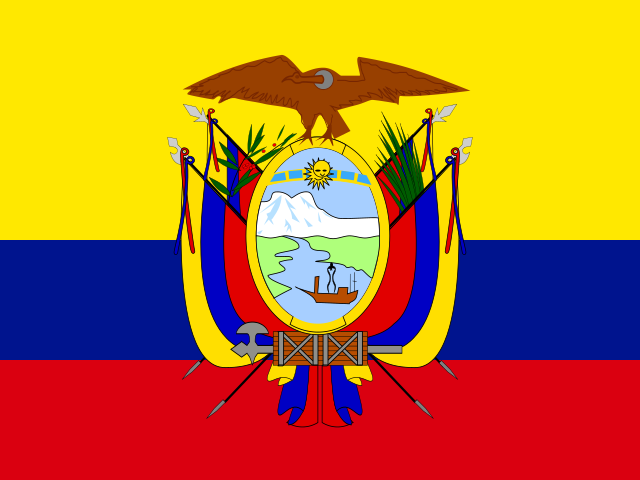 Ecuador
 Falkland Islands (Malvinas)
 French Guiana
 Guyana
 Paraguay
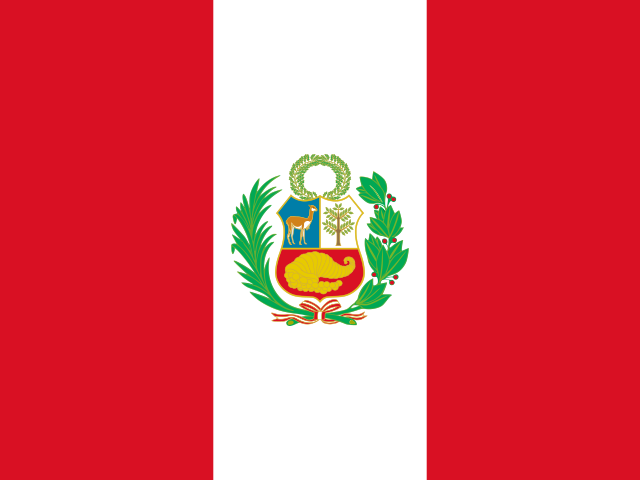 Peru
Peru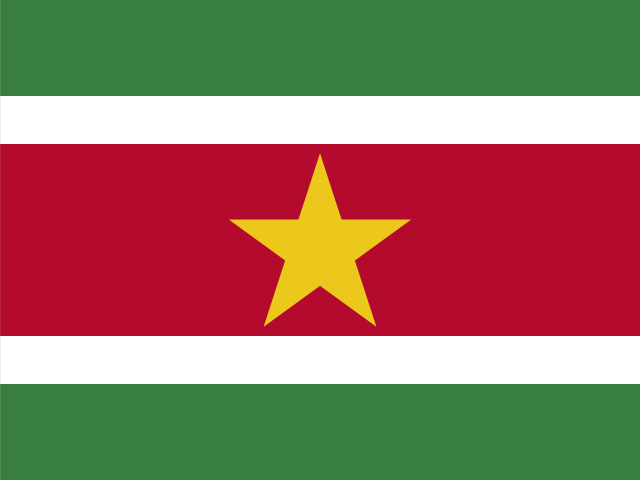 Suriname
 Uruguay
 Venezuela
 Belize
 Costa Rica
 El Salvador
 Guatemala
 Honduras
 Mexico
 Nicaragua
 Panama
 Antigua and Barbuda
 the Bahamas
 Barbados
 British Virgin Islands
 Cayman Islands
 Cuba
Cuba Dominica
 Dominican Republic
 Grenada
 Guadeloupe
 Haiti
Haiti Jamaica
 Martinique
 Montserrat
 Curacao
 Aruba
Aruba Saint Maarten (Dutch part)
 Bonaire
 Puerto Rico
 Saint Kitts and Nevis
 Anguilla
 Saint Lucia
 Saint-Martin (French Part)
 Saint Vincent and the Grenadines
 Trinidad and Tobago
 Turks and Caicos Islands
 United States Virgin Islands
Earlier Report Observations
Between 2018 and 2023, the market volume for sunflower, safflower or cottonseed oil in Latin America and the Caribbean showed significant volatility. Starting at 1 505 thousand tons in 2018, it remained stable the following year before contracting by 12% to 1 324 thousand tons in 2020.
A strong rebound occurred in 2021, with the market growing by 36% to 1 805 thousand tons. This was followed by a sharp 33% decline in 2022 to 1 217 thousand tons, before another substantial recovery took place.
In 2023, market volume increased by 41% to reach 1 712 thousand tons, the highest level in the period and 14% above the 2018 figure, indicating overall growth despite the pronounced yearly swings.
Table of content
- 1. Disclaimer
- 2. Terms of use of the report
- 3. Product codes in the statistical classifications used in the report
-
4. Key Market Indicators and Trends
-
4.1. Key Market Indicators
-
4.1.1. In kind
- 4.1.1.1. Production, 2018-2023
- 4.1.1.2. Imports, 2018-2024
- 4.1.1.3. Exports, 2018-2024
- 4.1.1.4. Market size, 2018-2023
-
4.1.1. In kind
- 4.2. Market Trends and Factors
-
4.1. Key Market Indicators
-
5. Production
-
5.1. Production in Latin America and the Caribbean
- 5.1.1. Annual dynamics of production in Latin America and the Caribbean in kind, 2018-2023, K t
-
5.2. Global production by Country, 2018-2023
- 5.2.1. Annual dynamics of production by macroregions in kind, 2018-2023, K t
- 5.2.2. Dynamics of production structure by macroregions in kind, 2018-2023
- 5.2.3. Annual dynamics of production by country in kind, 2018-2023, K t
- 5.2.4. Structure of production by countries in kind, 2018-2023
- 5.2.5. Dynamics of peoduction structure by countries in kind, 2018-2023
-
5.1. Production in Latin America and the Caribbean
-
6. Exports
-
6.1. Exports (Direct Data*)
- 6.1.1. Exports - Total information
-
6.1.2. Exports in kind, K t
- 6.1.2.1. Annual dynamics of product's exports from Argentina in kind, 2018-2024, K t
- 6.1.2.2. Dynamics of product's exports in kind from Argentina by countries, 2018-2024, K t
- 6.1.2.3. Structure of product's exports in kind by countries, 2018-2024
-
6.1.3. Exports in value, M $ US
- 6.1.3.1. Annual dynamics of product's exports from Argentina in value, 2018-2024, M $ US
- 6.1.3.2. Dynamics of product's exports in value from Argentina by countries, 2018-2024, M $ US
- 6.1.3.3. Structure of product's exports in value by countries, 2018-2024
-
6.1.4. Average price of product's exports, $ US/t
- 6.1.4.1. Annual dynamics of average price of product's exports from Argentina, 2018-2024, $ US/t
- 6.1.4.2. Dynamics of average price of product's exports from Argentina by countries, 2018-2024, $ US/t
-
6.2. Exports (Mirror Data)
- 6.2.1. Exports - Total information
-
6.2.2. Exports in kind, K t
- 6.2.2.1. Annual dynamics of product's exports from Argentina in kind, 2018-2024, K t
- 6.2.2.2. Dynamics of product's exports in kind from Argentina by countries, 2018-2024, K t
- 6.2.2.3. Structure of product's exports in kind by countries, 2018-2024
-
6.2.3. Exports in value, M $ US
- 6.2.3.1. Annual dynamics of product's exports from Argentina in value, 2018-2024, M $ US
- 6.2.3.2. Dynamics of product's exports in value from Argentina by countries, 2018-2024, M $ US
- 6.2.3.3. Structure of product's exports in value by countries, 2018-2024
-
6.2.4. Average price of product's exports, $ US/t
- 6.2.4.1. Annual dynamics of average price of product's exports from Argentina, 2018-2024, $ US/t
- 6.2.4.2. Dynamics of average price of product's exports from Argentina by countries, 2018-2024, $ US/t
-
6.1. Exports (Direct Data*)
-
7. Imports
-
7.1. Imports (Direct Data*)
- 7.1.1. Imports - Total information
-
7.1.2. Imports in kind, K t
- 7.1.2.1. Annual dynamics of product's imports to Argentina in kind, 2018-2024, K t
- 7.1.2.2. Dynamics of product's imports in kind to Argentina by countries, 2018-2024, K t
- 7.1.2.3. Structure of product's imports in kind by countries, 2018-2024
-
7.1.3. Imports in value, M $ US
- 7.1.3.1. Annual dynamics of product's imports to Argentina in value, 2018-2024, M $ US
- 7.1.3.2. Dynamics of product's imports in value to Argentina by countries, 2018-2024, M $ US
- 7.1.3.3. Structure of product's imports in value by countries, 2018-2024
-
7.1.4. Average price of product's imports, $ US/t
- 7.1.4.1. Annual dynamics of average price of product's imports to Argentina, 2018-2024, $ US/t
- 7.1.4.2. Dynamics of average price of product's imports to Argentina by countries, 2018-2024, $ US/t
-
7.2. Imports (Mirror Data)
- 7.2.1. Imports - Total information
-
7.2.2. Imports in kind, K t
- 7.2.2.1. Annual dynamics of product's imports to Argentina in kind, 2018-2024, K t
- 7.2.2.2. Dynamics of product's imports in kind to Argentina by countries, 2018-2024, K t
- 7.2.2.3. Structure of product's imports in kind by countries, 2018-2024
-
7.2.3. Imports in value, M $ US
- 7.2.3.1. Annual dynamics of product's imports to Argentina in value, 2018-2024, M $ US
- 7.2.3.2. Dynamics of product's imports in value to Argentina by countries, 2018-2024, M $ US
- 7.2.3.3. Structure of product's imports in value by countries, 2018-2024
-
7.2.4. Average price of product's imports, $ US/t
- 7.2.4.1. Annual dynamics of average price of product's imports to Argentina, 2018-2024, $ US/t
- 7.2.4.2. Dynamics of average price of product's imports to Argentina by countries, 2018-2024, $ US/t
-
7.1. Imports (Direct Data*)
-
8. Trade balance
-
8.1. Trade balance (Direct Data)
- 8.1.1. In kind, K t
- 8.1.2. In value, M $ US
-
8.2. Trade balance (Mirror Data)
- 8.2.1. In kind, K t
- 8.2.2. In value, M $ US
-
8.1. Trade balance (Direct Data)
-
9. Top buying and selling countries, 2018-2024
-
9.1. Direct Data
- 9.1.1. Import in Value by Countries-buyers
- 9.1.2. Export in Value by Countries-suppliers
-
9.2. Mirror Data
- 9.2.1. Import in Value by Countries-buyers
- 9.2.2. Export in Value by Countries-suppliers
-
9.1. Direct Data
Production sunflower, safflower or cottonseed oil and fractions in Latin America and the Caribbean
In kind, 2017-2020, K t
Top producers of sunflower, safflower or cottonseed oil and fractions, 2017-2020
World map of production of sunflower, safflower or cottonseed oil and fractions, 2017-2020
After two years of growth, Latin America and the Caribbean saw a decline in sunflower, safflower, or cottonseed oil and fractions production. In 2019, production reached its peak at 1 974 K t, but by 2020 it had fallen to 1 582 K t, marking a 19.8% decrease from the previous year. Over the period from 2017 to 2020, production decreased by 6.9%, which translates to an annualized decline of 2.3%. The largest year-on-year increase occurred in 2018, with production rising by 8.2%.
Annual dynamics of production in Latin America and the Caribbean in kind, 2017-2020, K t
| Parameter | 2018 | 2019 | 2020 | CAGR | |
|---|---|---|---|---|---|
| 1 | Change from last year | 8.2% | 7.4% | (19.8%) | (2.3%) |
In value, 2017-2020, M $ US
Sunflower, safflower, or cottonseed oil and fractions production in Latin America and the Caribbean declined for the third consecutive year. In 2020, the output was valued at 1 423 M $ US, down 11.7% compared to 2019. From 2017 to 2020, production decreased by 36.4%, equating to an annualized rate of decline of 14.0%.
Annual dynamics of production in Latin America and the Caribbean in value, 2017-2020, M $ US
| Parameter | 2018 | 2019 | 2020 | CAGR | |
|---|---|---|---|---|---|
| 1 | Change from last year | (23.8%) | (5.4%) | (11.7%) | (14.0%) |
Exports sunflower, safflower or cottonseed oil and fractions from Latin America and the Caribbean
Exports in kind, K t
Following a two-year increase, sunflower, safflower, or cottonseed oil and fractions exports from Latin America and the Caribbean declined. In 2019, exports peaked at 620.1 K t, but in 2020 they dropped to 480.9 K t, a decrease of 22.4% from the previous year. Over the 2017-2020 period, exports fell by 3.1%, with a compound annual growth rate of -1.0%. The largest increase was recorded in 2019, at 12.3%.
Annual dynamics of product's exports from Latin America and the Caribbean in kind, 2017-2020, K t
| Parameter | 2018 | 2019 | 2020 | CAGR | |
|---|---|---|---|---|---|
| 1 | Change from last year | 11.2% | 12.3% | (22.4%) | (1.0%) |
From 2017 to 2020, the export partner portfolio for sunflower, safflower, or cottonseed oil and fractions from Latin America and the Caribbean was quite broad. India accounted for 20.6% of exports in kind, South Africa for 4.0%, and Australia for 3.8%, with these three countries together representing only 28.4% of total flows.
Structure of product's exports in kind by countries, 2017-2020
World map of product's exports from Latin America and the Caribbean in kind, 2017-2020
Exports in value, M $ US
Latin America and the Caribbean's sunflower, safflower, or cottonseed oil and fractions exports declined for the third consecutive year. In 2020, exports were valued at 432.4 M $ US, reflecting a solid decline of 14.6% compared to 2019. Between 2017 and 2020, exports decreased by 33.8%, equating to an annualized rate of decline of 12.8%.
Annual dynamics of product's exports from Latin America and the Caribbean in value, 2017-2020, M $ US
| Parameter | 2018 | 2019 | 2020 | CAGR | |
|---|---|---|---|---|---|
| 1 | Change from last year | (21.7%) | (1.0%) | (14.6%) | (12.8%) |
The structure of exports in value terms from 2017 to 2020 can be described as diversified. India held 18.5% of exports in value terms, the United States 3.9%, and Australia 3.8%, with these three countries together accounting for just 26.2% of total flows, and no single country dominated the market.
Structure of product's exports in value by countries, 2017-2020
World map of product's exports from Latin America and the Caribbean in value, 2017-2020
Imports sunflower, safflower or cottonseed oil and fractions to Latin America and the Caribbean
Imports in kind, K t
Latin America and the Caribbean imported approximately 222.5 K t of sunflower, safflower, or cottonseed oil and fractions in 2020, which is 45.2% higher than in 2019. Over the period from 2017 to 2020, imports increased by 42.1%, equating to an annualized growth rate of 12.4%. The lowest import volume was recorded in 2019 at 153.2 K t, with the largest decline that year at 29.8%.
Annual dynamics of product's imports to Latin America and the Caribbean in kind, 2017-2020, K t
| Parameter | 2018 | 2019 | 2020 | CAGR | |
|---|---|---|---|---|---|
| 1 | Change from last year | 39.3% | (29.8%) | 45.2% | 12.4% |
During 2017-2020, imports in kind of sunflower, safflower, or cottonseed oil and fractions to Latin America and the Caribbean were spread across a large number of markets. The United States accounted for 7.7% of imports in kind, Ukraine for 4.1%, and Turkey for 1.9%, with these three countries jointly representing only 13.8% of total flows.
Structure of product's imports in kind by countries, 2017-2020
World map of product's imports to Latin America and the Caribbean in kind, 2017-2020
Imports in value, M $ US
In 2020, Latin America and the Caribbean's sunflower, safflower, or cottonseed oil and fractions imports stood at 359.0 M $ US, indicating a gain of 4.3% compared to 2019. The minimum value was recorded in 2019 at 344.3 M $ US, while the maximum was in 2018 at 382.3 M $ US. The largest decline occurred in 2019 at 9.9%, and the largest increase was in 2018 at 6.9%.
Annual dynamics of product's imports to Latin America and the Caribbean in value, 2017-2020, M $ US
| Parameter | 2018 | 2019 | 2020 | CAGR | |
|---|---|---|---|---|---|
| 1 | Change from last year | 6.9% | (9.9%) | 4.3% | 0.1% |
From 2017 to 2020, the country structure of imports in value terms remained highly diversified. The United States accounted for 8.3% of imports in value terms, Ukraine for 4.1%, and Turkey for 2.1%, with these three countries together making up only 14.5% of total flows, while a long tail of smaller markets constituted the remaining 85.5%.
Structure of product's imports in value by countries, 2017-2020
World map of product's imports to Latin America and the Caribbean in value, 2017-2020
Related Reports





In-depth market research on this product
Global Sunflower Seeds Market 2021–2031: Size, Share, Trends and Forecast
Global market report: size, trends and forecast to 2031 · 184 pages
Global Cottonseed Oil Market 2021–2031: Size, Share, Trends and Forecast
Global market report: size, trends and forecast to 2031 · 186 pages
Why Choose Us?
Only Verified Data
No Hidden Costs or Separate Fees
Smarter Subscription Pricing
Contact Our Team
Submit your inquiry using the form below — our team will get back to you within 24 hours.