






"Latin America and the Caribbean" region includes following countries:
 Argentina
 Bolivia
 Brazil
 Chile
Chile Colombia
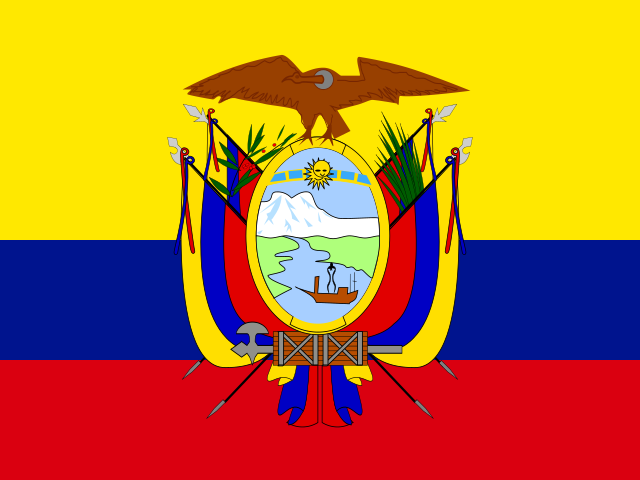 Ecuador
 Falkland Islands (Malvinas)
 French Guiana
 Guyana
 Paraguay
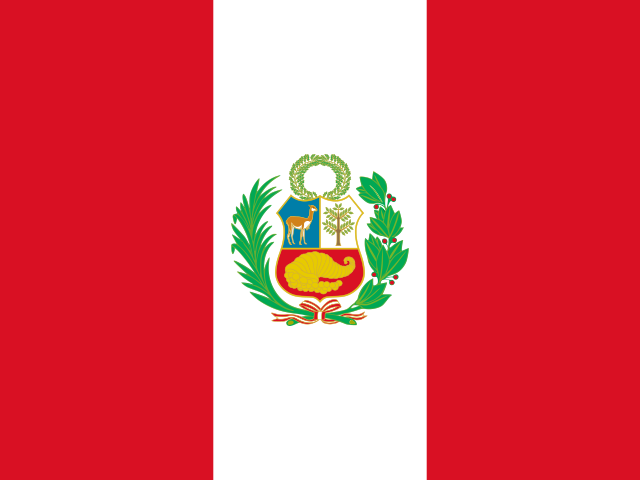 Peru
Peru Suriname
 Uruguay
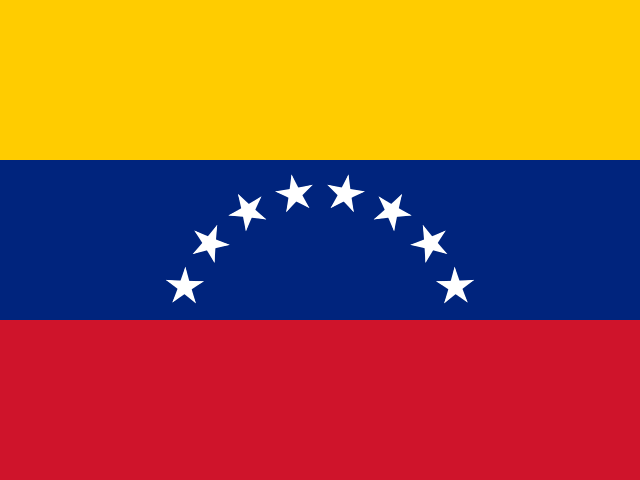 Venezuela
 Belize
 Costa Rica
 El Salvador
 Guatemala
 Honduras
 Mexico
 Nicaragua
 Panama
 Antigua and Barbuda
 the Bahamas
 Barbados
 British Virgin Islands
 Cayman Islands
 Cuba
Cuba Dominica
 Dominican Republic
 Grenada
 Guadeloupe
 Haiti
Haiti Jamaica
 Martinique
 Montserrat
 Curacao
 Aruba
Aruba Saint Maarten (Dutch part)
 Bonaire
 Puerto Rico
 Saint Kitts and Nevis
 Anguilla
 Saint Lucia
 Saint-Martin (French Part)
 Saint Vincent and the Grenadines
 Trinidad and Tobago
 Turks and Caicos Islands
 United States Virgin Islands
Earlier Report Observations
From 2018 to 2022, the palm oil market volume in Latin America and the Caribbean expanded consistently, rising from 3 261 thousand tons to 4 998 thousand tons. This growth was primarily driven by increased production capacity, with countries like Colombia and Honduras setting ambitious expansion targets for oil palm cultivation. Simultaneously, rising demand for palm oil in the biofuel sector and for organic food products stimulated both investment and output, supported by regulatory efforts to diversify energy matrices and decarbonize industries.
In 2023, the market volume contracted to 4 050 thousand tons as a surge in exports, which reached 2 953 thousand tons, redirected supply away from the domestic market. Latin American producers focused on strengthening their export channels, particularly to Europe, by adopting sustainable certifications and more efficient supply chains to compete globally. Entering 2024, climatic phenomena such as El Niño and aging plantations began to pressure yields, while ongoing certification delays and new European deforestation regulations continued to shape production strategies.
Table of content
- 1. Disclaimer
- 2. Terms of use of the report
- 3. Product codes in the statistical classifications used in the report
-
4. Key Market Indicators and Trends
-
4.1. Key Market Indicators
-
4.1.1. In kind
- 4.1.1.1. Production, 2018-2023
- 4.1.1.2. Imports, 2018-2024
- 4.1.1.3. Exports, 2018-2024
- 4.1.1.4. Market size, 2018-2023
-
4.1.1. In kind
- 4.2. Market Trends and Factors
-
4.1. Key Market Indicators
-
5. Production
-
5.1. Production in Latin America and the Caribbean
- 5.1.1. Annual dynamics of production in Latin America and the Caribbean in kind, 2018-2023, K t
-
5.2. Global production by Country, 2018-2023
- 5.2.1. Annual dynamics of production by macroregions in kind, 2018-2023, K t
- 5.2.2. Dynamics of production structure by macroregions in kind, 2018-2023
- 5.2.3. Annual dynamics of production by country in kind, 2018-2023, K t
- 5.2.4. Structure of production by countries in kind, 2018-2023
- 5.2.5. Dynamics of peoduction structure by countries in kind, 2018-2023
-
5.1. Production in Latin America and the Caribbean
-
6. Imports
-
6.1. Imports (Direct Data*)
- 6.1.1. Imports - Total information
-
6.1.2. Imports in kind, K t
- 6.1.2.1. Annual dynamics of product's imports to Argentina in kind, 2018-2024, K t
- 6.1.2.2. Dynamics of product's imports in kind to Argentina by countries, 2018-2024, K t
- 6.1.2.3. Structure of product's imports in kind by countries, 2018-2024
-
6.1.3. Imports in value, M $ US
- 6.1.3.1. Annual dynamics of product's imports to Argentina in value, 2018-2024, M $ US
- 6.1.3.2. Dynamics of product's imports in value to Argentina by countries, 2018-2024, M $ US
- 6.1.3.3. Structure of product's imports in value by countries, 2018-2024
-
6.1.4. Average price of product's imports, $ US/t
- 6.1.4.1. Annual dynamics of average price of product's imports to Argentina, 2018-2024, $ US/t
- 6.1.4.2. Dynamics of average price of product's imports to Argentina by countries, 2018-2024, $ US/t
-
6.2. Imports (Mirror Data)
- 6.2.1. Imports - Total information
-
6.2.2. Imports in kind, K t
- 6.2.2.1. Annual dynamics of product's imports to Argentina in kind, 2018-2024, K t
- 6.2.2.2. Dynamics of product's imports in kind to Argentina by countries, 2018-2024, K t
- 6.2.2.3. Structure of product's imports in kind by countries, 2018-2024
-
6.2.3. Imports in value, M $ US
- 6.2.3.1. Annual dynamics of product's imports to Argentina in value, 2018-2024, M $ US
- 6.2.3.2. Dynamics of product's imports in value to Argentina by countries, 2018-2024, M $ US
- 6.2.3.3. Structure of product's imports in value by countries, 2018-2024
-
6.2.4. Average price of product's imports, $ US/t
- 6.2.4.1. Annual dynamics of average price of product's imports to Argentina, 2018-2024, $ US/t
- 6.2.4.2. Dynamics of average price of product's imports to Argentina by countries, 2018-2024, $ US/t
-
6.1. Imports (Direct Data*)
-
7. Exports
-
7.1. Exports (Direct Data*)
- 7.1.1. Exports - Total information
-
7.1.2. Exports in kind, K t
- 7.1.2.1. Annual dynamics of product's exports from Argentina in kind, 2018-2024, K t
- 7.1.2.2. Dynamics of product's exports in kind from Argentina by countries, 2018-2024, K t
- 7.1.2.3. Structure of product's exports in kind by countries, 2018-2024
-
7.1.3. Exports in value, M $ US
- 7.1.3.1. Annual dynamics of product's exports from Argentina in value, 2018-2024, M $ US
- 7.1.3.2. Dynamics of product's exports in value from Argentina by countries, 2018-2024, M $ US
- 7.1.3.3. Structure of product's exports in value by countries, 2018-2024
-
7.1.4. Average price of product's exports, $ US/t
- 7.1.4.1. Annual dynamics of average price of product's exports from Argentina, 2018-2024, $ US/t
- 7.1.4.2. Dynamics of average price of product's exports from Argentina by countries, 2018-2024, $ US/t
-
7.2. Exports (Mirror Data)
- 7.2.1. Exports - Total information
-
7.2.2. Exports in kind, K t
- 7.2.2.1. Annual dynamics of product's exports from Argentina in kind, 2018-2024, K t
- 7.2.2.2. Dynamics of product's exports in kind from Argentina by countries, 2018-2024, K t
- 7.2.2.3. Structure of product's exports in kind by countries, 2018-2024
-
7.2.3. Exports in value, M $ US
- 7.2.3.1. Annual dynamics of product's exports from Argentina in value, 2018-2024, M $ US
- 7.2.3.2. Dynamics of product's exports in value from Argentina by countries, 2018-2024, M $ US
- 7.2.3.3. Structure of product's exports in value by countries, 2018-2024
-
7.2.4. Average price of product's exports, $ US/t
- 7.2.4.1. Annual dynamics of average price of product's exports from Argentina, 2018-2024, $ US/t
- 7.2.4.2. Dynamics of average price of product's exports from Argentina by countries, 2018-2024, $ US/t
-
7.1. Exports (Direct Data*)
-
8. Trade balance
-
8.1. Trade balance (Direct Data)
- 8.1.1. In kind, K t
- 8.1.2. In value, M $ US
-
8.2. Trade balance (Mirror Data)
- 8.2.1. In kind, K t
- 8.2.2. In value, M $ US
-
8.1. Trade balance (Direct Data)
-
9. Top buying and selling countries, 2018-2024
-
9.1. Direct Data
- 9.1.1. Import in Value by Countries-buyers
- 9.1.2. Export in Value by Countries-suppliers
-
9.2. Mirror Data
- 9.2.1. Import in Value by Countries-buyers
- 9.2.2. Export in Value by Countries-suppliers
-
9.1. Direct Data
Production palm oil and fractions in Latin America and the Caribbean
In kind, 2017-2020, K t
Top producers of palm oil and fractions, 2017-2020
World map of production of palm oil and fractions, 2017-2020
Latin America and the Caribbean have seen palm oil and fractions production grow for the third year in a row. In 2020, the region produced 5 332 thousand tons, marking a 4.7% increase compared to the previous year. Looking at the period from 2017 to 2020, production rose by 10.9%, which translates to an average annual growth rate of 3.5%.
Annual dynamics of production in Latin America and the Caribbean in kind, 2017-2020, K t
| Parameter | 2018 | 2019 | 2020 | CAGR | |
|---|---|---|---|---|---|
| 1 | Change from last year | 4.2% | 1.7% | 4.7% | 3.5% |
In value, 2017-2020, M $ US
Following a two-year decline, palm oil and fractions production in Latin America and the Caribbean rebounded. In 2020, the output was valued at 4 170 million US dollars, showing a significant 30.7% jump from 2019. Over the 2017-2020 span, production increased by 14.9%, averaging 4.8% per year. The lowest value was in 2019 at 3 190 million US dollars, with the sharpest drop occurring in 2018 at 11.5%.
Annual dynamics of production in Latin America and the Caribbean in value, 2017-2020, M $ US
| Parameter | 2018 | 2019 | 2020 | CAGR | |
|---|---|---|---|---|---|
| 1 | Change from last year | (11.5%) | (0.6%) | 30.7% | 4.8% |
Exports palm oil and fractions from Latin America and the Caribbean
Exports in kind, K t
In 2020, Latin America and the Caribbean exported 2 106 thousand tons of palm oil and fractions, reflecting a modest 6.3% year-over-year rise. From 2017 to 2020, exports fell by 4.8%, averaging a 1.6% annual decline. The lowest export volume was in 2019 at 1 981 thousand tons, while the peak was in 2018 at 2 492 thousand tons. The most significant decrease happened in 2019 at 20.5%, and the largest increase was in 2018 at 12.6%.
Annual dynamics of product's exports from Latin America and the Caribbean in kind, 2017-2020, K t
| Parameter | 2018 | 2019 | 2020 | CAGR | |
|---|---|---|---|---|---|
| 1 | Change from last year | 12.6% | (20.5%) | 6.3% | (1.6%) |
Between 2017 and 2020, palm oil and fractions exports from Latin America and the Caribbean were spread across various partner countries. The Netherlands accounted for 27.4% of exports in kind, Spain for 10.7%, and Germany for 5.9%, but together they made up only 44.0% of total flows.
Structure of product's exports in kind by countries, 2017-2020
World map of product's exports from Latin America and the Caribbean in kind, 2017-2020
Exports in value, M $ US
After two years of decline, Latin America and the Caribbean's palm oil and fractions exports rebounded. In 2020, exports reached 1 647 million US dollars, a sharp 32.7% increase from the previous year. The lowest value was recorded in 2019 at 1 241 million US dollars, with the biggest drop that year at 22.3%.
Annual dynamics of product's exports from Latin America and the Caribbean in value, 2017-2020, M $ US
| Parameter | 2018 | 2019 | 2020 | CAGR | |
|---|---|---|---|---|---|
| 1 | Change from last year | (4.3%) | (22.3%) | 32.7% | (0.4%) |
From 2017 to 2020, the Netherlands, Spain, and Germany played significant but not dominant roles as buyers of palm oil and fractions from Latin America and the Caribbean. The Netherlands held 26.4% of exports in value terms, Spain 9.6%, and Germany 5.7%, with their combined share totaling 41.8% of total exports.
Structure of product's exports in value by countries, 2017-2020
World map of product's exports from Latin America and the Caribbean in value, 2017-2020
Imports palm oil and fractions to Latin America and the Caribbean
Imports in kind, K t
Latin America and the Caribbean's palm oil and fractions imports grew for the second consecutive year. In 2020, imports totaled 1 374 thousand tons, a sharp 33.3% increase compared to 2019. Over the 2017-2020 period, imports rose by 12.6%, with a compound annual growth rate of 4.0%. The lowest import volume was in 2018 at 744 thousand tons, where the largest decline of 39.0% occurred. The biggest increase was in 2019 at 38.5%.
Annual dynamics of product's imports to Latin America and the Caribbean in kind, 2017-2020, K t
| Parameter | 2018 | 2019 | 2020 | CAGR | |
|---|---|---|---|---|---|
| 1 | Change from last year | (39.0%) | 38.5% | 33.3% | 4.0% |
From 2017 to 2020, Indonesia, Malaysia, and Denmark were consistently the main sources for imports in kind. Indonesia accounted for 19.6% of imports, Malaysia for 3.8%, and Denmark for 0.9%, together making up 24.3% of total flows.
Structure of product's imports in kind by countries, 2017-2020
World map of product's imports to Latin America and the Caribbean in kind, 2017-2020
Imports in value, M $ US
Following a two-year contraction, palm oil and fractions imports into Latin America and the Caribbean increased. In 2020, imports amounted to 1 207 million US dollars, a 37.3% rise from the previous year. Between 2017 and 2020, imports grew by 8.3%, averaging 2.7% annually. The minimum value was in 2019 at 879 million US dollars, with the largest decline that year at 20.2%.
Annual dynamics of product's imports to Latin America and the Caribbean in value, 2017-2020, M $ US
| Parameter | 2018 | 2019 | 2020 | CAGR | |
|---|---|---|---|---|---|
| 1 | Change from last year | (1.1%) | (20.2%) | 37.3% | 2.7% |
Throughout 2017-2020, Indonesia, Malaysia, and Denmark remained the top markets for imports in value terms, collectively accounting for 25.2% of total flows.
Structure of product's imports in value by countries, 2017-2020
World map of product's imports to Latin America and the Caribbean in value, 2017-2020
Related Reports

Palm oil and fractions market in Angola
2026-03-28
Palm oil and fractions market in MERCOSUR
2026-03-28
Palm oil and fractions market in Sweden
2026-03-28
Palm oil and fractions market in Peru
2026-03-28




Why Choose Us?
Only Verified Data
No Hidden Costs or Separate Fees
Smarter Subscription Pricing
Contact Our Team
Submit your inquiry using the form below — our team will get back to you within 24 hours.