






"SADC" region includes following countries:
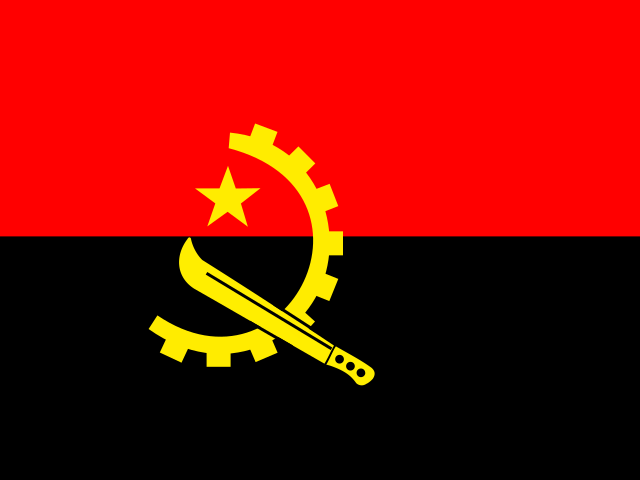 Angola
 Botswana
 Comoros
 Democratic Republic of the Congo
 Eswatini
 Lesotho
 Madagascar
 Malawi
 Mauritius
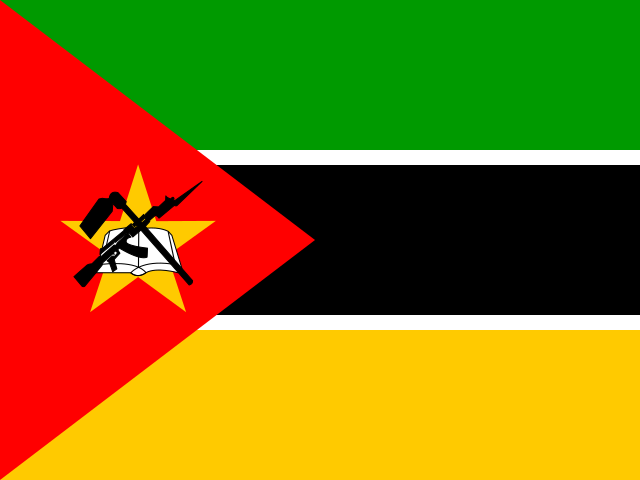 Mozambique
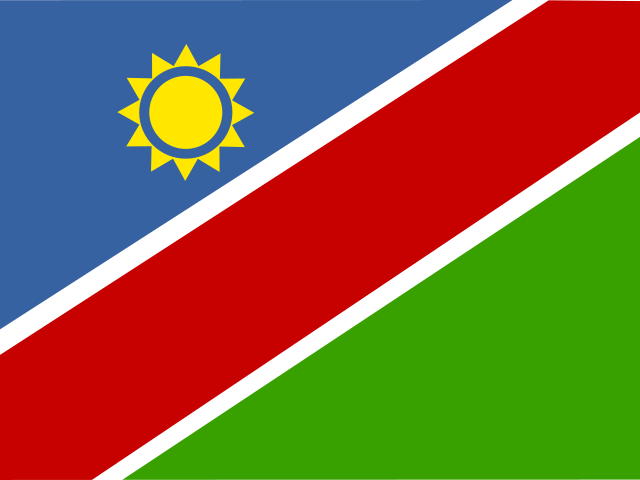 Namibia
 Seychelles
 South Africa
 Tanzania
 Zambia
 Zimbabwe
Earlier Report Observations
In the initial years from 2018 to 2020, the sunflower oil market in South Africa was shaped by developments in the agricultural base. Continued evaluation of sunflower hybrids for higher oil content aimed to improve oil yield, supporting production. However, in 2019, significant exports of sunflower seeds to other SADC countries reduced the domestic feedstock available for crushing, contributing to a drop in production and overall market volume that year. By 2020, a rebound in seed production and crushing activity, alongside favorable price levels linked to global oilseed markets, helped drive a sharp recovery in the market volume to 958 thousand tons.
The market contracted over 2021 and 2022 due to shifting trade dynamics and external shocks. While initiatives like the FarmSol Emerging Grower Programme supported emerging farmers and oilseed cultivation, a steep fall in imports caused the market volume to decline in 2021. The following year, the war in Ukraine triggered global supply disruptions and price volatility for sunflower oil. These conditions led to retailers rationing cooking oil sales and prompted a significant increase in exports from South Africa, which drew down domestic supply and further reduced the market volume to 702 thousand tons.
A partial recovery occurred in 2023, with the market volume rising to 818 thousand tons, aided by a normalization of export flows. Global factors, including lower sunflower seed harvests in key producing regions like the EU and Argentina, maintained upward pressure on prices. Furthermore, increased costs related to sanitary and phytosanitary protocols added complexity to the supply chain. Looking ahead to 2024, new regulations began phasing out certain hazardous pesticides, and the forthcoming Plant Improvement Act introduced revised requirements for seed producers, signaling ongoing regulatory evolution for the sector.
Table of content
- 1. Disclaimer
- 2. Terms of use of the report
- 3. Product codes in the statistical classifications used in the report
-
4. Key Market Indicators and Trends
-
4.1. Key Market Indicators
-
4.1.1. In kind
- 4.1.1.1. Production, 2018-2023
- 4.1.1.2. Imports, 2018-2024
- 4.1.1.3. Exports, 2018-2024
- 4.1.1.4. Market size, 2018-2023
-
4.1.1. In kind
- 4.2. Market Trends and Factors
-
4.1. Key Market Indicators
-
5. Production
-
5.1. Production in SADC
- 5.1.1. Annual dynamics of production in SADC in kind, 2018-2023, K t
-
5.2. Global production by Country, 2018-2023
- 5.2.1. Annual dynamics of production by macroregions in kind, 2018-2023, K t
- 5.2.2. Dynamics of production structure by macroregions in kind, 2018-2023
- 5.2.3. Annual dynamics of production by country in kind, 2018-2023, K t
- 5.2.4. Structure of production by countries in kind, 2018-2023
- 5.2.5. Dynamics of peoduction structure by countries in kind, 2018-2023
-
5.1. Production in SADC
-
6. Imports
-
6.1. Imports (Direct Data*)
- 6.1.1. Imports - Total information
-
6.1.2. Imports in kind, K t
- 6.1.2.1. Annual dynamics of product's imports to Angola in kind, 2018-2024, K t
- 6.1.2.2. Dynamics of product's imports in kind to Angola by countries, 2018-2024, K t
- 6.1.2.3. Structure of product's imports in kind by countries, 2018-2024
-
6.1.3. Imports in value, M $ US
- 6.1.3.1. Annual dynamics of product's imports to Angola in value, 2018-2024, M $ US
- 6.1.3.2. Dynamics of product's imports in value to Angola by countries, 2018-2024, M $ US
- 6.1.3.3. Structure of product's imports in value by countries, 2018-2024
-
6.1.4. Average price of product's imports, $ US/t
- 6.1.4.1. Annual dynamics of average price of product's imports to Angola, 2018-2024, $ US/t
- 6.1.4.2. Dynamics of average price of product's imports to Angola by countries, 2018-2024, $ US/t
-
6.2. Imports (Mirror Data)
- 6.2.1. Imports - Total information
-
6.2.2. Imports in kind, K t
- 6.2.2.1. Annual dynamics of product's imports to Angola in kind, 2018-2024, K t
- 6.2.2.2. Dynamics of product's imports in kind to Angola by countries, 2018-2024, K t
- 6.2.2.3. Structure of product's imports in kind by countries, 2018-2024
-
6.2.3. Imports in value, M $ US
- 6.2.3.1. Annual dynamics of product's imports to Angola in value, 2018-2024, M $ US
- 6.2.3.2. Dynamics of product's imports in value to Angola by countries, 2018-2024, M $ US
- 6.2.3.3. Structure of product's imports in value by countries, 2018-2024
-
6.2.4. Average price of product's imports, $ US/t
- 6.2.4.1. Annual dynamics of average price of product's imports to Angola, 2018-2024, $ US/t
- 6.2.4.2. Dynamics of average price of product's imports to Angola by countries, 2018-2024, $ US/t
-
6.1. Imports (Direct Data*)
-
7. Exports
-
7.1. Exports (Direct Data*)
- 7.1.1. Exports - Total information
-
7.1.2. Exports in kind, K t
- 7.1.2.1. Annual dynamics of product's exports from Angola in kind, 2018-2024, K t
- 7.1.2.2. Dynamics of product's exports in kind from Angola by countries, 2018-2024, K t
- 7.1.2.3. Structure of product's exports in kind by countries, 2018-2024
-
7.1.3. Exports in value, M $ US
- 7.1.3.1. Annual dynamics of product's exports from Angola in value, 2018-2024, M $ US
- 7.1.3.2. Dynamics of product's exports in value from Angola by countries, 2018-2024, M $ US
- 7.1.3.3. Structure of product's exports in value by countries, 2018-2024
-
7.1.4. Average price of product's exports, $ US/t
- 7.1.4.1. Annual dynamics of average price of product's exports from Angola, 2018-2024, $ US/t
- 7.1.4.2. Dynamics of average price of product's exports from Angola by countries, 2018-2024, $ US/t
-
7.2. Exports (Mirror Data)
- 7.2.1. Exports - Total information
-
7.2.2. Exports in kind, K t
- 7.2.2.1. Annual dynamics of product's exports from Angola in kind, 2018-2024, K t
- 7.2.2.2. Dynamics of product's exports in kind from Angola by countries, 2018-2024, K t
- 7.2.2.3. Structure of product's exports in kind by countries, 2018-2024
-
7.2.3. Exports in value, M $ US
- 7.2.3.1. Annual dynamics of product's exports from Angola in value, 2018-2024, M $ US
- 7.2.3.2. Dynamics of product's exports in value from Angola by countries, 2018-2024, M $ US
- 7.2.3.3. Structure of product's exports in value by countries, 2018-2024
-
7.2.4. Average price of product's exports, $ US/t
- 7.2.4.1. Annual dynamics of average price of product's exports from Angola, 2018-2024, $ US/t
- 7.2.4.2. Dynamics of average price of product's exports from Angola by countries, 2018-2024, $ US/t
-
7.1. Exports (Direct Data*)
-
8. Trade balance
-
8.1. Trade balance (Direct Data)
- 8.1.1. In kind, K t
- 8.1.2. In value, M $ US
-
8.2. Trade balance (Mirror Data)
- 8.2.1. In kind, K t
- 8.2.2. In value, M $ US
-
8.1. Trade balance (Direct Data)
-
9. Top buying and selling countries, 2018-2024
-
9.1. Direct Data
- 9.1.1. Import in Value by Countries-buyers
- 9.1.2. Export in Value by Countries-suppliers
-
9.2. Mirror Data
- 9.2.1. Import in Value by Countries-buyers
- 9.2.2. Export in Value by Countries-suppliers
-
9.1. Direct Data
Production sunflower or safflower oil and fractions in SADC
In kind, 2017-2020, K t
Top producers of sunflower or safflower oil and fractions, 2017-2020
World map of production of sunflower or safflower oil and fractions, 2017-2020
In 2020, SADC produced 609.6 thousand tonnes of sunflower or safflower oil and fractions, marking a 15.6% increase from 2019. Production reached its lowest point in 2019 at 527.5 thousand tonnes, with the largest decline that year of 11.1%. Over the period from 2017 to 2020, production grew by 4.7%, averaging an annualized rate of 1.6%.
Annual dynamics of production in SADC in kind, 2017-2020, K t
| Parameter | 2018 | 2019 | 2020 | CAGR | |
|---|---|---|---|---|---|
| 1 | Change from last year | 2.0% | (11.1%) | 15.6% | 1.6% |
Exports sunflower or safflower oil and fractions from SADC
Exports in kind, K t
Market performance showed significant fluctuations during this period. Sunflower or safflower oil and fractions exports from SADC reached a low in 2020 at 6.1 thousand tonnes, representing a sharp decrease of 93.4% compared to the previous year. The largest increase occurred in 2019, with a surge of 444.3%. From the peak in 2017 to the trough in 2020, export volumes varied by a factor of 19.
Annual dynamics of product's exports from SADC in kind, 2017-2020, K t
| Parameter | 2018 | 2019 | 2020 | CAGR | |
|---|---|---|---|---|---|
| 1 | Change from last year | (85.2%) | 444.3% | (93.4%) | (62.4%) |
From 2017 to 2020, Switzerland and Special Categories consistently held the top positions in the export structure by volume, together accounting for 6.5% of total flows.
Structure of product's exports in kind by countries, 2017-2020
World map of product's exports from SADC in kind, 2017-2020
Exports in value, M $ US
In 2020, SADC's exports of sunflower or safflower oil and fractions in value terms totaled 93.1 million US dollars, showing minimal change from the previous year. The lowest value was recorded in 2018 at 90.4 million US dollars, with the largest decline that year of 18.7%. The largest increase occurred in 2019, rising by 3.2%. Between 2017 and 2020, exports decreased by 16.3%, averaging an annualized decline of 5.7%.
Annual dynamics of product's exports from SADC in value, 2017-2020, M $ US
| Parameter | 2018 | 2019 | 2020 | CAGR | |
|---|---|---|---|---|---|
| 1 | Change from last year | (18.7%) | 3.2% | (0.2%) | (5.7%) |
From 2017 to 2020, Switzerland (19.1% of exports by value), Italy (0.5%), and Special Categories (0.5%) together represented 20.2% of total exports in value terms, serving as the primary destinations for sunflower or safflower oil and fractions from SADC.
Structure of product's exports in value by countries, 2017-2020
World map of product's exports from SADC in value, 2017-2020
Imports sunflower or safflower oil and fractions to SADC
Imports in kind, K t
SADC's imports of sunflower or safflower oil and fractions by volume rose for the second consecutive year in 2020, reaching 354.3 thousand tonnes, a 4.4% increase from 2019. The lowest volume was in 2018 at 235.2 thousand tonnes, with the largest decline that year of 2.9%. The largest increase occurred in 2019, jumping by 44.3%. Over the 2017-2020 period, imports grew by 46.3%, averaging an annualized rate of 13.5%.
Annual dynamics of product's imports to SADC in kind, 2017-2020, K t
| Parameter | 2018 | 2019 | 2020 | CAGR | |
|---|---|---|---|---|---|
| 1 | Change from last year | (2.9%) | 44.3% | 4.4% | 13.5% |
From 2017 to 2020, Bulgaria (28.3% of imports by volume), Romania (15.0%), and Argentina (14.2%) were the leading sources for sunflower or safflower oil and fractions imports to SADC, collectively accounting for 57.6% of total flows.
Structure of product's imports in kind by countries, 2017-2020
World map of product's imports to SADC in kind, 2017-2020
Imports in value, M $ US
In 2020, SADC's imports of sunflower or safflower oil and fractions in value terms amounted to 304.0 million US dollars, reflecting a slight reduction of 1.3% from 2019. The minimum value was in 2018 at 250.6 million US dollars, with the largest decline that year of 2.2%. The maximum value was recorded in 2019 at 308.1 million US dollars, with the largest increase that year of 22.9%. Between 2017 and 2020, imports increased by 18.6%, averaging an annualized growth rate of 5.9%.
Annual dynamics of product's imports to SADC in value, 2017-2020, M $ US
| Parameter | 2018 | 2019 | 2020 | CAGR | |
|---|---|---|---|---|---|
| 1 | Change from last year | (2.2%) | 22.9% | (1.3%) | 5.9% |
The import market in value terms from 2017 to 2020 was diverse, with Bulgaria (24.1% of imports by value), Argentina (15.4%), and Romania (9.3%) together making up 48.8% of total flows. The remaining 51.2% was distributed among numerous other countries.
Structure of product's imports in value by countries, 2017-2020
World map of product's imports to SADC in value, 2017-2020
Related Reports



Castor oil and fractions market in SADC
2026-03-28
Corn oil and fractions market in SADC
2026-03-28

Sesame oil and fractions market in SADC
2026-03-28
In-depth market research on this product
Global Sunflower Seeds Market 2021–2031: Size, Share, Trends and Forecast
Global market report: size, trends and forecast to 2031 · 184 pages
Why Choose Us?
Only Verified Data
No Hidden Costs or Separate Fees
Smarter Subscription Pricing
Contact Our Team
Submit your inquiry using the form below — our team will get back to you within 24 hours.