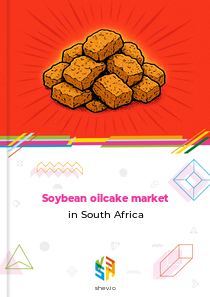







Earlier Report Observations
From 2018 to 2020, soybean oilcake production in South Africa increased from 892 thousand tonnes to over 1 million tonnes, driven by rising demand for animal feed from a growing middle class. Soybean crushing rose by 19% in 2018, doubling the ten-year average, and capital investments added approximately 600 thousand tonnes of processing capacity by 2020. This expansion supported production growth, while market volume remained stable around 1.3 million tonnes.
Market volume peaked at 1.5 million tonnes in 2021, but fell to 1.3 million tonnes in 2022 as imports dropped sharply from 496 thousand tonnes to 184 thousand tonnes, reflecting a strong import substitution trend. Production continued to rise, reaching 1.4 million tonnes in 2023, which helped restore market volume to 1.4 million tonnes. The implementation of phytosanitary regulations for oilseeds in 2021 affected market access, while exploration of new export markets in 2022 aimed to diversify outlets for soy derivatives.
From 2024, soybean cultivation expanded into western regions, replacing other crops, which supported ongoing production growth. Processing capacity was maintained at 2.9 million tonnes, underpinning the industry's ability to meet demand.
Table of content
- 1. Disclaimer
- 2. Terms of use of the report
- 3. Product codes in the statistical classifications used in the report
-
4. Key Market Indicators and Trends
-
4.1. Key Market Indicators
-
4.1.1. In kind
- 4.1.1.1. Production, 2018-2023
- 4.1.1.2. Imports, 2018-2025
- 4.1.1.3. Exports, 2018-2025
- 4.1.1.4. Market size, 2018-2023
-
4.1.2. In value
- 4.1.2.1. Production, 2018-2023
- 4.1.2.2. Imports, 2018-2025
- 4.1.2.3. Exports, 2018-2025
- 4.1.2.4. Market size, 2018-2023
-
4.1.1. In kind
- 4.2. Market Trends and Factors
-
4.1. Key Market Indicators
-
5. Production
-
5.1. Production in South Africa
- 5.1.1. Annual dynamics of production in South Africa in kind, 2018-2023, K t
- 5.1.2. Annual dynamics of production in South Africa in value, 2018-2023, $ US
-
5.2. Global production by Country, 2018-2023
- 5.2.1. Annual dynamics of production by macroregions in kind, 2018-2023, K t
- 5.2.2. Dynamics of production structure by macroregions in kind, 2018-2023
- 5.2.3. Annual dynamics of production by country in kind, 2018-2023, K t
- 5.2.4. Structure of production by countries in kind, 2018-2023
- 5.2.5. Dynamics of peoduction structure by countries in kind, 2018-2023
-
5.1. Production in South Africa
-
6. Imports
-
6.1. Imports (Direct Data)
- 6.1.1. Imports - Total information
-
6.1.2. Imports in kind, K t
- 6.1.2.1. Annual dynamics of product's imports to South Africa in kind, 2018-2025, K t
- 6.1.2.2. Dynamics of product's imports in kind to South Africa by countries, 2018-2025, K t
- 6.1.2.3. Structure of product's imports in kind by countries, 2018-2025
-
6.1.3. Imports in value, M $ US
- 6.1.3.1. Annual dynamics of product's imports to South Africa in value, 2018-2025, M $ US
- 6.1.3.2. Dynamics of product's imports in value to South Africa by countries, 2018-2025, M $ US
- 6.1.3.3. Structure of product's imports in value by countries, 2018-2025
-
6.1.4. Average price of product's imports, $ US/t
- 6.1.4.1. Annual dynamics of average price of product's imports to South Africa, 2018-2025, $ US/t
- 6.1.4.2. Dynamics of average price of product's imports to South Africa by countries, 2018-2025, $ US/t
-
6.2. Imports (Mirror Data)
- 6.2.1. Imports - Total information
-
6.2.2. Imports in kind, K t
- 6.2.2.1. Annual dynamics of product's imports to South Africa in kind, 2018-2025, K t
- 6.2.2.2. Dynamics of product's imports in kind to South Africa by countries, 2018-2025, K t
- 6.2.2.3. Structure of product's imports in kind by countries, 2018-2025
-
6.2.3. Imports in value, M $ US
- 6.2.3.1. Annual dynamics of product's imports to South Africa in value, 2018-2025, M $ US
- 6.2.3.2. Dynamics of product's imports in value to South Africa by countries, 2018-2025, M $ US
- 6.2.3.3. Structure of product's imports in value by countries, 2018-2025
-
6.2.4. Average price of product's imports, $ US/t
- 6.2.4.1. Annual dynamics of average price of product's imports to South Africa, 2018-2025, $ US/t
- 6.2.4.2. Dynamics of average price of product's imports to South Africa by countries, 2018-2025, $ US/t
-
6.1. Imports (Direct Data)
-
7. Exports
-
7.1. Exports (Direct Data)
- 7.1.1. Exports - Total information
-
7.1.2. Exports in kind, K t
- 7.1.2.1. Annual dynamics of product's exports from South Africa in kind, 2018-2025, K t
- 7.1.2.2. Dynamics of product's exports in kind from South Africa by countries, 2018-2025, K t
- 7.1.2.3. Structure of product's exports in kind by countries, 2018-2025
-
7.1.3. Exports in value, M $ US
- 7.1.3.1. Annual dynamics of product's exports from South Africa in value, 2018-2025, M $ US
- 7.1.3.2. Dynamics of product's exports in value from South Africa by countries, 2018-2025, M $ US
- 7.1.3.3. Structure of product's exports in value by countries, 2018-2025
-
7.1.4. Average price of product's exports, $ US/t
- 7.1.4.1. Annual dynamics of average price of product's exports from South Africa, 2018-2025, $ US/t
- 7.1.4.2. Dynamics of average price of product's exports from South Africa by countries, 2018-2025, $ US/t
-
7.2. Exports (Mirror Data)
- 7.2.1. Exports - Total information
-
7.2.2. Exports in kind, K t
- 7.2.2.1. Annual dynamics of product's exports from South Africa in kind, 2018-2025, K t
- 7.2.2.2. Dynamics of product's exports in kind from South Africa by countries, 2018-2025, K t
- 7.2.2.3. Structure of product's exports in kind by countries, 2018-2025
-
7.2.3. Exports in value, M $ US
- 7.2.3.1. Annual dynamics of product's exports from South Africa in value, 2018-2025, M $ US
- 7.2.3.2. Dynamics of product's exports in value from South Africa by countries, 2018-2025, M $ US
- 7.2.3.3. Structure of product's exports in value by countries, 2018-2025
-
7.2.4. Average price of product's exports, $ US/t
- 7.2.4.1. Annual dynamics of average price of product's exports from South Africa, 2018-2025, $ US/t
- 7.2.4.2. Dynamics of average price of product's exports from South Africa by countries, 2018-2025, $ US/t
-
7.1. Exports (Direct Data)
-
8. Trade balance
-
8.1. Trade balance (Direct Data)
- 8.1.1. In kind, K t
- 8.1.2. In value, M $ US
-
8.2. Trade balance (Mirror Data)
- 8.2.1. In kind, K t
- 8.2.2. In value, M $ US
-
8.1. Trade balance (Direct Data)
-
9. Top buying and selling countries, 2018-2025
-
9.1. Direct Data
- 9.1.1. Import in Value by Countries-buyers
- 9.1.2. Export in Value by Countries-suppliers
-
9.2. Mirror Data
- 9.2.1. Import in Value by Countries-buyers
- 9.2.2. Export in Value by Countries-suppliers
-
9.1. Direct Data
Production soybean oilcake in South Africa
In kind, 2018-2021, K t
From 2018 to 2021, South Africa ranked as the world's 22nd largest producer of soybean oilcake.
Top producers of soybean oilcake, 2018-2021
World map of production of soybean oilcake, 2018-2021
South Africa's soybean oilcake production grew for the third year in a row. In 2021, the country produced 1 110 thousand tonnes, marking an 8.4% increase from 2020. Over the 2018-2021 period, production rose by 24.5%, which translates to an average annual growth rate of 7.6%.
Annual dynamics of production in South Africa in kind, 2018-2021, K t
| Parameter | 2019 | 2020 | 2021 | CAGR | |
|---|---|---|---|---|---|
| 1 | Change from last year | 8.8% | 5.6% | 8.4% | 7.6% |
In value, 2018-2021, M $ US
South Africa's soybean oilcake production value continued its upward trend for the third consecutive year. In 2021, the output was valued at 569.3 million US dollars, up 34.5% from the previous year. Between 2018 and 2021, production value increased by 44.1%, with a compound annual growth rate of 13.0%.
Annual dynamics of production in South Africa in value, 2018-2021, M $ US
| Parameter | 2019 | 2020 | 2021 | CAGR | |
|---|---|---|---|---|---|
| 1 | Change from last year | 3.5% | 3.5% | 34.5% | 13.0% |
Exports soybean oilcake from South Africa
Exports in kind, K t
South Africa's soybean oilcake export volumes expanded for the third straight year. In 2021, exports totaled 137.4 thousand tonnes, a sharp 25.8% rise compared to 2020. From 2018 to 2021, exports surged by 96.6%, averaging an annual growth rate of 25.3%.
Annual dynamics of product's exports from South Africa in kind, 2018-2021, K t
| Parameter | 2019 | 2020 | 2021 | CAGR | |
|---|---|---|---|---|---|
| 1 | Change from last year | 49.2% | 4.8% | 25.8% | 25.3% |
Between 2018 and 2021, Eswatini, Botswana, and Mozambique were the top destinations for South Africa's soybean oilcake exports in volume terms. Eswatini accounted for 32.5% of exports, Botswana for 29.6%, and Mozambique for 15.0%, together making up 77.1% of total export flows.
Structure of product's exports in kind by countries, 2018-2021
World map of product's exports from South Africa in kind, 2018-2021
Exports in value, M $ US
South Africa's soybean oilcake export value grew for the third consecutive year. In 2021, exports reached 70.5 million US dollars, a dramatic 56.1% increase from 2020. Over the 2018-2021 period, export value jumped by 127.5%, with an average annual rate of 31.5%.
Annual dynamics of product's exports from South Africa in value, 2018-2021, M $ US
| Parameter | 2019 | 2020 | 2021 | CAGR | |
|---|---|---|---|---|---|
| 1 | Change from last year | 41.9% | 2.7% | 56.1% | 31.5% |
From 2018 to 2021, Eswatini, Botswana, and Mozambique were the leading markets for South Africa's soybean oilcake exports in value terms. Eswatini represented 30.8% of exports, Botswana 28.6%, and Mozambique 15.6%, collectively absorbing 74.9% of total export value.
Structure of product's exports in value by countries, 2018-2021
World map of product's exports from South Africa in value, 2018-2021
Imports soybean oilcake to South Africa
Imports in kind, K t
After declining for two years, South Africa's soybean oilcake imports rebounded in 2021. Imports reached 496.1 thousand tonnes, a solid 23.8% increase from the previous year. Over the 2018-2021 period, imports grew by 6.6%, with a compound annual growth rate of 2.2%. The lowest volume was recorded in 2020 at 400.9 thousand tonnes, following a 9.7% drop in 2019.
Annual dynamics of product's imports to South Africa in kind, 2018-2021, K t
| Parameter | 2019 | 2020 | 2021 | CAGR | |
|---|---|---|---|---|---|
| 1 | Change from last year | (9.7%) | (4.6%) | 23.8% | 2.2% |
Throughout 2018-2021, Argentina was the dominant source for South Africa's soybean oilcake imports in volume terms, consistently supplying 92.6% of total imports.
Structure of product's imports in kind by countries, 2018-2021
World map of product's imports to South Africa in kind, 2018-2021
Imports in value, M $ US
South Africa's soybean oilcake import value increased for the second year in a row. In 2021, imports amounted to 222.4 million US dollars, a steep 58.3% rise from the previous year. Between 2018 and 2021, import value grew by 37.1%, averaging an annual rate of 11.1%. The lowest value was in 2019 at 132.5 million US dollars, after an 18.3% decline that year.
Annual dynamics of product's imports to South Africa in value, 2018-2021, M $ US
| Parameter | 2019 | 2020 | 2021 | CAGR | |
|---|---|---|---|---|---|
| 1 | Change from last year | (18.3%) | 6.0% | 58.3% | 11.1% |
From 2018 to 2021, Argentina dominated South Africa's soybean oilcake imports in value terms, consistently accounting for 93.8% of total import flows.
Structure of product's imports in value by countries, 2018-2021
World map of product's imports to South Africa in value, 2018-2021
Related Reports

Soybean oilcake market in Austria
2026-03-29
Soybean oilcake market in Chile
2026-03-29
Soybean oilcake market in Malaysia
2026-03-29


Rapeseed oilcake market in South Africa
2026-03-29

Why Choose Us?
Only Verified Data
No Hidden Costs or Separate Fees
Smarter Subscription Pricing
Contact Our Team
Submit your inquiry using the form below — our team will get back to you within 24 hours.