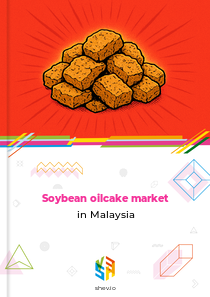







Earlier Report Observations
The soybean oilcake market in Malaysia began the period at 1.8 million tons in 2018 and grew to 1.87 million tons in 2019. Government-imposed maximum prices for bottled cooking oil during these years contributed to stability in the edible oils market, supporting consistent demand for soybean oil and its residues.
Market volume then entered a downward phase, contracting to 1.81 million tons in 2020 and falling more sharply to 1.66 million tons in 2021.
After a rebound to 1.73 million tons in 2022, the market declined again to 1.68 million tons in 2023. This most recent reduction coincided with a noticeable shift in consumer behavior toward alternative cooking oils, which reduced demand for soybean oil and consequently for soybean oilcake.
Table of content
- 1. Disclaimer
- 2. Terms of use of the report
- 3. Product codes in the statistical classifications used in the report
-
4. Key Market Indicators and Trends
-
4.1. Key Market Indicators
-
4.1.1. In kind
- 4.1.1.1. Production, 2018-2023
- 4.1.1.2. Imports, 2018-2025
- 4.1.1.3. Exports, 2018-2025
- 4.1.1.4. Market size, 2018-2023
-
4.1.1. In kind
- 4.2. Market Trends and Factors
-
4.1. Key Market Indicators
-
5. Production
-
5.1. Production in Malaysia
- 5.1.1. Annual dynamics of production in Malaysia in kind, 2018-2023, K t
- 5.1.2. Annual dynamics of production in Malaysia in value, 2018-2023, $ US
-
5.2. Global production by Country, 2018-2023
- 5.2.1. Annual dynamics of production by macroregions in kind, 2018-2023, K t
- 5.2.2. Dynamics of production structure by macroregions in kind, 2018-2023
- 5.2.3. Annual dynamics of production by country in kind, 2018-2023, K t
- 5.2.4. Structure of production by countries in kind, 2018-2023
- 5.2.5. Dynamics of peoduction structure by countries in kind, 2018-2023
-
5.1. Production in Malaysia
-
6. Imports
-
6.1. Imports (Direct Data)
- 6.1.1. Imports - Total information
-
6.1.2. Imports in kind, K t
- 6.1.2.1. Annual dynamics of product's imports to Malaysia in kind, 2018-2025, K t
- 6.1.2.2. Dynamics of product's imports in kind to Malaysia by countries, 2018-2025, K t
- 6.1.2.3. Structure of product's imports in kind by countries, 2018-2025
-
6.1.3. Imports in value, M $ US
- 6.1.3.1. Annual dynamics of product's imports to Malaysia in value, 2018-2025, M $ US
- 6.1.3.2. Dynamics of product's imports in value to Malaysia by countries, 2018-2025, M $ US
- 6.1.3.3. Structure of product's imports in value by countries, 2018-2025
-
6.1.4. Average price of product's imports, $ US/t
- 6.1.4.1. Annual dynamics of average price of product's imports to Malaysia, 2018-2025, $ US/t
- 6.1.4.2. Dynamics of average price of product's imports to Malaysia by countries, 2018-2025, $ US/t
-
6.2. Imports (Mirror Data)
- 6.2.1. Imports - Total information
-
6.2.2. Imports in kind, K t
- 6.2.2.1. Annual dynamics of product's imports to Malaysia in kind, 2018-2025, K t
- 6.2.2.2. Dynamics of product's imports in kind to Malaysia by countries, 2018-2025, K t
- 6.2.2.3. Structure of product's imports in kind by countries, 2018-2025
-
6.2.3. Imports in value, M $ US
- 6.2.3.1. Annual dynamics of product's imports to Malaysia in value, 2018-2025, M $ US
- 6.2.3.2. Dynamics of product's imports in value to Malaysia by countries, 2018-2025, M $ US
- 6.2.3.3. Structure of product's imports in value by countries, 2018-2025
-
6.2.4. Average price of product's imports, $ US/t
- 6.2.4.1. Annual dynamics of average price of product's imports to Malaysia, 2018-2025, $ US/t
- 6.2.4.2. Dynamics of average price of product's imports to Malaysia by countries, 2018-2025, $ US/t
-
6.1. Imports (Direct Data)
-
7. Exports
-
7.1. Exports (Direct Data)
- 7.1.1. Exports - Total information
-
7.1.2. Exports in kind, K t
- 7.1.2.1. Annual dynamics of product's exports from Malaysia in kind, 2018-2025, K t
- 7.1.2.2. Dynamics of product's exports in kind from Malaysia by countries, 2018-2025, K t
- 7.1.2.3. Structure of product's exports in kind by countries, 2018-2025
-
7.1.3. Exports in value, M $ US
- 7.1.3.1. Annual dynamics of product's exports from Malaysia in value, 2018-2025, M $ US
- 7.1.3.2. Dynamics of product's exports in value from Malaysia by countries, 2018-2025, M $ US
- 7.1.3.3. Structure of product's exports in value by countries, 2018-2025
-
7.1.4. Average price of product's exports, $ US/t
- 7.1.4.1. Annual dynamics of average price of product's exports from Malaysia, 2018-2025, $ US/t
- 7.1.4.2. Dynamics of average price of product's exports from Malaysia by countries, 2018-2025, $ US/t
-
7.2. Exports (Mirror Data)
- 7.2.1. Exports - Total information
-
7.2.2. Exports in kind, K t
- 7.2.2.1. Annual dynamics of product's exports from Malaysia in kind, 2018-2025, K t
- 7.2.2.2. Dynamics of product's exports in kind from Malaysia by countries, 2018-2025, K t
- 7.2.2.3. Structure of product's exports in kind by countries, 2018-2025
-
7.2.3. Exports in value, M $ US
- 7.2.3.1. Annual dynamics of product's exports from Malaysia in value, 2018-2025, M $ US
- 7.2.3.2. Dynamics of product's exports in value from Malaysia by countries, 2018-2025, M $ US
- 7.2.3.3. Structure of product's exports in value by countries, 2018-2025
-
7.2.4. Average price of product's exports, $ US/t
- 7.2.4.1. Annual dynamics of average price of product's exports from Malaysia, 2018-2025, $ US/t
- 7.2.4.2. Dynamics of average price of product's exports from Malaysia by countries, 2018-2025, $ US/t
-
7.1. Exports (Direct Data)
-
8. Trade balance
-
8.1. Trade balance (Direct Data)
- 8.1.1. In kind, K t
- 8.1.2. In value, M $ US
-
8.2. Trade balance (Mirror Data)
- 8.2.1. In kind, K t
- 8.2.2. In value, M $ US
-
8.1. Trade balance (Direct Data)
-
9. Top buying and selling countries, 2018-2025
-
9.1. Direct Data
- 9.1.1. Import in Value by Countries-buyers
- 9.1.2. Export in Value by Countries-suppliers
-
9.2. Mirror Data
- 9.2.1. Import in Value by Countries-buyers
- 9.2.2. Export in Value by Countries-suppliers
-
9.1. Direct Data
Production soybean oilcake in Malaysia
In kind, 2018-2021, K t
Malaysia ranked 30th globally in soybean oilcake production from 2018 to 2021.
Top producers of soybean oilcake, 2018-2021
World map of production of soybean oilcake, 2018-2021
Soybean oilcake production in Malaysia declined for the second year in a row. In 2021, the country produced 492.8 K t, a gradual decrease of 4.9% compared to the previous year. Over the 2018-2021 period, production rose by 11.6%, with an average annual growth rate of 3.7%. The highest output was in 2019 at 520.3 K t, which also saw the largest increase of 17.9%.
Annual dynamics of production in Malaysia in kind, 2018-2021, K t
| Parameter | 2019 | 2020 | 2021 | CAGR | |
|---|---|---|---|---|---|
| 1 | Change from last year | 17.9% | (0.4%) | (4.9%) | 3.7% |
Exports soybean oilcake from Malaysia
Exports in kind, K t
Malaysia's soybean oilcake exports grew for the third consecutive year. In 2021, exports reached 84 K t, a dramatic rise of 32.6% year-over-year. From 2018 to 2021, exports surged by 241.2%, with an average annual growth rate of 50.5%.
Annual dynamics of product's exports from Malaysia in kind, 2018-2021, K t
| Parameter | 2019 | 2020 | 2021 | CAGR | |
|---|---|---|---|---|---|
| 1 | Change from last year | 76.9% | 45.4% | 32.6% | 50.5% |
From 2018 to 2021, Singapore, Papua New Guinea, and Myanmar were the top destinations for Malaysia's soybean oilcake exports in volume terms. Singapore accounted for 21.3% of exports, Papua New Guinea for 18.6%, and Myanmar for 16.7%, together making up 56.6% of total flows.
Structure of product's exports in kind by countries, 2018-2021
World map of product's exports from Malaysia in kind, 2018-2021
Exports in value, M $ US
Malaysia's soybean oilcake exports in value terms increased for the third year running. In 2021, exports totaled 50.5 M $ US, an 80.8% gain compared to 2020. Over the 2018-2021 period, exports jumped by 362.9%, with an average annual growth rate of 66.7%.
Annual dynamics of product's exports from Malaysia in value, 2018-2021, M $ US
| Parameter | 2019 | 2020 | 2021 | CAGR | |
|---|---|---|---|---|---|
| 1 | Change from last year | 62.8% | 57.3% | 80.8% | 66.7% |
In 2018-2021, Singapore, Papua New Guinea, and Myanmar were the main markets for Malaysia's soybean oilcake exports in value terms. Singapore represented 20.7% of exports, Papua New Guinea 18.7%, and Myanmar 15.2%, collectively accounting for 54.6% of total flows.
Structure of product's exports in value by countries, 2018-2021
World map of product's exports from Malaysia in value, 2018-2021
Imports soybean oilcake to Malaysia
Imports in kind, K t
Malaysia's soybean oilcake imports declined for the second consecutive year. In 2021, imports totaled 1 249 K t, a decrease of 7.6% from the prior year. Over the 2018-2021 period, imports fell by 9.5%, with an average annual decline of 3.3%. The peak was in 2019 at 1 389 K t, which also saw the largest increase of 0.7%.
Annual dynamics of product's imports to Malaysia in kind, 2018-2021, K t
| Parameter | 2019 | 2020 | 2021 | CAGR | |
|---|---|---|---|---|---|
| 1 | Change from last year | 0.7% | (2.7%) | (7.6%) | (3.3%) |
From 2018 to 2021, Argentina was the primary and nearly exclusive source for Malaysia's soybean oilcake imports in volume terms, accounting for 97.2% of total flows.
Structure of product's imports in kind by countries, 2018-2021
World map of product's imports to Malaysia in kind, 2018-2021
Imports in value, M $ US
After two years of decline, Malaysia's soybean oilcake imports in value terms increased. In 2021, imports reached 629.2 M $ US, up 21.0% from the previous year. Between 2018 and 2021, imports grew by 6.6%, equating to an average annual rate of 2.1%. The lowest value was in 2020 at 519.9 M $ US, while the largest drop occurred in 2019 at 11.6%.
Annual dynamics of product's imports to Malaysia in value, 2018-2021, M $ US
| Parameter | 2019 | 2020 | 2021 | CAGR | |
|---|---|---|---|---|---|
| 1 | Change from last year | (11.6%) | (0.4%) | 21.0% | 2.1% |
In 2018-2021, Argentina dominated Malaysia's soybean oilcake imports in value terms, representing 96.7% of total flows, making it the overwhelmingly dominant market.
Structure of product's imports in value by countries, 2018-2021
World map of product's imports to Malaysia in value, 2018-2021
Related Reports

Soybean oilcake market in Sub-Saharan Africa
2026-03-29
Soybean oilcake market in MENA
2026-03-29
Soybean oilcake market in Syria
2026-03-29
Soybean oilcake market in Northern America
2026-03-29


Rapeseed oilcake market in Malaysia
2026-03-29
Why Choose Us?
Only Verified Data
No Hidden Costs or Separate Fees
Smarter Subscription Pricing
Contact Our Team
Submit your inquiry using the form below — our team will get back to you within 24 hours.