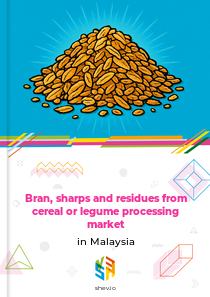







Earlier Report Observations
The market for bran, sharps and residues from cereal processing in Malaysia contracted substantially from 2018 to 2020, with total volume falling from 669 thousand tons to 527 thousand tons. This decline of over 140 thousand tons was followed by a gradual recovery, bringing the market to 580 thousand tons by 2023, though it remained below the initial level.
A sharp and sustained drop in imports was the primary driver of the market's contraction, falling from 204 thousand tons in 2018 to 110 thousand tons by 2022. Domestic production also declined in the early period, hitting a low of 441 thousand tons in 2021, before rebounding to 519 thousand tons in 2023, which supported the market's recovery.
Export volumes introduced additional variability, peaking at 82 thousand tons in 2019 before moderating. The overall market dynamics from 2018 to 2023 were shaped by the interplay of recovering domestic output and significantly reduced import flows.
Table of content
- 1. Disclaimer
- 2. Terms of use of the report
- 3. Product codes in the statistical classifications used in the report
-
4. Key Market Indicators and Trends
-
4.1. Key Market Indicators
-
4.1.1. In kind
- 4.1.1.1. Production, 2018-2023
- 4.1.1.2. Imports, 2018-2025
- 4.1.1.3. Exports, 2018-2025
- 4.1.1.4. Market size, 2018-2023
-
4.1.1. In kind
- 4.2. Market Trends and Factors
-
4.1. Key Market Indicators
-
5. Production
-
5.1. Production in Malaysia
- 5.1.1. Annual dynamics of production in Malaysia in kind, 2018-2023, K t
- 5.1.2. Annual dynamics of production in Malaysia in value, 2018-2023, $ US
-
5.2. Global production by Country, 2018-2023
- 5.2.1. Annual dynamics of production by macroregions in kind, 2018-2023, K t
- 5.2.2. Dynamics of production structure by macroregions in kind, 2018-2023
- 5.2.3. Annual dynamics of production by country in kind, 2018-2023, K t
- 5.2.4. Structure of production by countries in kind, 2018-2023
- 5.2.5. Dynamics of peoduction structure by countries in kind, 2018-2023
-
5.1. Production in Malaysia
-
6. Imports
-
6.1. Imports (Direct Data)
- 6.1.1. Imports - Total information
-
6.1.2. Imports in kind, K t
- 6.1.2.1. Annual dynamics of product's imports to Malaysia in kind, 2018-2025, K t
- 6.1.2.2. Dynamics of product's imports in kind to Malaysia by countries, 2018-2025, K t
- 6.1.2.3. Structure of product's imports in kind by countries, 2018-2025
-
6.1.3. Imports in value, K $ US
- 6.1.3.1. Annual dynamics of product's imports to Malaysia in value, 2018-2025, K $ US
- 6.1.3.2. Dynamics of product's imports in value to Malaysia by countries, 2018-2025, K $ US
- 6.1.3.3. Structure of product's imports in value by countries, 2018-2025
-
6.1.4. Average price of product's imports, $ US/t
- 6.1.4.1. Annual dynamics of average price of product's imports to Malaysia, 2018-2025, $ US/t
- 6.1.4.2. Dynamics of average price of product's imports to Malaysia by countries, 2018-2025, $ US/t
-
6.2. Imports (Mirror Data)
- 6.2.1. Imports - Total information
-
6.2.2. Imports in kind, K t
- 6.2.2.1. Annual dynamics of product's imports to Malaysia in kind, 2018-2025, K t
- 6.2.2.2. Dynamics of product's imports in kind to Malaysia by countries, 2018-2025, K t
- 6.2.2.3. Structure of product's imports in kind by countries, 2018-2025
-
6.2.3. Imports in value, K $ US
- 6.2.3.1. Annual dynamics of product's imports to Malaysia in value, 2018-2025, K $ US
- 6.2.3.2. Dynamics of product's imports in value to Malaysia by countries, 2018-2025, K $ US
- 6.2.3.3. Structure of product's imports in value by countries, 2018-2025
-
6.2.4. Average price of product's imports, $ US/t
- 6.2.4.1. Annual dynamics of average price of product's imports to Malaysia, 2018-2025, $ US/t
- 6.2.4.2. Dynamics of average price of product's imports to Malaysia by countries, 2018-2025, $ US/t
-
6.1. Imports (Direct Data)
-
7. Exports
-
7.1. Exports (Direct Data)
- 7.1.1. Exports - Total information
-
7.1.2. Exports in kind, K t
- 7.1.2.1. Annual dynamics of product's exports from Malaysia in kind, 2018-2025, K t
- 7.1.2.2. Dynamics of product's exports in kind from Malaysia by countries, 2018-2025, K t
- 7.1.2.3. Structure of product's exports in kind by countries, 2018-2025
-
7.1.3. Exports in value, K $ US
- 7.1.3.1. Annual dynamics of product's exports from Malaysia in value, 2018-2025, K $ US
- 7.1.3.2. Dynamics of product's exports in value from Malaysia by countries, 2018-2025, K $ US
- 7.1.3.3. Structure of product's exports in value by countries, 2018-2025
-
7.1.4. Average price of product's exports, $ US/t
- 7.1.4.1. Annual dynamics of average price of product's exports from Malaysia, 2018-2025, $ US/t
- 7.1.4.2. Dynamics of average price of product's exports from Malaysia by countries, 2018-2025, $ US/t
-
7.2. Exports (Mirror Data)
- 7.2.1. Exports - Total information
-
7.2.2. Exports in kind, K t
- 7.2.2.1. Annual dynamics of product's exports from Malaysia in kind, 2018-2025, K t
- 7.2.2.2. Dynamics of product's exports in kind from Malaysia by countries, 2018-2025, K t
- 7.2.2.3. Structure of product's exports in kind by countries, 2018-2025
-
7.2.3. Exports in value, K $ US
- 7.2.3.1. Annual dynamics of product's exports from Malaysia in value, 2018-2025, K $ US
- 7.2.3.2. Dynamics of product's exports in value from Malaysia by countries, 2018-2025, K $ US
- 7.2.3.3. Structure of product's exports in value by countries, 2018-2025
-
7.2.4. Average price of product's exports, $ US/t
- 7.2.4.1. Annual dynamics of average price of product's exports from Malaysia, 2018-2025, $ US/t
- 7.2.4.2. Dynamics of average price of product's exports from Malaysia by countries, 2018-2025, $ US/t
-
7.1. Exports (Direct Data)
-
8. Trade balance
-
8.1. Trade balance (Direct Data)
- 8.1.1. In kind, K t
- 8.1.2. In value, K $ US
-
8.2. Trade balance (Mirror Data)
- 8.2.1. In kind, K t
- 8.2.2. In value, K $ US
-
8.1. Trade balance (Direct Data)
-
9. Top buying and selling countries, 2018-2025
-
9.1. Direct Data
- 9.1.1. Import in Value by Countries-buyers
- 9.1.2. Export in Value by Countries-suppliers
-
9.2. Mirror Data
- 9.2.1. Import in Value by Countries-buyers
- 9.2.2. Export in Value by Countries-suppliers
-
9.1. Direct Data
Production bran, sharps and residues from cereal or legume processing in Malaysia
In kind, 2018-2021, K t
Top producers of bran, sharps and residues from cereal or legume processing, 2018-2021
World map of production of bran, sharps and residues from cereal or legume processing, 2018-2021
Malaysia's production of bran, sharps, and residues from cereal or legume processing has declined for the third year in a row. In 2021, the country produced 440.8 thousand tons, marking a moderate decrease of 5.7% compared to 2020. Looking at the period from 2018 to 2021, production fell by 13.7%, with an average annual decline of 4.8%.
Annual dynamics of production in Malaysia in kind, 2018-2021, K t
| Parameter | 2019 | 2020 | 2021 | CAGR | |
|---|---|---|---|---|---|
| 1 | Change from last year | (2.9%) | (5.7%) | (5.7%) | (4.8%) |
Exports bran, sharps and residues from cereal or legume processing from Malaysia
Exports in kind, K t
The market displayed volatility during the observed period. Exports reached their lowest point in 2018, then peaked in 2019 with a fluctuation of 1.8 times between these years. In 2021, Malaysia's exports of bran, sharps, and residues from cereal or legume processing totaled 54.5 thousand tons, representing a decline of 24.8% from 2020. The highest export volume was recorded in 2019 at 82.4 thousand tons, which also saw the largest increase of 79.6%.
Annual dynamics of product's exports from Malaysia in kind, 2018-2021, K t
| Parameter | 2019 | 2020 | 2021 | CAGR | |
|---|---|---|---|---|---|
| 1 | Change from last year | 79.6% | (11.9%) | (24.8%) | 6.0% |
From 2018 to 2021, Singapore, Thailand, and China were the primary markets for Malaysia's exports in kind. Singapore accounted for 40.5% of exports, Thailand for 39.4%, and China for 8.9%, together making up 88.8% of total export flows.
Structure of product's exports in kind by countries, 2018-2021
World map of product's exports from Malaysia in kind, 2018-2021
Exports in value, K $ US
Malaysia's export value of bran, sharps, and residues from cereal or legume processing declined for the second consecutive year. In 2021, exports amounted to 14 868 thousand US dollars, showing a slight decrease of 0.7% compared to 2020. Over the 2018-2021 period, exports increased by 45.3%, with an average annual growth rate of 13.3%. The peak value was recorded in 2019 at 17 052 thousand US dollars, which also experienced the largest increase of 66.6%, while the largest decline occurred in 2020 at 12.2%.
Annual dynamics of product's exports from Malaysia in value, 2018-2021, K $ US
| Parameter | 2019 | 2020 | 2021 | CAGR | |
|---|---|---|---|---|---|
| 1 | Change from last year | 66.6% | (12.2%) | (0.7%) | 13.3% |
Throughout 2018-2021, Singapore, Thailand, and China remained the key destinations for Malaysia's exports in value terms. Singapore held 45.3% of exports, Thailand 32.7%, and China 8.3%, collectively accounting for 86.3% of total export flows.
Structure of product's exports in value by countries, 2018-2021
World map of product's exports from Malaysia in value, 2018-2021
Imports bran, sharps and residues from cereal or legume processing to Malaysia
Imports in kind, K t
Following a two-year decrease, Malaysia's imports of bran, sharps, and residues from cereal or legume processing increased in 2021. The country imported 147.9 thousand tons, up by 12.0% from 2020. Between 2018 and 2021, imports decreased by 27.6%, equivalent to an annualized decline of 10.2%. The lowest import volume was recorded in 2020 at 132.1 thousand tons, which also saw the largest decline of 28.7%.
Annual dynamics of product's imports to Malaysia in kind, 2018-2021, K t
| Parameter | 2019 | 2020 | 2021 | CAGR | |
|---|---|---|---|---|---|
| 1 | Change from last year | (9.3%) | (28.7%) | 12.0% | (10.2%) |
In the 2018-2021 period, the leading sources for Malaysia's imports in kind were Japan, the United States, and Singapore. Japan contributed 40.4% of imports, the United States 21.7%, and Singapore 10.3%, together representing 72.4% of total import flows.
Structure of product's imports in kind by countries, 2018-2021
World map of product's imports to Malaysia in kind, 2018-2021
Imports in value, K $ US
After a two-year reduction, Malaysia's import value of bran, sharps, and residues from cereal or legume processing rose in 2021. Imports totaled 53 152 thousand US dollars, corresponding to an increase of 28.7% from the previous year. Over the 2018-2021 period, imports decreased by 11.7%, with an average annual decline of 4.1%. The minimum value was recorded in 2020 at 41 289 thousand US dollars, which also experienced the largest decline of 26.5%.
Annual dynamics of product's imports to Malaysia in value, 2018-2021, K $ US
| Parameter | 2019 | 2020 | 2021 | CAGR | |
|---|---|---|---|---|---|
| 1 | Change from last year | (6.7%) | (26.5%) | 28.7% | (4.1%) |
From 2018 to 2021, Japan, the United States, and Singapore were the top suppliers of bran, sharps, and residues from cereal or legume processing to Malaysia in value terms. Japan accounted for 42.3% of imports, the United States for 21.9%, and Singapore for 8.9%, with their combined share reaching 73.1% of total imports.
Structure of product's imports in value by countries, 2018-2021
World map of product's imports to Malaysia in value, 2018-2021
Related Reports


Rapeseed oilcake market in Malaysia
2026-03-29


Groundnutoil-cake market in Malaysia
2026-03-29

Sunflower-seed oilcake market in Malaysia
2026-03-29
Why Choose Us?
Only Verified Data
No Hidden Costs or Separate Fees
Smarter Subscription Pricing
Contact Our Team
Submit your inquiry using the form below — our team will get back to you within 24 hours.