






"Northern Africa" region includes following countries:
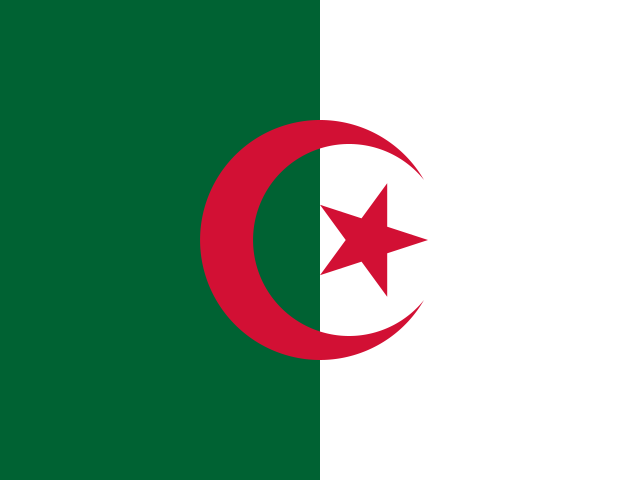 Algeria
 Libya
Libya Morocco
 Sudan
Sudan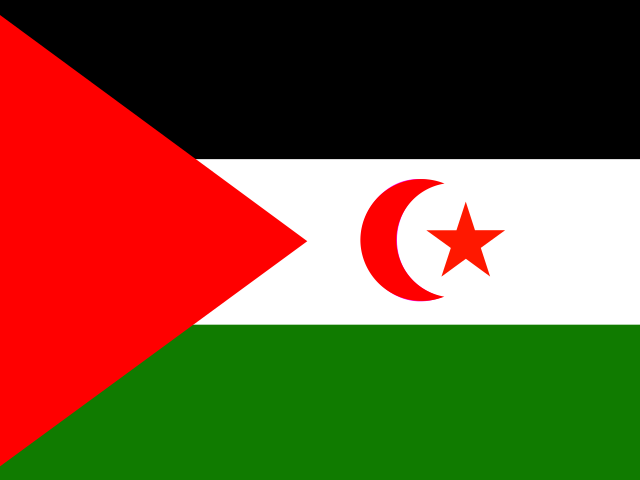 Western Sahara
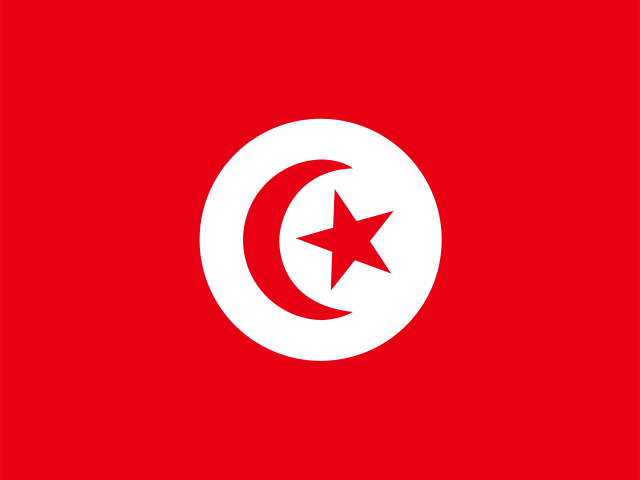 Tunisia
 Egypt
EgyptEarlier Report Observations
From 2018 to 2020, the semi-milled or wholly milled rice market in Northern Africa expanded from 2.5 million tons to 3.6 million tons. This growth was driven by substantial investments in irrigation projects and the adoption of modern agricultural technologies, which increased domestic production capacity. A heightened policy focus on achieving food security through greater local output further supported this upward trend.
Market volume contracted in 2021 but stabilized around 3.2 million tons in 2022. During this period, the entry of new companies into the African rice sector, such as Capwell Industries launching fortified rice in Kenya, introduced new products and competition. The implementation of the African Continental Free Trade Area (AfCFTA) also facilitated regional trade, influencing import flows and market structure.
A sharp rebound to 4.1 million tons occurred in 2023. India's restrictions on rice exports caused global prices to rise, prompting North African countries to boost local production. Concurrently, continued investment in irrigation infrastructure, like the African Development Bank's projects in Gambia, expanded the cultivated area and yield potential, driving the market to a new high.
Table of content
- 1. Disclaimer
- 2. Terms of use of the report
- 3. Product codes in the statistical classifications used in the report
-
4. Key Market Indicators and Trends
-
4.1. Key Market Indicators
-
4.1.1. In kind
- 4.1.1.1. Production, 2018-2023
- 4.1.1.2. Imports, 2018-2024
- 4.1.1.3. Exports, 2018-2024
- 4.1.1.4. Market size, 2018-2023
-
4.1.1. In kind
- 4.2. Market Trends and Factors
-
4.1. Key Market Indicators
-
5. Production
-
5.1. Production in Northern Africa
- 5.1.1. Annual dynamics of production in Northern Africa in kind, 2018-2023, K t
-
5.2. Global production by Country, 2018-2023
- 5.2.1. Annual dynamics of production by macroregions in kind, 2018-2023, K t
- 5.2.2. Dynamics of production structure by macroregions in kind, 2018-2023
- 5.2.3. Annual dynamics of production by country in kind, 2018-2023, K t
- 5.2.4. Structure of production by countries in kind, 2018-2023
- 5.2.5. Dynamics of peoduction structure by countries in kind, 2018-2023
-
5.1. Production in Northern Africa
-
6. Imports
-
6.1. Imports (Direct Data*)
- 6.1.1. Imports - Total information
-
6.1.2. Imports in kind, K t
- 6.1.2.1. Annual dynamics of product's imports to Algeria in kind, 2018-2024, K t
- 6.1.2.2. Dynamics of product's imports in kind to Algeria by countries, 2018-2024, K t
- 6.1.2.3. Structure of product's imports in kind by countries, 2018-2024
-
6.1.3. Imports in value, M $ US
- 6.1.3.1. Annual dynamics of product's imports to Algeria in value, 2018-2024, M $ US
- 6.1.3.2. Dynamics of product's imports in value to Algeria by countries, 2018-2024, M $ US
- 6.1.3.3. Structure of product's imports in value by countries, 2018-2024
-
6.1.4. Average price of product's imports, $ US/t
- 6.1.4.1. Annual dynamics of average price of product's imports to Algeria, 2018-2024, $ US/t
- 6.1.4.2. Dynamics of average price of product's imports to Algeria by countries, 2018-2024, $ US/t
-
6.2. Imports (Mirror Data)
- 6.2.1. Imports - Total information
-
6.2.2. Imports in kind, K t
- 6.2.2.1. Annual dynamics of product's imports to Algeria in kind, 2018-2024, K t
- 6.2.2.2. Dynamics of product's imports in kind to Algeria by countries, 2018-2024, K t
- 6.2.2.3. Structure of product's imports in kind by countries, 2018-2024
-
6.2.3. Imports in value, M $ US
- 6.2.3.1. Annual dynamics of product's imports to Algeria in value, 2018-2024, M $ US
- 6.2.3.2. Dynamics of product's imports in value to Algeria by countries, 2018-2024, M $ US
- 6.2.3.3. Structure of product's imports in value by countries, 2018-2024
-
6.2.4. Average price of product's imports, $ US/t
- 6.2.4.1. Annual dynamics of average price of product's imports to Algeria, 2018-2024, $ US/t
- 6.2.4.2. Dynamics of average price of product's imports to Algeria by countries, 2018-2024, $ US/t
-
6.1. Imports (Direct Data*)
-
7. Exports
-
7.1. Exports (Direct Data*)
- 7.1.1. Exports - Total information
-
7.1.2. Exports in kind, K t
- 7.1.2.1. Annual dynamics of product's exports from Algeria in kind, 2018-2024, K t
- 7.1.2.2. Dynamics of product's exports in kind from Algeria by countries, 2018-2024, K t
- 7.1.2.3. Structure of product's exports in kind by countries, 2018-2024
-
7.1.3. Exports in value, M $ US
- 7.1.3.1. Annual dynamics of product's exports from Algeria in value, 2018-2024, M $ US
- 7.1.3.2. Dynamics of product's exports in value from Algeria by countries, 2018-2024, M $ US
- 7.1.3.3. Structure of product's exports in value by countries, 2018-2024
-
7.1.4. Average price of product's exports, $ US/t
- 7.1.4.1. Annual dynamics of average price of product's exports from Algeria, 2018-2024, $ US/t
- 7.1.4.2. Dynamics of average price of product's exports from Algeria by countries, 2018-2024, $ US/t
-
7.2. Exports (Mirror Data)
- 7.2.1. Exports - Total information
-
7.2.2. Exports in kind, K t
- 7.2.2.1. Annual dynamics of product's exports from Algeria in kind, 2018-2024, K t
- 7.2.2.2. Dynamics of product's exports in kind from Algeria by countries, 2018-2024, K t
- 7.2.2.3. Structure of product's exports in kind by countries, 2018-2024
-
7.2.3. Exports in value, M $ US
- 7.2.3.1. Annual dynamics of product's exports from Algeria in value, 2018-2024, M $ US
- 7.2.3.2. Dynamics of product's exports in value from Algeria by countries, 2018-2024, M $ US
- 7.2.3.3. Structure of product's exports in value by countries, 2018-2024
-
7.2.4. Average price of product's exports, $ US/t
- 7.2.4.1. Annual dynamics of average price of product's exports from Algeria, 2018-2024, $ US/t
- 7.2.4.2. Dynamics of average price of product's exports from Algeria by countries, 2018-2024, $ US/t
-
7.1. Exports (Direct Data*)
-
8. Trade balance
-
8.1. Trade balance (Direct Data)
- 8.1.1. In kind, K t
- 8.1.2. In value, M $ US
-
8.2. Trade balance (Mirror Data)
- 8.2.1. In kind, K t
- 8.2.2. In value, M $ US
-
8.1. Trade balance (Direct Data)
-
9. Top buying and selling countries, 2018-2024
-
9.1. Direct Data
- 9.1.1. Import in Value by Countries-buyers
- 9.1.2. Export in Value by Countries-suppliers
-
9.2. Mirror Data
- 9.2.1. Import in Value by Countries-buyers
- 9.2.2. Export in Value by Countries-suppliers
-
9.1. Direct Data
Production semi-milled or wholly milled rice in Northern Africa
In kind, 2017-2020, K t
Top producers of semi-milled or wholly milled rice, 2017-2020
World map of production of semi-milled or wholly milled rice, 2017-2020
Semi-milled or wholly milled rice production in Northern Africa increased for the second consecutive year. In 2020, production reached 3 166 K t, representing a 10.9% gain compared to the previous year. Over the period from 2017 to 2020, production decreased by 13%, with a compound annual growth rate of 4.5%. The lowest production level was recorded in 2018 at 2 213 K t, which marked the largest decline of 39.2%. The largest increase occurred in 2019, with production rising by 29.0%.
Annual dynamics of production in Northern Africa in kind, 2017-2020, K t
| Parameter | 2018 | 2019 | 2020 | CAGR | |
|---|---|---|---|---|---|
| 1 | Change from last year | (39.2%) | 29.0% | 10.9% | (4.5%) |
In value, 2017-2020, M $ US
Northern Africa's semi-milled or wholly milled rice production increased for the second consecutive year. In 2020, the output was valued at 2 192 M $ US, showing little change from 2019. Between 2017 and 2020, production decreased by 19.8%, equating to an annualized rate of 7.1%. The minimum value was recorded in 2018 at 2 158 M $ US, which saw the largest decline of 21.0%. The largest increase was in 2019, with a rise of 1.1%.
Annual dynamics of production in Northern Africa in value, 2017-2020, M $ US
| Parameter | 2018 | 2019 | 2020 | CAGR | |
|---|---|---|---|---|---|
| 1 | Change from last year | (21.0%) | 1.1% | 0.5% | (7.1%) |
Exports semi-milled or wholly milled rice from Northern Africa
Exports in kind, K t
The market showed signs of volatility over the observed period. Exports bottomed in 2020 and peaked in 2019, with a 34-fold difference between these years. In 2020, Northern Africa exported 0.1 K t of semi-milled or wholly milled rice, representing a steep drop of 97.0% year-over-year. The maximum value was recorded in 2019 at 4.9 K t. The largest increase occurred in 2018, with exports rising by 254.1%.
Annual dynamics of product's exports from Northern Africa in kind, 2017-2020, K t
| Parameter | 2018 | 2019 | 2020 | CAGR | |
|---|---|---|---|---|---|
| 1 | Change from last year | 254.1% | 218.4% | (97.0%) | (30.5%) |
From 2017 to 2020, Turkey, Benin, and Niger were the main destinations for semi-milled or wholly milled rice exports from Northern Africa. Turkey accounted for 45.6% of exports in kind, Benin for 6.5%, and Niger for 5.1%, together absorbing 57.1% of total exports.
Structure of product's exports in kind by countries, 2017-2020
World map of product's exports from Northern Africa in kind, 2017-2020
Exports in value, M $ US
There were noticeable fluctuations in market performance during the period. Export volumes reached their minimum in 2020 and peaked in 2019, with a top-to-bottom ratio of 37 times. In 2020, foreign supplies of semi-milled or wholly milled rice from Northern Africa amounted to 0.1 M $ US, representing a steep decrease of 97.3% compared to the previous year. The maximum value was recorded in 2019 at 3.7 M $ US. The largest increase occurred in 2018, with a rise of 360.2%.
Annual dynamics of product's exports from Northern Africa in value, 2017-2020, M $ US
| Parameter | 2018 | 2019 | 2020 | CAGR | |
|---|---|---|---|---|---|
| 1 | Change from last year | 360.2% | 149.5% | (97.3%) | (32.3%) |
From 2017 to 2020, Turkey, Benin, and Niger headed the ranking of buyers of semi-milled or wholly milled rice from Northern Africa in value terms. Turkey accounted for 57.2% of exports, Benin for 3.1%, and Niger for 2.8%, with their combined share reaching 63.1% of total exports.
Structure of product's exports in value by countries, 2017-2020
World map of product's exports from Northern Africa in value, 2017-2020
Imports semi-milled or wholly milled rice to Northern Africa
Imports in kind, K t
There were noticeable fluctuations in market performance during the period. Imports bottomed in 2018 and peaked in 2019, with a 2.1-fold difference between these years. In 2020, Northern Africa's semi-milled or wholly milled rice import volume totalled 426.2 K t, representing a 35.5% drop compared to the previous year. The minimum value was recorded in 2018 at 314.3 K t, while the maximum was in 2019 at 660.6 K t. The largest increase occurred in 2019, with imports rising by 110.2%.
Annual dynamics of product's imports to Northern Africa in kind, 2017-2020, K t
| Parameter | 2018 | 2019 | 2020 | CAGR | |
|---|---|---|---|---|---|
| 1 | Change from last year | (8.3%) | 110.2% | (35.5%) | 7.5% |
From 2017 to 2020, India, China, and Thailand accounted for the largest share of imports in kind of semi-milled or wholly milled rice to Northern Africa. India represented 43.2% of imports, China 20.7%, and Thailand 15.8%, together comprising 79.7% of total flows.
Structure of product's imports in kind by countries, 2017-2020
World map of product's imports to Northern Africa in kind, 2017-2020
Imports in value, M $ US
The market showed signs of volatility over the observed period. Imports bottomed in 2018 and peaked in 2019, with a 2.3-fold difference between these years. In 2020, Northern Africa's semi-milled or wholly milled rice imports amounted to 216.8 M $ US, marking a decline of 51.4% compared to 2019. The minimum value was recorded in 2018 at 195.8 M $ US, while the maximum was in 2019 at 446.4 M $ US. The largest increase occurred in 2019, with imports rising by 128.0%.
Annual dynamics of product's imports to Northern Africa in value, 2017-2020, M $ US
| Parameter | 2018 | 2019 | 2020 | CAGR | |
|---|---|---|---|---|---|
| 1 | Change from last year | (6.5%) | 128.0% | (51.4%) | 1.2% |
From 2017 to 2020, India, China, and Thailand were the main destinations in the geographical breakdown of imports in value terms of semi-milled or wholly milled rice to Northern Africa. India accounted for 42.6% of imports, China for 23.4%, and Thailand for 14.3%, with a combined share of 80.4% of total flows.
Structure of product's imports in value by countries, 2017-2020
World map of product's imports to Northern Africa in value, 2017-2020
Related Reports


Triticale market in Northern Africa
2026-03-28

Maize market in Northern Africa
2026-03-28

2026-03-28
Why Choose Us?
Only Verified Data
No Hidden Costs or Separate Fees
Smarter Subscription Pricing
Contact Our Team
Submit your inquiry using the form below — our team will get back to you within 24 hours.