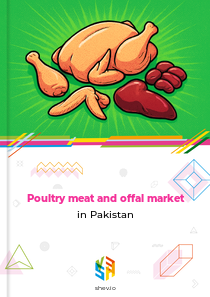







Earlier Report Observations
The poultry meat and offal market in Pakistan demonstrated strong and consistent growth from 2018 to 2023, with its volume increasing from 2 787 thousand tons to 4 324 thousand tons. This expansion was anchored by a steady rise in domestic production, which grew each year and easily offset the minimal volumes dedicated to export.
The market's growth accelerated in 2022, reaching 3 963 thousand tons. This period was influenced by key consumer and industry trends, including a rising preference for convenient, ready-to-cook poultry products and greater health consciousness that favored poultry meat over red meat. Enhanced cold-chain logistics also played a role by improving the distribution and preservation of products, supporting greater market access and consumption.
This positive momentum continued into 2023, with the market volume climbing further to 4 324 thousand tons, underscoring the robustness of domestic production and sustained consumer demand within the country.
Table of content
- 1. Disclaimer
- 2. Terms of use of the report
- 3. Product codes in the statistical classifications used in the report
-
4. Key Market Indicators and Trends
-
4.1. Key Market Indicators
-
4.1.1. In kind
- 4.1.1.1. Production, 2018-2023
- 4.1.1.2. Imports, 2018-2024
- 4.1.1.3. Exports, 2018-2024
- 4.1.1.4. Market size, 2018-2023
-
4.1.1. In kind
- 4.2. Market Trends and Factors
-
4.1. Key Market Indicators
-
5. Production
-
5.1. Production in Pakistan
- 5.1.1. Annual dynamics of production in Pakistan in kind, 2018-2023, K t
- 5.1.2. Annual dynamics of production in Pakistan in value, 2018-2023, $ US
-
5.2. Global production by Country, 2018-2023
- 5.2.1. Annual dynamics of production by macroregions in kind, 2018-2023, K t
- 5.2.2. Dynamics of production structure by macroregions in kind, 2018-2023
- 5.2.3. Annual dynamics of production by country in kind, 2018-2023, K t
- 5.2.4. Structure of production by countries in kind, 2018-2023
- 5.2.5. Dynamics of peoduction structure by countries in kind, 2018-2023
-
5.1. Production in Pakistan
-
6. Exports
-
6.1. Exports (Direct Data)
- 6.1.1. Exports - Total information
-
6.1.2. Exports in kind, t
- 6.1.2.1. Annual dynamics of product's exports from Pakistan in kind, 2018-2024, t
- 6.1.2.2. Dynamics of product's exports in kind from Pakistan by countries, 2018-2024, t
- 6.1.2.3. Structure of product's exports in kind by countries, 2018-2024
-
6.1.3. Exports in value, K $ US
- 6.1.3.1. Annual dynamics of product's exports from Pakistan in value, 2018-2024, K $ US
- 6.1.3.2. Dynamics of product's exports in value from Pakistan by countries, 2018-2024, K $ US
- 6.1.3.3. Structure of product's exports in value by countries, 2018-2024
-
6.1.4. Average price of product's exports, $ US/t
- 6.1.4.1. Annual dynamics of average price of product's exports from Pakistan, 2018-2024, $ US/t
- 6.1.4.2. Dynamics of average price of product's exports from Pakistan by countries, 2018-2024, $ US/t
-
6.2. Exports (Mirror Data)
- 6.2.1. Exports - Total information
-
6.2.2. Exports in kind, t
- 6.2.2.1. Annual dynamics of product's exports from Pakistan in kind, 2018-2024, t
- 6.2.2.2. Dynamics of product's exports in kind from Pakistan by countries, 2018-2024, t
- 6.2.2.3. Structure of product's exports in kind by countries, 2018-2024
-
6.2.3. Exports in value, K $ US
- 6.2.3.1. Annual dynamics of product's exports from Pakistan in value, 2018-2024, K $ US
- 6.2.3.2. Dynamics of product's exports in value from Pakistan by countries, 2018-2024, K $ US
- 6.2.3.3. Structure of product's exports in value by countries, 2018-2024
-
6.2.4. Average price of product's exports, $ US/t
- 6.2.4.1. Annual dynamics of average price of product's exports from Pakistan, 2018-2024, $ US/t
- 6.2.4.2. Dynamics of average price of product's exports from Pakistan by countries, 2018-2024, $ US/t
-
6.1. Exports (Direct Data)
-
7. Imports
-
7.1. Imports (Direct Data)
- 7.1.1. Imports - Total information
-
7.1.2. Imports in kind, t
- 7.1.2.1. Annual dynamics of product's imports to Pakistan in kind, 2018-2024, t
- 7.1.2.2. Dynamics of product's imports in kind to Pakistan by countries, 2018-2024, t
- 7.1.2.3. Structure of product's imports in kind by countries, 2018-2024
-
7.1.3. Imports in value, K $ US
- 7.1.3.1. Annual dynamics of product's imports to Pakistan in value, 2018-2024, K $ US
- 7.1.3.2. Dynamics of product's imports in value to Pakistan by countries, 2018-2024, K $ US
- 7.1.3.3. Structure of product's imports in value by countries, 2018-2024
-
7.1.4. Average price of product's imports, $ US/t
- 7.1.4.1. Annual dynamics of average price of product's imports to Pakistan, 2018-2024, $ US/t
- 7.1.4.2. Dynamics of average price of product's imports to Pakistan by countries, 2018-2024, $ US/t
-
7.2. Imports (Mirror Data)
- 7.2.1. Imports - Total information
-
7.2.2. Imports in kind, t
- 7.2.2.1. Annual dynamics of product's imports to Pakistan in kind, 2018-2024, t
- 7.2.2.2. Dynamics of product's imports in kind to Pakistan by countries, 2018-2024, t
- 7.2.2.3. Structure of product's imports in kind by countries, 2018-2024
-
7.2.3. Imports in value, K $ US
- 7.2.3.1. Annual dynamics of product's imports to Pakistan in value, 2018-2024, K $ US
- 7.2.3.2. Dynamics of product's imports in value to Pakistan by countries, 2018-2024, K $ US
- 7.2.3.3. Structure of product's imports in value by countries, 2018-2024
-
7.2.4. Average price of product's imports, $ US/t
- 7.2.4.1. Annual dynamics of average price of product's imports to Pakistan, 2018-2024, $ US/t
- 7.2.4.2. Dynamics of average price of product's imports to Pakistan by countries, 2018-2024, $ US/t
-
7.1. Imports (Direct Data)
-
8. Trade balance
-
8.1. Trade balance (Direct Data)
- 8.1.1. In kind, t
- 8.1.2. In value, K $ US
-
8.2. Trade balance (Mirror Data)
- 8.2.1. In kind, t
- 8.2.2. In value, K $ US
-
8.1. Trade balance (Direct Data)
-
9. Top buying and selling countries, 2018-2024
-
9.1. Direct Data
- 9.1.1. Import in Value by Countries-buyers
- 9.1.2. Export in Value by Countries-suppliers
-
9.2. Mirror Data
- 9.2.1. Import in Value by Countries-buyers
- 9.2.2. Export in Value by Countries-suppliers
-
9.1. Direct Data
Production poultry meat and offal in Pakistan
In kind, 2017-2020, K t
From 2017 to 2020, Pakistan ranked 21st globally in poultry meat and offal production.
Top producers of poultry meat and offal, 2017-2020
World map of production of poultry meat and offal, 2017-2020
Pakistan's poultry meat and offal production grew for the third year in a row. In 2020, the country produced 3 324 thousand tonnes, marking a 9.1% increase from the previous year. Over the 2017-2020 period, production rose by 29.7%, with an average annual growth rate of 9.1%.
Annual dynamics of production in Pakistan in kind, 2017-2020, K t
| Parameter | 2018 | 2019 | 2020 | CAGR | |
|---|---|---|---|---|---|
| 1 | Change from last year | 9.0% | 9.1% | 9.1% | 9.1% |
Exports poultry meat and offal from Pakistan
Exports in kind, t
In 2020, Pakistan exported 6 597 tonnes of poultry meat and offal, a 57.8% jump from 2019. Between 2017 and 2020, exports climbed 73.7%, averaging 20.2% per year. The biggest drop occurred in 2019, when exports fell by 26.6%.
Annual dynamics of product's exports from Pakistan in kind, 2017-2020, t
| Parameter | 2018 | 2019 | 2020 | CAGR | |
|---|---|---|---|---|---|
| 1 | Change from last year | 50.0% | (26.6%) | 57.8% | 20.2% |
From 2017 to 2020, Vietnam was the top buyer of Pakistani poultry meat and offal, accounting for 72.3% of total exports by volume, while the remainder went to various other countries.
Structure of product's exports in kind by countries, 2017-2020
World map of product's exports from Pakistan in kind, 2017-2020
Exports in value, K $ US
Pakistan's poultry meat and offal exports in value terms declined for the second consecutive year. In 2020, exports totaled 3 140 thousand US dollars, down 18.0% from the previous year. Over 2017-2020, export value dropped by 28.3%, with an average annual decrease of 10.5%. The peak was in 2018 at 5 570 thousand US dollars, followed by the largest fall in 2019 of 31.3%, while the biggest rise was in 2018 at 27.2%.
Annual dynamics of product's exports from Pakistan in value, 2017-2020, K $ US
| Parameter | 2018 | 2019 | 2020 | CAGR | |
|---|---|---|---|---|---|
| 1 | Change from last year | 27.2% | (31.3%) | (18.0%) | (10.5%) |
During 2017-2020, Vietnam led in export value, making up 71.5% of total flows, with other markets holding smaller shares.
Structure of product's exports in value by countries, 2017-2020
World map of product's exports from Pakistan in value, 2017-2020
Imports poultry meat and offal to Pakistan
Imports in kind, t
Import volumes of poultry meat and offal into Pakistan varied significantly over the period. In 2019, imports hit a low of 42 tonnes, then surged to 108 tonnes in 2020, a 153.9% increase. The peak was in 2018 at 319 tonnes. The sharpest decline was in 2019, down 86.7%, while the largest gain was in 2018, up 264.1%. From 2018 to 2019, the range between high and low points spanned 7.5 times.
Annual dynamics of product's imports to Pakistan in kind, 2017-2020, t
| Parameter | 2018 | 2019 | 2020 | CAGR | |
|---|---|---|---|---|---|
| 1 | Change from last year | 264.1% | (86.7%) | 153.9% | 7.1% |
From 2017 to 2020, Brazil, the United States, and China were the main sources of imports by volume, contributing 36.0%, 20.4%, and 17.4% respectively, together making up 73.7% of total imports.
Structure of product's imports in kind by countries, 2017-2020
World map of product's imports to Pakistan in kind, 2017-2020
Imports in value, K $ US
Import values showed volatility from 2017 to 2020. In 2020, Pakistan imported 77 thousand US dollars worth of poultry meat and offal, a 15.1% drop from the previous year. The highest value was in 2018 at 800 thousand US dollars, and the lowest in 2020, with a 10.4-fold difference between these years. The steepest decrease was in 2019, down 88.7%, while the largest increase was in 2018, up 456.8%.
Annual dynamics of product's imports to Pakistan in value, 2017-2020, K $ US
| Parameter | 2018 | 2019 | 2020 | CAGR | |
|---|---|---|---|---|---|
| 1 | Change from last year | 456.8% | (88.7%) | (15.1%) | (18.8%) |
Over 2017-2020, Brazil, the United States, and China dominated import value, with shares of 40.2%, 24.8%, and 16.8% respectively, collectively accounting for 81.8% of total imports into Pakistan.
Structure of product's imports in value by countries, 2017-2020
World map of product's imports to Pakistan in value, 2017-2020
Related Reports

Duck meat and offal market in Pakistan
2026-03-27

Beef and buffalo meat market in Pakistan
2026-03-30


2026-03-27
Why Choose Us?
Only Verified Data
No Hidden Costs or Separate Fees
Smarter Subscription Pricing
Contact Our Team
Submit your inquiry using the form below — our team will get back to you within 24 hours.