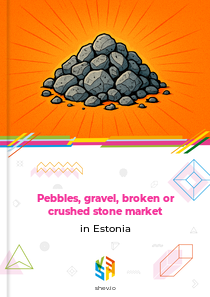







Earlier Report Observations
The Estonian market for aggregates grew from 10 827 thousand tonnes in 2018 to 11 574 thousand tonnes in 2021. This expansion was supported by state-owned companies increasing their production capacities to meet rising demand from infrastructure projects. During the COVID-19 pandemic in 2020, state-owned enterprises played a key role in maintaining supply, helping to stabilize market volume. Further growth in 2021 was aided by the expansion of production facilities focusing on reduced carbon footprint and legislative changes aligned with the EU Circular Economy Action Plan, which promoted sustainable resource use and stimulated demand.
In 2022, the market volume fell sharply to 8 006 thousand tonnes. During this period, new market entrants emerged focusing on recycled and composite aggregate products, and mandatory sustainability reporting for producers was introduced. However, these developments did not offset the overall contraction in market size.
The market showed signs of stabilization in the following years, with volume reaching 8 429 thousand tonnes in 2023 and edging down slightly to 8 412 thousand tonnes in 2024.
Table of content
- 1. Disclaimer
- 2. Terms of use of the report
- 3. Product codes in the statistical classifications used in the report
-
4. Key Market Indicators and Trends
-
4.1. Key Market Indicators
-
4.1.1. In kind
- 4.1.1.1. Production, 2018-2024
- 4.1.1.2. Imports, 2018-2025
- 4.1.1.3. Exports, 2018-2025
- 4.1.1.4. Market size, 2018-2024
-
4.1.2. In value
- 4.1.2.1. Production, 2018-2024
- 4.1.2.2. Imports, 2018-2025
- 4.1.2.3. Exports, 2018-2025
- 4.1.2.4. Market size, 2018-2024
-
4.1.1. In kind
- 4.2. Market Trends and Factors
-
4.1. Key Market Indicators
-
5. Production
-
5.1. Production in Estonia
- 5.1.1. In kind, 2018-2024, K t
- 5.1.2. In value, 2018-2024, K $ US
-
5.2. Production in the EU, 2018-2024
- 5.2.1. In kind, 2018-2024, K t
- 5.2.2. In value, 2018-2024, K $ US
-
5.1. Production in Estonia
-
6. Exports
-
6.1. Exports (Direct Data)
- 6.1.1. Exports - Total information
-
6.1.2. Exports in kind, K t
- 6.1.2.1. Annual dynamics of product's exports from Estonia in kind, 2018-2025, K t
- 6.1.2.2. Dynamics of product's exports in kind from Estonia by countries, 2018-2025, K t
- 6.1.2.3. Structure of product's exports in kind by countries, 2018-2025
-
6.1.3. Exports in value, K $ US
- 6.1.3.1. Annual dynamics of product's exports from Estonia in value, 2018-2025, K $ US
- 6.1.3.2. Dynamics of product's exports in value from Estonia by countries, 2018-2025, K $ US
- 6.1.3.3. Structure of product's exports in value by countries, 2018-2025
-
6.1.4. Average price of product's exports, $ US/t
- 6.1.4.1. Annual dynamics of average price of product's exports from Estonia, 2018-2025, $ US/t
- 6.1.4.2. Dynamics of average price of product's exports from Estonia by countries, 2018-2025, $ US/t
-
6.2. Exports (Mirror Data)
- 6.2.1. Exports - Total information
-
6.2.2. Exports in kind, K t
- 6.2.2.1. Annual dynamics of product's exports from Estonia in kind, 2018-2025, K t
- 6.2.2.2. Dynamics of product's exports in kind from Estonia by countries, 2018-2025, K t
- 6.2.2.3. Structure of product's exports in kind by countries, 2018-2025
-
6.2.3. Exports in value, K $ US
- 6.2.3.1. Annual dynamics of product's exports from Estonia in value, 2018-2025, K $ US
- 6.2.3.2. Dynamics of product's exports in value from Estonia by countries, 2018-2025, K $ US
- 6.2.3.3. Structure of product's exports in value by countries, 2018-2025
-
6.2.4. Average price of product's exports, $ US/t
- 6.2.4.1. Annual dynamics of average price of product's exports from Estonia, 2018-2025, $ US/t
- 6.2.4.2. Dynamics of average price of product's exports from Estonia by countries, 2018-2025, $ US/t
-
6.1. Exports (Direct Data)
-
7. Imports
-
7.1. Imports (Direct Data)
- 7.1.1. Imports - Total information
-
7.1.2. Imports in kind, K t
- 7.1.2.1. Annual dynamics of product's imports to Estonia in kind, 2018-2025, K t
- 7.1.2.2. Dynamics of product's imports in kind to Estonia by countries, 2018-2025, K t
- 7.1.2.3. Structure of product's imports in kind by countries, 2018-2025
-
7.1.3. Imports in value, K $ US
- 7.1.3.1. Annual dynamics of product's imports to Estonia in value, 2018-2025, K $ US
- 7.1.3.2. Dynamics of product's imports in value to Estonia by countries, 2018-2025, K $ US
- 7.1.3.3. Structure of product's imports in value by countries, 2018-2025
-
7.1.4. Average price of product's imports, $ US/t
- 7.1.4.1. Annual dynamics of average price of product's imports to Estonia, 2018-2025, $ US/t
- 7.1.4.2. Dynamics of average price of product's imports to Estonia by countries, 2018-2025, $ US/t
-
7.2. Imports (Mirror Data)
- 7.2.1. Imports - Total information
-
7.2.2. Imports in kind, K t
- 7.2.2.1. Annual dynamics of product's imports to Estonia in kind, 2018-2025, K t
- 7.2.2.2. Dynamics of product's imports in kind to Estonia by countries, 2018-2025, K t
- 7.2.2.3. Structure of product's imports in kind by countries, 2018-2025
-
7.2.3. Imports in value, K $ US
- 7.2.3.1. Annual dynamics of product's imports to Estonia in value, 2018-2025, K $ US
- 7.2.3.2. Dynamics of product's imports in value to Estonia by countries, 2018-2025, K $ US
- 7.2.3.3. Structure of product's imports in value by countries, 2018-2025
-
7.2.4. Average price of product's imports, $ US/t
- 7.2.4.1. Annual dynamics of average price of product's imports to Estonia, 2018-2025, $ US/t
- 7.2.4.2. Dynamics of average price of product's imports to Estonia by countries, 2018-2025, $ US/t
-
7.1. Imports (Direct Data)
-
8. Trade balance
-
8.1. Trade balance (Direct Data)
- 8.1.1. In kind, K t
- 8.1.2. In value, K $ US
-
8.2. Trade balance (Mirror Data)
- 8.2.1. In kind, K t
- 8.2.2. In value, K $ US
-
8.1. Trade balance (Direct Data)
-
9. Top buying and selling countries, 2018-2025
-
9.1. Direct Data
- 9.1.1. Import in Value by Countries-buyers
- 9.1.2. Export in Value by Countries-suppliers
-
9.2. Mirror Data
- 9.2.1. Import in Value by Countries-buyers
- 9.2.2. Export in Value by Countries-suppliers
-
9.1. Direct Data
Production aggregates grade pebbles, gravel, crushed stone in Estonia
In value, 2018-2021, K $ US
Estonia's production of pebbles, gravel, broken or crushed stone has increased for the second consecutive year. In 2021, output was valued at 87,055 thousand US dollars, marking a significant year-over-year rise of 41.5%. Over the period from 2018 to 2021, production grew by 50.3%, with a compound annual growth rate of 14.6%. The lowest value was recorded in 2019 at 54,288 thousand US dollars, which also saw the largest decline of 6.3%.
Annual dynamics of production in Estonia in value, 2018-2021, K $ US
| Parameter | 2019 | 2020 | 2021 | CAGR | |
|---|---|---|---|---|---|
| 1 | Change from last year | (6.3%) | 13.3% | 41.5% | 14.6% |
In kind, 2018-2021, K t
Estonia's production of pebbles, gravel, broken or crushed stone has increased for the second consecutive year. In 2021, 10,224 thousand tonnes were produced, showing a moderate year-over-year rise of 5.9%. Between 2018 and 2021, production increased by 5.4%, equating to an annualized growth rate of 1.8%. The lowest volume was recorded in 2019 at 9,530 thousand tonnes, which also experienced the largest decline of 1.8%.
Annual dynamics of production in Estonia in kind, 2018-2021, K t
| Parameter | 2019 | 2020 | 2021 | CAGR | |
|---|---|---|---|---|---|
| 1 | Change from last year | (1.8%) | 1.3% | 5.9% | 1.8% |
Exports aggregates grade pebbles, gravel, crushed stone from Estonia
Exports in kind, K t
In 2021, Estonia exported 288 thousand tonnes of pebbles, gravel, broken or crushed stone, which is 10.0% less than in 2020. The lowest export volume was recorded in 2019 at 275 thousand tonnes, while the highest was in 2020 at 320 thousand tonnes. The largest increase occurred in 2020, with a rise of 16.6%.
Annual dynamics of product's exports from Estonia in kind, 2018-2021, K t
| Parameter | 2019 | 2020 | 2021 | CAGR | |
|---|---|---|---|---|---|
| 1 | Change from last year | (4.3%) | 16.6% | (10.0%) | 0.1% |
From 2018 to 2021, Germany, Finland, and Poland remained the top buyers of pebbles, gravel, broken or crushed stone from Estonia in terms of volume. Germany accounted for 57.5% of exports, Finland for 14.4%, and Poland for 11.2%, together making up 83.1% of total exports.
Structure of product's exports in kind by countries, 2018-2021
World map of product's exports from Estonia in kind, 2018-2021
Exports in value, K $ US
Estonia's exports of pebbles, gravel, broken or crushed stone have declined for the third consecutive year. In 2021, exports were valued at 3,988 thousand US dollars, reflecting a slight year-over-year drop of 1.5%. Between 2018 and 2021, exports decreased by 31.7%, equating to an annualized decline rate of 11.9%.
Annual dynamics of product's exports from Estonia in value, 2018-2021, K $ US
| Parameter | 2019 | 2020 | 2021 | CAGR | |
|---|---|---|---|---|---|
| 1 | Change from last year | (15.0%) | (18.5%) | (1.5%) | (11.9%) |
From 2018 to 2021, Germany, Finland, and Latvia were the largest buyers of pebbles, gravel, broken or crushed stone from Estonia in value terms. Germany accounted for 66.0% of exports, Finland for 13.4%, and Latvia for 7.9%, together forming 87.3% of total exports.
Structure of product's exports in value by countries, 2018-2021
World map of product's exports from Estonia in value, 2018-2021
Imports aggregates grade pebbles, gravel, crushed stone to Estonia
Imports in kind, K t
In 2021, Estonia imported 1,638 thousand tonnes of pebbles, gravel, broken or crushed stone, showing no significant change compared to 2020. Over the period from 2018 to 2021, imports increased by 16.1%, with a compound annual growth rate of 5.1%. The highest import volume was recorded in 2019 at 1,785 thousand tonnes. The largest decline occurred in 2020 with a drop of 8.5%, while the largest increase was in 2019 with a rise of 26.5%.
Annual dynamics of product's imports to Estonia in kind, 2018-2021, K t
| Parameter | 2019 | 2020 | 2021 | CAGR | |
|---|---|---|---|---|---|
| 1 | Change from last year | 26.5% | (8.5%) | 0.3% | 5.1% |
From 2018 to 2021, imports of pebbles, gravel, broken or crushed stone to Estonia were primarily oriented towards Finland and Norway. Their combined share reached 92.1% of total import flows, with other destinations playing a secondary role.
Structure of product's imports in kind by countries, 2018-2021
World map of product's imports to Estonia in kind, 2018-2021
Imports in value, K $ US
In 2021, Estonia's imports of pebbles, gravel, broken or crushed stone were valued at 24,909 thousand US dollars, indicating a modest advance of 4.9% compared to 2020. Between 2018 and 2021, imports increased by 18.9%, equating to an annualized growth rate of 5.9%. The highest value was recorded in 2019 at 25,540 thousand US dollars. The largest decline occurred in 2020 with a drop of 7.1%, while the largest increase was in 2019 with a rise of 21.9%.
Annual dynamics of product's imports to Estonia in value, 2018-2021, K $ US
| Parameter | 2019 | 2020 | 2021 | CAGR | |
|---|---|---|---|---|---|
| 1 | Change from last year | 21.9% | (7.1%) | 4.9% | 5.9% |
From 2018 to 2021, Finland and Norway remained the key destinations for Estonia's imports of pebbles, gravel, broken or crushed stone in value terms. Together, they accounted for 92.4% of total import flows, while other partners were much less significant individually.
Structure of product's imports in value by countries, 2018-2021
World map of product's imports to Estonia in value, 2018-2021
Related Reports

Portland cement market in Estonia
2026-03-29

Natural sands market in Estonia
2026-03-29

Silica and quartz sands market in Estonia
2026-03-29

Stone granules and powder market in Estonia
2026-03-29
Why Choose Us?
Only Verified Data
No Hidden Costs or Separate Fees
Smarter Subscription Pricing
Contact Our Team
Submit your inquiry using the form below — our team will get back to you within 24 hours.