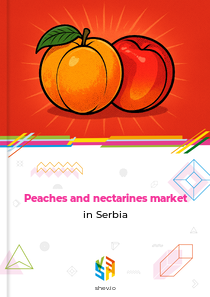







Earlier Report Observations
From 2018 to 2021, the Serbian peach and nectarine market contracted in volume from 61.2 thousand tons to 27.6 thousand tons. During this period, producers consistently increased planting areas focused on domestic consumption, while consumer demand shifted towards organic and large-sized fruit.
A turnaround occurred in 2022 when market volume grew to 33.4 thousand tons. This recovery coincided with continued expansion of local production and sustained interest in organic produce. Geopolitical instability due to the war in Ukraine may have indirectly influenced market dynamics.
In 2023, the market stabilized at 33.5 thousand tons, with the organic segment maintaining its appeal to consumers.
Table of content
- 1. Disclaimer
- 2. Terms of use of the report
- 3. Product codes in the statistical classifications used in the report
-
4. Key Market Indicators and Trends
-
4.1. Key Market Indicators
-
4.1.1. In kind
- 4.1.1.1. Production, 2018-2023
- 4.1.1.2. Imports, 2018-2024
- 4.1.1.3. Exports, 2018-2024
- 4.1.1.4. Market size, 2018-2023
-
4.1.2. In value
- 4.1.2.1. Production, 2018-2023
- 4.1.2.2. Imports, 2018-2024
- 4.1.2.3. Exports, 2018-2024
- 4.1.2.4. Market size, 2018-2023
-
4.1.1. In kind
- 4.2. Market Trends and Factors
-
4.1. Key Market Indicators
-
5. Production
-
5.1. Production in Serbia
- 5.1.1. Annual dynamics of production in Serbia in kind, 2018-2023, t
- 5.1.2. Annual dynamics of production in Serbia in value, 2018-2023, $ US
-
5.2. Global production by Country, 2018-2023
- 5.2.1. Annual dynamics of production by macroregions in kind, 2018-2023, t
- 5.2.2. Dynamics of production structure by macroregions in kind, 2018-2023
- 5.2.3. Annual dynamics of production by country in kind, 2018-2023, t
- 5.2.4. Structure of production by countries in kind, 2018-2023
- 5.2.5. Dynamics of peoduction structure by countries in kind, 2018-2023
-
5.1. Production in Serbia
-
6. Exports
-
6.1. Exports (Direct Data)
- 6.1.1. Exports - Total information
-
6.1.2. Exports in kind, t
- 6.1.2.1. Annual dynamics of product's exports from Serbia in kind, 2018-2024, t
- 6.1.2.2. Dynamics of product's exports in kind from Serbia by countries, 2018-2024, t
- 6.1.2.3. Structure of product's exports in kind by countries, 2018-2024
-
6.1.3. Exports in value, K $ US
- 6.1.3.1. Annual dynamics of product's exports from Serbia in value, 2018-2024, K $ US
- 6.1.3.2. Dynamics of product's exports in value from Serbia by countries, 2018-2024, K $ US
- 6.1.3.3. Structure of product's exports in value by countries, 2018-2024
-
6.1.4. Average price of product's exports, $ US/t
- 6.1.4.1. Annual dynamics of average price of product's exports from Serbia, 2018-2024, $ US/t
- 6.1.4.2. Dynamics of average price of product's exports from Serbia by countries, 2018-2024, $ US/t
-
6.2. Exports (Mirror Data)
- 6.2.1. Exports - Total information
-
6.2.2. Exports in kind, t
- 6.2.2.1. Annual dynamics of product's exports from Serbia in kind, 2018-2024, t
- 6.2.2.2. Dynamics of product's exports in kind from Serbia by countries, 2018-2024, t
- 6.2.2.3. Structure of product's exports in kind by countries, 2018-2024
-
6.2.3. Exports in value, K $ US
- 6.2.3.1. Annual dynamics of product's exports from Serbia in value, 2018-2024, K $ US
- 6.2.3.2. Dynamics of product's exports in value from Serbia by countries, 2018-2024, K $ US
- 6.2.3.3. Structure of product's exports in value by countries, 2018-2024
-
6.2.4. Average price of product's exports, $ US/t
- 6.2.4.1. Annual dynamics of average price of product's exports from Serbia, 2018-2024, $ US/t
- 6.2.4.2. Dynamics of average price of product's exports from Serbia by countries, 2018-2024, $ US/t
-
6.1. Exports (Direct Data)
-
7. Imports
-
7.1. Imports (Direct Data)
- 7.1.1. Imports - Total information
-
7.1.2. Imports in kind, t
- 7.1.2.1. Annual dynamics of product's imports to Serbia in kind, 2018-2024, t
- 7.1.2.2. Dynamics of product's imports in kind to Serbia by countries, 2018-2024, t
- 7.1.2.3. Structure of product's imports in kind by countries, 2018-2024
-
7.1.3. Imports in value, K $ US
- 7.1.3.1. Annual dynamics of product's imports to Serbia in value, 2018-2024, K $ US
- 7.1.3.2. Dynamics of product's imports in value to Serbia by countries, 2018-2024, K $ US
- 7.1.3.3. Structure of product's imports in value by countries, 2018-2024
-
7.1.4. Average price of product's imports, $ US/t
- 7.1.4.1. Annual dynamics of average price of product's imports to Serbia, 2018-2024, $ US/t
- 7.1.4.2. Dynamics of average price of product's imports to Serbia by countries, 2018-2024, $ US/t
-
7.2. Imports (Mirror Data)
- 7.2.1. Imports - Total information
-
7.2.2. Imports in kind, t
- 7.2.2.1. Annual dynamics of product's imports to Serbia in kind, 2018-2024, t
- 7.2.2.2. Dynamics of product's imports in kind to Serbia by countries, 2018-2024, t
- 7.2.2.3. Structure of product's imports in kind by countries, 2018-2024
-
7.2.3. Imports in value, K $ US
- 7.2.3.1. Annual dynamics of product's imports to Serbia in value, 2018-2024, K $ US
- 7.2.3.2. Dynamics of product's imports in value to Serbia by countries, 2018-2024, K $ US
- 7.2.3.3. Structure of product's imports in value by countries, 2018-2024
-
7.2.4. Average price of product's imports, $ US/t
- 7.2.4.1. Annual dynamics of average price of product's imports to Serbia, 2018-2024, $ US/t
- 7.2.4.2. Dynamics of average price of product's imports to Serbia by countries, 2018-2024, $ US/t
-
7.1. Imports (Direct Data)
-
8. Trade balance
-
8.1. Trade balance (Direct Data)
- 8.1.1. In kind, t
- 8.1.2. In value, K $ US
-
8.2. Trade balance (Mirror Data)
- 8.2.1. In kind, t
- 8.2.2. In value, K $ US
-
8.1. Trade balance (Direct Data)
-
9. Top buying and selling countries, 2018-2024
-
9.1. Direct Data
- 9.1.1. Import in Value by Countries-buyers
- 9.1.2. Export in Value by Countries-suppliers
-
9.2. Mirror Data
- 9.2.1. Import in Value by Countries-buyers
- 9.2.2. Export in Value by Countries-suppliers
-
9.1. Direct Data
Production peaches and nectarines in Serbia
In kind, 2017-2020, t
Between 2017 and 2020, Serbia ranked 26th globally in the production of peaches and nectarines.
Top producers of peaches and nectarines, 2017-2020
World map of production of peaches and nectarines, 2017-2020
Serbia's production of peaches and nectarines declined for the third consecutive year. In 2020, the country produced 58 692 tonnes, which represents a 16.4% decrease compared to the previous year. Over the period from 2017 to 2020, production fell by 27.2%, averaging an annual decline of 10.0%.
Annual dynamics of production in Serbia in kind, 2017-2020, t
| Parameter | 2018 | 2019 | 2020 | CAGR | |
|---|---|---|---|---|---|
| 1 | Change from last year | (8.6%) | (4.7%) | (16.4%) | (10.0%) |
In value, 2017-2020, K $ US
In 2020, the output of peaches and nectarines in Serbia was valued at 57 051 thousand US dollars, showing only a slight fluctuation from the previous year. From 2017 to 2020, production value decreased by 25%, with a compound annual growth rate of -9.2%. The lowest value was recorded in 2019 at 56 868 thousand US dollars, while the highest was in 2018 at 81 552 thousand US dollars. The largest decline occurred in 2019 with a 30.3% drop, and the largest increase was in 2018 with a 7.2% rise.
Annual dynamics of production in Serbia in value, 2017-2020, K $ US
| Parameter | 2018 | 2019 | 2020 | CAGR | |
|---|---|---|---|---|---|
| 1 | Change from last year | 7.2% | (30.3%) | 0.3% | (9.2%) |
Exports peaches and nectarines from Serbia
Exports in kind, t
After a two-year decline, the volume of peaches and nectarines exported from Serbia increased. In 2020, exports reached 24 219 tonnes, marking a strong 11.6% increase compared to the prior year. However, between 2017 and 2020, exports decreased by 44.4%, averaging an annual decline of 17.8%. The lowest volume was recorded in 2019 at 21 693 tonnes, with the largest decline occurring in 2018 at 45.8%.
Annual dynamics of product's exports from Serbia in kind, 2017-2020, t
| Parameter | 2018 | 2019 | 2020 | CAGR | |
|---|---|---|---|---|---|
| 1 | Change from last year | (45.8%) | (8.2%) | 11.6% | (17.8%) |
From 2017 to 2020, Russia was the dominant market for Serbia's exports of peaches and nectarines in volume terms, accounting for 80.5% of total flows, while other markets made up a fragmented remainder.
Structure of product's exports in kind by countries, 2017-2020
World map of product's exports from Serbia in kind, 2017-2020
Exports in value, K $ US
Following a two-year contraction, the value of peaches and nectarines exported from Serbia increased. In 2020, exports were recorded at 23 542 thousand US dollars, indicating a steep 33.9% rise relative to the previous year. Over the period from 2017 to 2020, exports decreased by 42.8%, with an average annual decline of 17.0%. The lowest value was in 2019 at 17 578 thousand US dollars, and the largest decline was in 2018 at 36.4%.
Annual dynamics of product's exports from Serbia in value, 2017-2020, K $ US
| Parameter | 2018 | 2019 | 2020 | CAGR | |
|---|---|---|---|---|---|
| 1 | Change from last year | (36.4%) | (32.8%) | 33.9% | (17.0%) |
Throughout 2017 to 2020, the structure of exports in value terms was heavily centered on Russia, which accounted for 89.0% of total flows, with other markets forming a less significant portion.
Structure of product's exports in value by countries, 2017-2020
World map of product's exports from Serbia in value, 2017-2020
Imports peaches and nectarines to Serbia
Imports in kind, t
Imports of peaches and nectarines into Serbia declined for the third consecutive year. In 2020, imports amounted to 3 425 tonnes, representing a dramatic 28.3% decrease year-over-year. From 2017 to 2020, imports fell by 85.9%, with a compound annual growth rate of -47.9%.
Annual dynamics of product's imports to Serbia in kind, 2017-2020, t
| Parameter | 2018 | 2019 | 2020 | CAGR | |
|---|---|---|---|---|---|
| 1 | Change from last year | (53.9%) | (57.4%) | (28.3%) | (47.9%) |
From 2017 to 2020, Greece clearly dominated Serbia's imports of peaches and nectarines in volume terms, taking 86.2% of total flows, while other countries held significantly smaller shares.
Structure of product's imports in kind by countries, 2017-2020
World map of product's imports to Serbia in kind, 2017-2020
Imports in value, K $ US
After a two-year drop, the value of imported peaches and nectarines into Serbia increased. In 2020, import volume reached 3 779 thousand US dollars, which is 7.0% above the previous year. However, over the period from 2017 to 2020, imports decreased by 63.6%, with a compound annual growth rate of -28.6%. The lowest value was recorded in 2019 at 3 531 thousand US dollars, and the largest decline occurred in 2018 at 47.6%.
Annual dynamics of product's imports to Serbia in value, 2017-2020, K $ US
| Parameter | 2018 | 2019 | 2020 | CAGR | |
|---|---|---|---|---|---|
| 1 | Change from last year | (47.6%) | (35.1%) | 7.0% | (28.6%) |
In 2017 to 2020, the structure of imports in value terms was characterized by the predominance of Greece, which absorbed 74.9% of total flows, alongside a large number of minor partners.
Structure of product's imports in value by countries, 2017-2020
World map of product's imports to Serbia in value, 2017-2020
Related Reports

Peaches and nectarines market in Australia
2026-03-28
Peaches and nectarines market in MENA
2026-03-28
Peaches and nectarines market in Slovakia
2026-03-28
Peaches and nectarines market in China
2026-03-28

Melons and papayas market in Serbia
2026-03-28

2026-03-28
In-shell walnuts market in Serbia
2026-03-28

2026-03-28
Why Choose Us?
Only Verified Data
No Hidden Costs or Separate Fees
Smarter Subscription Pricing
Contact Our Team
Submit your inquiry using the form below — our team will get back to you within 24 hours.