






"Latin America and the Caribbean" region includes following countries:
 Argentina
 Bolivia
 Brazil
 Chile
Chile Colombia
 Ecuador
 Falkland Islands (Malvinas)
 French Guiana
 Guyana
 Paraguay
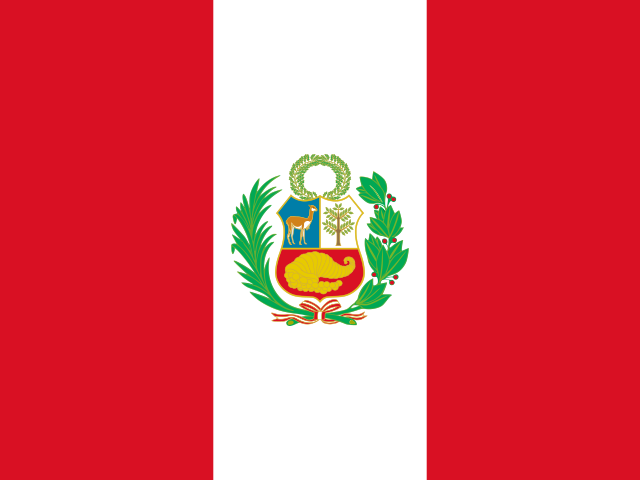 Peru
Peru Suriname
 Uruguay
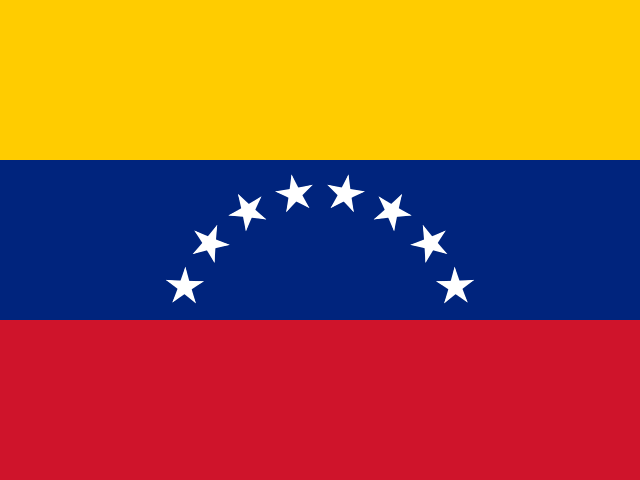 Venezuela
 Belize
 Costa Rica
 El Salvador
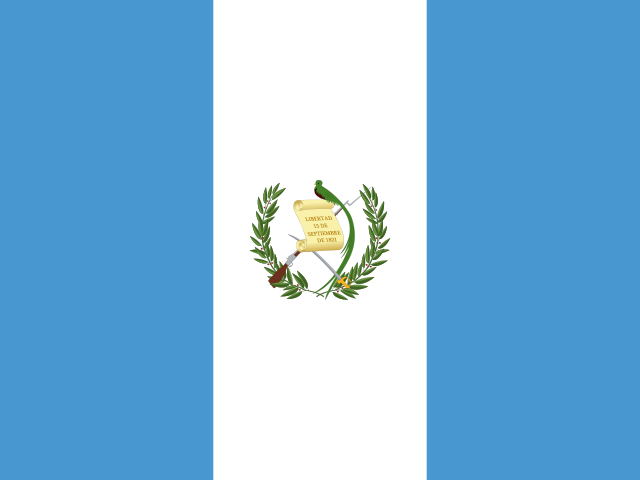 Guatemala
 Honduras
 Mexico
 Nicaragua
 Panama
 Antigua and Barbuda
 the Bahamas
 Barbados
 British Virgin Islands
 Cayman Islands
 Cuba
Cuba Dominica
 Dominican Republic
 Grenada
 Guadeloupe
 Haiti
Haiti Jamaica
 Martinique
 Montserrat
 Curacao
 Aruba
Aruba Saint Maarten (Dutch part)
 Bonaire
 Puerto Rico
 Saint Kitts and Nevis
 Anguilla
 Saint Lucia
 Saint-Martin (French Part)
 Saint Vincent and the Grenadines
 Trinidad and Tobago
 Turks and Caicos Islands
 United States Virgin Islands
Earlier Report Observations
The molasses market in Latin America and the Caribbean expanded from 17.5 million metric tons in 2018 to 22.1 million metric tons in 2020, then contracted to 19.7 million metric tons in 2021.
Market volume recovered to 21.1 million metric tons in 2022, supported by demand from the animal feed sector as molasses competed with grains like corn. Growth continued in 2023, reaching 23.2 million metric tons, alongside active trade flows including Mexico's imports of beet molasses from the United States and France.
For 2024, industry developments included the launch of molasses-based animal supplements and biodegradable packaging materials, along with advanced filtration technology to improve product purity, reflecting ongoing innovation and a focus on sustainability.
Table of content
- 1. Disclaimer
- 2. Terms of use of the report
- 3. Product codes in the statistical classifications used in the report
-
4. Key Market Indicators and Trends
-
4.1. Key Market Indicators
-
4.1.1. In kind
- 4.1.1.1. Production, 2018-2023
- 4.1.1.2. Imports, 2018-2024
- 4.1.1.3. Exports, 2018-2024
- 4.1.1.4. Market size, 2018-2023
-
4.1.1. In kind
- 4.2. Market Trends and Factors
-
4.1. Key Market Indicators
-
5. Production
-
5.1. Production in Latin America and the Caribbean
- 5.1.1. Annual dynamics of production in Latin America and the Caribbean in kind, 2018-2023, K t
-
5.2. Global production by Country, 2018-2023
- 5.2.1. Annual dynamics of production by macroregions in kind, 2018-2023, K t
- 5.2.2. Dynamics of production structure by macroregions in kind, 2018-2023
- 5.2.3. Annual dynamics of production by country in kind, 2018-2023, K t
- 5.2.4. Structure of production by countries in kind, 2018-2023
- 5.2.5. Dynamics of peoduction structure by countries in kind, 2018-2023
-
5.1. Production in Latin America and the Caribbean
-
6. Exports
-
6.1. Exports (Direct Data*)
- 6.1.1. Exports - Total information
-
6.1.2. Exports in kind, K t
- 6.1.2.1. Annual dynamics of product's exports from Argentina in kind, 2018-2024, K t
- 6.1.2.2. Dynamics of product's exports in kind from Argentina by countries, 2018-2024, K t
- 6.1.2.3. Structure of product's exports in kind by countries, 2018-2024
-
6.1.3. Exports in value, M $ US
- 6.1.3.1. Annual dynamics of product's exports from Argentina in value, 2018-2024, M $ US
- 6.1.3.2. Dynamics of product's exports in value from Argentina by countries, 2018-2024, M $ US
- 6.1.3.3. Structure of product's exports in value by countries, 2018-2024
-
6.1.4. Average price of product's exports, $ US/t
- 6.1.4.1. Annual dynamics of average price of product's exports from Argentina, 2018-2024, $ US/t
- 6.1.4.2. Dynamics of average price of product's exports from Argentina by countries, 2018-2024, $ US/t
-
6.2. Exports (Mirror Data)
- 6.2.1. Exports - Total information
-
6.2.2. Exports in kind, K t
- 6.2.2.1. Annual dynamics of product's exports from Argentina in kind, 2018-2024, K t
- 6.2.2.2. Dynamics of product's exports in kind from Argentina by countries, 2018-2024, K t
- 6.2.2.3. Structure of product's exports in kind by countries, 2018-2024
-
6.2.3. Exports in value, M $ US
- 6.2.3.1. Annual dynamics of product's exports from Argentina in value, 2018-2024, M $ US
- 6.2.3.2. Dynamics of product's exports in value from Argentina by countries, 2018-2024, M $ US
- 6.2.3.3. Structure of product's exports in value by countries, 2018-2024
-
6.2.4. Average price of product's exports, $ US/t
- 6.2.4.1. Annual dynamics of average price of product's exports from Argentina, 2018-2024, $ US/t
- 6.2.4.2. Dynamics of average price of product's exports from Argentina by countries, 2018-2024, $ US/t
-
6.1. Exports (Direct Data*)
-
7. Imports
-
7.1. Imports (Direct Data*)
- 7.1.1. Imports - Total information
-
7.1.2. Imports in kind, K t
- 7.1.2.1. Annual dynamics of product's imports to Argentina in kind, 2018-2024, K t
- 7.1.2.2. Dynamics of product's imports in kind to Argentina by countries, 2018-2024, K t
- 7.1.2.3. Structure of product's imports in kind by countries, 2018-2024
-
7.1.3. Imports in value, M $ US
- 7.1.3.1. Annual dynamics of product's imports to Argentina in value, 2018-2024, M $ US
- 7.1.3.2. Dynamics of product's imports in value to Argentina by countries, 2018-2024, M $ US
- 7.1.3.3. Structure of product's imports in value by countries, 2018-2024
-
7.1.4. Average price of product's imports, $ US/t
- 7.1.4.1. Annual dynamics of average price of product's imports to Argentina, 2018-2024, $ US/t
- 7.1.4.2. Dynamics of average price of product's imports to Argentina by countries, 2018-2024, $ US/t
-
7.2. Imports (Mirror Data)
- 7.2.1. Imports - Total information
-
7.2.2. Imports in kind, K t
- 7.2.2.1. Annual dynamics of product's imports to Argentina in kind, 2018-2024, K t
- 7.2.2.2. Dynamics of product's imports in kind to Argentina by countries, 2018-2024, K t
- 7.2.2.3. Structure of product's imports in kind by countries, 2018-2024
-
7.2.3. Imports in value, M $ US
- 7.2.3.1. Annual dynamics of product's imports to Argentina in value, 2018-2024, M $ US
- 7.2.3.2. Dynamics of product's imports in value to Argentina by countries, 2018-2024, M $ US
- 7.2.3.3. Structure of product's imports in value by countries, 2018-2024
-
7.2.4. Average price of product's imports, $ US/t
- 7.2.4.1. Annual dynamics of average price of product's imports to Argentina, 2018-2024, $ US/t
- 7.2.4.2. Dynamics of average price of product's imports to Argentina by countries, 2018-2024, $ US/t
-
7.1. Imports (Direct Data*)
-
8. Trade balance
-
8.1. Trade balance (Direct Data)
- 8.1.1. In kind, K t
- 8.1.2. In value, M $ US
-
8.2. Trade balance (Mirror Data)
- 8.2.1. In kind, K t
- 8.2.2. In value, M $ US
-
8.1. Trade balance (Direct Data)
-
9. Top buying and selling countries, 2018-2024
-
9.1. Direct Data
- 9.1.1. Import in Value by Countries-buyers
- 9.1.2. Export in Value by Countries-suppliers
-
9.2. Mirror Data
- 9.2.1. Import in Value by Countries-buyers
- 9.2.2. Export in Value by Countries-suppliers
-
9.1. Direct Data
Production molasses in Latin America and the Caribbean
In kind, 2017-2020, K t
Top producers of molasses, 2017-2020
World map of production of molasses, 2017-2020
Latin America and the Caribbean saw molasses production rise for the second year in a row. In 2020, the region produced 23 304 K t of molasses, marking a 22.6% increase from the previous year. Looking at the period from 2017 to 2020, production grew by 3.8%, which translates to an annualized growth rate of 1.3%. The lowest production level was recorded in 2018 at 18 507 K t, with the largest decline that year reaching 17.5%.
Annual dynamics of production in Latin America and the Caribbean in kind, 2017-2020, K t
| Parameter | 2018 | 2019 | 2020 | CAGR | |
|---|---|---|---|---|---|
| 1 | Change from last year | (17.5%) | 2.7% | 22.6% | 1.3% |
In value, 2017-2020, M $ US
Molasses production in Latin America and the Caribbean increased for the second consecutive year. In 2020, the output was valued at 3 609 M $ US, up by 46.4% compared to 2019. Over the 2017-2020 period, production rose by 19.6%, with a compound annual growth rate (CAGR) of 6.2%. The minimum value occurred in 2018 at 2 292 M $ US, when the largest decline of 24.0% was also recorded.
Annual dynamics of production in Latin America and the Caribbean in value, 2017-2020, M $ US
| Parameter | 2018 | 2019 | 2020 | CAGR | |
|---|---|---|---|---|---|
| 1 | Change from last year | (24.0%) | 7.5% | 46.4% | 6.2% |
Exports molasses from Latin America and the Caribbean
Exports in kind, K t
After two years of decline, molasses exports from Latin America and the Caribbean rebounded. In 2020, exports reached 1 297 K t, representing a 16.5% increase from the previous year. The lowest export volume was in 2019 at 1 114 K t, while the largest drop occurred in 2018 with an 11.7% decrease.
Annual dynamics of product's exports from Latin America and the Caribbean in kind, 2017-2020, K t
| Parameter | 2018 | 2019 | 2020 | CAGR | |
|---|---|---|---|---|---|
| 1 | Change from last year | (11.7%) | (1.1%) | 16.5% | 0.6% |
From 2017 to 2020, the United States, the Netherlands, and the United Kingdom remained the top buyers of molasses from Latin America and the Caribbean. The United States accounted for 58.0% of exports in kind, followed by the Netherlands at 10.1% and the United Kingdom at 10.0%. Together, these three countries represented 78.1% of total exports in kind.
Structure of product's exports in kind by countries, 2017-2020
World map of product's exports from Latin America and the Caribbean in kind, 2017-2020
Exports in value, M $ US
Molasses exports from Latin America and the Caribbean increased for the second consecutive year. In 2020, export value amounted to 200.9 M $ US, up by 39.2% compared to the previous year. Over the 2017-2020 period, exports grew by 17.2%, with a CAGR of 5.4%. The minimum value was recorded in 2018 at 139.5 M $ US, when the largest decline of 18.6% also occurred.
Annual dynamics of product's exports from Latin America and the Caribbean in value, 2017-2020, M $ US
| Parameter | 2018 | 2019 | 2020 | CAGR | |
|---|---|---|---|---|---|
| 1 | Change from last year | (18.6%) | 3.5% | 39.2% | 5.4% |
Between 2017 and 2020, the United States, the Netherlands, and the United Kingdom were the principal destinations for molasses exports in value terms. The United States led with 62.5% of exports, followed by the Netherlands at 8.4% and the United Kingdom at 8.3%. Collectively, these three countries accounted for 79.3% of total export flows.
Structure of product's exports in value by countries, 2017-2020
World map of product's exports from Latin America and the Caribbean in value, 2017-2020
Imports molasses to Latin America and the Caribbean
Imports in kind, K t
Molasses imports into Latin America and the Caribbean increased for the third consecutive year. In 2020, imports reached 88 K t, showing no significant change from 2019. Over the 2017-2020 period, imports rose by 29.6%, with a CAGR of 9.0%.
Annual dynamics of product's imports to Latin America and the Caribbean in kind, 2017-2020, K t
| Parameter | 2018 | 2019 | 2020 | CAGR | |
|---|---|---|---|---|---|
| 1 | Change from last year | 27.1% | 1.5% | 0.5% | 9.0% |
From 2017 to 2020, Fiji, the United States, and Russia were among the largest suppliers of molasses to Latin America and the Caribbean. Fiji accounted for 4.6% of imports in kind, the United States for 3.2%, and Russia for 2.2%. However, even combined, they represented only 10.0% of total imports in kind, indicating a highly diversified partner base.
Structure of product's imports in kind by countries, 2017-2020
World map of product's imports to Latin America and the Caribbean in kind, 2017-2020
Imports in value, M $ US
Molasses imports into Latin America and the Caribbean increased for the second consecutive year. In 2020, imports were valued at 49.9 M $ US, marking a 54.9% rise from the previous year. Between 2017 and 2020, imports grew by 49.7%, equating to an annualized rate of 14.4%. The minimum value was recorded in 2018 at 30.7 M $ US, when the largest decline of 7.9% also occurred.
Annual dynamics of product's imports to Latin America and the Caribbean in value, 2017-2020, M $ US
| Parameter | 2018 | 2019 | 2020 | CAGR | |
|---|---|---|---|---|---|
| 1 | Change from last year | (7.9%) | 4.9% | 54.9% | 14.4% |
Between 2017 and 2020, molasses imports into Latin America and the Caribbean involved many trading partners. Even the largest suppliers—Fiji, the United States, and Russia—together accounted for only 12.6% of total imports in value terms, highlighting the region's broad diversification in import sources.
Structure of product's imports in value by countries, 2017-2020
World map of product's imports to Latin America and the Caribbean in value, 2017-2020
Related Reports





Why Choose Us?
Only Verified Data
No Hidden Costs or Separate Fees
Smarter Subscription Pricing
Contact Our Team
Submit your inquiry using the form below — our team will get back to you within 24 hours.