






"Americas" region includes following countries:
 Bermuda
 Canada
 Greenland
 Saint Pierre and Miquelon
 the United States
 Argentina
 Bolivia
 Brazil
 Chile
Chile Colombia
 Ecuador
 Falkland Islands (Malvinas)
 French Guiana
 Guyana
 Paraguay
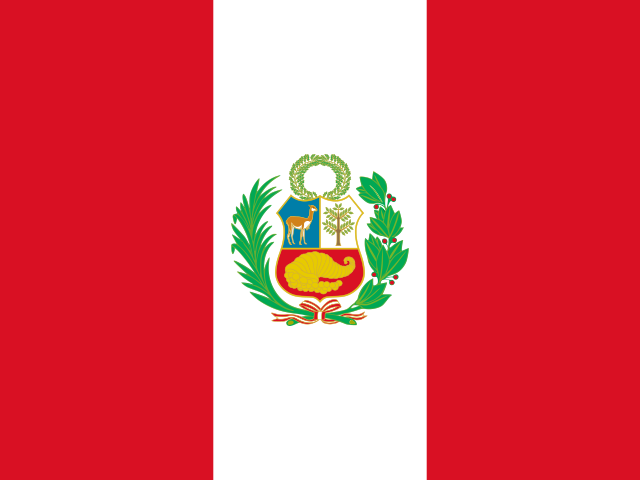 Peru
Peru Suriname
 Uruguay
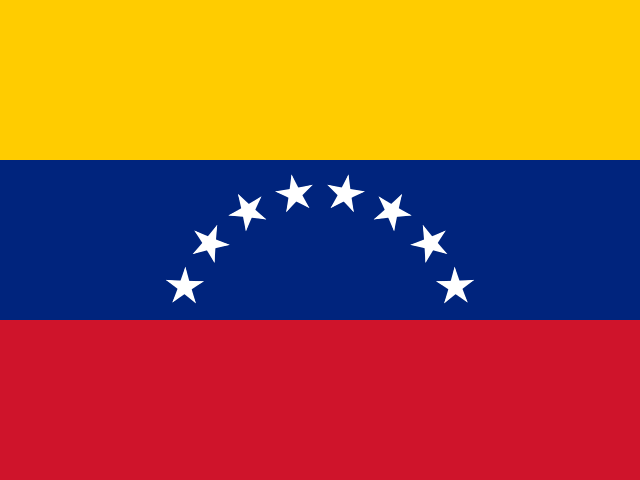 Venezuela
 Belize
 Costa Rica
 El Salvador
 Guatemala
 Honduras
 Mexico
 Nicaragua
 Panama
 Antigua and Barbuda
 the Bahamas
 Barbados
 British Virgin Islands
 Cayman Islands
 Cuba
Cuba Dominica
 Dominican Republic
 Grenada
 Guadeloupe
 Haiti
Haiti Jamaica
 Martinique
 Montserrat
 Curacao
 Aruba
Aruba Saint Maarten (Dutch part)
 Bonaire
 Puerto Rico
 Saint Kitts and Nevis
 Anguilla
 Saint Lucia
 Saint-Martin (French Part)
 Saint Vincent and the Grenadines
 Trinidad and Tobago
 Turks and Caicos Islands
 United States Virgin Islands
Earlier Report Observations
From 2018 to 2020, the milk market volume in the Americas grew from 192.2 to 199.5 million tonnes. This expansion was supported by increased production and consumption in Argentina, where currency stability and improved dollar prices encouraged output. The global COVID-19 pandemic in 2020 disrupted logistics and demand, but the market continued to grow as higher production costs in Brazil were offset by gains in other regions.
Between 2021 and 2022, production costs rose sharply due to the Russia-Ukraine war, which affected global dairy trade and pushed international milk prices to record highs. In Brazil, high domestic prices during the off-season reduced consumption, but increased imports helped maintain market volume, which stabilized around 202 million tonnes. The war also led to higher feed and energy costs, squeezing producer profitability across the region.
In 2023, market volume edged up to 202.6 million tonnes, though the value fell by 12% to $672.1 billion due to lower prices. Production in Brazil stagnated around 34 billion liters, impacted by imports and the off-season, while Mexico saw a 1.7% output increase. Lower Chinese demand and El Niño weather patterns added uncertainty, with imports into Brazil keeping per capita supply high.
Table of content
- 1. Disclaimer
- 2. Terms of use of the report
- 3. Product codes in the statistical classifications used in the report
-
4. Key Market Indicators and Trends
-
4.1. Key Market Indicators
-
4.1.1. In kind
- 4.1.1.1. Production, 2018-2023
- 4.1.1.2. Imports, 2018-2024
- 4.1.1.3. Exports, 2018-2024
- 4.1.1.4. Market size, 2018-2023
-
4.1.2. In value
- 4.1.2.1. Production, 2018-2023
- 4.1.2.2. Imports, 2018-2024
- 4.1.2.3. Exports, 2018-2024
- 4.1.2.4. Market size, 2018-2023
-
4.1.1. In kind
- 4.2. Market Trends and Factors
-
4.1. Key Market Indicators
-
5. Production
-
5.1. Production in Americas
- 5.1.1. Annual dynamics of production in Americas in kind, 2018-2023, M t
-
5.2. Global production by Country, 2018-2023
- 5.2.1. Annual dynamics of production by macroregions in kind, 2018-2023, M t
- 5.2.2. Dynamics of production structure by macroregions in kind, 2018-2023
- 5.2.3. Annual dynamics of production by country in kind, 2018-2023, M t
- 5.2.4. Structure of production by countries in kind, 2018-2023
- 5.2.5. Dynamics of peoduction structure by countries in kind, 2018-2023
-
5.1. Production in Americas
-
6. Imports
-
6.1. Imports (Direct Data*)
- 6.1.1. Imports - Total information
-
6.1.2. Imports in kind, K t
- 6.1.2.1. Annual dynamics of product's imports to Bermuda in kind, 2018-2024, K t
- 6.1.2.2. Dynamics of product's imports in kind to Bermuda by countries, 2018-2024, K t
- 6.1.2.3. Structure of product's imports in kind by countries, 2018-2024
-
6.1.3. Imports in value, M $ US
- 6.1.3.1. Annual dynamics of product's imports to Bermuda in value, 2018-2024, M $ US
- 6.1.3.2. Dynamics of product's imports in value to Bermuda by countries, 2018-2024, M $ US
- 6.1.3.3. Structure of product's imports in value by countries, 2018-2024
-
6.1.4. Average price of product's imports, $ US/t
- 6.1.4.1. Annual dynamics of average price of product's imports to Bermuda, 2018-2024, $ US/t
- 6.1.4.2. Dynamics of average price of product's imports to Bermuda by countries, 2018-2024, $ US/t
-
6.2. Imports (Mirror Data)
- 6.2.1. Imports - Total information
-
6.2.2. Imports in kind, K t
- 6.2.2.1. Annual dynamics of product's imports to Bermuda in kind, 2018-2024, K t
- 6.2.2.2. Dynamics of product's imports in kind to Bermuda by countries, 2018-2024, K t
- 6.2.2.3. Structure of product's imports in kind by countries, 2018-2024
-
6.2.3. Imports in value, M $ US
- 6.2.3.1. Annual dynamics of product's imports to Bermuda in value, 2018-2024, M $ US
- 6.2.3.2. Dynamics of product's imports in value to Bermuda by countries, 2018-2024, M $ US
- 6.2.3.3. Structure of product's imports in value by countries, 2018-2024
-
6.2.4. Average price of product's imports, $ US/t
- 6.2.4.1. Annual dynamics of average price of product's imports to Bermuda, 2018-2024, $ US/t
- 6.2.4.2. Dynamics of average price of product's imports to Bermuda by countries, 2018-2024, $ US/t
-
6.1. Imports (Direct Data*)
-
7. Exports
-
7.1. Exports (Direct Data*)
- 7.1.1. Exports - Total information
-
7.1.2. Exports in kind, K t
- 7.1.2.1. Annual dynamics of product's exports from Bermuda in kind, 2018-2024, K t
- 7.1.2.2. Dynamics of product's exports in kind from Bermuda by countries, 2018-2024, K t
- 7.1.2.3. Structure of product's exports in kind by countries, 2018-2024
-
7.1.3. Exports in value, M $ US
- 7.1.3.1. Annual dynamics of product's exports from Bermuda in value, 2018-2024, M $ US
- 7.1.3.2. Dynamics of product's exports in value from Bermuda by countries, 2018-2024, M $ US
- 7.1.3.3. Structure of product's exports in value by countries, 2018-2024
-
7.1.4. Average price of product's exports, $ US/t
- 7.1.4.1. Annual dynamics of average price of product's exports from Bermuda, 2018-2024, $ US/t
- 7.1.4.2. Dynamics of average price of product's exports from Bermuda by countries, 2018-2024, $ US/t
-
7.2. Exports (Mirror Data)
- 7.2.1. Exports - Total information
-
7.2.2. Exports in kind, K t
- 7.2.2.1. Annual dynamics of product's exports from Bermuda in kind, 2018-2024, K t
- 7.2.2.2. Dynamics of product's exports in kind from Bermuda by countries, 2018-2024, K t
- 7.2.2.3. Structure of product's exports in kind by countries, 2018-2024
-
7.2.3. Exports in value, M $ US
- 7.2.3.1. Annual dynamics of product's exports from Bermuda in value, 2018-2024, M $ US
- 7.2.3.2. Dynamics of product's exports in value from Bermuda by countries, 2018-2024, M $ US
- 7.2.3.3. Structure of product's exports in value by countries, 2018-2024
-
7.2.4. Average price of product's exports, $ US/t
- 7.2.4.1. Annual dynamics of average price of product's exports from Bermuda, 2018-2024, $ US/t
- 7.2.4.2. Dynamics of average price of product's exports from Bermuda by countries, 2018-2024, $ US/t
-
7.1. Exports (Direct Data*)
-
8. Trade balance
-
8.1. Trade balance (Direct Data)
- 8.1.1. In kind, K t
- 8.1.2. In value, M $ US
-
8.2. Trade balance (Mirror Data)
- 8.2.1. In kind, K t
- 8.2.2. In value, M $ US
-
8.1. Trade balance (Direct Data)
-
9. Top buying and selling countries, 2018-2024
-
9.1. Direct Data
- 9.1.1. Import in Value by Countries-buyers
- 9.1.2. Export in Value by Countries-suppliers
-
9.2. Mirror Data
- 9.2.1. Import in Value by Countries-buyers
- 9.2.2. Export in Value by Countries-suppliers
-
9.1. Direct Data
Production milk in Americas
In kind, 2017-2020, M t
Top producers of milk, 2017-2020
World map of production of milk, 2017-2020
Milk production in the Americas has increased for the third consecutive year. In 2020, the region produced 199.0 million tonnes of milk, marking a modest gain of 2.6% compared to the previous year. Over the period from 2017 to 2020, production rose by 5.1%, with a compound annual growth rate of 1.7%.
Annual dynamics of production in Americas in kind, 2017-2020, M t
| Parameter | 2018 | 2019 | 2020 | CAGR | |
|---|---|---|---|---|---|
| 1 | Change from last year | 1.5% | 0.9% | 2.6% | 1.7% |
In value, 2017-2020, B $ US
Milk production value in the Americas has risen for the second consecutive year. In 2020, the output was valued at 662.7 billion US dollars, representing a significant increase of 17.3% year-over-year. Between 2017 and 2020, production value grew by 28.7%, equating to an annualized rate of 8.8%. The lowest value was recorded in 2018 at 507.0 billion US dollars, which also saw the largest decline of 1.5%.
Annual dynamics of production in Americas in value, 2017-2020, B $ US
| Parameter | 2018 | 2019 | 2020 | CAGR | |
|---|---|---|---|---|---|
| 1 | Change from last year | (1.5%) | 11.5% | 17.3% | 8.8% |
Exports milk from Americas
Exports in kind, K t
Exported milk volumes from the Americas have declined for the second consecutive year. In 2020, exports totaled 468.1 thousand tonnes, remaining broadly stable compared to the previous year. Between 2017 and 2020, exports decreased by 9.9%, with an annualized rate of decline of 3.4%. The peak was reached in 2018 at 596.2 thousand tonnes, which also saw the largest increase of 14.8%. The largest decline occurred in 2019, with a drop of 21.3%.
Annual dynamics of product's exports from Americas in kind, 2017-2020, K t
| Parameter | 2018 | 2019 | 2020 | CAGR | |
|---|---|---|---|---|---|
| 1 | Change from last year | 14.8% | (21.3%) | (0.2%) | (3.4%) |
From 2017 to 2020, milk exports in kind from the Americas were characterized by a broad spread across markets. Algeria accounted for 19.2% of exports, China for 2.6%, and Russia for 2.4%, with these three countries together representing only 24.3% of total flows.
Structure of product's exports in kind by countries, 2017-2020
World map of product's exports from Americas in kind, 2017-2020
Exports in value, M $ US
In 2020, the Americas exported milk worth 1 559 million US dollars, which is 14.1% more than in 2019. Between 2017 and 2020, exports increased by 10.4%, with an annualized growth rate of 3.3%. The lowest value was recorded in 2019 at 1 366 million US dollars, which also saw the largest decline of 13.1%. The highest value was in 2018 at 1 572 million US dollars.
Annual dynamics of product's exports from Americas in value, 2017-2020, M $ US
| Parameter | 2018 | 2019 | 2020 | CAGR | |
|---|---|---|---|---|---|
| 1 | Change from last year | 11.3% | (13.1%) | 14.1% | 3.3% |
From 2017 to 2020, the partner structure for milk exports in value terms was balanced rather than concentrated. Algeria represented 24.9% of exports, Russia 3.1%, and China 2.9%, with these three countries jointly accounting for 30.9% of total flows. Many other countries made up the remaining 69.1%.
Structure of product's exports in value by countries, 2017-2020
World map of product's exports from Americas in value, 2017-2020
Imports milk to Americas
Imports in kind, K t
Milk imports to the Americas have increased for the second consecutive year. In 2020, imports totaled 924.9 thousand tonnes, showing a substantial rise of 57.6% compared to the previous year. Over the period from 2017 to 2020, imports grew by 42.4%, with a compound annual growth rate of 12.5%. The lowest volume was recorded in 2018 at 559.0 thousand tonnes, which also experienced the largest decline of 13.9%.
Annual dynamics of product's imports to Americas in kind, 2017-2020, K t
| Parameter | 2018 | 2019 | 2020 | CAGR | |
|---|---|---|---|---|---|
| 1 | Change from last year | (13.9%) | 5.0% | 57.6% | 12.5% |
Throughout 2017 to 2020, milk imports in kind to the Americas were not concentrated on a few key markets. New Zealand accounted for 5.2% of imports, Germany for 3.0%, and the Netherlands for 2.9%, with these three countries jointly representing only 11.1% of total flows.
Structure of product's imports in kind by countries, 2017-2020
World map of product's imports to Americas in kind, 2017-2020
Imports in value, M $ US
In 2020, foreign milk supplies to the Americas totaled 2 479 million US dollars, marking an 11.7% increase year-over-year. Between 2017 and 2020, imports rose by 12.8%, with an annualized growth rate of 4.1%. The largest decline occurred in 2019, with a drop of 2.2%.
Annual dynamics of product's imports to Americas in value, 2017-2020, M $ US
| Parameter | 2018 | 2019 | 2020 | CAGR | |
|---|---|---|---|---|---|
| 1 | Change from last year | 3.2% | (2.2%) | 11.7% | 4.1% |
From 2017 to 2020, milk imports in value terms to the Americas were spread across many countries. New Zealand accounted for 7.6% of imports, the Netherlands for 3.5%, and Germany for 2.0%, with these three countries jointly representing only 13.1% of total flows.
Structure of product's imports in value by countries, 2017-2020
World map of product's imports to Americas in value, 2017-2020
Related Reports

2026-03-30
Milk market in Northern Africa
2026-03-30
2026-03-30
2026-03-30

Milk and cream market in Americas
2026-03-27



In-depth market research on this product
Global Sheep Milk Cheese Market 2021–2031: Size, Share, Trends and Forecast
Global market report: size, trends and forecast to 2031 · 186 pages
Global Skimmed Milk Powder Market 2021–2031: Size, Share, Trends and Forecast
Global market report: size, trends and forecast to 2031 · 192 pages
Global Whole Milk Powder Market 2021–2031: Size, Share, Trends and Forecast
Global market report: size, trends and forecast to 2031 · 214 pages
Global Condensed Milk Market 2021–2031: Size, Share, Trends and Forecast
Global market report: size, trends and forecast to 2031 · 224 pages
Why Choose Us?
Only Verified Data
No Hidden Costs or Separate Fees
Smarter Subscription Pricing
Contact Our Team
Submit your inquiry using the form below — our team will get back to you within 24 hours.