






"Americas" region includes following countries:
 Bermuda
 Canada
 Greenland
 Saint Pierre and Miquelon
 the United States
 Argentina
 Bolivia
 Brazil
 Chile
Chile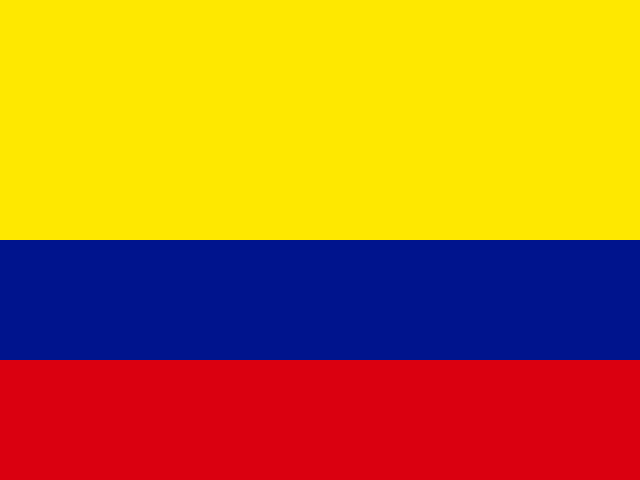 Colombia
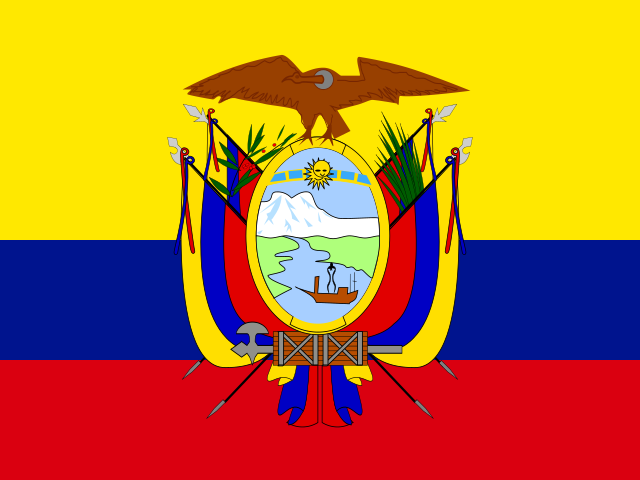 Ecuador
 Falkland Islands (Malvinas)
 French Guiana
 Guyana
 Paraguay
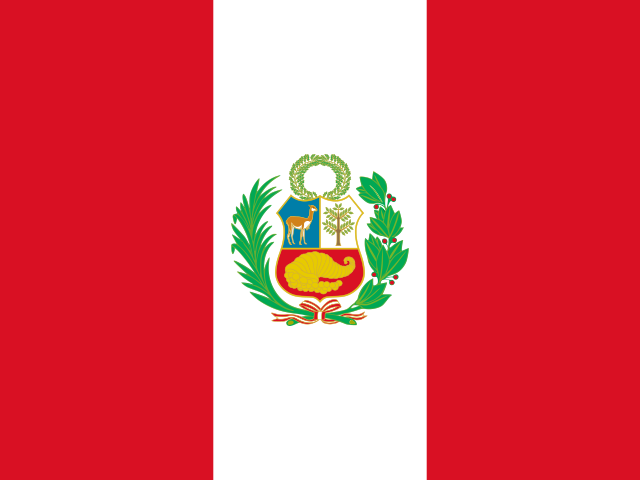 Peru
Peru Suriname
 Uruguay
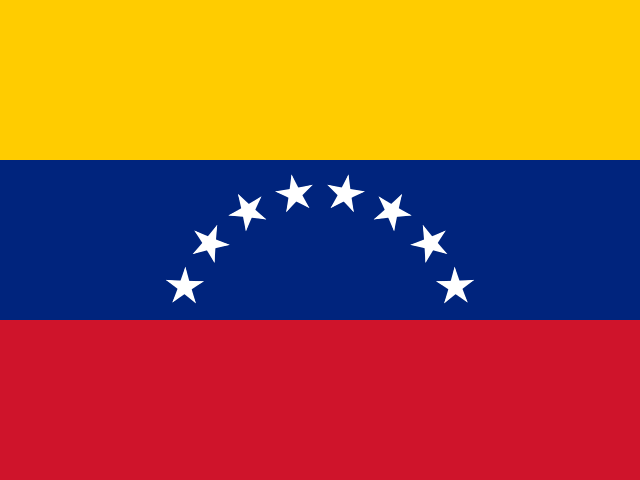 Venezuela
 Belize
 Costa Rica
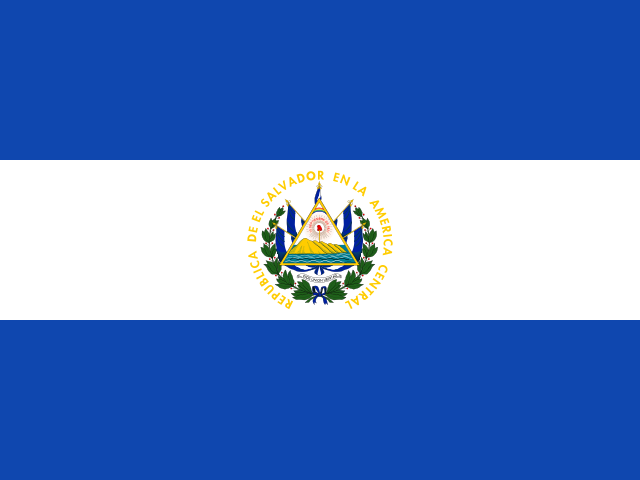 El Salvador
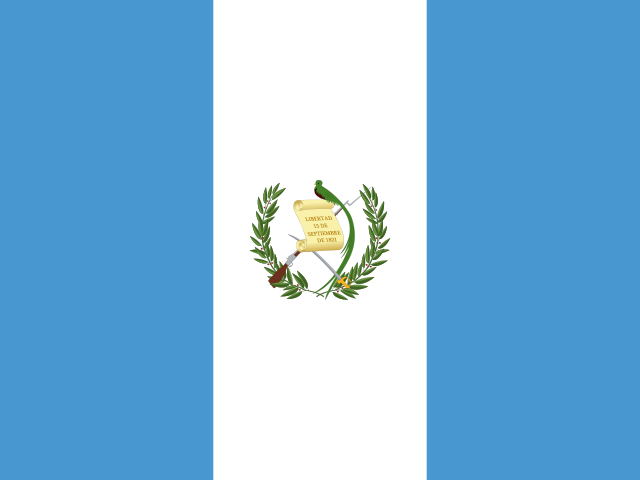 Guatemala
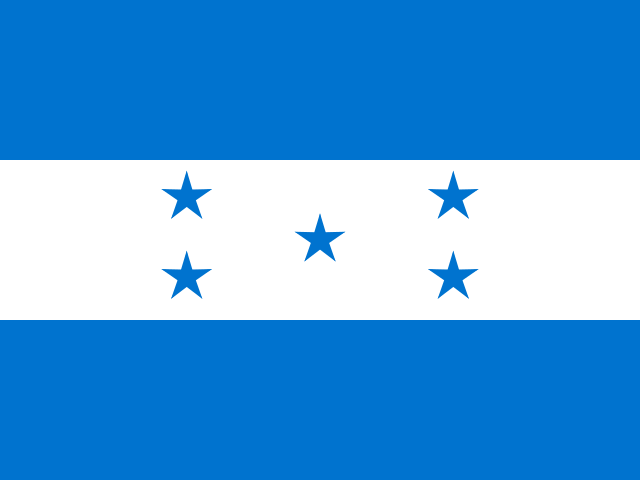 Honduras
 Mexico
 Nicaragua
 Panama
 Antigua and Barbuda
 the Bahamas
 Barbados
 British Virgin Islands
 Cayman Islands
 Cuba
Cuba Dominica
 Dominican Republic
 Grenada
 Guadeloupe
 Haiti
Haiti Jamaica
 Martinique
 Montserrat
 Curacao
 Aruba
Aruba Saint Maarten (Dutch part)
 Bonaire
 Puerto Rico
 Saint Kitts and Nevis
 Anguilla
 Saint Lucia
 Saint-Martin (French Part)
 Saint Vincent and the Grenadines
 Trinidad and Tobago
 Turks and Caicos Islands
 United States Virgin Islands
Earlier Report Observations
From 2018 to 2023, the market volume for not concentrated, not sweetened milk and cream in the Americas increased steadily from 217.8 million tons to 230.6 million tons. This growth was primarily fueled by a rising consumer shift toward plant-based milk alternatives, such as almond and oat milk, driven by health considerations like lactose intolerance and a preference for natural, unsweetened products.
The most significant expansion occurred in 2020, when increased awareness of lactose intolerance and allergies motivated consumers to adopt non-dairy options, contributing to a market jump of over 6 million tons. Subsequent years saw continued growth supported by the launch of new product lines, including high-protein pea and oat milk, and the entry of new players offering barista blends and fortified varieties. Expansion in distribution channels, particularly supermarkets and e-commerce, made these products more accessible to consumers.
Regulatory changes in labeling and traceability requirements in some American countries promoted ingredient transparency, while investments from state-owned and private companies boosted production and marketing efforts. Although growth moderated after 2020, innovations in sustainable packaging and a focus on clean-label products helped maintain upward momentum through 2023.
Table of content
- 1. Disclaimer
- 2. Terms of use of the report
- 3. Product codes in the statistical classifications used in the report
-
4. Key Market Indicators and Trends
-
4.1. Key Market Indicators
-
4.1.1. In kind
- 4.1.1.1. Production, 2018-2023
- 4.1.1.2. Imports, 2018-2024
- 4.1.1.3. Exports, 2018-2024
- 4.1.1.4. Market size, 2018-2023
-
4.1.1. In kind
- 4.2. Market Trends and Factors
-
4.1. Key Market Indicators
-
5. Production
-
5.1. Production in Americas
- 5.1.1. Annual dynamics of production in Americas in kind, 2018-2023, M t
-
5.2. Global production by Country, 2018-2023
- 5.2.1. Annual dynamics of production by macroregions in kind, 2018-2023, M t
- 5.2.2. Dynamics of production structure by macroregions in kind, 2018-2023
- 5.2.3. Annual dynamics of production by country in kind, 2018-2023, M t
- 5.2.4. Structure of production by countries in kind, 2018-2023
- 5.2.5. Dynamics of peoduction structure by countries in kind, 2018-2023
-
5.1. Production in Americas
-
6. Imports
-
6.1. Imports (Direct Data*)
- 6.1.1. Imports - Total information
-
6.1.2. Imports in kind, K t
- 6.1.2.1. Annual dynamics of product's imports to Bermuda in kind, 2018-2024, K t
- 6.1.2.2. Dynamics of product's imports in kind to Bermuda by countries, 2018-2024, K t
- 6.1.2.3. Structure of product's imports in kind by countries, 2018-2024
-
6.1.3. Imports in value, M $ US
- 6.1.3.1. Annual dynamics of product's imports to Bermuda in value, 2018-2024, M $ US
- 6.1.3.2. Dynamics of product's imports in value to Bermuda by countries, 2018-2024, M $ US
- 6.1.3.3. Structure of product's imports in value by countries, 2018-2024
-
6.1.4. Average price of product's imports, $ US/t
- 6.1.4.1. Annual dynamics of average price of product's imports to Bermuda, 2018-2024, $ US/t
- 6.1.4.2. Dynamics of average price of product's imports to Bermuda by countries, 2018-2024, $ US/t
-
6.2. Imports (Mirror Data)
- 6.2.1. Imports - Total information
-
6.2.2. Imports in kind, K t
- 6.2.2.1. Annual dynamics of product's imports to Bermuda in kind, 2018-2024, K t
- 6.2.2.2. Dynamics of product's imports in kind to Bermuda by countries, 2018-2024, K t
- 6.2.2.3. Structure of product's imports in kind by countries, 2018-2024
-
6.2.3. Imports in value, M $ US
- 6.2.3.1. Annual dynamics of product's imports to Bermuda in value, 2018-2024, M $ US
- 6.2.3.2. Dynamics of product's imports in value to Bermuda by countries, 2018-2024, M $ US
- 6.2.3.3. Structure of product's imports in value by countries, 2018-2024
-
6.2.4. Average price of product's imports, $ US/t
- 6.2.4.1. Annual dynamics of average price of product's imports to Bermuda, 2018-2024, $ US/t
- 6.2.4.2. Dynamics of average price of product's imports to Bermuda by countries, 2018-2024, $ US/t
-
6.1. Imports (Direct Data*)
-
7. Exports
-
7.1. Exports (Direct Data*)
- 7.1.1. Exports - Total information
-
7.1.2. Exports in kind, K t
- 7.1.2.1. Annual dynamics of product's exports from Bermuda in kind, 2018-2024, K t
- 7.1.2.2. Dynamics of product's exports in kind from Bermuda by countries, 2018-2024, K t
- 7.1.2.3. Structure of product's exports in kind by countries, 2018-2024
-
7.1.3. Exports in value, M $ US
- 7.1.3.1. Annual dynamics of product's exports from Bermuda in value, 2018-2024, M $ US
- 7.1.3.2. Dynamics of product's exports in value from Bermuda by countries, 2018-2024, M $ US
- 7.1.3.3. Structure of product's exports in value by countries, 2018-2024
-
7.1.4. Average price of product's exports, $ US/t
- 7.1.4.1. Annual dynamics of average price of product's exports from Bermuda, 2018-2024, $ US/t
- 7.1.4.2. Dynamics of average price of product's exports from Bermuda by countries, 2018-2024, $ US/t
-
7.2. Exports (Mirror Data)
- 7.2.1. Exports - Total information
-
7.2.2. Exports in kind, K t
- 7.2.2.1. Annual dynamics of product's exports from Bermuda in kind, 2018-2024, K t
- 7.2.2.2. Dynamics of product's exports in kind from Bermuda by countries, 2018-2024, K t
- 7.2.2.3. Structure of product's exports in kind by countries, 2018-2024
-
7.2.3. Exports in value, M $ US
- 7.2.3.1. Annual dynamics of product's exports from Bermuda in value, 2018-2024, M $ US
- 7.2.3.2. Dynamics of product's exports in value from Bermuda by countries, 2018-2024, M $ US
- 7.2.3.3. Structure of product's exports in value by countries, 2018-2024
-
7.2.4. Average price of product's exports, $ US/t
- 7.2.4.1. Annual dynamics of average price of product's exports from Bermuda, 2018-2024, $ US/t
- 7.2.4.2. Dynamics of average price of product's exports from Bermuda by countries, 2018-2024, $ US/t
-
7.1. Exports (Direct Data*)
-
8. Trade balance
-
8.1. Trade balance (Direct Data)
- 8.1.1. In kind, K t
- 8.1.2. In value, M $ US
-
8.2. Trade balance (Mirror Data)
- 8.2.1. In kind, K t
- 8.2.2. In value, M $ US
-
8.1. Trade balance (Direct Data)
-
9. Top buying and selling countries, 2018-2024
-
9.1. Direct Data
- 9.1.1. Import in Value by Countries-buyers
- 9.1.2. Export in Value by Countries-suppliers
-
9.2. Mirror Data
- 9.2.1. Import in Value by Countries-buyers
- 9.2.2. Export in Value by Countries-suppliers
-
9.1. Direct Data
Production milk and cream in Americas
In kind, 2017-2020, M t
Top producers of milk and cream, 2017-2020
World map of production of milk and cream, 2017-2020
Milk and cream production in the Americas has grown for the third year in a row. In 2020, the region produced 226.2 million tonnes, marking a 2.9% increase from 2019. From 2017 to 2020, production rose by 5.3%, which translates to an average annual growth rate of 1.8%.
Annual dynamics of production in Americas in kind, 2017-2020, M t
| Parameter | 2018 | 2019 | 2020 | CAGR | |
|---|---|---|---|---|---|
| 1 | Change from last year | 1.4% | 0.9% | 2.9% | 1.8% |
In value, 2017-2020, B $ US
The value of milk and cream production in the Americas has declined for the second consecutive year. In 2020, output was valued at 196.7 billion US dollars, down 2.2% year-over-year. The highest value was recorded in 2018 at 219.8 billion US dollars, with the largest increase of 13.3% also occurring that year. In 2019, the value saw its biggest drop of 8.6%.
Annual dynamics of production in Americas in value, 2017-2020, B $ US
| Parameter | 2018 | 2019 | 2020 | CAGR | |
|---|---|---|---|---|---|
| 1 | Change from last year | 13.3% | (8.6%) | (2.2%) | 0.5% |
Exports milk and cream from Americas
Exports in kind, K t
Milk and cream exports from the Americas have increased for the second year in a row. In 2020, the region exported 128.1 thousand tonnes, showing a significant improvement of 28.3% compared to 2019. The lowest export volume was recorded in 2018 at 96.4 thousand tonnes, which also saw the largest decline of 25.1%.
Annual dynamics of product's exports from Americas in kind, 2017-2020, K t
| Parameter | 2018 | 2019 | 2020 | CAGR | |
|---|---|---|---|---|---|
| 1 | Change from last year | (25.1%) | 3.6% | 28.3% | (0.1%) |
From 2017 to 2020, milk and cream exports from the Americas were distributed across a wide range of partner countries. The Philippines accounted for 5.6% of exports, China for 2.7%, and the United Arab Emirates for 1.0%, with these three countries together making up just 9.4% of total flows.
Structure of product's exports in kind by countries, 2017-2020
World map of product's exports from Americas in kind, 2017-2020
Exports in value, M $ US
After a two-year decline, milk and cream export value from the Americas has increased. In 2020, exports totaled 111.4 million US dollars, representing a strong 22.0% rise compared to the previous year. From 2017 to 2020, export value decreased by 4.2%, averaging an annual decline of 1.4%. The lowest value was recorded in 2019 at 91.4 million US dollars, while the largest drop of 16.3% occurred in 2018.
Annual dynamics of product's exports from Americas in value, 2017-2020, M $ US
| Parameter | 2018 | 2019 | 2020 | CAGR | |
|---|---|---|---|---|---|
| 1 | Change from last year | (16.3%) | (6.1%) | 22.0% | (1.4%) |
The structure of milk and cream exports in value terms from 2017 to 2020 shows a diversified set of partners. The Philippines accounted for 6.9% of exports, the United Arab Emirates for 3.1%, and China for 2.0%, with these three countries jointly representing only 11.9% of total flows. The remaining 88.1% was spread across numerous smaller markets.
Structure of product's exports in value by countries, 2017-2020
World map of product's exports from Americas in value, 2017-2020
Imports milk and cream to Americas
Imports in kind, K t
Milk and cream imports into the Americas have risen for the second consecutive year. In 2020, imports reached 205.2 thousand tonnes, up 4.9% from the previous year. From 2017 to 2020, imports grew by 13.1%, averaging an annual increase of 4.2%. The lowest import volume was recorded in 2018 at 160.0 thousand tonnes, which also saw the largest decline of 11.8%. In 2019, imports experienced the biggest increase of 22.3%.
Annual dynamics of product's imports to Americas in kind, 2017-2020, K t
| Parameter | 2018 | 2019 | 2020 | CAGR | |
|---|---|---|---|---|---|
| 1 | Change from last year | (11.8%) | 22.3% | 4.9% | 4.2% |
From 2017 to 2020, milk and cream imports into the Americas were not heavily concentrated. Germany accounted for 7.0% of imports, Spain for 5.9%, and Denmark for 1.8%, with these three countries together capturing only 14.7% of total flows.
Structure of product's imports in kind by countries, 2017-2020
World map of product's imports to Americas in kind, 2017-2020
Imports in value, M $ US
Cross-border shipments of milk and cream into the Americas have increased for the second year in a row. In 2020, imports totaled 201.2 million US dollars, which is 15.0% higher than in 2019. From 2017 to 2020, imports rose by 12.1%, averaging an annual growth rate of 3.9%. The lowest value was recorded in 2018 at 160.1 million US dollars, with the largest decline of 10.8% also occurring that year.
Annual dynamics of product's imports to Americas in value, 2017-2020, M $ US
| Parameter | 2018 | 2019 | 2020 | CAGR | |
|---|---|---|---|---|---|
| 1 | Change from last year | (10.8%) | 9.3% | 15.0% | 3.9% |
From 2017 to 2020, milk and cream imports in value terms were distributed across a wide set of partner countries. Germany accounted for 5.0% of imports, Spain for 4.5%, and Denmark for 3.5%, with these three countries jointly representing just 12.9% of total flows.
Structure of product's imports in value by countries, 2017-2020
World map of product's imports to Americas in value, 2017-2020
Related Reports

Milk and cream market in Western Asia
2026-03-27
2026-03-27
Milk and cream market in Armenia
2026-03-27
Milk and cream market in Trinidad and Tobago
2026-03-27




2026-03-27
Why Choose Us?
Only Verified Data
No Hidden Costs or Separate Fees
Smarter Subscription Pricing
Contact Our Team
Submit your inquiry using the form below — our team will get back to you within 24 hours.