






"Middle Africa" region includes following countries:
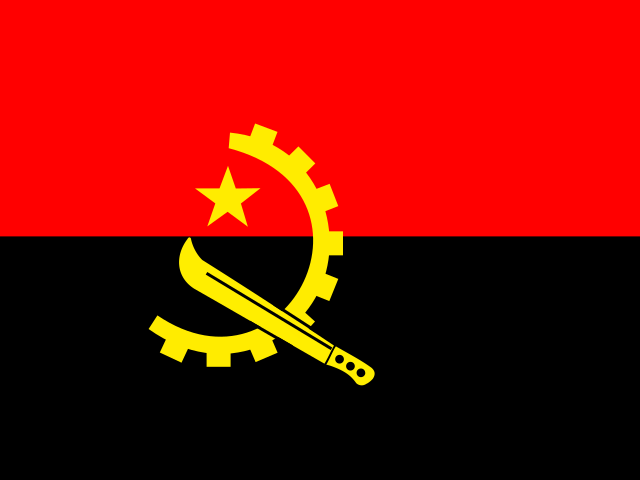 Angola
 Cameroon
 Central African Republic
 Chad
Chad Congo
Congo Democratic Republic of the Congo
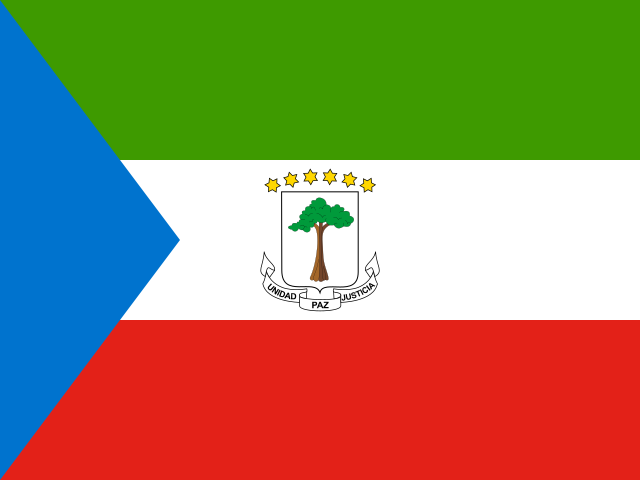 Equatorial Guinea
 Gabon
Gabon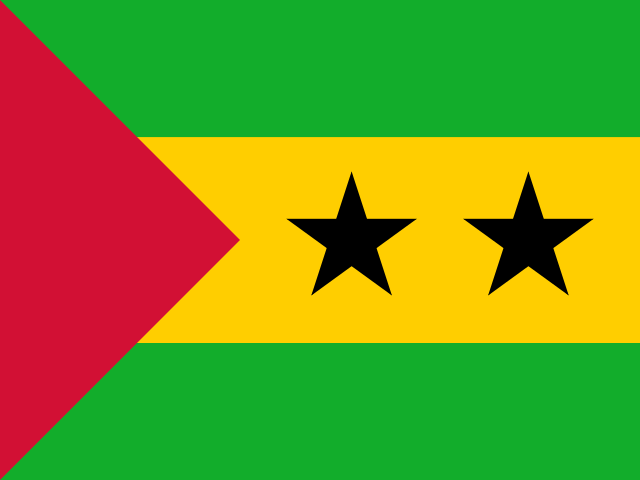 Sao Tome and Principe
Earlier Report Observations
The melon market in Middle Africa demonstrated remarkable stability from 2018 to 2023, with annual market volumes fluctuating within a narrow band between 47 403 t and 48 012 t. Market size peaked in 2020 at 48 012 t, closely mirroring domestic production trends which also reached a high that year.
Following the 2020 peak, a slight contraction of less than 1% occurred in 2021, bringing the market volume to 47 572 t. The market subsequently stabilized, with volumes recovering to 47 726 t in 2022 and reaching 47 761 t in 2023, indicating a return to equilibrium with minimal annual variation.
Overall, the period was characterized by a balanced market where year-on-year changes consistently remained below 1%. This stability suggests a mature market without major disruptions to supply or demand during these years.
Table of content
- 1. Disclaimer
- 2. Terms of use of the report
- 3. Product codes in the statistical classifications used in the report
-
4. Key Market Indicators and Trends
-
4.1. Key Market Indicators
-
4.1.1. In kind
- 4.1.1.1. Production, 2018-2023
- 4.1.1.2. Imports, 2018-2024
- 4.1.1.3. Exports, 2018-2024
- 4.1.1.4. Market size, 2018-2023
-
4.1.1. In kind
- 4.2. Market Trends and Factors
-
4.1. Key Market Indicators
-
5. Production
-
5.1. Production in Middle Africa
- 5.1.1. Annual dynamics of production in Middle Africa in kind, 2018-2023, t
-
5.2. Global production by Country, 2018-2023
- 5.2.1. Annual dynamics of production by macroregions in kind, 2018-2023, t
- 5.2.2. Dynamics of production structure by macroregions in kind, 2018-2023
- 5.2.3. Annual dynamics of production by country in kind, 2018-2023, t
- 5.2.4. Structure of production by countries in kind, 2018-2023
- 5.2.5. Dynamics of peoduction structure by countries in kind, 2018-2023
-
5.1. Production in Middle Africa
-
6. Exports
-
6.1. Exports (Direct Data*)
- 6.1.1. Exports - Total information
-
6.1.2. Exports in kind, t
- 6.1.2.1. Annual dynamics of product's exports from Angola in kind, 2018-2024, t
- 6.1.2.2. Dynamics of product's exports in kind from Angola by countries, 2018-2024, t
- 6.1.2.3. Structure of product's exports in kind by countries, 2018-2024
-
6.1.3. Exports in value, $ US
- 6.1.3.1. Annual dynamics of product's exports from Angola in value, 2018-2024, $ US
- 6.1.3.2. Dynamics of product's exports in value from Angola by countries, 2018-2024, $ US
- 6.1.3.3. Structure of product's exports in value by countries, 2018-2024
-
6.1.4. Average price of product's exports, $ US/t
- 6.1.4.1. Annual dynamics of average price of product's exports from Angola, 2018-2024, $ US/t
- 6.1.4.2. Dynamics of average price of product's exports from Angola by countries, 2018-2024, $ US/t
-
6.2. Exports (Mirror Data)
- 6.2.1. Exports - Total information
-
6.2.2. Exports in kind, t
- 6.2.2.1. Annual dynamics of product's exports from Angola in kind, 2018-2024, t
- 6.2.2.2. Dynamics of product's exports in kind from Angola by countries, 2018-2024, t
- 6.2.2.3. Structure of product's exports in kind by countries, 2018-2024
-
6.2.3. Exports in value, $ US
- 6.2.3.1. Annual dynamics of product's exports from Angola in value, 2018-2024, $ US
- 6.2.3.2. Dynamics of product's exports in value from Angola by countries, 2018-2024, $ US
- 6.2.3.3. Structure of product's exports in value by countries, 2018-2024
-
6.2.4. Average price of product's exports, $ US/t
- 6.2.4.1. Annual dynamics of average price of product's exports from Angola, 2018-2024, $ US/t
- 6.2.4.2. Dynamics of average price of product's exports from Angola by countries, 2018-2024, $ US/t
-
6.1. Exports (Direct Data*)
-
7. Imports
-
7.1. Imports (Direct Data*)
- 7.1.1. Imports - Total information
-
7.1.2. Imports in kind, t
- 7.1.2.1. Annual dynamics of product's imports to Angola in kind, 2018-2024, t
- 7.1.2.2. Dynamics of product's imports in kind to Angola by countries, 2018-2024, t
- 7.1.2.3. Structure of product's imports in kind by countries, 2018-2024
-
7.1.3. Imports in value, $ US
- 7.1.3.1. Annual dynamics of product's imports to Angola in value, 2018-2024, $ US
- 7.1.3.2. Dynamics of product's imports in value to Angola by countries, 2018-2024, $ US
- 7.1.3.3. Structure of product's imports in value by countries, 2018-2024
-
7.1.4. Average price of product's imports, $ US/t
- 7.1.4.1. Annual dynamics of average price of product's imports to Angola, 2018-2024, $ US/t
- 7.1.4.2. Dynamics of average price of product's imports to Angola by countries, 2018-2024, $ US/t
-
7.2. Imports (Mirror Data)
- 7.2.1. Imports - Total information
-
7.2.2. Imports in kind, t
- 7.2.2.1. Annual dynamics of product's imports to Angola in kind, 2018-2024, t
- 7.2.2.2. Dynamics of product's imports in kind to Angola by countries, 2018-2024, t
- 7.2.2.3. Structure of product's imports in kind by countries, 2018-2024
-
7.2.3. Imports in value, $ US
- 7.2.3.1. Annual dynamics of product's imports to Angola in value, 2018-2024, $ US
- 7.2.3.2. Dynamics of product's imports in value to Angola by countries, 2018-2024, $ US
- 7.2.3.3. Structure of product's imports in value by countries, 2018-2024
-
7.2.4. Average price of product's imports, $ US/t
- 7.2.4.1. Annual dynamics of average price of product's imports to Angola, 2018-2024, $ US/t
- 7.2.4.2. Dynamics of average price of product's imports to Angola by countries, 2018-2024, $ US/t
-
7.1. Imports (Direct Data*)
-
8. Trade balance
-
8.1. Trade balance (Direct Data)
- 8.1.1. In kind, t
- 8.1.2. In value, $ US
-
8.2. Trade balance (Mirror Data)
- 8.2.1. In kind, t
- 8.2.2. In value, $ US
-
8.1. Trade balance (Direct Data)
-
9. Top buying and selling countries, 2018-2024
-
9.1. Direct Data
- 9.1.1. Import in Value by Countries-buyers
- 9.1.2. Export in Value by Countries-suppliers
-
9.2. Mirror Data
- 9.2.1. Import in Value by Countries-buyers
- 9.2.2. Export in Value by Countries-suppliers
-
9.1. Direct Data
Production melons in Middle Africa
In kind, 2017-2020, t
Top producers of melons, 2017-2020
World map of production of melons, 2017-2020
Middle Africa's melon production has grown for the third year in a row. In 2020, the region produced 47 995 tonnes of melons, which is 0.9% more than in 2019. Looking at the period from 2017 to 2020, production increased by 2.5%, averaging an annual growth rate of 0.8%.
Annual dynamics of production in Middle Africa in kind, 2017-2020, t
| Parameter | 2018 | 2019 | 2020 | CAGR | |
|---|---|---|---|---|---|
| 1 | Change from last year | 0.7% | 0.8% | 0.9% | 0.8% |
Exports melons from Middle Africa
Exports in kind, t
In 2020, Middle Africa exported 2.9 tonnes of melons to foreign markets, a 65.3% increase compared to 2019. Over the 2017-2020 period, exports surged by 517.9%, with a compound annual growth rate of 83.5%.
Annual dynamics of product's exports from Middle Africa in kind, 2017-2020, t
| Parameter | 2018 | 2019 | 2020 | CAGR | |
|---|---|---|---|---|---|
| 1 | Change from last year | 65.3% | n/a | n/a | 83.5% |
From 2017 to 2020, Portugal, the Bahamas, and Singapore were the leading destinations for Middle Africa's melon exports by volume. Portugal accounted for 53.8% of exports, the Bahamas for 18.6%, and Singapore for 2.3%, together making up 74.7% of total export flows.
Structure of product's exports in kind by countries, 2017-2020
World map of product's exports from Middle Africa in kind, 2017-2020
Exports in value, $ US
The market showed significant volatility during these years. Exports peaked in 2017 and hit their lowest point in 2018, with a 4.5-fold difference between these two years. In 2020, melon deliveries from Middle Africa reached 1 479 US dollars, representing a 77.7% decline compared to 2019.
Annual dynamics of product's exports from Middle Africa in value, 2017-2020, $ US
| Parameter | 2018 | 2019 | 2020 | CAGR | |
|---|---|---|---|---|---|
| 1 | Change from last year | (77.7%) | n/a | n/a | (6.8%) |
Between 2017 and 2020, Portugal, the Bahamas, and Singapore were the primary buyers of melons from Middle Africa in value terms. Portugal held 35.5% of exports, the Bahamas 24.4%, and Singapore 15.1%, collectively accounting for 75.0% of total export value.
Structure of product's exports in value by countries, 2017-2020
World map of product's exports from Middle Africa in value, 2017-2020
Imports melons to Middle Africa
Imports in kind, t
The market experienced notable volatility during this period. Imports peaked in 2018 at 234.0 tonnes and dropped to their lowest point in 2019 at 16.3 tonnes, resulting in a 14.4-fold gap between these years. In 2020, Middle Africa imported 20.2 tonnes of melons, marking a solid 24.0% increase from 2019. The largest decline occurred in 2019, falling by 93.0%, while the largest increase was recorded in 2018, surging by 1,150.2%.
Annual dynamics of product's imports to Middle Africa in kind, 2017-2020, t
| Parameter | 2018 | 2019 | 2020 | CAGR | |
|---|---|---|---|---|---|
| 1 | Change from last year | 1 150.2% | (93.0%) | 24.0% | 2.5% |
From 2017 to 2020, Portugal dominated melon imports to Middle Africa by volume, accounting for 83.4% of total flows. Other countries each held significantly smaller shares during this period.
Structure of product's imports in kind by countries, 2017-2020
World map of product's imports to Middle Africa in kind, 2017-2020
Imports in value, $ US
After a two-year decline, melon imports to Middle Africa increased in 2020. The region imported 36 248 US dollars worth of melons, up 19.0% from 2019. Over the 2017-2020 period, imports decreased by 47.7%, averaging an annual decline of 19.4%. The lowest value was recorded in 2019 at 30 465 US dollars, with the largest drop of 47.8% also occurring that year.
Annual dynamics of product's imports to Middle Africa in value, 2017-2020, $ US
| Parameter | 2018 | 2019 | 2020 | CAGR | |
|---|---|---|---|---|---|
| 1 | Change from last year | (15.7%) | (47.8%) | 19.0% | (19.4%) |
During 2017-2020, France, Portugal, and Brazil were the main sources of melon imports to Middle Africa in value terms. France accounted for 30.4% of imports, Portugal for 21.5%, and Brazil for 12.5%, together making up 64.4% of total import flows.
Structure of product's imports in value by countries, 2017-2020
World map of product's imports to Middle Africa in value, 2017-2020
Related Reports

2026-03-28
2026-03-28
2026-03-28

Hazelnuts market in Middle Africa
2026-03-28

Chestnuts market in Middle Africa
2026-03-28


2026-03-28
Why Choose Us?
Only Verified Data
No Hidden Costs or Separate Fees
Smarter Subscription Pricing
Contact Our Team
Submit your inquiry using the form below — our team will get back to you within 24 hours.