






"Northern Africa" region includes following countries:
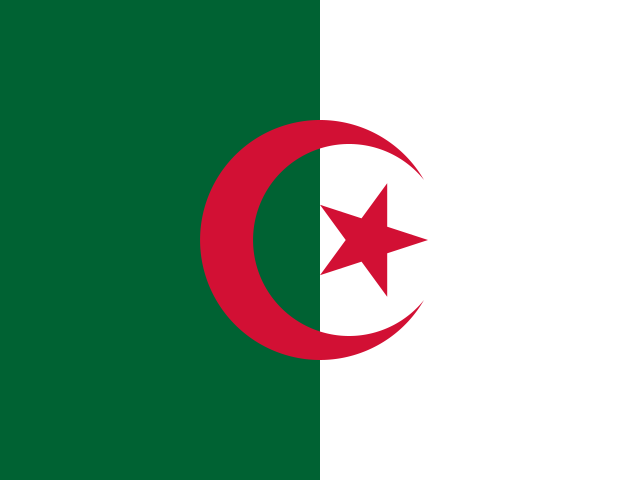 Algeria
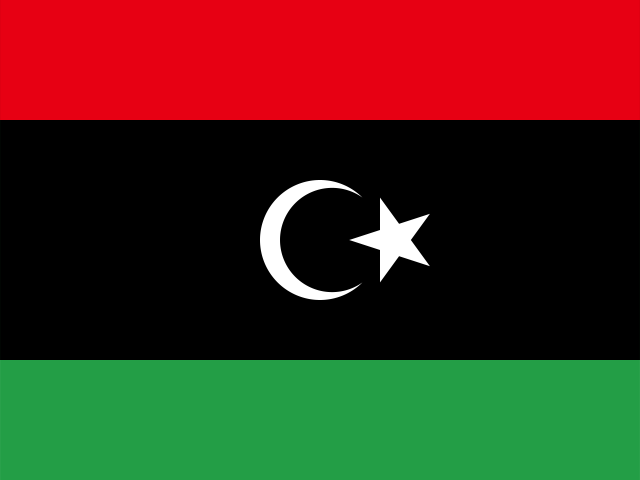 Libya
Libya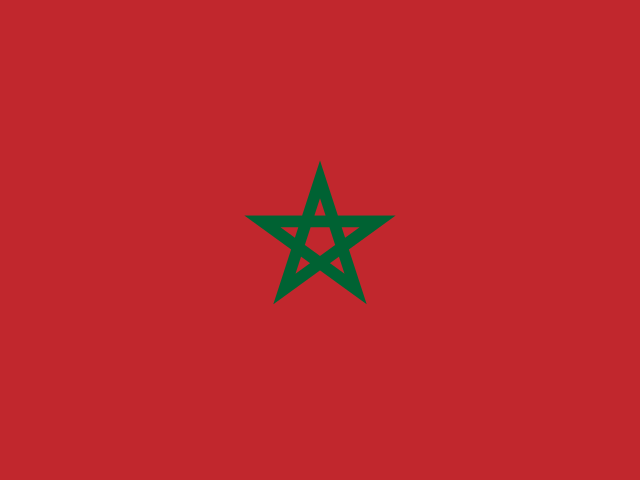 Morocco
 Sudan
Sudan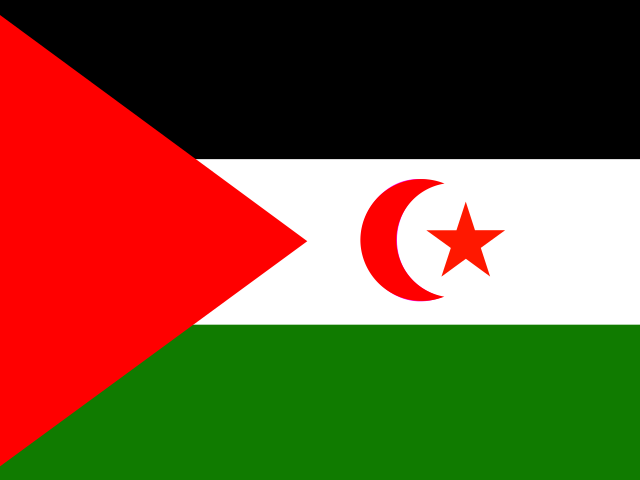 Western Sahara
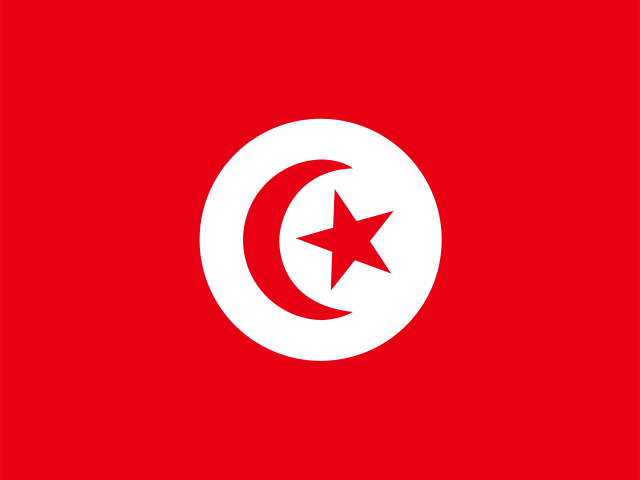 Tunisia
 Egypt
EgyptEarlier Report Observations
The malt market in Northern Africa declined from 105 469 t in 2018 to a low of 89 682 t in 2020, as both domestic production and import volumes fell over the period.
A recovery began in 2021, with market volume expanding to 95 906 t and then accelerating to 119 473 t in 2023. This strong growth coincided with the global market's increasing demand for organic and specialty malts, driven by consumer interest in craft beers and sustainable products, which stimulated both local production and imports.
For 2024, import volumes continued to rise, reaching 62 495 t. Key influences included a drought in Europe that reduced barley harvests and tightened global malt supply, alongside strategic investments by major maltsters in new African production capacity to serve regional demand.
Table of content
- 1. Disclaimer
- 2. Terms of use of the report
- 3. Product codes in the statistical classifications used in the report
-
4. Key Market Indicators and Trends
-
4.1. Key Market Indicators
-
4.1.1. In kind
- 4.1.1.1. Production, 2018-2023
- 4.1.1.2. Imports, 2018-2024
- 4.1.1.3. Exports, 2018-2024
- 4.1.1.4. Market size, 2018-2023
-
4.1.1. In kind
- 4.2. Market Trends and Factors
-
4.1. Key Market Indicators
-
5. Production
-
5.1. Production in Northern Africa
- 5.1.1. Annual dynamics of production in Northern Africa in kind, 2018-2023, t
-
5.2. Global production by Country, 2018-2023
- 5.2.1. Annual dynamics of production by macroregions in kind, 2018-2023, t
- 5.2.2. Dynamics of production structure by macroregions in kind, 2018-2023
- 5.2.3. Annual dynamics of production by country in kind, 2018-2023, t
- 5.2.4. Structure of production by countries in kind, 2018-2023
- 5.2.5. Dynamics of peoduction structure by countries in kind, 2018-2023
-
5.1. Production in Northern Africa
-
6. Imports
-
6.1. Imports (Direct Data*)
- 6.1.1. Imports - Total information
-
6.1.2. Imports in kind, t
- 6.1.2.1. Annual dynamics of product's imports to Algeria in kind, 2018-2024, t
- 6.1.2.2. Dynamics of product's imports in kind to Algeria by countries, 2018-2024, t
- 6.1.2.3. Structure of product's imports in kind by countries, 2018-2024
-
6.1.3. Imports in value, K $ US
- 6.1.3.1. Annual dynamics of product's imports to Algeria in value, 2018-2024, K $ US
- 6.1.3.2. Dynamics of product's imports in value to Algeria by countries, 2018-2024, K $ US
- 6.1.3.3. Structure of product's imports in value by countries, 2018-2024
-
6.1.4. Average price of product's imports, $ US/t
- 6.1.4.1. Annual dynamics of average price of product's imports to Algeria, 2018-2024, $ US/t
- 6.1.4.2. Dynamics of average price of product's imports to Algeria by countries, 2018-2024, $ US/t
-
6.2. Imports (Mirror Data)
- 6.2.1. Imports - Total information
-
6.2.2. Imports in kind, t
- 6.2.2.1. Annual dynamics of product's imports to Algeria in kind, 2018-2024, t
- 6.2.2.2. Dynamics of product's imports in kind to Algeria by countries, 2018-2024, t
- 6.2.2.3. Structure of product's imports in kind by countries, 2018-2024
-
6.2.3. Imports in value, K $ US
- 6.2.3.1. Annual dynamics of product's imports to Algeria in value, 2018-2024, K $ US
- 6.2.3.2. Dynamics of product's imports in value to Algeria by countries, 2018-2024, K $ US
- 6.2.3.3. Structure of product's imports in value by countries, 2018-2024
-
6.2.4. Average price of product's imports, $ US/t
- 6.2.4.1. Annual dynamics of average price of product's imports to Algeria, 2018-2024, $ US/t
- 6.2.4.2. Dynamics of average price of product's imports to Algeria by countries, 2018-2024, $ US/t
-
6.1. Imports (Direct Data*)
-
7. Exports
-
7.1. Exports (Direct Data*)
- 7.1.1. Exports - Total information
-
7.1.2. Exports in kind, t
- 7.1.2.1. Annual dynamics of product's exports from Algeria in kind, 2018-2024, t
- 7.1.2.2. Dynamics of product's exports in kind from Algeria by countries, 2018-2024, t
- 7.1.2.3. Structure of product's exports in kind by countries, 2018-2024
-
7.1.3. Exports in value, K $ US
- 7.1.3.1. Annual dynamics of product's exports from Algeria in value, 2018-2024, K $ US
- 7.1.3.2. Dynamics of product's exports in value from Algeria by countries, 2018-2024, K $ US
- 7.1.3.3. Structure of product's exports in value by countries, 2018-2024
-
7.1.4. Average price of product's exports, $ US/t
- 7.1.4.1. Annual dynamics of average price of product's exports from Algeria, 2018-2024, $ US/t
- 7.1.4.2. Dynamics of average price of product's exports from Algeria by countries, 2018-2024, $ US/t
-
7.2. Exports (Mirror Data)
- 7.2.1. Exports - Total information
-
7.2.2. Exports in kind, t
- 7.2.2.1. Annual dynamics of product's exports from Algeria in kind, 2018-2024, t
- 7.2.2.2. Dynamics of product's exports in kind from Algeria by countries, 2018-2024, t
- 7.2.2.3. Structure of product's exports in kind by countries, 2018-2024
-
7.2.3. Exports in value, K $ US
- 7.2.3.1. Annual dynamics of product's exports from Algeria in value, 2018-2024, K $ US
- 7.2.3.2. Dynamics of product's exports in value from Algeria by countries, 2018-2024, K $ US
- 7.2.3.3. Structure of product's exports in value by countries, 2018-2024
-
7.2.4. Average price of product's exports, $ US/t
- 7.2.4.1. Annual dynamics of average price of product's exports from Algeria, 2018-2024, $ US/t
- 7.2.4.2. Dynamics of average price of product's exports from Algeria by countries, 2018-2024, $ US/t
-
7.1. Exports (Direct Data*)
-
8. Trade balance
-
8.1. Trade balance (Direct Data)
- 8.1.1. In kind, t
- 8.1.2. In value, K $ US
-
8.2. Trade balance (Mirror Data)
- 8.2.1. In kind, t
- 8.2.2. In value, K $ US
-
8.1. Trade balance (Direct Data)
-
9. Top buying and selling countries, 2018-2024
-
9.1. Direct Data
- 9.1.1. Import in Value by Countries-buyers
- 9.1.2. Export in Value by Countries-suppliers
-
9.2. Mirror Data
- 9.2.1. Import in Value by Countries-buyers
- 9.2.2. Export in Value by Countries-suppliers
-
9.1. Direct Data
Production malt in Northern Africa
In kind, 2017-2020, t
Top producers of malt, 2017-2020
World map of production of malt, 2017-2020
Northern Africa's malt production rebounded after two years of decline. In 2020, the region produced 53 679 tonnes of malt, marking a moderate 9.9% increase compared to the previous year. Looking at the broader period from 2017 to 2020, production decreased by 8.8%, which translates to an average annual decline of 3.0%. The lowest production level was recorded in 2019 at 48 852 tonnes, with that year also seeing the largest drop of 9.6%.
Annual dynamics of production in Northern Africa in kind, 2017-2020, t
| Parameter | 2018 | 2019 | 2020 | CAGR | |
|---|---|---|---|---|---|
| 1 | Change from last year | (8.2%) | (9.6%) | 9.9% | (3.0%) |
Exports malt from Northern Africa
Exports in kind, t
The data shows irregular fluctuations, pointing to a volatile market environment. Export volumes hit their lowest point in 2018 at 1 428 tonnes and peaked in 2017, with the difference between these years being 3.8 times. In 2020, Northern Africa exported 3 337 tonnes of malt, representing a significant 57.3% increase from the previous year. The largest decline occurred in 2018, when exports fell by 73.4%.
Annual dynamics of product's exports from Northern Africa in kind, 2017-2020, t
| Parameter | 2018 | 2019 | 2020 | CAGR | |
|---|---|---|---|---|---|
| 1 | Change from last year | (73.4%) | 48.6% | 57.3% | (14.6%) |
From 2017 to 2020, the main destinations for Northern Africa's malt exports in volume terms were Burundi (12.9% of exports), Rwanda (9.8%), and Ethiopia (7.7%). Together, these three countries accounted for 30.5% of total export flows.
Structure of product's exports in kind by countries, 2017-2020
World map of product's exports from Northern Africa in kind, 2017-2020
Exports in value, K $ US
The market exhibited volatility during the observed period. Export values reached their lowest point in 2018 at 1 124 thousand US dollars and peaked in 2017, with a 5.4-fold difference between these years. In 2020, malt exports from Northern Africa amounted to 2 719 thousand US dollars, up by 62.1% compared to 2019. The largest decline was recorded in 2018, when export values dropped by 81.5%.
Annual dynamics of product's exports from Northern Africa in value, 2017-2020, K $ US
| Parameter | 2018 | 2019 | 2020 | CAGR | |
|---|---|---|---|---|---|
| 1 | Change from last year | (81.5%) | 49.2% | 62.1% | (23.6%) |
Between 2017 and 2020, Burundi (12.5% of exports in value terms), Rwanda (9.7%), and Ethiopia (7.7%) led the structure of malt exports from Northern Africa. Collectively, these three markets represented 29.9% of total export flows.
Structure of product's exports in value by countries, 2017-2020
World map of product's exports from Northern Africa in value, 2017-2020
Imports malt to Northern Africa
Imports in kind, t
Cross-border shipments of malt to Northern Africa declined for the second consecutive year. In 2020, imports were recorded at 39 340 tonnes, showing a solid decrease of 22.3% year-on-year. Over the period from 2017 to 2020, imports decreased by 21.6%, with an average annual decline of 7.8%. The highest import volume was in 2018 at 52 856 tonnes, with the largest increase of 5.3% also occurring that year.
Annual dynamics of product's imports to Northern Africa in kind, 2017-2020, t
| Parameter | 2018 | 2019 | 2020 | CAGR | |
|---|---|---|---|---|---|
| 1 | Change from last year | 5.3% | (4.2%) | (22.3%) | (7.8%) |
From 2017 to 2020, the leading sources for malt imports to Northern Africa in volume terms were Belgium (32.1% of imports), France (29.0%), and Poland (10.7%). Together, these three countries accounted for 71.9% of total import flows.
Structure of product's imports in kind by countries, 2017-2020
World map of product's imports to Northern Africa in kind, 2017-2020
Imports in value, K $ US
Northern Africa's malt import volume declined after a two-year rise. In 2020, imports totaled 23 239 thousand US dollars, equivalent to a substantial decrease of 15.6% from the previous year. Between 2017 and 2020, imports decreased by 7.6%, translating to an average annual decline of 2.6%. The highest import value was recorded in 2019 at 27 540 thousand US dollars, with the largest increase of 8.2% occurring in 2018.
Annual dynamics of product's imports to Northern Africa in value, 2017-2020, K $ US
| Parameter | 2018 | 2019 | 2020 | CAGR | |
|---|---|---|---|---|---|
| 1 | Change from last year | 8.2% | 1.2% | (15.6%) | (2.6%) |
Throughout 2017 to 2020, the three largest markets—Belgium, France, and Poland—dominated the structure of malt imports to Northern Africa in value terms, together accounting for 70.2% of total flows.
Structure of product's imports in value by countries, 2017-2020
World map of product's imports to Northern Africa in value, 2017-2020
Related Reports



In-depth market research on this product
Global Malt Market 2021–2031: Size, Share, Trends and Forecast
Global market report: size, trends and forecast to 2031 · 186 pages
Why Choose Us?
Only Verified Data
No Hidden Costs or Separate Fees
Smarter Subscription Pricing
Contact Our Team
Submit your inquiry using the form below — our team will get back to you within 24 hours.