






"Sub-Saharan Africa" region includes following countries:
 Cabo Verde
 Benin
Benin Gambia
 Ghana
Ghana Guinea
 Côte d'Ivoire
 Liberia
 Mali
Mali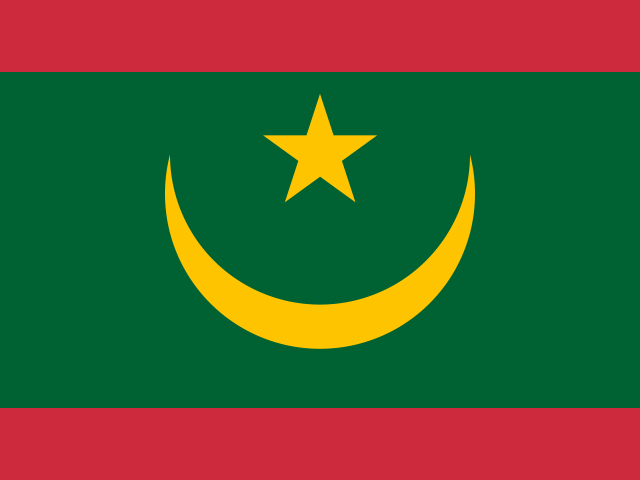 Mauritania
 Niger
Niger Nigeria
 Guinea-Bissau
 Saint Helena, Ascension and Tristan da Cunha
 Senegal
 Sierra Leone
 Togo
Togo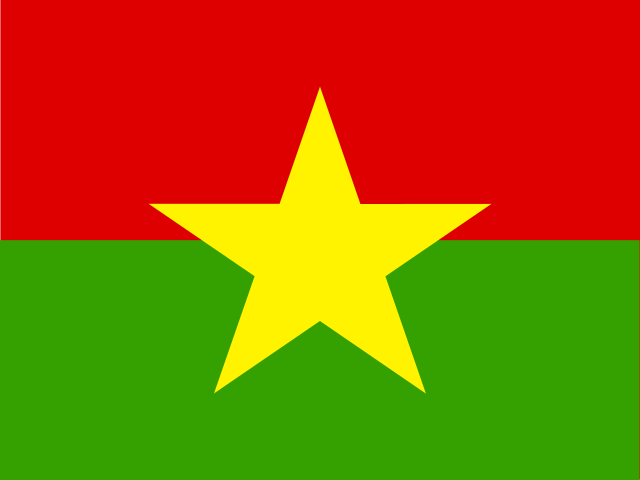 Burkina Faso
 British Indian Ocean Territory
 Burundi
 Comoros
 Mayotte
 Ethiopia
 Eritrea
 French Southern Territories
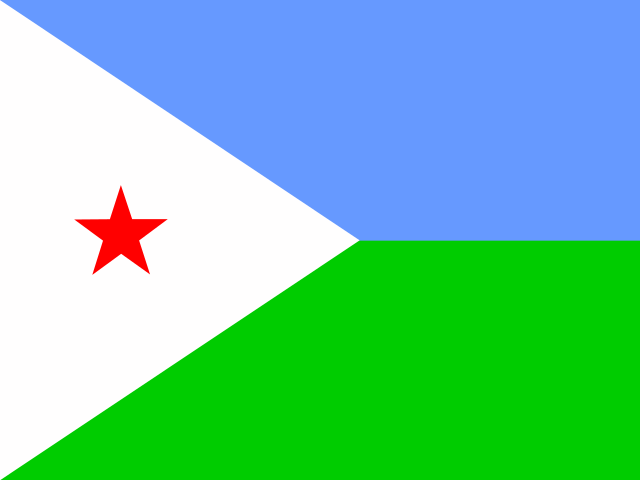 Djibouti
 Kenya
Kenya Madagascar
 Malawi
 Mauritius
 Mozambique
 Reunion
 Rwanda
 Seychelles
 Somalia
 Zimbabwe
 South Sudan
 Uganda
 Tanzania
 Zambia
 Angola
 Cameroon
 Central African Republic
 Chad
Chad Congo
Congo Democratic Republic of the Congo
 Equatorial Guinea
 Gabon
Gabon Sao Tome and Principe
 Botswana
 Lesotho
 Namibia
 South Africa
 Eswatini
Earlier Report Observations
From 2018 to 2020, the maize market volume in Sub-Saharan Africa grew from 79 149 thousand tons to 88 901 thousand tons. This expansion occurred against the backdrop of maize remaining the region's primary staple cereal, with consumption equivalent to rice and wheat combined. However, low fertilizer usage, applied on only about one-third of cultivated area, limited yield potential. Production was concentrated in South Africa, Nigeria, and Ethiopia, which together accounted for 45% of regional output, while a technological gap between high-input farming in South Africa and low-input practices in Nigeria created significant productivity disparities.
In 2021-2022, market volume stabilized around 88 000 thousand tons, with minor fluctuations. Rapid urbanization in some countries accelerated demand for processed maize products, shifting consumer preferences and supply chains. The approval of genetically modified (TELA) maize in Ethiopia in 2022, followed by insect-resistant and drought-tolerant varieties in Nigeria, marked a policy shift aimed at enhancing production resilience and future yields.
By 2023, market volume reached 91 046 thousand tons, even as maize prices surged by over 70% in early 2024 due to local currency weakness and inflation. Monetary policy responses, such as the Bank of Zambia's interest rate hike, influenced market conditions. The introduction of genetically modified maize varieties in Nigeria and Ethiopia in 2024 underscored ongoing efforts to boost productivity amid production constraints and rising import needs.
Table of content
- 1. Disclaimer
- 2. Terms of use of the report
- 3. Product codes in the statistical classifications used in the report
-
4. Key Market Indicators and Trends
-
4.1. Key Market Indicators
-
4.1.1. In kind
- 4.1.1.1. Production, 2018-2023
- 4.1.1.2. Imports, 2018-2024
- 4.1.1.3. Exports, 2018-2024
- 4.1.1.4. Market size, 2018-2023
-
4.1.1. In kind
- 4.2. Market Trends and Factors
-
4.1. Key Market Indicators
-
5. Production
-
5.1. Production in Sub-Saharan Africa
- 5.1.1. Annual dynamics of production in Sub-Saharan Africa in kind, 2018-2023, K t
-
5.2. Global production by Country, 2018-2023
- 5.2.1. Annual dynamics of production by macroregions in kind, 2018-2023, K t
- 5.2.2. Dynamics of production structure by macroregions in kind, 2018-2023
- 5.2.3. Annual dynamics of production by country in kind, 2018-2023, K t
- 5.2.4. Structure of production by countries in kind, 2018-2023
- 5.2.5. Dynamics of peoduction structure by countries in kind, 2018-2023
-
5.1. Production in Sub-Saharan Africa
-
6. Imports
-
6.1. Imports (Direct Data*)
- 6.1.1. Imports - Total information
-
6.1.2. Imports in kind, K t
- 6.1.2.1. Annual dynamics of product's imports to Cabo Verde in kind, 2018-2024, K t
- 6.1.2.2. Dynamics of product's imports in kind to Cabo Verde by countries, 2018-2024, K t
- 6.1.2.3. Structure of product's imports in kind by countries, 2018-2024
-
6.1.3. Imports in value, M $ US
- 6.1.3.1. Annual dynamics of product's imports to Cabo Verde in value, 2018-2024, M $ US
- 6.1.3.2. Dynamics of product's imports in value to Cabo Verde by countries, 2018-2024, M $ US
- 6.1.3.3. Structure of product's imports in value by countries, 2018-2024
-
6.1.4. Average price of product's imports, $ US/t
- 6.1.4.1. Annual dynamics of average price of product's imports to Cabo Verde, 2018-2024, $ US/t
- 6.1.4.2. Dynamics of average price of product's imports to Cabo Verde by countries, 2018-2024, $ US/t
-
6.2. Imports (Mirror Data)
- 6.2.1. Imports - Total information
-
6.2.2. Imports in kind, K t
- 6.2.2.1. Annual dynamics of product's imports to Cabo Verde in kind, 2018-2024, K t
- 6.2.2.2. Dynamics of product's imports in kind to Cabo Verde by countries, 2018-2024, K t
- 6.2.2.3. Structure of product's imports in kind by countries, 2018-2024
-
6.2.3. Imports in value, M $ US
- 6.2.3.1. Annual dynamics of product's imports to Cabo Verde in value, 2018-2024, M $ US
- 6.2.3.2. Dynamics of product's imports in value to Cabo Verde by countries, 2018-2024, M $ US
- 6.2.3.3. Structure of product's imports in value by countries, 2018-2024
-
6.2.4. Average price of product's imports, $ US/t
- 6.2.4.1. Annual dynamics of average price of product's imports to Cabo Verde, 2018-2024, $ US/t
- 6.2.4.2. Dynamics of average price of product's imports to Cabo Verde by countries, 2018-2024, $ US/t
-
6.1. Imports (Direct Data*)
-
7. Exports
-
7.1. Exports (Direct Data*)
- 7.1.1. Exports - Total information
-
7.1.2. Exports in kind, K t
- 7.1.2.1. Annual dynamics of product's exports from Cabo Verde in kind, 2018-2024, K t
- 7.1.2.2. Dynamics of product's exports in kind from Cabo Verde by countries, 2018-2024, K t
- 7.1.2.3. Structure of product's exports in kind by countries, 2018-2024
-
7.1.3. Exports in value, M $ US
- 7.1.3.1. Annual dynamics of product's exports from Cabo Verde in value, 2018-2024, M $ US
- 7.1.3.2. Dynamics of product's exports in value from Cabo Verde by countries, 2018-2024, M $ US
- 7.1.3.3. Structure of product's exports in value by countries, 2018-2024
-
7.1.4. Average price of product's exports, $ US/t
- 7.1.4.1. Annual dynamics of average price of product's exports from Cabo Verde, 2018-2024, $ US/t
- 7.1.4.2. Dynamics of average price of product's exports from Cabo Verde by countries, 2018-2024, $ US/t
-
7.2. Exports (Mirror Data)
- 7.2.1. Exports - Total information
-
7.2.2. Exports in kind, K t
- 7.2.2.1. Annual dynamics of product's exports from Cabo Verde in kind, 2018-2024, K t
- 7.2.2.2. Dynamics of product's exports in kind from Cabo Verde by countries, 2018-2024, K t
- 7.2.2.3. Structure of product's exports in kind by countries, 2018-2024
-
7.2.3. Exports in value, M $ US
- 7.2.3.1. Annual dynamics of product's exports from Cabo Verde in value, 2018-2024, M $ US
- 7.2.3.2. Dynamics of product's exports in value from Cabo Verde by countries, 2018-2024, M $ US
- 7.2.3.3. Structure of product's exports in value by countries, 2018-2024
-
7.2.4. Average price of product's exports, $ US/t
- 7.2.4.1. Annual dynamics of average price of product's exports from Cabo Verde, 2018-2024, $ US/t
- 7.2.4.2. Dynamics of average price of product's exports from Cabo Verde by countries, 2018-2024, $ US/t
-
7.1. Exports (Direct Data*)
-
8. Trade balance
-
8.1. Trade balance (Direct Data)
- 8.1.1. In kind, K t
- 8.1.2. In value, M $ US
-
8.2. Trade balance (Mirror Data)
- 8.2.1. In kind, K t
- 8.2.2. In value, M $ US
-
8.1. Trade balance (Direct Data)
-
9. Top buying and selling countries, 2018-2024
-
9.1. Direct Data
- 9.1.1. Import in Value by Countries-buyers
- 9.1.2. Export in Value by Countries-suppliers
-
9.2. Mirror Data
- 9.2.1. Import in Value by Countries-buyers
- 9.2.2. Export in Value by Countries-suppliers
-
9.1. Direct Data
Production maize in Sub-Saharan Africa
In kind, 2017-2020, K t
Top producers of maize, 2017-2020
World map of production of maize, 2017-2020
After two years of decline, maize production in Sub-Saharan Africa rebounded. In 2020, the region produced 86 442 thousand tonnes of maize, representing a 10.6% increase compared to the previous year. Over the period from 2017 to 2020, production grew by 5.7%, with an average annual growth rate of 1.9%. The lowest production level was recorded in 2019 at 78 154 thousand tonnes, while the largest decline occurred in 2018, when production fell by 3.9%.
Annual dynamics of production in Sub-Saharan Africa in kind, 2017-2020, K t
| Parameter | 2018 | 2019 | 2020 | CAGR | |
|---|---|---|---|---|---|
| 1 | Change from last year | (3.9%) | (0.6%) | 10.6% | 1.9% |
Exports maize from Sub-Saharan Africa
Exports in kind, K t
Market performance showed significant fluctuations during this period. Exports reached their lowest point in 2019 and peaked in 2020, with a 7.4-fold difference between these years. In 2020, Sub-Saharan Africa's maize exports totaled 2 828 thousand tonnes, marking a sharp increase of 643.7% compared to the previous year. The minimum export volume was recorded in 2019 at 380 thousand tonnes, and the largest decline also occurred in 2019, when exports dropped by 85.1%.
Annual dynamics of product's exports from Sub-Saharan Africa in kind, 2017-2020, K t
| Parameter | 2018 | 2019 | 2020 | CAGR | |
|---|---|---|---|---|---|
| 1 | Change from last year | (4.3%) | (85.1%) | 643.7% | 2.0% |
From 2017 to 2020, Japan, Vietnam, and South Korea played notable but not dominant roles as buyers of maize from Sub-Saharan Africa. Japan accounted for 9.7% of exports in kind, Vietnam for 7.6%, and South Korea for 5.8%. Together, these three countries represented only 23.1% of total exports in kind.
Structure of product's exports in kind by countries, 2017-2020
World map of product's exports from Sub-Saharan Africa in kind, 2017-2020
Exports in value, M $ US
The market displayed volatility over the observed period. Exports in value terms reached their lowest point in 2019 and peaked in 2020, with a 1.8-fold difference between these years. In 2020, the value of maize exports from Sub-Saharan Africa amounted to 749 million US dollars, showing a dramatic year-on-year increase of 76.5%. The minimum value was recorded in 2019 at 424 million US dollars, and the largest decline also occurred in 2019, when export value fell by 37.1%.
Annual dynamics of product's exports from Sub-Saharan Africa in value, 2017-2020, M $ US
| Parameter | 2018 | 2019 | 2020 | CAGR | |
|---|---|---|---|---|---|
| 1 | Change from last year | (5.5%) | (37.1%) | 76.5% | 1.6% |
Between 2017 and 2020, maize from Sub-Saharan Africa was exported to a diverse range of markets. Japan accounted for 7.3% of exports in value terms, Vietnam for 6.5%, and South Korea for 4.7%. Together, these three countries represented only 18.6% of total export value, while numerous smaller destinations made up the remaining 81.4%.
Structure of product's exports in value by countries, 2017-2020
World map of product's exports from Sub-Saharan Africa in value, 2017-2020
Imports maize to Sub-Saharan Africa
Imports in kind, K t
Maize imports to Sub-Saharan Africa increased for the second consecutive year. In 2020, imports reached 5 288 thousand tonnes, showing a dramatic rise of 45.5% compared to the previous year. Over the period from 2017 to 2020, imports grew by 8.6%, with an average annual growth rate of 2.8%. The lowest import volume was recorded in 2018 at 3 062 thousand tonnes, and the largest decline also occurred in 2018, when imports fell by 37.1%.
Annual dynamics of product's imports to Sub-Saharan Africa in kind, 2017-2020, K t
| Parameter | 2018 | 2019 | 2020 | CAGR | |
|---|---|---|---|---|---|
| 1 | Change from last year | (37.1%) | 18.7% | 45.5% | 2.8% |
During 2017–2020, maize imports to Sub-Saharan Africa in kind were relatively evenly distributed among suppliers. Argentina accounted for 25.5% of imports in kind, Mexico for 7.4%, and the United States for 4.4%. Together, these three countries represented only 37.4% of total import flows.
Structure of product's imports in kind by countries, 2017-2020
World map of product's imports to Sub-Saharan Africa in kind, 2017-2020
Imports in value, M $ US
The value of maize imports to Sub-Saharan Africa increased for the second year in a row. In 2020, import value amounted to 972 million US dollars, marking a dramatic increase of 35.0% compared to 2019. However, over the period from 2017 to 2020, import value decreased by 20.6%, with an average annual decline of 7.4%. The lowest value was recorded in 2018 at 657 million US dollars, and the largest decline also occurred in 2018, when import value dropped by 46.4%.
Annual dynamics of product's imports to Sub-Saharan Africa in value, 2017-2020, M $ US
| Parameter | 2018 | 2019 | 2020 | CAGR | |
|---|---|---|---|---|---|
| 1 | Change from last year | (46.4%) | 9.6% | 35.0% | (7.4%) |
From 2017 to 2020, maize imports to Sub-Saharan Africa in value terms were not heavily concentrated. Argentina accounted for 21.9% of imports in value terms, Mexico for 8.3%, and the United States for 6.0%. Together, these three suppliers captured only 36.1% of total import flows.
Structure of product's imports in value by countries, 2017-2020
World map of product's imports to Sub-Saharan Africa in value, 2017-2020
Related Reports

2026-03-28
Maize market in Southern Europe
2026-03-28
2026-03-28
2026-03-28


Fonio market in Sub-Saharan Africa
2026-03-28

Brown rice market in Sub-Saharan Africa
2026-03-28

Broken rice market in Sub-Saharan Africa
2026-03-28
Why Choose Us?
Only Verified Data
No Hidden Costs or Separate Fees
Smarter Subscription Pricing
Contact Our Team
Submit your inquiry using the form below — our team will get back to you within 24 hours.