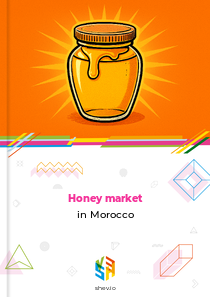







Earlier Report Observations
The Moroccan honey market volume grew from 10 641 t in 2018 to a peak of 12 108 t in 2020, supported by the government's Plan Maroc Vert which financed modern beekeeping equipment and cooperatives, expanding the number of beekeepers and hives. This increase in domestic production was accompanied by a reduction in import duties from 40% to 2.5% in 2020, which spurred higher imports and contributed to the overall market expansion.
Market volume declined to 11 445 t in 2021 as domestic output fell, a trend highlighted by industry warnings during Ramadan when tightening supply pressured prices. The volume further decreased to 10 889 t in 2022, primarily due to lower imports, while domestic production remained steady under continued PMV support for hive distribution.
A recovery to 11 870 t occurred in 2023, coinciding with the adoption of a new organic honey decree that banned excessive heating and mandated 'Miel du Maroc' labeling to ensure quality and traceability. In 2024, Morocco gained official authorization to export honey to the EU, opening new market opportunities for the sector.
Table of content
- 1. Disclaimer
- 2. Terms of use of the report
- 3. Product codes in the statistical classifications used in the report
-
4. Key Market Indicators and Trends
-
4.1. Key Market Indicators
-
4.1.1. In kind
- 4.1.1.1. Production, 2018-2023
- 4.1.1.2. Imports, 2018-2024
- 4.1.1.3. Exports, 2018-2024
- 4.1.1.4. Market size, 2018-2023
-
4.1.1. In kind
- 4.2. Market Trends and Factors
-
4.1. Key Market Indicators
-
5. Production
-
5.1. Production in Morocco
- 5.1.1. Annual dynamics of production in Morocco in kind, 2018-2023, t
- 5.1.2. Annual dynamics of production in Morocco in value, 2018-2023, $ US
-
5.2. Global production by Country, 2018-2023
- 5.2.1. Annual dynamics of production by macroregions in kind, 2018-2023, t
- 5.2.2. Dynamics of production structure by macroregions in kind, 2018-2023
- 5.2.3. Annual dynamics of production by country in kind, 2018-2023, t
- 5.2.4. Structure of production by countries in kind, 2018-2023
- 5.2.5. Dynamics of peoduction structure by countries in kind, 2018-2023
-
5.1. Production in Morocco
-
6. Imports
-
6.1. Imports (Direct Data)
- 6.1.1. Imports - Total information
-
6.1.2. Imports in kind, t
- 6.1.2.1. Annual dynamics of product's imports to Morocco in kind, 2018-2024, t
- 6.1.2.2. Dynamics of product's imports in kind to Morocco by countries, 2018-2024, t
- 6.1.2.3. Structure of product's imports in kind by countries, 2018-2024
-
6.1.3. Imports in value, K $ US
- 6.1.3.1. Annual dynamics of product's imports to Morocco in value, 2018-2024, K $ US
- 6.1.3.2. Dynamics of product's imports in value to Morocco by countries, 2018-2024, K $ US
- 6.1.3.3. Structure of product's imports in value by countries, 2018-2024
-
6.1.4. Average price of product's imports, $ US/kg
- 6.1.4.1. Annual dynamics of average price of product's imports to Morocco, 2018-2024, $ US/kg
- 6.1.4.2. Dynamics of average price of product's imports to Morocco by countries, 2018-2024, $ US/kg
-
6.2. Imports (Mirror Data)
- 6.2.1. Imports - Total information
-
6.2.2. Imports in kind, t
- 6.2.2.1. Annual dynamics of product's imports to Morocco in kind, 2018-2024, t
- 6.2.2.2. Dynamics of product's imports in kind to Morocco by countries, 2018-2024, t
- 6.2.2.3. Structure of product's imports in kind by countries, 2018-2024
-
6.2.3. Imports in value, K $ US
- 6.2.3.1. Annual dynamics of product's imports to Morocco in value, 2018-2024, K $ US
- 6.2.3.2. Dynamics of product's imports in value to Morocco by countries, 2018-2024, K $ US
- 6.2.3.3. Structure of product's imports in value by countries, 2018-2024
-
6.2.4. Average price of product's imports, $ US/kg
- 6.2.4.1. Annual dynamics of average price of product's imports to Morocco, 2018-2024, $ US/kg
- 6.2.4.2. Dynamics of average price of product's imports to Morocco by countries, 2018-2024, $ US/kg
-
6.1. Imports (Direct Data)
-
7. Exports
-
7.1. Exports (Direct Data)
- 7.1.1. Exports - Total information
-
7.1.2. Exports in kind, t
- 7.1.2.1. Annual dynamics of product's exports from Morocco in kind, 2018-2024, t
- 7.1.2.2. Dynamics of product's exports in kind from Morocco by countries, 2018-2024, t
- 7.1.2.3. Structure of product's exports in kind by countries, 2018-2024
-
7.1.3. Exports in value, K $ US
- 7.1.3.1. Annual dynamics of product's exports from Morocco in value, 2018-2024, K $ US
- 7.1.3.2. Dynamics of product's exports in value from Morocco by countries, 2018-2024, K $ US
- 7.1.3.3. Structure of product's exports in value by countries, 2018-2024
-
7.1.4. Average price of product's exports, $ US/kg
- 7.1.4.1. Annual dynamics of average price of product's exports from Morocco, 2018-2024, $ US/kg
- 7.1.4.2. Dynamics of average price of product's exports from Morocco by countries, 2018-2024, $ US/kg
-
7.2. Exports (Mirror Data)
- 7.2.1. Exports - Total information
-
7.2.2. Exports in kind, t
- 7.2.2.1. Annual dynamics of product's exports from Morocco in kind, 2018-2024, t
- 7.2.2.2. Dynamics of product's exports in kind from Morocco by countries, 2018-2024, t
- 7.2.2.3. Structure of product's exports in kind by countries, 2018-2024
-
7.2.3. Exports in value, K $ US
- 7.2.3.1. Annual dynamics of product's exports from Morocco in value, 2018-2024, K $ US
- 7.2.3.2. Dynamics of product's exports in value from Morocco by countries, 2018-2024, K $ US
- 7.2.3.3. Structure of product's exports in value by countries, 2018-2024
-
7.2.4. Average price of product's exports, $ US/kg
- 7.2.4.1. Annual dynamics of average price of product's exports from Morocco, 2018-2024, $ US/kg
- 7.2.4.2. Dynamics of average price of product's exports from Morocco by countries, 2018-2024, $ US/kg
-
7.1. Exports (Direct Data)
-
8. Trade balance
-
8.1. Trade balance (Direct Data)
- 8.1.1. In kind, t
- 8.1.2. In value, K $ US
-
8.2. Trade balance (Mirror Data)
- 8.2.1. In kind, t
- 8.2.2. In value, K $ US
-
8.1. Trade balance (Direct Data)
-
9. Top buying and selling countries, 2018-2024
-
9.1. Direct Data
- 9.1.1. Import in Value by Countries-buyers
- 9.1.2. Export in Value by Countries-suppliers
-
9.2. Mirror Data
- 9.2.1. Import in Value by Countries-buyers
- 9.2.2. Export in Value by Countries-suppliers
-
9.1. Direct Data
Production honey in Morocco
In kind, 2017-2020, t
Top producers of honey, 2017-2020
World map of production of honey, 2017-2020
Honey production in Morocco has increased for the third consecutive year. In 2020, Morocco produced 8 000 tons of honey, showing only a marginal fluctuation compared to 2019. Between 2017 and 2020, production grew by 33.3%, which translates to an annualized growth rate of 10.1%.
Annual dynamics of production in Morocco in kind, 2017-2020, t
| Parameter | 2018 | 2019 | 2020 | CAGR | |
|---|---|---|---|---|---|
| 1 | Change from last year | 23.8% | 7.1% | 0.5% | 10.1% |
Exports honey from Morocco
Exports in kind, t
The data reveals irregular changes, indicating a volatile market environment. The period saw a trough in 2017 and a peak in 2018, with a 14-fold amplitude between these years. In 2020, Morocco's honey export volume was recorded at 34 tons, reflecting a rise of 304.0% compared to the previous year. The maximum value was recorded in 2018 at 53 tons. The largest decline occurred in 2019, with a decrease of 84.2%, while the largest increase was in 2018, with a surge of 1 298.9%.
Annual dynamics of product's exports from Morocco in kind, 2017-2020, t
| Parameter | 2018 | 2019 | 2020 | CAGR | |
|---|---|---|---|---|---|
| 1 | Change from last year | 1 298.9% | (84.2%) | 304.0% | 107.5% |
From 2017 to 2020, India, Saudi Arabia, and Qatar were the main markets for Morocco's honey exports in kind. India accounted for 45.3% of exports, Saudi Arabia for 30.5%, and Qatar for 12.0%. Together, these three countries represented 87.8% of total export flows.
Structure of product's exports in kind by countries, 2017-2020
World map of product's exports from Morocco in kind, 2017-2020
Exports in value, K $ US
Volatility characterized the market behavior during these years. From the low in 2017 to the high in 2018, export volumes varied 2.2 times. In 2020, honey exports from Morocco amounted to 238 thousand US dollars, reflecting a decline of 12.6% compared to the previous year. The maximum value was recorded in 2018 at 274 thousand US dollars, with the largest increase that year at 122.1%.
Annual dynamics of product's exports from Morocco in value, 2017-2020, K $ US
| Parameter | 2018 | 2019 | 2020 | CAGR | |
|---|---|---|---|---|---|
| 1 | Change from last year | 122.1% | (0.4%) | (12.6%) | 24.6% |
From 2017 to 2020, France, Qatar, and Saudi Arabia were the main destinations for Morocco's honey exports in value terms. France accounted for 35.2% of exports, Qatar for 20.5%, and Saudi Arabia for 12.8%. Combined, these three countries made up 68.5% of total export flows.
Structure of product's exports in value by countries, 2017-2020
World map of product's exports from Morocco in value, 2017-2020
Imports honey to Morocco
Imports in kind, t
Volatility characterized the market behavior during these years. The lowest import volume was recorded in 2017, while the highest occurred in 2020, with a peak-to-trough ratio of 2 times. In 2020, Morocco imported a total of honey, indicating a gain of 70.8% compared to 2019. The largest decline was recorded in 2019, with a decrease of 25.7%.
Annual dynamics of product's imports to Morocco in kind, 2017-2020, t
| Parameter | 2018 | 2019 | 2020 | CAGR | |
|---|---|---|---|---|---|
| 1 | Change from last year | 57.3% | (25.7%) | 70.8% | 25.9% |
From 2017 to 2020, the leading sources for honey imports in kind to Morocco were India, Argentina, and China. India accounted for 26.2% of imports, Argentina for 22.0%, and China for 20.1%. Together, these three countries represented 68.3% of total import flows.
Structure of product's imports in kind by countries, 2017-2020
World map of product's imports to Morocco in kind, 2017-2020
Imports in value, K $ US
There were noticeable fluctuations in market performance during the period. A 2.1-fold variation was noted between the minimum in 2017 and the maximum in 2020. In 2020, Morocco's honey imports amounted to 9 282 thousand US dollars, showing a sharp improvement of 81.2% compared to the previous year. The largest decline was recorded in 2019, with a decrease of 27.4%.
Annual dynamics of product's imports to Morocco in value, 2017-2020, K $ US
| Parameter | 2018 | 2019 | 2020 | CAGR | |
|---|---|---|---|---|---|
| 1 | Change from last year | 61.2% | (27.4%) | 81.2% | 28.5% |
Over 2017 to 2020, Argentina, India, and Egypt headed the ranking of suppliers of honey to Morocco in value terms. Argentina accounted for 23.1% of imports, India for 20.1%, and Egypt for 17.7%. Their combined share reached 61.0% of total imports in value terms.
Structure of product's imports in value by countries, 2017-2020
World map of product's imports to Morocco in value, 2017-2020
Related Reports

2026-03-27
2026-03-27
2026-03-27
Chicken meat and offal market in Morocco
2026-03-27

2026-03-30
Beef and buffalo meat market in Morocco
2026-03-30

Turkey meat and offal market in Morocco
2026-03-27
Why Choose Us?
Only Verified Data
No Hidden Costs or Separate Fees
Smarter Subscription Pricing
Contact Our Team
Submit your inquiry using the form below — our team will get back to you within 24 hours.