






"Middle Africa" region includes following countries:
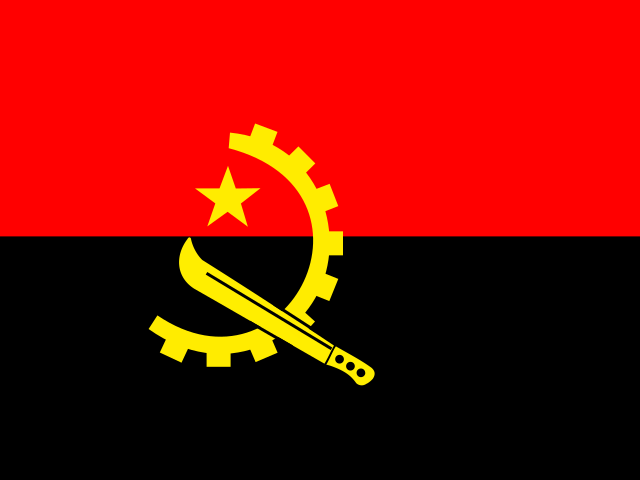 Angola
 Cameroon
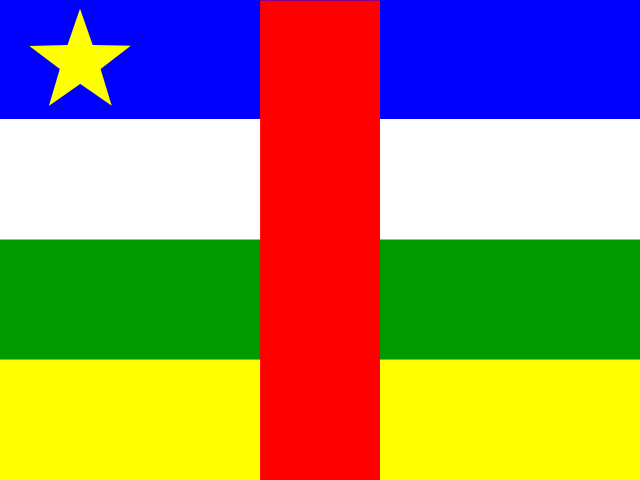 Central African Republic
 Chad
Chad Congo
Congo Democratic Republic of the Congo
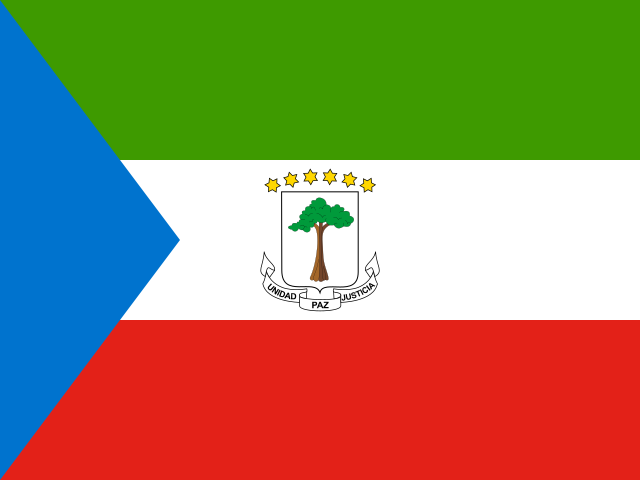 Equatorial Guinea
 Gabon
Gabon Sao Tome and Principe
Earlier Report Observations
From 2018 to 2021, the market for flour and powder of sago, roots, or tubers in Middle Africa grew steadily, with production rising from 940 to 1 221 thousand tons. This expansion was underpinned by the region's strong cassava production base, notably in DR Congo, which ranked as the world's third-largest cassava producer. While viral and bacterial diseases posed challenges to cassava yields, the overall industrial potential for cassava-derived flour supported market growth.
A significant boost occurred in 2022 when the DR Congo government adopted a cassava flour industrialization project, promoting its use in baking and pastry with up to 20% blending with wheat flour. Backed by $38 million in funding from the African Development Bank, this initiative aimed to reduce reliance on wheat imports, a urgency heightened by soaring wheat prices due to the war in Ukraine. The policy directly stimulated demand for cassava flour, encouraging new semi-industrial processing units and the emergence of new product segments.
The trend continued into 2023 and 2024, with rising domestic demand for cassava as a staple food driving further market expansion. New private projects in countries like Cameroon and Gabon sought to establish high-quality bread-making cassava flour production, capitalizing on its price competitiveness against wheat flour. Despite occasional fungal diseases affecting cassava crops, sales of cassava flour saw strong increases in several agricultural markets, reflecting sustained interest in local flour alternatives.
Table of content
- 1. Disclaimer
- 2. Terms of use of the report
- 3. Product codes in the statistical classifications used in the report
-
4. Key Market Indicators and Trends
-
4.1. Key Market Indicators
-
4.1.1. In kind
- 4.1.1.1. Production, 2018-2023
- 4.1.1.2. Imports, 2018-2024
- 4.1.1.3. Exports, 2018-2024
- 4.1.1.4. Market size, 2018-2023
-
4.1.1. In kind
- 4.2. Market Trends and Factors
-
4.1. Key Market Indicators
-
5. Production
-
5.1. Production in Middle Africa
- 5.1.1. Annual dynamics of production in Middle Africa in kind, 2018-2023, K t
-
5.2. Global production by Country, 2018-2023
- 5.2.1. Annual dynamics of production by macroregions in kind, 2018-2023, K t
- 5.2.2. Dynamics of production structure by macroregions in kind, 2018-2023
- 5.2.3. Annual dynamics of production by country in kind, 2018-2023, K t
- 5.2.4. Structure of production by countries in kind, 2018-2023
- 5.2.5. Dynamics of peoduction structure by countries in kind, 2018-2023
-
5.1. Production in Middle Africa
-
6. Imports
-
6.1. Imports (Direct Data*)
- 6.1.1. Imports - Total information
-
6.1.2. Imports in kind, t
- 6.1.2.1. Annual dynamics of product's imports to Angola in kind, 2018-2024, t
- 6.1.2.2. Dynamics of product's imports in kind to Angola by countries, 2018-2024, t
- 6.1.2.3. Structure of product's imports in kind by countries, 2018-2024
-
6.1.3. Imports in value, K $ US
- 6.1.3.1. Annual dynamics of product's imports to Angola in value, 2018-2024, K $ US
- 6.1.3.2. Dynamics of product's imports in value to Angola by countries, 2018-2024, K $ US
- 6.1.3.3. Structure of product's imports in value by countries, 2018-2024
-
6.1.4. Average price of product's imports, $ US/t
- 6.1.4.1. Annual dynamics of average price of product's imports to Angola, 2018-2024, $ US/t
- 6.1.4.2. Dynamics of average price of product's imports to Angola by countries, 2018-2024, $ US/t
-
6.2. Imports (Mirror Data)
- 6.2.1. Imports - Total information
-
6.2.2. Imports in kind, t
- 6.2.2.1. Annual dynamics of product's imports to Angola in kind, 2018-2024, t
- 6.2.2.2. Dynamics of product's imports in kind to Angola by countries, 2018-2024, t
- 6.2.2.3. Structure of product's imports in kind by countries, 2018-2024
-
6.2.3. Imports in value, K $ US
- 6.2.3.1. Annual dynamics of product's imports to Angola in value, 2018-2024, K $ US
- 6.2.3.2. Dynamics of product's imports in value to Angola by countries, 2018-2024, K $ US
- 6.2.3.3. Structure of product's imports in value by countries, 2018-2024
-
6.2.4. Average price of product's imports, $ US/t
- 6.2.4.1. Annual dynamics of average price of product's imports to Angola, 2018-2024, $ US/t
- 6.2.4.2. Dynamics of average price of product's imports to Angola by countries, 2018-2024, $ US/t
-
6.1. Imports (Direct Data*)
-
7. Exports
-
7.1. Exports (Direct Data*)
- 7.1.1. Exports - Total information
-
7.1.2. Exports in kind, t
- 7.1.2.1. Annual dynamics of product's exports from Angola in kind, 2018-2024, t
- 7.1.2.2. Dynamics of product's exports in kind from Angola by countries, 2018-2024, t
- 7.1.2.3. Structure of product's exports in kind by countries, 2018-2024
-
7.1.3. Exports in value, K $ US
- 7.1.3.1. Annual dynamics of product's exports from Angola in value, 2018-2024, K $ US
- 7.1.3.2. Dynamics of product's exports in value from Angola by countries, 2018-2024, K $ US
- 7.1.3.3. Structure of product's exports in value by countries, 2018-2024
-
7.1.4. Average price of product's exports, $ US/t
- 7.1.4.1. Annual dynamics of average price of product's exports from Angola, 2018-2024, $ US/t
- 7.1.4.2. Dynamics of average price of product's exports from Angola by countries, 2018-2024, $ US/t
-
7.2. Exports (Mirror Data)
- 7.2.1. Exports - Total information
-
7.2.2. Exports in kind, t
- 7.2.2.1. Annual dynamics of product's exports from Angola in kind, 2018-2024, t
- 7.2.2.2. Dynamics of product's exports in kind from Angola by countries, 2018-2024, t
- 7.2.2.3. Structure of product's exports in kind by countries, 2018-2024
-
7.2.3. Exports in value, K $ US
- 7.2.3.1. Annual dynamics of product's exports from Angola in value, 2018-2024, K $ US
- 7.2.3.2. Dynamics of product's exports in value from Angola by countries, 2018-2024, K $ US
- 7.2.3.3. Structure of product's exports in value by countries, 2018-2024
-
7.2.4. Average price of product's exports, $ US/t
- 7.2.4.1. Annual dynamics of average price of product's exports from Angola, 2018-2024, $ US/t
- 7.2.4.2. Dynamics of average price of product's exports from Angola by countries, 2018-2024, $ US/t
-
7.1. Exports (Direct Data*)
-
8. Trade balance
-
8.1. Trade balance (Direct Data)
- 8.1.1. In kind, t
- 8.1.2. In value, K $ US
-
8.2. Trade balance (Mirror Data)
- 8.2.1. In kind, t
- 8.2.2. In value, K $ US
-
8.1. Trade balance (Direct Data)
-
9. Top buying and selling countries, 2018-2024
-
9.1. Direct Data
- 9.1.1. Import in Value by Countries-buyers
- 9.1.2. Export in Value by Countries-suppliers
-
9.2. Mirror Data
- 9.2.1. Import in Value by Countries-buyers
- 9.2.2. Export in Value by Countries-suppliers
-
9.1. Direct Data
Production flour or powder of sago, roots or tubers in Middle Africa
In kind, 2017-2020, K t
Top producers of flour or powder of sago, roots or tubers, 2017-2020
World map of production of flour or powder of sago, roots or tubers, 2017-2020
Middle Africa's production of flour or powder from sago, roots, or tubers has grown for the third year in a row. In 2020, the region produced 1 124 thousand tonnes of this product, representing an 11.3% year-over-year increase. From 2017 to 2020, production rose by 38%, which translates to an average annual growth rate of 11.3%.
Annual dynamics of production in Middle Africa in kind, 2017-2020, K t
| Parameter | 2018 | 2019 | 2020 | CAGR | |
|---|---|---|---|---|---|
| 1 | Change from last year | 15.5% | 7.4% | 11.3% | 11.3% |
Exports flour or powder of sago, roots or tubers from Middle Africa
Exports in kind, t
Middle Africa's exports of flour or powder from sago, roots, or tubers have increased for the second consecutive year. In 2020, the region exported 992 tonnes, marking a sharp rise of 41.5% compared to the previous year. Over the 2017-2020 period, exports grew by 57.3%, with a compound annual growth rate of 16.3%. The lowest export volume was recorded in 2018 at 593 tonnes, which also saw the largest decline of 5.9%.
Annual dynamics of product's exports from Middle Africa in kind, 2017-2020, t
| Parameter | 2018 | 2019 | 2020 | CAGR | |
|---|---|---|---|---|---|
| 1 | Change from last year | (5.9%) | 18.3% | 41.5% | 16.3% |
From 2017 to 2020, France, the United States, and Belgium were the top destinations for Middle Africa's exports of flour or powder from sago, roots, or tubers. France accounted for 24.5% of exports, the United States for 16.2%, and Belgium for 14.9%. Together, these three countries made up 55.6% of total export flows.
Structure of product's exports in kind by countries, 2017-2020
World map of product's exports from Middle Africa in kind, 2017-2020
Exports in value, K $ US
The market for exports in value terms experienced significant fluctuations during this period. Export volumes reached their lowest point in 2018 and peaked in 2019, with a threefold difference between these years. In 2020, Middle Africa's cross-border shipments of flour or powder from sago, roots, or tubers totaled 350 thousand US dollars, a decline of 61.1% from the previous year. The minimum value was recorded in 2018 at 295 thousand US dollars, while the maximum was in 2019 at 899 thousand US dollars. The largest increase occurred in 2019, with a jump of 204.4%.
Annual dynamics of product's exports from Middle Africa in value, 2017-2020, K $ US
| Parameter | 2018 | 2019 | 2020 | CAGR | |
|---|---|---|---|---|---|
| 1 | Change from last year | (5.6%) | 204.4% | (61.1%) | 3.8% |
The market base for exports in value terms from 2017 to 2020 was diverse. The United States, France, and Portugal were the leading destinations, accounting for 15.6%, 15.3%, and 12.7% of exports, respectively. Combined, these three countries represented 43.6% of total flows, with the remaining 56.4% distributed among numerous other nations.
Structure of product's exports in value by countries, 2017-2020
World map of product's exports from Middle Africa in value, 2017-2020
Imports flour or powder of sago, roots or tubers to Middle Africa
Imports in kind, t
The import market for flour or powder from sago, roots, or tubers in Middle Africa showed volatility over the observed period. Import volumes hit their highest level in 2017 and fell to their lowest in 2019, a 3.1-fold change. In 2020, Middle Africa imported 1 307 tonnes, a substantial increase of 111.7% from the prior year. The minimum volume was recorded in 2019 at 617 tonnes, and the largest decline occurred in 2018, dropping by 58.7%.
Annual dynamics of product's imports to Middle Africa in kind, 2017-2020, t
| Parameter | 2018 | 2019 | 2020 | CAGR | |
|---|---|---|---|---|---|
| 1 | Change from last year | (58.7%) | (22.1%) | 111.7% | (12.0%) |
Between 2017 and 2020, Togo, Benin, and Turkey were the main sources for Middle Africa's imports of flour or powder from sago, roots, or tubers. Togo contributed 37.5% of imports, Benin 18.3%, and Turkey 18.1%. Together, these three countries accounted for 74.0% of total import flows.
Structure of product's imports in kind by countries, 2017-2020
World map of product's imports to Middle Africa in kind, 2017-2020
Imports in value, K $ US
The import market in value terms saw notable fluctuations during this time. Imports reached their lowest point in 2019 and peaked in 2017, with a 9.6-fold gap between these years. In 2020, Middle Africa's imports of flour or powder from sago, roots, or tubers were valued at 307 thousand US dollars, a dramatic increase of 89.2% from the previous year. The minimum value was recorded in 2019 at 162 thousand US dollars, and the largest decline happened in 2018, falling by 89.3%.
Annual dynamics of product's imports to Middle Africa in value, 2017-2020, K $ US
| Parameter | 2018 | 2019 | 2020 | CAGR | |
|---|---|---|---|---|---|
| 1 | Change from last year | (89.3%) | (3.3%) | 89.2% | (41.9%) |
From 2017 to 2020, Turkey, Portugal, and Togo dominated the structure of imports in value terms for Middle Africa. Turkey accounted for 35.9% of imports, Portugal for 26.8%, and Togo for 18.1%. Collectively, these three countries represented 80.8% of total import flows.
Structure of product's imports in value by countries, 2017-2020
World map of product's imports to Middle Africa in value, 2017-2020
Related Reports



Why Choose Us?
Only Verified Data
No Hidden Costs or Separate Fees
Smarter Subscription Pricing
Contact Our Team
Submit your inquiry using the form below — our team will get back to you within 24 hours.