






"SADC" region includes following countries:
 Angola
 Botswana
 Comoros
 Democratic Republic of the Congo
 Eswatini
 Lesotho
 Madagascar
 Malawi
 Mauritius
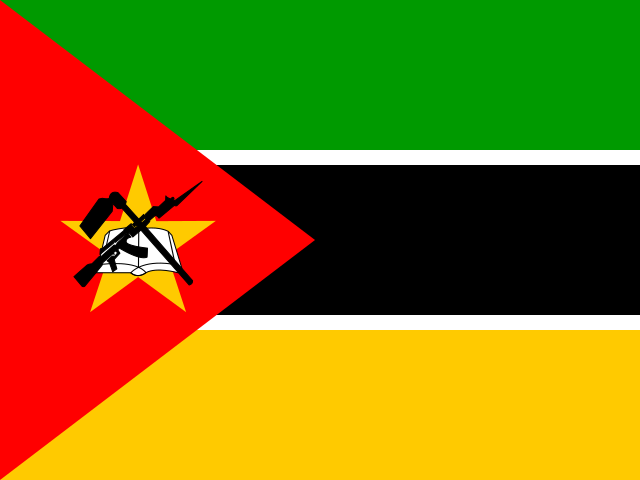 Mozambique
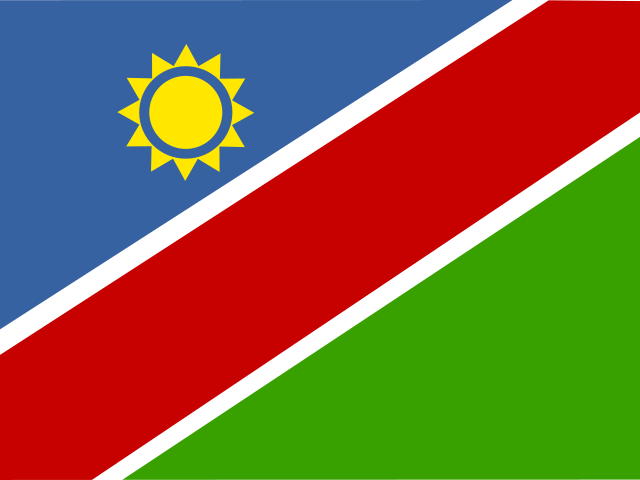 Namibia
 Seychelles
 South Africa
 Tanzania
 Zambia
 Zimbabwe
Earlier Report Observations
The market volume for coconut oil in the SADC region experienced a gradual decline from 55 416 tons in 2018 to 51 142 tons in 2023. After remaining stable near 55 000 tons in the initial two years, a noticeable contraction occurred in 2020, followed by a partial recovery in 2022 and another drop in 2023.
Domestic production followed a similar downward trend, falling from 48 298 tons to 45 945 tons over the same period. Import volumes fluctuated between 6 000 and 8 200 tons, influencing year-to-year changes in total market supply.
In the broader African context, 2024 saw a 4.3% increase in refined coconut oil production to 1.2 million tons and a 21% rise in imports, indicating growing regional demand. Within SADC, South Africa remained a key importer while Mozambique led in export value, reflecting ongoing market activity.
Table of content
- 1. Disclaimer
- 2. Terms of use of the report
- 3. Product codes in the statistical classifications used in the report
-
4. Key Market Indicators and Trends
-
4.1. Key Market Indicators
-
4.1.1. In kind
- 4.1.1.1. Production, 2018-2023
- 4.1.1.2. Imports, 2018-2024
- 4.1.1.3. Exports, 2018-2024
- 4.1.1.4. Market size, 2018-2023
-
4.1.1. In kind
- 4.2. Market Trends and Factors
-
4.1. Key Market Indicators
-
5. Production
-
5.1. Production in SADC
- 5.1.1. Annual dynamics of production in SADC in kind, 2018-2023, t
-
5.2. Global production by Country, 2018-2023
- 5.2.1. Annual dynamics of production by macroregions in kind, 2018-2023, t
- 5.2.2. Dynamics of production structure by macroregions in kind, 2018-2023
- 5.2.3. Annual dynamics of production by country in kind, 2018-2023, t
- 5.2.4. Structure of production by countries in kind, 2018-2023
- 5.2.5. Dynamics of peoduction structure by countries in kind, 2018-2023
-
5.1. Production in SADC
-
6. Imports
-
6.1. Imports (Direct Data*)
- 6.1.1. Imports - Total information
-
6.1.2. Imports in kind, t
- 6.1.2.1. Annual dynamics of product's imports to Angola in kind, 2018-2024, t
- 6.1.2.2. Dynamics of product's imports in kind to Angola by countries, 2018-2024, t
- 6.1.2.3. Structure of product's imports in kind by countries, 2018-2024
-
6.1.3. Imports in value, K $ US
- 6.1.3.1. Annual dynamics of product's imports to Angola in value, 2018-2024, K $ US
- 6.1.3.2. Dynamics of product's imports in value to Angola by countries, 2018-2024, K $ US
- 6.1.3.3. Structure of product's imports in value by countries, 2018-2024
-
6.1.4. Average price of product's imports, $ US/t
- 6.1.4.1. Annual dynamics of average price of product's imports to Angola, 2018-2024, $ US/t
- 6.1.4.2. Dynamics of average price of product's imports to Angola by countries, 2018-2024, $ US/t
-
6.2. Imports (Mirror Data)
- 6.2.1. Imports - Total information
-
6.2.2. Imports in kind, t
- 6.2.2.1. Annual dynamics of product's imports to Angola in kind, 2018-2024, t
- 6.2.2.2. Dynamics of product's imports in kind to Angola by countries, 2018-2024, t
- 6.2.2.3. Structure of product's imports in kind by countries, 2018-2024
-
6.2.3. Imports in value, K $ US
- 6.2.3.1. Annual dynamics of product's imports to Angola in value, 2018-2024, K $ US
- 6.2.3.2. Dynamics of product's imports in value to Angola by countries, 2018-2024, K $ US
- 6.2.3.3. Structure of product's imports in value by countries, 2018-2024
-
6.2.4. Average price of product's imports, $ US/t
- 6.2.4.1. Annual dynamics of average price of product's imports to Angola, 2018-2024, $ US/t
- 6.2.4.2. Dynamics of average price of product's imports to Angola by countries, 2018-2024, $ US/t
-
6.1. Imports (Direct Data*)
-
7. Exports
-
7.1. Exports (Direct Data*)
- 7.1.1. Exports - Total information
-
7.1.2. Exports in kind, t
- 7.1.2.1. Annual dynamics of product's exports from Angola in kind, 2018-2024, t
- 7.1.2.2. Dynamics of product's exports in kind from Angola by countries, 2018-2024, t
- 7.1.2.3. Structure of product's exports in kind by countries, 2018-2024
-
7.1.3. Exports in value, K $ US
- 7.1.3.1. Annual dynamics of product's exports from Angola in value, 2018-2024, K $ US
- 7.1.3.2. Dynamics of product's exports in value from Angola by countries, 2018-2024, K $ US
- 7.1.3.3. Structure of product's exports in value by countries, 2018-2024
-
7.1.4. Average price of product's exports, $ US/t
- 7.1.4.1. Annual dynamics of average price of product's exports from Angola, 2018-2024, $ US/t
- 7.1.4.2. Dynamics of average price of product's exports from Angola by countries, 2018-2024, $ US/t
-
7.2. Exports (Mirror Data)
- 7.2.1. Exports - Total information
-
7.2.2. Exports in kind, t
- 7.2.2.1. Annual dynamics of product's exports from Angola in kind, 2018-2024, t
- 7.2.2.2. Dynamics of product's exports in kind from Angola by countries, 2018-2024, t
- 7.2.2.3. Structure of product's exports in kind by countries, 2018-2024
-
7.2.3. Exports in value, K $ US
- 7.2.3.1. Annual dynamics of product's exports from Angola in value, 2018-2024, K $ US
- 7.2.3.2. Dynamics of product's exports in value from Angola by countries, 2018-2024, K $ US
- 7.2.3.3. Structure of product's exports in value by countries, 2018-2024
-
7.2.4. Average price of product's exports, $ US/t
- 7.2.4.1. Annual dynamics of average price of product's exports from Angola, 2018-2024, $ US/t
- 7.2.4.2. Dynamics of average price of product's exports from Angola by countries, 2018-2024, $ US/t
-
7.1. Exports (Direct Data*)
-
8. Trade balance
-
8.1. Trade balance (Direct Data)
- 8.1.1. In kind, t
- 8.1.2. In value, K $ US
-
8.2. Trade balance (Mirror Data)
- 8.2.1. In kind, t
- 8.2.2. In value, K $ US
-
8.1. Trade balance (Direct Data)
-
9. Top buying and selling countries, 2018-2024
-
9.1. Direct Data
- 9.1.1. Import in Value by Countries-buyers
- 9.1.2. Export in Value by Countries-suppliers
-
9.2. Mirror Data
- 9.2.1. Import in Value by Countries-buyers
- 9.2.2. Export in Value by Countries-suppliers
-
9.1. Direct Data
Production coconut oil and fractions in SADC
In kind, 2017-2020, t
Top producers of coconut oil and fractions, 2017-2020
World map of production of coconut oil and fractions, 2017-2020
SADC's coconut oil and fractions production saw a decline after two years of growth. In 2020, production reached 45 627 tonnes, marking a 6.9% decrease compared to the previous year. Over the period from 2017 to 2020, overall production fell by 4.5%, with a compound annual growth rate of 1.5%. The highest production volume was recorded in 2019 at 48 994 tonnes, which also saw the largest annual increase of 1.4%.
Annual dynamics of production in SADC in kind, 2017-2020, t
| Parameter | 2018 | 2019 | 2020 | CAGR | |
|---|---|---|---|---|---|
| 1 | Change from last year | 1.1% | 1.4% | (6.9%) | (1.5%) |
In value, 2017-2020, M $ US
Following a two-year upward trend, coconut oil and fractions production in SADC experienced a decline. In 2020, the output was valued at 128.2 million US dollars, representing a 7.6% drop year-over-year. Between 2017 and 2020, however, production value increased by 21%, translating to an annualized growth rate of 6.6%. The peak value occurred in 2019 at 138.7 million US dollars, while the largest annual increase of 19.7% was recorded in 2018.
Annual dynamics of production in SADC in value, 2017-2020, M $ US
| Parameter | 2018 | 2019 | 2020 | CAGR | |
|---|---|---|---|---|---|
| 1 | Change from last year | 19.7% | 9.4% | (7.6%) | 6.6% |
Exports coconut oil and fractions from SADC
Exports in kind, t
SADC's exports of coconut oil and fractions declined for the third consecutive year. In 2020, exports amounted to 351 tonnes, showing a significant decrease of 15.7% compared to the previous year. From 2017 to 2020, exports fell by 71.7%, which corresponds to an annualized decline rate of 34.4%.
Annual dynamics of product's exports from SADC in kind, 2017-2020, t
| Parameter | 2018 | 2019 | 2020 | CAGR | |
|---|---|---|---|---|---|
| 1 | Change from last year | (16.9%) | (59.7%) | (15.7%) | (34.4%) |
Between 2017 and 2020, Switzerland, Kenya, and Burundi were the primary buyers of coconut oil and fractions from SADC in terms of volume. Switzerland accounted for 17.5% of exports, Kenya for 6.0%, and Burundi for 1.2%. Together, these three countries represented 24.7% of total exports in kind.
Structure of product's exports in kind by countries, 2017-2020
World map of product's exports from SADC in kind, 2017-2020
Exports in value, K $ US
SADC's coconut oil and fractions exports in value terms declined for the third year in a row. In 2020, exports totaled 987 thousand US dollars, reflecting a 16.3% decrease from 2019. Over the period from 2017 to 2020, exports dropped by 64.2%, with an annualized decline rate of 29.0%.
Annual dynamics of product's exports from SADC in value, 2017-2020, K $ US
| Parameter | 2018 | 2019 | 2020 | CAGR | |
|---|---|---|---|---|---|
| 1 | Change from last year | (1.6%) | (56.5%) | (16.3%) | (29.0%) |
From 2017 to 2020, the partner portfolio for SADC's coconut oil and fractions exports in value terms was quite diverse. Switzerland accounted for 15.5% of exports, Oman for 8.7%, and Kenya for 6.0%. Combined, these three countries represented only 30.1% of total export flows.
Structure of product's exports in value by countries, 2017-2020
World map of product's exports from SADC in value, 2017-2020
Imports coconut oil and fractions to SADC
Imports in kind, t
In 2020, SADC's imports of coconut oil and fractions reached 7 060 tonnes, up by 3.9% compared to the previous year. Between 2017 and 2020, imports increased by 31.7%, with an annualized growth rate of 9.6%. The highest import volume was recorded in 2018 at 8 152 tonnes, which also saw the largest annual increase of 52.1%. In 2019, imports experienced the largest decline of 16.6%.
Annual dynamics of product's imports to SADC in kind, 2017-2020, t
| Parameter | 2018 | 2019 | 2020 | CAGR | |
|---|---|---|---|---|---|
| 1 | Change from last year | 52.1% | (16.6%) | 3.9% | 9.6% |
Throughout 2017 to 2020, Indonesia, Malaysia, and the Philippines were the key sources for SADC's imports of coconut oil and fractions in terms of volume. Together, these three markets accounted for 77.5% of total import flows.
Structure of product's imports in kind by countries, 2017-2020
World map of product's imports to SADC in kind, 2017-2020
Imports in value, K $ US
SADC imported 8 982 thousand US dollars worth of coconut oil and fractions in 2020, reflecting a 5.7% increase from the previous year. However, between 2017 and 2020, overall imports decreased by 15%, with an annualized decline rate of 5.3%. The lowest import value was recorded in 2019 at 8 500 thousand US dollars, which also saw the largest annual decline of 30.2%. In contrast, the highest import value occurred in 2018 at 12 172 thousand US dollars, with the largest annual increase of 15.1%.
Annual dynamics of product's imports to SADC in value, 2017-2020, K $ US
| Parameter | 2018 | 2019 | 2020 | CAGR | |
|---|---|---|---|---|---|
| 1 | Change from last year | 15.1% | (30.2%) | 5.7% | (5.3%) |
From 2017 to 2020, Indonesia, Malaysia, and the Philippines were the main markets for SADC's coconut oil and fractions imports in value terms. Indonesia accounted for 41.2% of imports, Malaysia for 21.2%, and the Philippines for 11.1%. Collectively, these three countries represented 73.5% of total import flows.
Structure of product's imports in value by countries, 2017-2020
World map of product's imports to SADC in value, 2017-2020
Related Reports

Coconut oil and fractions market in Africa
2026-03-28
Coconut oil and fractions market in Americas
2026-03-28
Coconut oil and fractions market in ECOWAS
2026-03-28


Groundnut oil and fractions market in SADC
2026-03-28

Corn oil and fractions market in SADC
2026-03-28

Why Choose Us?
Only Verified Data
No Hidden Costs or Separate Fees
Smarter Subscription Pricing
Contact Our Team
Submit your inquiry using the form below — our team will get back to you within 24 hours.