






"Sub-Saharan Africa" region includes following countries:
 Cabo Verde
 Benin
Benin Gambia
 Ghana
Ghana Guinea
 Côte d'Ivoire
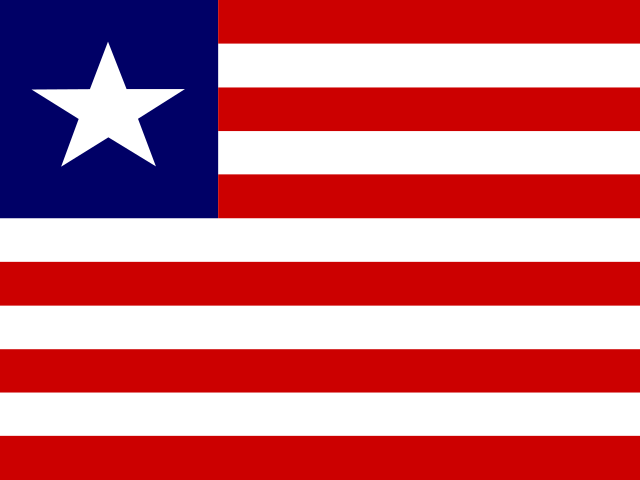 Liberia
 Mali
Mali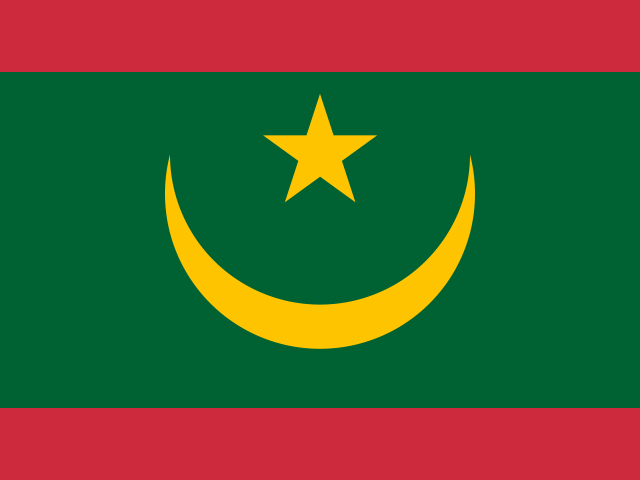 Mauritania
 Niger
Niger Nigeria
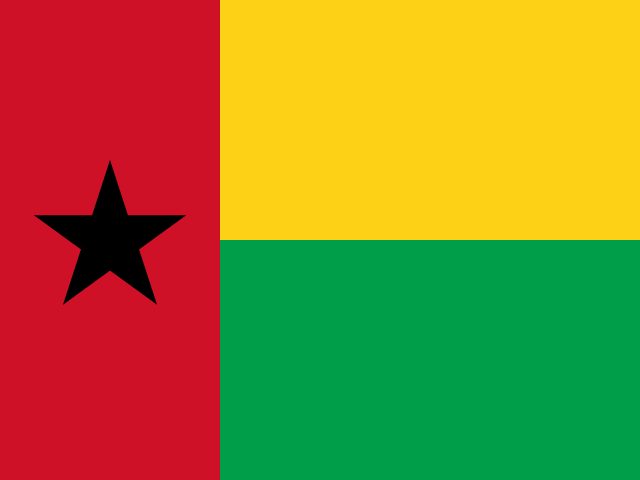 Guinea-Bissau
 Saint Helena, Ascension and Tristan da Cunha
 Senegal
 Sierra Leone
 Togo
Togo Burkina Faso
 British Indian Ocean Territory
 Burundi
 Comoros
 Mayotte
 Ethiopia
 Eritrea
 French Southern Territories
 Djibouti
 Kenya
Kenya Madagascar
 Malawi
 Mauritius
 Mozambique
 Reunion
 Rwanda
 Seychelles
 Somalia
 Zimbabwe
 South Sudan
 Uganda
 Tanzania
 Zambia
 Angola
 Cameroon
 Central African Republic
 Chad
Chad Congo
Congo Democratic Republic of the Congo
 Equatorial Guinea
 Gabon
Gabon Sao Tome and Principe
 Botswana
 Lesotho
 Namibia
 South Africa
 Eswatini
Earlier Report Observations
The market for chocolate and cocoa products in Sub-Saharan Africa expanded consistently from 2018 to 2023, with volume growing from 77 000 tons to 143 100 tons and value more than doubling from $227.4 million to $603.9 million. The most pronounced growth occurred between 2022 and 2023, when market volume jumped by 30% and value by 50%.
The surge in 2023 was driven by a 20% increase in chocolate imports into South Africa, a key regional market, which boosted overall supply. Simultaneously, global cocoa prices began to climb due to climate-related crop failures and disease in West Africa, increasing production costs and market value. By 2024, cocoa prices reached record highs above $10,000 per ton, putting further cost pressure on manufacturers and leading to retail price hikes of up to 40% in South Africa.
Table of content
- 1. Disclaimer
- 2. Terms of use of the report
- 3. Product codes in the statistical classifications used in the report
-
4. Key Market Indicators and Trends
-
4.1. Key Market Indicators
-
4.1.1. In kind
- 4.1.1.1. Production, 2018-2023
- 4.1.1.2. Imports, 2018-2024
- 4.1.1.3. Exports, 2018-2024
- 4.1.1.4. Market size, 2018-2023
-
4.1.2. In value
- 4.1.2.1. Production, 2018-2023
- 4.1.2.2. Imports, 2018-2024
- 4.1.2.3. Exports, 2018-2024
- 4.1.2.4. Market size, 2018-2023
-
4.1.1. In kind
- 4.2. Market Trends and Factors
-
4.1. Key Market Indicators
-
5. Production
-
5.1. Production in Sub-Saharan Africa
- 5.1.1. Annual dynamics of production in Sub-Saharan Africa in kind, 2018-2023, K t
-
5.2. Global production by Country, 2018-2023
- 5.2.1. Annual dynamics of production by macroregions in kind, 2018-2023, K t
- 5.2.2. Dynamics of production structure by macroregions in kind, 2018-2023
- 5.2.3. Annual dynamics of production by country in kind, 2018-2023, K t
- 5.2.4. Structure of production by countries in kind, 2018-2023
- 5.2.5. Dynamics of peoduction structure by countries in kind, 2018-2023
-
5.1. Production in Sub-Saharan Africa
-
6. Imports
-
6.1. Imports (Direct Data*)
- 6.1.1. Imports - Total information
-
6.1.2. Imports in kind, t
- 6.1.2.1. Annual dynamics of product's imports to Cabo Verde in kind, 2018-2024, t
- 6.1.2.2. Dynamics of product's imports in kind to Cabo Verde by countries, 2018-2024, t
- 6.1.2.3. Structure of product's imports in kind by countries, 2018-2024
-
6.1.3. Imports in value, M $ US
- 6.1.3.1. Annual dynamics of product's imports to Cabo Verde in value, 2018-2024, M $ US
- 6.1.3.2. Dynamics of product's imports in value to Cabo Verde by countries, 2018-2024, M $ US
- 6.1.3.3. Structure of product's imports in value by countries, 2018-2024
-
6.1.4. Average price of product's imports, $ US/t
- 6.1.4.1. Annual dynamics of average price of product's imports to Cabo Verde, 2018-2024, $ US/t
- 6.1.4.2. Dynamics of average price of product's imports to Cabo Verde by countries, 2018-2024, $ US/t
-
6.2. Imports (Mirror Data)
- 6.2.1. Imports - Total information
-
6.2.2. Imports in kind, t
- 6.2.2.1. Annual dynamics of product's imports to Cabo Verde in kind, 2018-2024, t
- 6.2.2.2. Dynamics of product's imports in kind to Cabo Verde by countries, 2018-2024, t
- 6.2.2.3. Structure of product's imports in kind by countries, 2018-2024
-
6.2.3. Imports in value, M $ US
- 6.2.3.1. Annual dynamics of product's imports to Cabo Verde in value, 2018-2024, M $ US
- 6.2.3.2. Dynamics of product's imports in value to Cabo Verde by countries, 2018-2024, M $ US
- 6.2.3.3. Structure of product's imports in value by countries, 2018-2024
-
6.2.4. Average price of product's imports, $ US/t
- 6.2.4.1. Annual dynamics of average price of product's imports to Cabo Verde, 2018-2024, $ US/t
- 6.2.4.2. Dynamics of average price of product's imports to Cabo Verde by countries, 2018-2024, $ US/t
-
6.1. Imports (Direct Data*)
-
7. Exports
-
7.1. Exports (Direct Data*)
- 7.1.1. Exports - Total information
-
7.1.2. Exports in kind, t
- 7.1.2.1. Annual dynamics of product's exports from Cabo Verde in kind, 2018-2024, t
- 7.1.2.2. Dynamics of product's exports in kind from Cabo Verde by countries, 2018-2024, t
- 7.1.2.3. Structure of product's exports in kind by countries, 2018-2024
-
7.1.3. Exports in value, M $ US
- 7.1.3.1. Annual dynamics of product's exports from Cabo Verde in value, 2018-2024, M $ US
- 7.1.3.2. Dynamics of product's exports in value from Cabo Verde by countries, 2018-2024, M $ US
- 7.1.3.3. Structure of product's exports in value by countries, 2018-2024
-
7.1.4. Average price of product's exports, $ US/t
- 7.1.4.1. Annual dynamics of average price of product's exports from Cabo Verde, 2018-2024, $ US/t
- 7.1.4.2. Dynamics of average price of product's exports from Cabo Verde by countries, 2018-2024, $ US/t
-
7.2. Exports (Mirror Data)
- 7.2.1. Exports - Total information
-
7.2.2. Exports in kind, t
- 7.2.2.1. Annual dynamics of product's exports from Cabo Verde in kind, 2018-2024, t
- 7.2.2.2. Dynamics of product's exports in kind from Cabo Verde by countries, 2018-2024, t
- 7.2.2.3. Structure of product's exports in kind by countries, 2018-2024
-
7.2.3. Exports in value, M $ US
- 7.2.3.1. Annual dynamics of product's exports from Cabo Verde in value, 2018-2024, M $ US
- 7.2.3.2. Dynamics of product's exports in value from Cabo Verde by countries, 2018-2024, M $ US
- 7.2.3.3. Structure of product's exports in value by countries, 2018-2024
-
7.2.4. Average price of product's exports, $ US/t
- 7.2.4.1. Annual dynamics of average price of product's exports from Cabo Verde, 2018-2024, $ US/t
- 7.2.4.2. Dynamics of average price of product's exports from Cabo Verde by countries, 2018-2024, $ US/t
-
7.1. Exports (Direct Data*)
-
8. Trade balance
-
8.1. Trade balance (Direct Data)
- 8.1.1. In kind, t
- 8.1.2. In value, M $ US
-
8.2. Trade balance (Mirror Data)
- 8.2.1. In kind, t
- 8.2.2. In value, M $ US
-
8.1. Trade balance (Direct Data)
-
9. Top buying and selling countries, 2018-2024
-
9.1. Direct Data
- 9.1.1. Import in Value by Countries-buyers
- 9.1.2. Export in Value by Countries-suppliers
-
9.2. Mirror Data
- 9.2.1. Import in Value by Countries-buyers
- 9.2.2. Export in Value by Countries-suppliers
-
9.1. Direct Data
Production chocolate and cocoa products in Sub-Saharan Africa
In kind, 2017-2020, t
Top producers of chocolate and cocoa products, 2017-2020
World map of production of chocolate and cocoa products, 2017-2020
Chocolate and cocoa products production in Sub-Saharan Africa has increased for the third consecutive year. In 2020, the region produced 70 184 tonnes of these products, marking a moderate rise of 7.3% compared to 2019. Over the period from 2017 to 2020, production grew by 29.4%, with an average annual growth rate of 9.0%.
Annual dynamics of production in Sub-Saharan Africa in kind, 2017-2020, t
| Parameter | 2018 | 2019 | 2020 | CAGR | |
|---|---|---|---|---|---|
| 1 | Change from last year | 15.2% | 4.7% | 7.3% | 9.0% |
In value, 2017-2020, M $ US
Chocolate and cocoa products production in Sub-Saharan Africa has increased for the third consecutive year. In 2020, the output was valued at 328.0 million US dollars, reflecting a significant advance of 25.7% compared to 2019. Between 2017 and 2020, production rose by 38.6%, equating to an annualized rate of 11.5%.
Annual dynamics of production in Sub-Saharan Africa in value, 2017-2020, M $ US
| Parameter | 2018 | 2019 | 2020 | CAGR | |
|---|---|---|---|---|---|
| 1 | Change from last year | 5.1% | 4.9% | 25.7% | 11.5% |
Exports chocolate and cocoa products from Sub-Saharan Africa
Exports in kind, t
Exported volumes of chocolate and cocoa products from Sub-Saharan Africa declined for the second consecutive year. In 2020, exports totalled 63 392 tonnes, indicating a robust fall of 12.2% from 2019. Between 2017 and 2020, exports increased by 2.4%, with an annualized rate of 0.8%. The maximum volume was recorded in 2018 at 81 072 tonnes, which also saw the largest increase of 31.0%.
Annual dynamics of product's exports from Sub-Saharan Africa in kind, 2017-2020, t
| Parameter | 2018 | 2019 | 2020 | CAGR | |
|---|---|---|---|---|---|
| 1 | Change from last year | 31.0% | (10.9%) | (12.2%) | 0.8% |
Throughout the period from 2017 to 2020, France, Poland, and the United States formed the core group of markets for exports in kind. France accounted for 39.1% of exports, Poland for 8.3%, and the United States for 5.0%, together representing 52.3% of total flows.
Structure of product's exports in kind by countries, 2017-2020
World map of product's exports from Sub-Saharan Africa in kind, 2017-2020
Exports in value, M $ US
Sub-Saharan Africa exported 296.3 million US dollars worth of chocolate and cocoa products in 2020, indicating a slight uptick of 2.8% compared to 2019. Between 2017 and 2020, exports increased by 9.8%, with an annualized rate of 3.2%. The maximum value was recorded in 2018 at 322.8 million US dollars, which also saw the largest increase of 19.6%. The largest decline occurred in 2019, with a drop of 10.7%.
Annual dynamics of product's exports from Sub-Saharan Africa in value, 2017-2020, M $ US
| Parameter | 2018 | 2019 | 2020 | CAGR | |
|---|---|---|---|---|---|
| 1 | Change from last year | 19.6% | (10.7%) | 2.8% | 3.2% |
Over the period from 2017 to 2020, France, Poland, and the United States were the largest but not dominant buyers of chocolate and cocoa products from Sub-Saharan Africa in value terms. France accounted for 36.3% of exports, Poland for 7.3%, and the United States for 5.0%, together making up 48.6% of total exports, against a broad background of smaller partners.
Structure of product's exports in value by countries, 2017-2020
World map of product's exports from Sub-Saharan Africa in value, 2017-2020
Imports chocolate and cocoa products to Sub-Saharan Africa
Imports in kind, t
Chocolate and cocoa products deliveries to Sub-Saharan Africa declined for the second consecutive year. In 2020, imports totalled 86 018 tonnes, down by 8.7% compared to 2019. The maximum volume was recorded in 2018 at 95 580 tonnes, which also saw the largest increase of 11.9%.
Annual dynamics of product's imports to Sub-Saharan Africa in kind, 2017-2020, t
| Parameter | 2018 | 2019 | 2020 | CAGR | |
|---|---|---|---|---|---|
| 1 | Change from last year | 11.9% | (1.5%) | (8.7%) | 0.2% |
In the period from 2017 to 2020, the partner structure for imports in kind was balanced rather than concentrated. Turkey accounted for 14.0% of imports, China for 11.5%, and Italy for 4.6%, jointly representing 30.1% of total flows, with many other countries accounting for the remaining 69.9%.
Structure of product's imports in kind by countries, 2017-2020
World map of product's imports to Sub-Saharan Africa in kind, 2017-2020
Imports in value, M $ US
Sub-Saharan Africa's volume of chocolate and cocoa products imports declined for the second consecutive year. In 2020, the region imported 275.1 million US dollars worth of these products, marking a slight decrease of 2.3% compared to 2019. The maximum value was recorded in 2018 at 301.5 million US dollars, which also saw the largest increase of 10.3%. The largest decline occurred in 2019, with a drop of 6.6%.
Annual dynamics of product's imports to Sub-Saharan Africa in value, 2017-2020, M $ US
| Parameter | 2018 | 2019 | 2020 | CAGR | |
|---|---|---|---|---|---|
| 1 | Change from last year | 10.3% | (6.6%) | (2.3%) | 0.2% |
The country composition of imports in value terms from 2017 to 2020 was dispersed. Italy accounted for 11.0% of imports, France for 6.8%, and Belgium for 6.5%, together forming just 24.3% of total flows, with the remaining 75.7% split among a wide range of other destinations.
Structure of product's imports in value by countries, 2017-2020
World map of product's imports to Sub-Saharan Africa in value, 2017-2020
Related Reports

Chocolate and cocoa products market in SADC
2026-03-29

Cocoa beans market in Sub-Saharan Africa
2026-03-29



Why Choose Us?
Only Verified Data
No Hidden Costs or Separate Fees
Smarter Subscription Pricing
Contact Our Team
Submit your inquiry using the form below — our team will get back to you within 24 hours.