






"Sub-Saharan Africa" region includes following countries:
 Cabo Verde
 Benin
Benin Gambia
 Ghana
Ghana Guinea
 Côte d'Ivoire
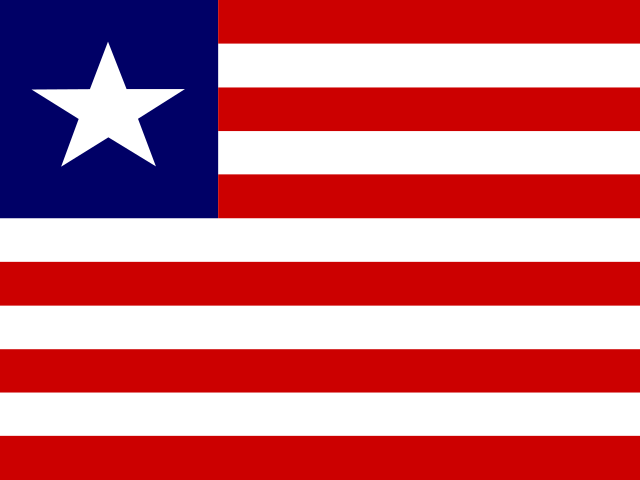 Liberia
 Mali
Mali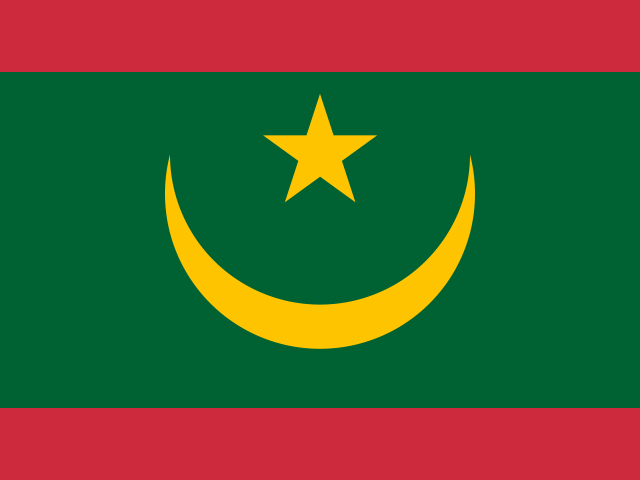 Mauritania
 Niger
Niger Nigeria
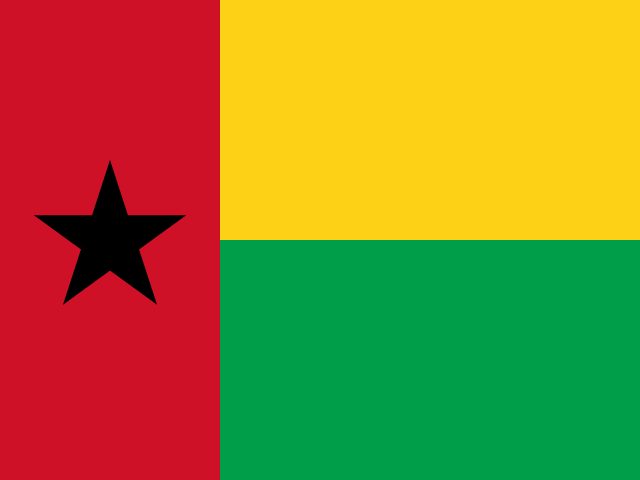 Guinea-Bissau
 Saint Helena, Ascension and Tristan da Cunha
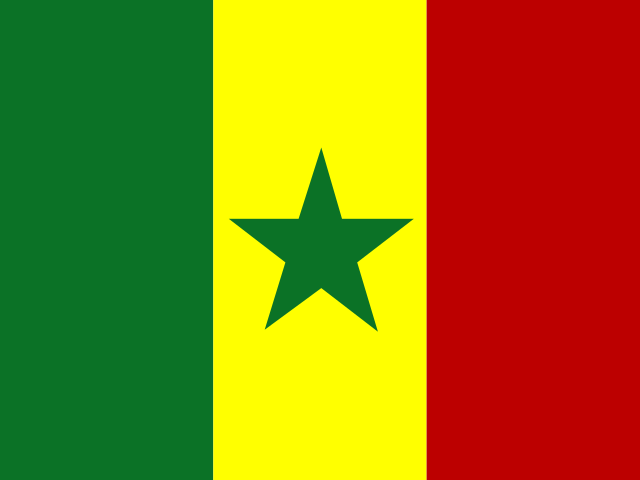 Senegal
 Sierra Leone
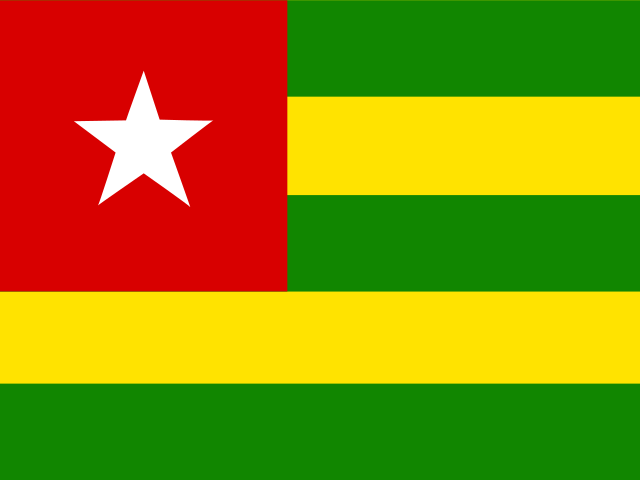 Togo
Togo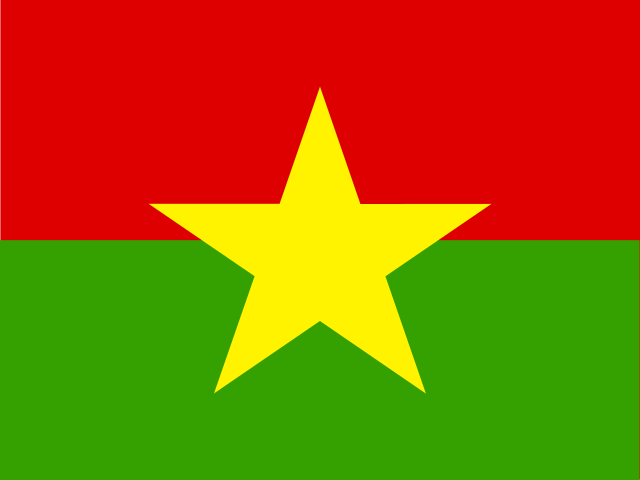 Burkina Faso
 British Indian Ocean Territory
 Burundi
 Comoros
 Mayotte
 Ethiopia
 Eritrea
 French Southern Territories
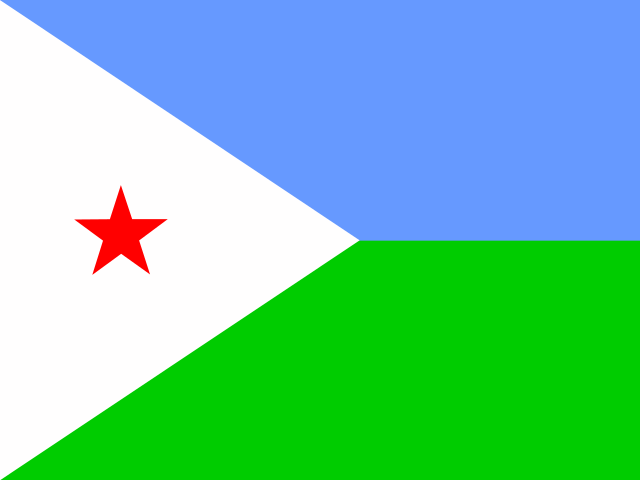 Djibouti
 Kenya
Kenya Madagascar
 Malawi
 Mauritius
 Mozambique
 Reunion
 Rwanda
 Seychelles
 Somalia
 Zimbabwe
 South Sudan
 Uganda
 Tanzania
 Zambia
 Angola
 Cameroon
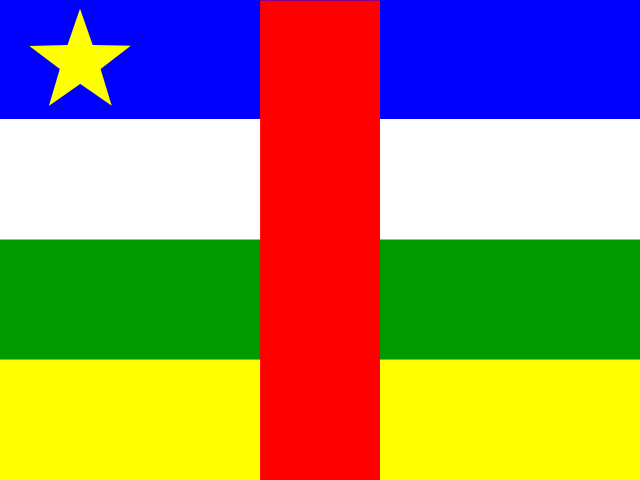 Central African Republic
 Chad
Chad Congo
Congo Democratic Republic of the Congo
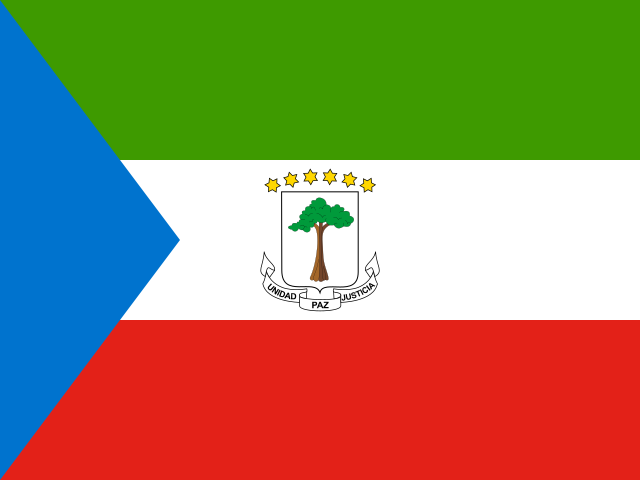 Equatorial Guinea
 Gabon
Gabon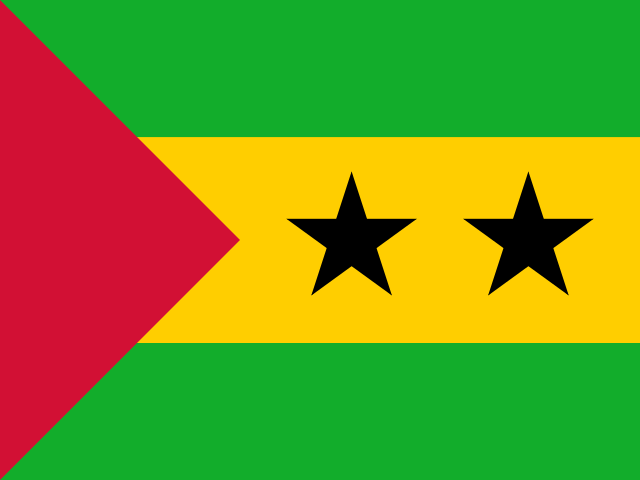 Sao Tome and Principe
 Botswana
 Lesotho
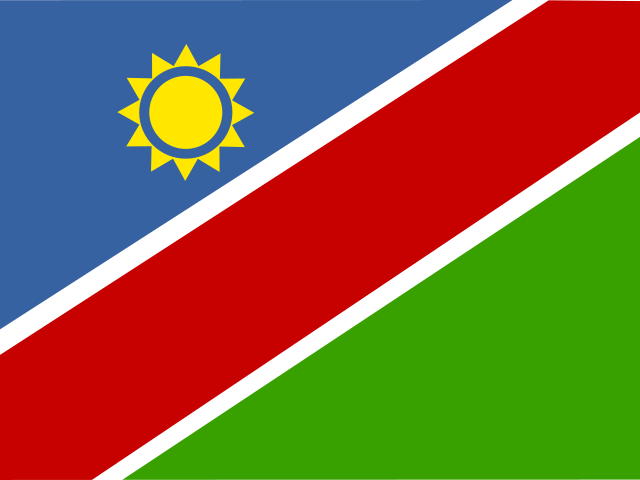 Namibia
 South Africa
 Eswatini
Earlier Report Observations
The cocoa beans market volume in Sub-Saharan Africa grew significantly in 2020, reaching 1.44 million tons, largely because the COVID-19 pandemic disrupted global trade flows and reduced export volumes, leaving more beans available domestically. Prior to this, alliances such as the one between WACOT and Cocoasource in 2018 aimed to enhance sustainable cocoa farming with traceability, which supported production stability in key origins like Nigeria.
Following the pandemic surge, market volume contracted to 913 thousand tons by 2023, as export volumes recovered and structural challenges persisted. Nigerian cocoa processing plants were operating at only 8% capacity as of 2019, reflecting deep-seated inefficiencies that limited local value addition. Concurrently, shifting consumer preferences towards premium, artisan, and dark chocolate influenced demand patterns within the region, though they did not offset the overall volume decline.
Table of content
- 1. Disclaimer
- 2. Terms of use of the report
- 3. Product codes in the statistical classifications used in the report
-
4. Key Market Indicators and Trends
-
4.1. Key Market Indicators
-
4.1.1. In kind
- 4.1.1.1. Production, 2018-2023
- 4.1.1.2. Imports, 2018-2024
- 4.1.1.3. Exports, 2018-2024
- 4.1.1.4. Market size, 2018-2023
-
4.1.2. In value
- 4.1.2.1. Production, 2018-2023
- 4.1.2.2. Imports, 2018-2024
- 4.1.2.3. Exports, 2018-2024
- 4.1.2.4. Market size, 2018-2023
-
4.1.1. In kind
- 4.2. Market Trends and Factors
-
4.1. Key Market Indicators
-
5. Production
-
5.1. Production in Sub-Saharan Africa
- 5.1.1. Annual dynamics of production in Sub-Saharan Africa in kind, 2018-2023, K t
-
5.2. Global production by Country, 2018-2023
- 5.2.1. Annual dynamics of production by macroregions in kind, 2018-2023, K t
- 5.2.2. Dynamics of production structure by macroregions in kind, 2018-2023
- 5.2.3. Annual dynamics of production by country in kind, 2018-2023, K t
- 5.2.4. Structure of production by countries in kind, 2018-2023
- 5.2.5. Dynamics of peoduction structure by countries in kind, 2018-2023
-
5.1. Production in Sub-Saharan Africa
-
6. Imports
-
6.1. Imports (Direct Data*)
- 6.1.1. Imports - Total information
-
6.1.2. Imports in kind, K t
- 6.1.2.1. Annual dynamics of product's imports to Cabo Verde in kind, 2018-2024, K t
- 6.1.2.2. Dynamics of product's imports in kind to Cabo Verde by countries, 2018-2024, K t
- 6.1.2.3. Structure of product's imports in kind by countries, 2018-2024
-
6.1.3. Imports in value, M $ US
- 6.1.3.1. Annual dynamics of product's imports to Cabo Verde in value, 2018-2024, M $ US
- 6.1.3.2. Dynamics of product's imports in value to Cabo Verde by countries, 2018-2024, M $ US
- 6.1.3.3. Structure of product's imports in value by countries, 2018-2024
-
6.1.4. Average price of product's imports, $ US/t
- 6.1.4.1. Annual dynamics of average price of product's imports to Cabo Verde, 2018-2024, $ US/t
- 6.1.4.2. Dynamics of average price of product's imports to Cabo Verde by countries, 2018-2024, $ US/t
-
6.2. Imports (Mirror Data)
- 6.2.1. Imports - Total information
-
6.2.2. Imports in kind, K t
- 6.2.2.1. Annual dynamics of product's imports to Cabo Verde in kind, 2018-2024, K t
- 6.2.2.2. Dynamics of product's imports in kind to Cabo Verde by countries, 2018-2024, K t
- 6.2.2.3. Structure of product's imports in kind by countries, 2018-2024
-
6.2.3. Imports in value, M $ US
- 6.2.3.1. Annual dynamics of product's imports to Cabo Verde in value, 2018-2024, M $ US
- 6.2.3.2. Dynamics of product's imports in value to Cabo Verde by countries, 2018-2024, M $ US
- 6.2.3.3. Structure of product's imports in value by countries, 2018-2024
-
6.2.4. Average price of product's imports, $ US/t
- 6.2.4.1. Annual dynamics of average price of product's imports to Cabo Verde, 2018-2024, $ US/t
- 6.2.4.2. Dynamics of average price of product's imports to Cabo Verde by countries, 2018-2024, $ US/t
-
6.1. Imports (Direct Data*)
-
7. Exports
-
7.1. Exports (Direct Data*)
- 7.1.1. Exports - Total information
-
7.1.2. Exports in kind, K t
- 7.1.2.1. Annual dynamics of product's exports from Cabo Verde in kind, 2018-2024, K t
- 7.1.2.2. Dynamics of product's exports in kind from Cabo Verde by countries, 2018-2024, K t
- 7.1.2.3. Structure of product's exports in kind by countries, 2018-2024
-
7.1.3. Exports in value, M $ US
- 7.1.3.1. Annual dynamics of product's exports from Cabo Verde in value, 2018-2024, M $ US
- 7.1.3.2. Dynamics of product's exports in value from Cabo Verde by countries, 2018-2024, M $ US
- 7.1.3.3. Structure of product's exports in value by countries, 2018-2024
-
7.1.4. Average price of product's exports, $ US/t
- 7.1.4.1. Annual dynamics of average price of product's exports from Cabo Verde, 2018-2024, $ US/t
- 7.1.4.2. Dynamics of average price of product's exports from Cabo Verde by countries, 2018-2024, $ US/t
-
7.2. Exports (Mirror Data)
- 7.2.1. Exports - Total information
-
7.2.2. Exports in kind, K t
- 7.2.2.1. Annual dynamics of product's exports from Cabo Verde in kind, 2018-2024, K t
- 7.2.2.2. Dynamics of product's exports in kind from Cabo Verde by countries, 2018-2024, K t
- 7.2.2.3. Structure of product's exports in kind by countries, 2018-2024
-
7.2.3. Exports in value, M $ US
- 7.2.3.1. Annual dynamics of product's exports from Cabo Verde in value, 2018-2024, M $ US
- 7.2.3.2. Dynamics of product's exports in value from Cabo Verde by countries, 2018-2024, M $ US
- 7.2.3.3. Structure of product's exports in value by countries, 2018-2024
-
7.2.4. Average price of product's exports, $ US/t
- 7.2.4.1. Annual dynamics of average price of product's exports from Cabo Verde, 2018-2024, $ US/t
- 7.2.4.2. Dynamics of average price of product's exports from Cabo Verde by countries, 2018-2024, $ US/t
-
7.1. Exports (Direct Data*)
-
8. Trade balance
-
8.1. Trade balance (Direct Data)
- 8.1.1. In kind, K t
- 8.1.2. In value, M $ US
-
8.2. Trade balance (Mirror Data)
- 8.2.1. In kind, K t
- 8.2.2. In value, M $ US
-
8.1. Trade balance (Direct Data)
-
9. Top buying and selling countries, 2018-2024
-
9.1. Direct Data
- 9.1.1. Import in Value by Countries-buyers
- 9.1.2. Export in Value by Countries-suppliers
-
9.2. Mirror Data
- 9.2.1. Import in Value by Countries-buyers
- 9.2.2. Export in Value by Countries-suppliers
-
9.1. Direct Data
Production cocoa beans in Sub-Saharan Africa
In kind, 2017-2020, K t
Top producers of cocoa beans, 2017-2020
World map of production of cocoa beans, 2017-2020
In Sub-Saharan Africa, cocoa bean production reached 3 886 thousand tonnes in 2020, marking a modest 3.7% increase from 2019. Over the period from 2017 to 2020, production grew by 3.7%, which translates to an annualized growth rate of 1.2%. The most significant decline occurred in 2019, when production fell by 1.0%.
Annual dynamics of production in Sub-Saharan Africa in kind, 2017-2020, K t
| Parameter | 2018 | 2019 | 2020 | CAGR | |
|---|---|---|---|---|---|
| 1 | Change from last year | 1.0% | (1.0%) | 3.7% | 1.2% |
In value, 2017-2020, M $ US
The value of cocoa bean production in Sub-Saharan Africa was 9 648 million US dollars in 2020, showing a solid 11.0% rise compared to the previous year. From 2017 to 2020, production value increased by 12.5%, with a compound annual growth rate of 4.0%. The largest drop was recorded in 2019, at 1.3%.
Annual dynamics of production in Sub-Saharan Africa in value, 2017-2020, M $ US
| Parameter | 2018 | 2019 | 2020 | CAGR | |
|---|---|---|---|---|---|
| 1 | Change from last year | 2.7% | (1.3%) | 11.0% | 4.0% |
Exports cocoa beans from Sub-Saharan Africa
Exports in kind, K t
Cocoa bean exports from Sub-Saharan Africa declined for the second year in a row. In 2020, the region exported 2 455 thousand tonnes, which represents an 11.8% decrease from 2019. Over the 2017-2020 period, exports fell by 5%, with a compound annual growth rate of -1.7%. The peak volume was recorded in 2018 at 2 837 thousand tonnes, with the largest increase that year of 9.7%.
Annual dynamics of product's exports from Sub-Saharan Africa in kind, 2017-2020, K t
| Parameter | 2018 | 2019 | 2020 | CAGR | |
|---|---|---|---|---|---|
| 1 | Change from last year | 9.7% | (1.9%) | (11.8%) | (1.7%) |
From 2017 to 2020, cocoa bean exports from Sub-Saharan Africa were widely distributed among partner countries. The Netherlands accounted for 27.5% of exports in kind, the United States for 11.6%, and Malaysia for 10.2%, together making up 49.3% of total flows.
Structure of product's exports in kind by countries, 2017-2020
World map of product's exports from Sub-Saharan Africa in kind, 2017-2020
Exports in value, M $ US
Export value of cocoa beans from Sub-Saharan Africa decreased for the second consecutive year. In 2020, exports amounted to 6 094 million US dollars, a 5.6% drop from the previous year. Over the 2017-2020 period, export value increased by 2.9%, with a compound annual growth rate of 1.0%. The highest value was recorded in 2018 at 6 601 million US dollars, with the largest increase that year of 11.5%.
Annual dynamics of product's exports from Sub-Saharan Africa in value, 2017-2020, M $ US
| Parameter | 2018 | 2019 | 2020 | CAGR | |
|---|---|---|---|---|---|
| 1 | Change from last year | 11.5% | (2.2%) | (5.6%) | 1.0% |
During 2017-2020, the export market in value terms was diverse. The Netherlands contributed 25.5% of exports in value, Malaysia 12.9%, and the United States 11.5%, together accounting for 49.9% of total flows. The remaining 50.1% was distributed among many other countries.
Structure of product's exports in value by countries, 2017-2020
World map of product's exports from Sub-Saharan Africa in value, 2017-2020
Imports cocoa beans to Sub-Saharan Africa
Imports in kind, K t
Market performance showed noticeable fluctuations during this period. Import volumes hit a low in 2018 and peaked in 2020, with a 25-fold difference between these years. In 2020, Sub-Saharan Africa imported 8 thousand tonnes of cocoa beans, indicating a year-on-year gain of 875.9%. The minimum volume was recorded in 2018 at 0.3 thousand tonnes, with the largest decline that year of 21.5%.
Annual dynamics of product's imports to Sub-Saharan Africa in kind, 2017-2020, K t
| Parameter | 2018 | 2019 | 2020 | CAGR | |
|---|---|---|---|---|---|
| 1 | Change from last year | (21.5%) | 154.2% | 875.9% | 169.0% |
From 2017 to 2020, the core group of markets for cocoa bean imports in kind included China, Panama, and Belgium, each accounting for 0.7% of imports. Together, they represented 2.0% of total flows.
Structure of product's imports in kind by countries, 2017-2020
World map of product's imports to Sub-Saharan Africa in kind, 2017-2020
Imports in value, M $ US
Foreign cocoa bean supplies to Sub-Saharan Africa increased for the third year in a row. In 2020, the region imported approximately 26 million US dollars worth of cocoa beans, representing a 1,259.0% gain compared to 2019. Over the 2017-2020 period, imports surged by 1,946.5%, with a compound annual growth rate of 173.5%.
Annual dynamics of product's imports to Sub-Saharan Africa in value, 2017-2020, M $ US
| Parameter | 2018 | 2019 | 2020 | CAGR | |
|---|---|---|---|---|---|
| 1 | Change from last year | 7.4% | 40.2% | 1 259.0% | 173.5% |
Throughout 2017-2020, the key directions for cocoa bean imports in value terms were Panama with 1.3%, Italy with 0.9%, and Peru with 0.6%, together taking 2.8% of total flows.
Structure of product's imports in value by countries, 2017-2020
World map of product's imports to Sub-Saharan Africa in value, 2017-2020
Related Reports
Cocoa beans market in Micronesia
2026-03-29
Cocoa beans market in Dominica
2026-03-29
2026-03-30
Cocoa beans market in South-eastern Asia
2026-03-29



Bread market in Sub-Saharan Africa
2026-03-30
Why Choose Us?
Only Verified Data
No Hidden Costs or Separate Fees
Smarter Subscription Pricing
Contact Our Team
Submit your inquiry using the form below — our team will get back to you within 24 hours.