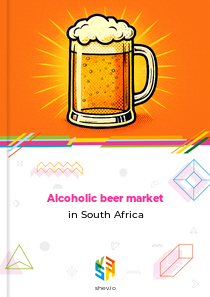







Earlier Report Observations
Between 2018 and 2019, the alcoholic beer market in South Africa expanded in volume, reaching 3 361 млн л. This initial growth was supported by the launch of innovative products such as SAB's Castle Free, the first non-alcoholic beer in the country, and a notable rise in craft beer offerings, which catered to evolving consumer tastes. However, in 2020, the market volume plummeted by 22% to 2 620 млн л due to the COVID-19 pandemic and government-imposed alcohol bans, which forced brewery closures and severely restricted sales.
The market rebounded strongly in 2021, with volume rising by 19% to 3 119 млн л, driven by the accelerated growth of no- and low-alcohol segments. Improved brewing techniques enhanced the flavor of non-alcoholic beers, making them more appealing, while the easing of restrictions allowed for recovery in consumption. This recovery continued into 2022, with volume reaching 3 364 млн л, as alcohol bans were fully lifted, reigniting consumer interest in beer tourism and festivals. The non-alcoholic segment saw significant expansion, with Castle Free producing two million bottles monthly, and the Beer Association of South Africa actively promoted low- and no-alcohol products.
In 2023, market volume grew further to 3 554 млн л, but in value terms, it stabilized at around 2 713 млн долл. США. This decoupling reflected an economic slowdown that prompted brands to innovate and diversify their portfolios, balancing full-strength and no-low alcohol options to meet cost-conscious demand. Additionally, tighter advertising regulations constrained marketing efforts, further influencing market dynamics.
Table of content
- 1. Disclaimer
- 2. Terms of use of the report
- 3. Product codes in the statistical classifications used in the report
-
4. Key Market Indicators and Trends
-
4.1. Key Market Indicators
-
4.1.1. In kind
- 4.1.1.1. Production, 2018-2023
- 4.1.1.2. Imports, 2018-2025
- 4.1.1.3. Exports, 2018-2025
- 4.1.1.4. Market size, 2018-2023
-
4.1.2. In value
- 4.1.2.1. Production, 2018-2023
- 4.1.2.2. Imports, 2018-2025
- 4.1.2.3. Exports, 2018-2025
- 4.1.2.4. Market size, 2018-2023
-
4.1.1. In kind
- 4.2. Market Trends and Factors
-
4.1. Key Market Indicators
-
5. Production
-
5.1. Production in South Africa
- 5.1.1. Annual dynamics of production in South Africa in kind, 2018-2023, M l
- 5.1.2. Annual dynamics of production in South Africa in value, 2018-2023, $ US
-
5.2. Global production by Country, 2018-2023
- 5.2.1. Annual dynamics of production by macroregions in kind, 2018-2023, M l
- 5.2.2. Dynamics of production structure by macroregions in kind, 2018-2023
- 5.2.3. Annual dynamics of production by country in kind, 2018-2023, M l
- 5.2.4. Structure of production by countries in kind, 2018-2023
- 5.2.5. Dynamics of peoduction structure by countries in kind, 2018-2023
-
5.1. Production in South Africa
-
6. Exports
-
6.1. Exports (Direct Data)
- 6.1.1. Exports - Total information
-
6.1.2. Exports in kind, M l
- 6.1.2.1. Annual dynamics of product's exports from South Africa in kind, 2018-2025, M l
- 6.1.2.2. Dynamics of product's exports in kind from South Africa by countries, 2018-2025, M l
- 6.1.2.3. Structure of product's exports in kind by countries, 2018-2025
-
6.1.3. Exports in value, M $ US
- 6.1.3.1. Annual dynamics of product's exports from South Africa in value, 2018-2025, M $ US
- 6.1.3.2. Dynamics of product's exports in value from South Africa by countries, 2018-2025, M $ US
- 6.1.3.3. Structure of product's exports in value by countries, 2018-2025
-
6.1.4. Average price of product's exports, $ US/K l
- 6.1.4.1. Annual dynamics of average price of product's exports from South Africa, 2018-2025, $ US/K l
- 6.1.4.2. Dynamics of average price of product's exports from South Africa by countries, 2018-2025, $ US/K l
-
6.2. Exports (Mirror Data)
- 6.2.1. Exports - Total information
-
6.2.2. Exports in kind, M l
- 6.2.2.1. Annual dynamics of product's exports from South Africa in kind, 2018-2025, M l
- 6.2.2.2. Dynamics of product's exports in kind from South Africa by countries, 2018-2025, M l
- 6.2.2.3. Structure of product's exports in kind by countries, 2018-2025
-
6.2.3. Exports in value, M $ US
- 6.2.3.1. Annual dynamics of product's exports from South Africa in value, 2018-2025, M $ US
- 6.2.3.2. Dynamics of product's exports in value from South Africa by countries, 2018-2025, M $ US
- 6.2.3.3. Structure of product's exports in value by countries, 2018-2025
-
6.2.4. Average price of product's exports, $ US/K l
- 6.2.4.1. Annual dynamics of average price of product's exports from South Africa, 2018-2025, $ US/K l
- 6.2.4.2. Dynamics of average price of product's exports from South Africa by countries, 2018-2025, $ US/K l
-
6.1. Exports (Direct Data)
-
7. Imports
-
7.1. Imports (Direct Data)
- 7.1.1. Imports - Total information
-
7.1.2. Imports in kind, M l
- 7.1.2.1. Annual dynamics of product's imports to South Africa in kind, 2018-2025, M l
- 7.1.2.2. Dynamics of product's imports in kind to South Africa by countries, 2018-2025, M l
- 7.1.2.3. Structure of product's imports in kind by countries, 2018-2025
-
7.1.3. Imports in value, M $ US
- 7.1.3.1. Annual dynamics of product's imports to South Africa in value, 2018-2025, M $ US
- 7.1.3.2. Dynamics of product's imports in value to South Africa by countries, 2018-2025, M $ US
- 7.1.3.3. Structure of product's imports in value by countries, 2018-2025
-
7.1.4. Average price of product's imports, $ US/K l
- 7.1.4.1. Annual dynamics of average price of product's imports to South Africa, 2018-2025, $ US/K l
- 7.1.4.2. Dynamics of average price of product's imports to South Africa by countries, 2018-2025, $ US/K l
-
7.2. Imports (Mirror Data)
- 7.2.1. Imports - Total information
-
7.2.2. Imports in kind, M l
- 7.2.2.1. Annual dynamics of product's imports to South Africa in kind, 2018-2025, M l
- 7.2.2.2. Dynamics of product's imports in kind to South Africa by countries, 2018-2025, M l
- 7.2.2.3. Structure of product's imports in kind by countries, 2018-2025
-
7.2.3. Imports in value, M $ US
- 7.2.3.1. Annual dynamics of product's imports to South Africa in value, 2018-2025, M $ US
- 7.2.3.2. Dynamics of product's imports in value to South Africa by countries, 2018-2025, M $ US
- 7.2.3.3. Structure of product's imports in value by countries, 2018-2025
-
7.2.4. Average price of product's imports, $ US/K l
- 7.2.4.1. Annual dynamics of average price of product's imports to South Africa, 2018-2025, $ US/K l
- 7.2.4.2. Dynamics of average price of product's imports to South Africa by countries, 2018-2025, $ US/K l
-
7.1. Imports (Direct Data)
-
8. Trade balance
-
8.1. Trade balance (Direct Data)
- 8.1.1. In kind, M l
- 8.1.2. In value, M $ US
-
8.2. Trade balance (Mirror Data)
- 8.2.1. In kind, M l
- 8.2.2. In value, M $ US
-
8.1. Trade balance (Direct Data)
-
9. Top buying and selling countries, 2018-2025
-
9.1. Direct Data
- 9.1.1. Import in Value by Countries-buyers
- 9.1.2. Export in Value by Countries-suppliers
-
9.2. Mirror Data
- 9.2.1. Import in Value by Countries-buyers
- 9.2.2. Export in Value by Countries-suppliers
-
9.1. Direct Data
Production alcoholic beer in South Africa
In kind, 2018-2021, M l
From 2018 to 2021, South Africa ranked 11th globally in alcoholic beer production.
Top producers of alcoholic beer, 2018-2021
World map of production of alcoholic beer, 2018-2021
In 2021, South Africa produced 3 100 million liters of alcoholic beer, marking a 19.2% increase from the previous year. Production peaked in 2019 at 3 250 million liters, then dropped to its lowest point in 2020 at 2 600 million liters, representing a 20.0% decline that year.
Annual dynamics of production in South Africa in kind, 2018-2021, M l
| Parameter | 2019 | 2020 | 2021 | CAGR | |
|---|---|---|---|---|---|
| 1 | Change from last year | 3.7% | (20.0%) | 19.2% | (0.4%) |
In value, 2018-2021, M $ US
Following a two-year decline, alcoholic beer production in South Africa rebounded in 2021, with output valued at 2 609 million US dollars—a sharp 45.2% rise compared to 2020. Over the 2018–2021 period, production grew by 2.5%, averaging 0.8% annually. The lowest value was recorded in 2020 at 1 797 million US dollars, reflecting a 22.7% drop that year.
Annual dynamics of production in South Africa in value, 2018-2021, M $ US
| Parameter | 2019 | 2020 | 2021 | CAGR | |
|---|---|---|---|---|---|
| 1 | Change from last year | (8.7%) | (22.7%) | 45.2% | 0.8% |
Exports alcoholic beer from South Africa
Exports in kind, M l
In 2021, South Africa exported 109.5 million liters of alcoholic beer, up 24.6% from 2020. Exports reached their highest level in 2019 at 129.1 million liters, then fell to a low of 87.9 million liters in 2020, a 31.9% decrease. Over 2018–2021, exports increased by 10.7%, with an average annual growth rate of 3.4%.
Annual dynamics of product's exports from South Africa in kind, 2018-2021, M l
| Parameter | 2019 | 2020 | 2021 | CAGR | |
|---|---|---|---|---|---|
| 1 | Change from last year | 30.5% | (31.9%) | 24.6% | 3.4% |
From 2018 to 2021, Zambia, Mozambique, and Botswana were the leading destinations for South Africa's alcoholic beer exports by volume. Zambia accounted for 29.2% of exports, Mozambique for 16.3%, and Botswana for 13.6%, together making up 59.1% of total export flows.
Structure of product's exports in kind by countries, 2018-2021
World map of product's exports from South Africa in kind, 2018-2021
Exports in value, M $ US
In 2021, the value of alcoholic beer exports from South Africa stood at 92.2 million US dollars, showing a sharp 51.7% increase from the previous year. The highest value was recorded in 2019 at 92.4 million US dollars, while the lowest was in 2020 at 60.7 million US dollars, a 34.2% decline. Over 2018–2021, export value grew by 14.7%, with an average annual rate of 4.7%.
Annual dynamics of product's exports from South Africa in value, 2018-2021, M $ US
| Parameter | 2019 | 2020 | 2021 | CAGR | |
|---|---|---|---|---|---|
| 1 | Change from last year | 14.9% | (34.2%) | 51.7% | 4.7% |
Throughout 2018–2021, Zambia, Botswana, and Mozambique formed the core markets for South Africa's alcoholic beer exports by value. Zambia represented 25.8% of export value, Botswana 15.8%, and Mozambique 15.1%, together accounting for 56.8% of total export flows.
Structure of product's exports in value by countries, 2018-2021
World map of product's exports from South Africa in value, 2018-2021
Imports alcoholic beer to South Africa
Imports in kind, M l
In 2021, South Africa imported approximately 128.1 million liters of alcoholic beer, an 18.3% increase from 2020. Imports peaked in 2019 at 239.9 million liters, then dropped to their lowest in 2020 at 108.3 million liters, a 54.8% decline. Over 2018–2021, imports decreased by 16.1%, with an average annual decline of 5.7%.
Annual dynamics of product's imports to South Africa in kind, 2018-2021, M l
| Parameter | 2019 | 2020 | 2021 | CAGR | |
|---|---|---|---|---|---|
| 1 | Change from last year | 57.1% | (54.8%) | 18.3% | (5.7%) |
From 2018 to 2021, Namibia, the Netherlands, and Mexico were the main sources of alcoholic beer imports to South Africa by volume. Namibia accounted for 38.6% of imports, the Netherlands for 32.2%, and Mexico for 23.1%, together representing 93.9% of total import flows.
Structure of product's imports in kind by countries, 2018-2021
World map of product's imports to South Africa in kind, 2018-2021
Imports in value, M $ US
In 2021, South Africa imported alcoholic beer valued at 112.7 million US dollars, a sudden 27.5% increase from the previous year. The highest import value was recorded in 2019 at 242.1 million US dollars, while the lowest was in 2020 at 112.7 million US dollars, a 53.5% drop. Over 2018–2021, import value decreased by 10.5%, with an average annual decline of 3.6%.
Annual dynamics of product's imports to South Africa in value, 2018-2021, M $ US
| Parameter | 2019 | 2020 | 2021 | CAGR | |
|---|---|---|---|---|---|
| 1 | Change from last year | 50.9% | (53.5%) | 27.5% | (3.6%) |
During 2018–2021, Namibia, Mexico, and the Netherlands were the top suppliers of alcoholic beer to South Africa by value. Namibia accounted for 38.7% of import value, Mexico for 33.6%, and the Netherlands for 21.0%, together making up 93.3% of total import flows.
Structure of product's imports in value by countries, 2018-2021
World map of product's imports to South Africa in value, 2018-2021
Related Reports

Alcoholic beer market in Morocco
2026-03-29
Alcoholic beer market in Czechia
2026-03-29
Alcoholic beer market in Western Europe
2026-03-29
Alcoholic beer market in Georgia
2026-03-29

Grape wine market in South Africa
2026-03-29

Vegetable puree market in South Africa
2026-03-29
Why Choose Us?
Only Verified Data
No Hidden Costs or Separate Fees
Smarter Subscription Pricing
Contact Our Team
Submit your inquiry using the form below — our team will get back to you within 24 hours.