Vietnam’s wood exports reach $10.2 billion as European markets gain ground
Vietnam exported $10.2 billion of wood and wood products in the first seven months of 2026, up 5.6% year on year. Shipments to the Netherlands and Germany rose sharply, while exports to the United States fell 5.8%.
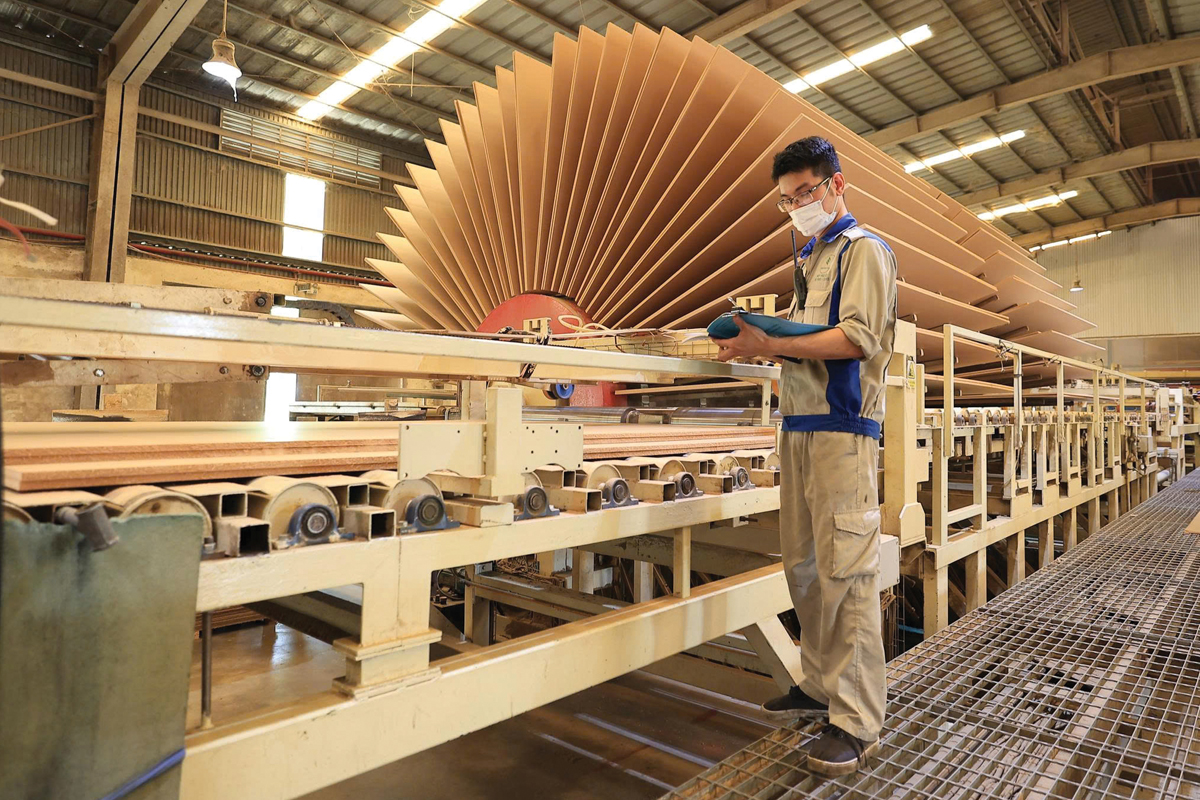
Exports pass the $10 billion mark
Vietnam’s exports of wood and wood products reached $10.2 billion in the first seven months of 2026, an increase of 5.6% from the same period of 2025, according to Customs Department data reported by Doanh Nghiep Tiep Thi. The sector was among Vietnam’s seven largest export categories by value.
The overall increase concealed a widening gap between major destinations. The United States remained the largest market at $5.1 billion, representing about 50% of sector exports, but shipments there declined 5.8% year on year. China ranked second with approximately $1.5 billion, up 46.4%, followed by Japan and South Korea.
Concentration remains high. Tran Ngoc Liem, director of the Ho Chi Minh City branch of the Vietnam Chamber of Commerce and Industry, said the United States, China, Japan and South Korea together account for more than 80% of Vietnam’s wood and wood-product exports. Ho Chi Minh City alone exported nearly $4 billion of these goods during the first half of 2026.
Germany and the Netherlands accelerate
European markets provided some of the strongest growth. During the seven-month period, exports to the Netherlands increased 104%, while shipments to Germany rose 47%. Canada and the United Kingdom also recorded notable growth, although the source did not provide shipment values or percentage changes for those markets.
Liem said these results indicate that Vietnamese suppliers have room to expand their European market share, particularly by using the commitments and advantages available under the EU-Vietnam Free Trade Agreement. Vietnam’s production capacity is being complemented by improving capabilities in design, supply and compliance with the standards of developed markets.
The potential customer base is substantial. Ministry of Industry and Trade figures cited from Mordor Intelligence put the European furniture market at about $277.2 billion in 2026, with a possible increase to $358.3 billion by 2031. That projection implies average annual growth of approximately 5.26%.
Compliance determines access
European expansion will require exporters to satisfy increasingly demanding rules covering environmental performance, raw-material origin and supply-chain traceability. Logistics costs, trade policy and purchasing power in major markets will also affect competitiveness. At the same time, anticipated changes in US tariff policy could continue to influence orders in Vietnam’s single largest market.
These pressures make diversification across markets, customers and commercial partners increasingly important. The figures also show that Europe cannot yet replace the United States by scale: the US still generates half of the sector’s export revenue, even after the latest decline. For producers and traders, the immediate task is therefore to preserve established demand while building larger positions in faster-growing destinations.
Industry seeks new buyers
VIFA ASEAN 2026, the Vietnam ASEAN International Furniture, Home Accessories and Handicraft Fair, is scheduled to take place in Ho Chi Minh City in early September. More than 200 Vietnamese and international businesses are expected to participate across over 600 booths.
The event is intended to connect Vietnamese companies with buyers and investors from the United States, Canada, China, India, Japan, the Netherlands and other markets. With exports already above $10 billion after seven months, those contacts could support new orders and reduce the industry’s exposure to a small group of dominant destinations.