Turkey's hazelnut sector squeezed as costs jump 50% and farmgate prices fall 40%
Turkish hazelnut growers face production costs at least 50% higher than last year while prices have fallen about 40% to a band of 180-200 lira, according to business daily Dünya. The country supplies roughly 70% of global hazelnut output, but 2025 exports came to $2.2 billion, down 85,000 tonnes and $300 million from 2024.
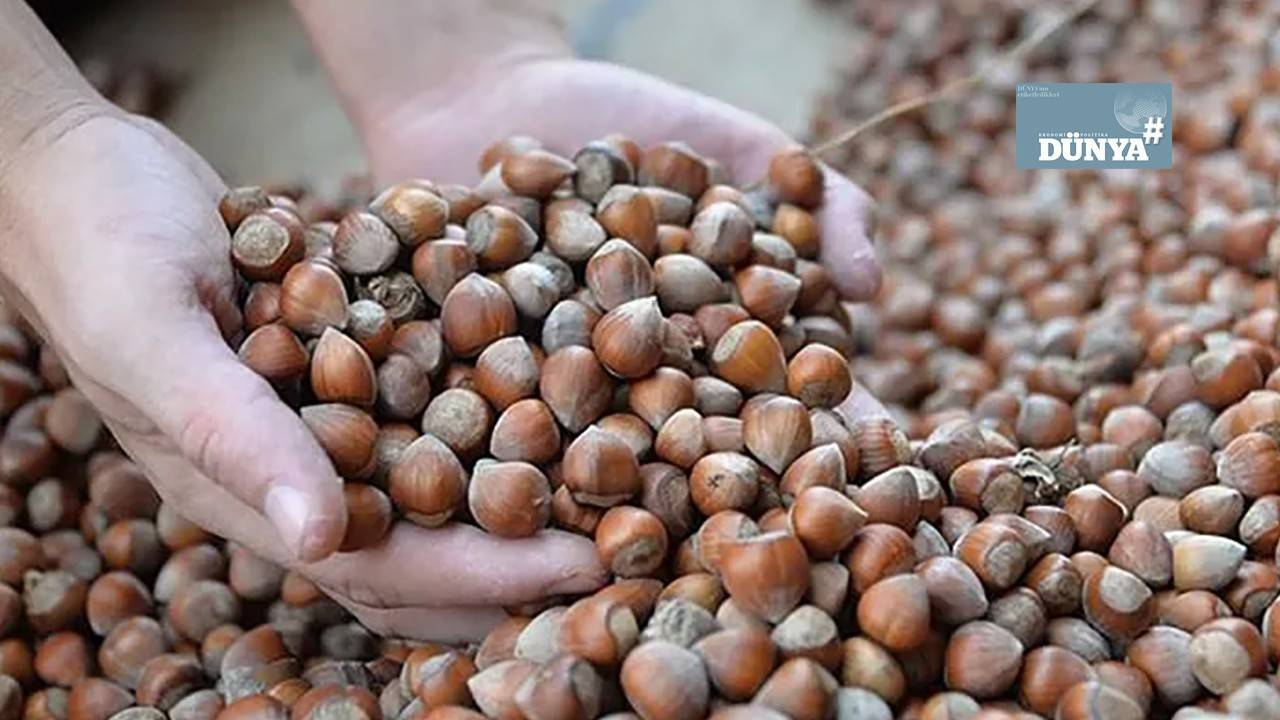
Turkey's hazelnut industry, which supplies roughly 70% of global supply, is moving through a severe bottleneck as production costs climb and farmgate prices fall, business daily Dünya reported. Growers are caught between expenses that have risen by at least 50% from last year and prices that have dropped about 40%, while the buying side says declining kernel quality is making the crop harder to place on export markets.
This season's crop is expected at around 700,000 tonnes. Despite that volume, prices are stuck in a band of 180-200 lira, and quality complaints are being used to push offers lower still. Growers facing the risk of unsold stock have little choice but to accept those levels.
Costs up 50%, prices down 40%
Orchard maintenance spending — fertiliser, orchard work, spraying, mowing — and harvest labour have both risen sharply, according to Dünya, which describes growers as economically exhausted. With outlays up more than 50% and the sale price down 40%, hazelnut growing has become unprofitable, and as farmers cut back on orchard care the quality problem deepens. The brown marmorated stink bug remains a factor, although its impact eased somewhat this season.
The 250 lira price announced by state buyer TMO is not functioning as a floor, Dünya said: purchases are limited to 100 kg per dönüm, selling to TMO is not straightforward, and the figure applies to hazelnuts at 50% kernel yield. Because TMO has not entered the market forcefully, traders opened the season at 170 lira. FİSKOBİRLİK, the cooperative union created to act as market maker, has lost that function and is trying to buy below the announced 255 lira.
Export earnings below potential
The sector's annual export volume reaches $2.5 billion and Turkey holds the leading position in the global market, but Dünya warns that the structural crisis in the orchards puts that dominance at risk. Export revenue swings between $1.7 billion and $2.6 billion a year and accounts for about 1% of Turkey's total exports. Exports in 2025 came to $2.2 billion, down 85,000 tonnes and $300 million from 2024. Even with a large crop expected, higher costs, weaker prices and stink bug damage to quality mean revenue risks falling short of its potential.
Competitors — the United States, Italy and Georgia, which together account for 30% of world production — are working to turn Turkey's difficulties to their own advantage. When supply rises or prices spike, global buyers and the large chocolate manufacturers can switch to substitute raw materials.
Ageing orchards and fragmented plots
Most Turkish hazelnut orchards are 50 to 60 years old and past their economic life. Yield per decare is around 80-100 kg in Turkey against 250-300 kg in the United States and Italy under modern planting systems, and converting orchards from the traditional bush (ocak) layout to row or hedge planting would lift yields two- to threefold. Inheritance has fragmented plots to the point where mechanised care and harvesting are impossible and unit costs peak, so legal consolidation into viable operating scale is needed.
Measures on the table
- Cost-based support targeting fertiliser, crop protection and labour, plus low-interest farm credit, instead of classic area-based income support.
- A floor price set at a level that covers production costs and grower welfare, removal of quotas, and more storage and licensed warehousing capacity so the state can act as a strong buyer.
- A new grower union extending from the regional to the national level, replacing structures that have lost their market-making role.
- Incentives for plants making higher value-added goods — hazelnut paste, hazelnut flour, hazelnut oil, industrial chocolate and cosmetics inputs — since Turkey ships mostly in-shell or shelled kernels in sacks while European processors capture the margin in chocolate and praline.
- Regional pest-control centres along the Black Sea coast with early warning systems under Agriculture Ministry coordination, including laboratory rearing and release of biological agents such as the samurai wasp, against the stink bug and powdery mildew.
- An internationally recognised hazelnut exchange based in Giresun or Ordu, backed by licensed warehousing and financing for growers once product is deposited, to end dependence on price-setting by buyers in Hamburg and Italy.
Dünya also argues that the "market farmer" model — growers who live away from the region and return only at harvest — should be abandoned, with orchard management transferred to professional agricultural companies or strong cooperatives, and quality-based contracts with purchase guarantees signed between growers and processors or cooperatives.