Thai agricultural exports fall for fourth quarter as rice, rubber and cassava weaken
Thailand’s agricultural and agro-industrial exports fell 3.4% year on year in the second quarter of 2026, their fourth consecutive quarterly contraction. Lower rice, rubber, cassava and chicken shipments outweighed continued growth in fruit exports, while competition, supply constraints and geopolitical risks cloud the 2027 outlook.
Exports decline 3.4% as major markets slow
Thailand’s agricultural and agro-industrial exports contracted for a fourth consecutive quarter in the second quarter of 2026, falling 3.4% year on year, according to Krungthai COMPASS figures reported by InfoQuest. Weaker demand in China and the United States, disruption linked to the Middle East conflict and stronger competition placed pressure on several of the country’s main export products.
Agricultural commodities, which represented about 53% of the combined export value, were broadly unchanged, declining 0.01%. Agro-industrial goods, accounting for the remaining 47%, fell 7.9%. Exports to the Middle East dropped 32.6%, although some suppliers maintained shipments by diverting vessels to routes that avoided the affected strait.
Rice, rubber and cassava record steep losses
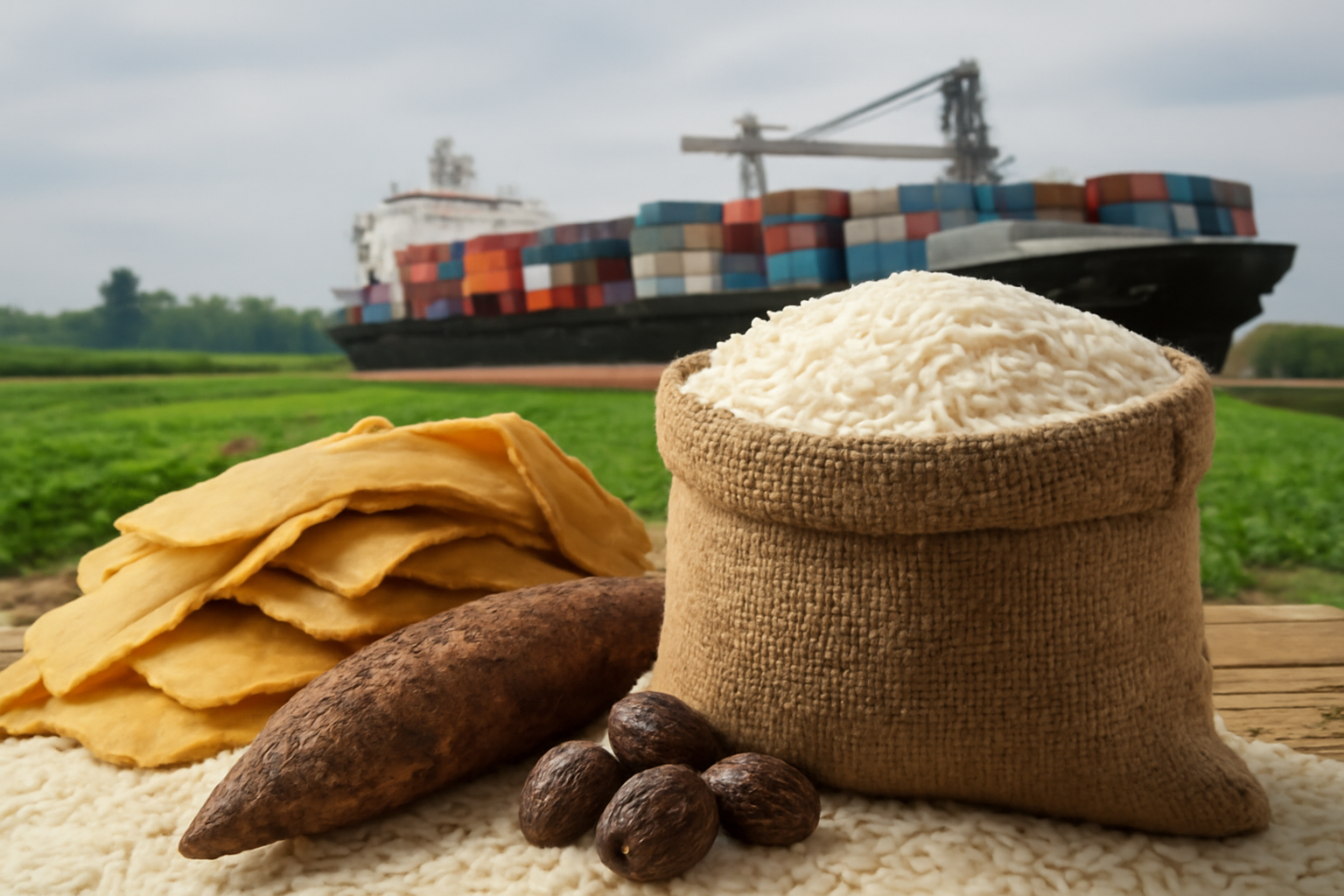
Rice export value fell 17.1% to $957 million as volume declined 18.5%. The average export price rose 1.8%, but this provided limited relief. Thai 5% broken white rice reached about $446 per tonne, up 5.7%, while jasmine rice rose 14.1% to $1,215 per tonne. High domestic costs and renewed competition following India’s return to exports weakened Thailand’s position, while disruption around the Strait of Hormuz affected Middle Eastern trade.
Natural rubber exports declined 4.9% to $1.082 billion. Sheet and block rubber volume fell 8.6%, including a 17.7% drop in shipments to China, where vehicle production decreased 1.4%. China’s two-year import-duty exemption for almost all African countries, effective May 1, 2026, also encouraged greater sourcing from Côte d’Ivoire. Concentrated latex volume dropped 16.4%, with shipments to China down 51.6%, after a 100% US tariff on Chinese rubber gloves reduced Chinese demand for Thai feedstock.
Cassava exporters faced a domestic raw-material shortage caused by mosaic disease and lower imports of fresh roots from Cambodia amid the Thailand-Cambodia conflict. Cassava chip and pellet export value plunged 71.6% to $86 million, while volume fell 82.5%. Scarcity lifted the export price 28.4% to $238 per tonne. Raw and modified cassava starch exports declined 10% to $457 million; volume dropped 31.3%, but the average price increased 30.9% to $660 per tonne.
Fruit and processed chicken provide support
Fresh, chilled, frozen and dried fruit exports remained a clear exception, rising 12.9% to $3.775 billion. Sales to China increased 16.6%, while durian exports, representing 68% of the category, grew 28.8% from a low comparison base following tighter Chinese quality and food-safety inspections in the first half of 2025. Thailand’s average fresh durian export price to China nevertheless fell 2.5% amid price competition from Malaysia, Vietnam and the Philippines.
Total exports of fresh, chilled, frozen and processed chicken fell 2.1% to $1.118 billion. Fresh and frozen chicken exports dropped 19.6% to $298 million, including a 59.3% fall in sales to China after Beijing suspended imports from 22 Thai plants in August 2025 and increased domestic production. Processed chicken performed better, rising 6.3% to $820 million. Shipments to Japan grew 6.1% to $373 million, while exports to the European Union increased 5.2% to $331 million, supported by ready-meal demand, tourism, restaurants and avian influenza outbreaks in both markets.
Krungthai COMPASS expects Thai exporters to face continued intense competition in 2027. A potentially stronger El Niño and expensive fertiliser could restrict agricultural output, while the Middle East conflict may raise energy and freight costs. US Section 301 measures and the European Union’s deforestation regulation could add further compliance and competitiveness pressure.