Spanish school-supply sales in July rise 43% from 2022 as families buy earlier
Folder says July school-supply sales across its Spanish stationery network have increased 43% since 2022. Purchases before August now account for 20% of back-to-school sales, reshaping inventory and promotional planning.
Back-to-school demand shifts into July
Spanish families are buying school supplies substantially earlier, extending a retail campaign that traditionally peaked in late August and early September. According to data reported by Murcia.com from stationery chain Folder, sales recorded in July have increased 43% since 2022 across the company’s network of more than 150 stores in Spain.
Purchases completed before 31 July now represent 20% of Folder’s total back-to-school sales, compared with 14% four years earlier. The company estimates that families have brought their purchasing forward by an average of five weeks. The shift turns July into one of the campaign’s fastest-growing periods and changes when retailers need to stock products, schedule promotions and prepare stores.
Folder’s transaction data indicate that the increase is being driven by both customer traffic and larger baskets. The number of July transactions rose 18% over four years, while the average value of purchases made during the month increased 21%. Families are therefore not merely making small advance purchases: they are assembling a larger part of the required school kit before August.
Families divide spending across the summer
Folder links the earlier start partly to household budget planning. Instead of concentrating most expenditure in the final days of August and the beginning of September, consumers are spreading purchases over several weeks. Seven out of every 10 customers making an initial purchase in July return in August or September to obtain items specified by their school.
This staggered pattern has created a clearer sequence of demand. Products that do not depend heavily on school lists—such as backpacks, pencil cases, notebooks, folders, binders, planners, writing materials and reusable bottles—enter baskets first. More specific classroom supplies are purchased once schools provide their requirements.
The degree of advance purchasing differs by category. Before August, Folder already records 25% of backpack sales, 12% of pencil-case sales, 42% of reusable-bottle sales, 8% of school-planner sales and 16% of notebook and folder sales. Backpack sales in June and July have risen 24% compared with four years ago.
Practical products also become end-of-term gifts
Budget management is not the only factor. Folder says parents and grandparents increasingly buy design-led backpacks, branded pencil cases, planners, reusable bottles and stationery accessories as rewards at the end of the school year. Products previously treated mainly as functional purchases are therefore reaching consumers before the summer holidays.
The change matters because back-to-school remains a central revenue period for stationery retailers. At Folder, the four-month campaign generates approximately 40% of annual turnover. The average ticket is close to €14.05 and rises as families complete their purchases during August.
Earlier sales affect a wider store network
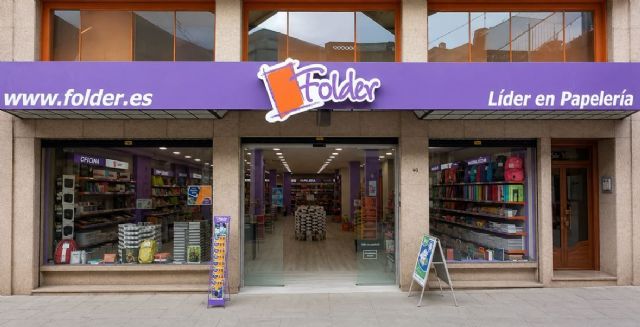
Folder combines physical retail, e-commerce and supplies for businesses and educational institutions. Founded in 2004 by the Iglesias family, it currently operates around 170 stores, including 155 in Spain and 15 in Romania. The company works with more than 65 international manufacturers and distributes nearly 8,000 products covering school and office supplies, computer consumables, furniture and related categories.
For manufacturers and retailers, the sales pattern implies an earlier deadline for product availability, particularly for categories bought without school lists. It also lengthens the period over which demand must be monitored: July sales no longer replace August and September purchases, because most early customers return later. Folder plans to exceed 200 stores and reach €120 million in revenue in 2028 while continuing to integrate its physical and digital channels.