Russia Remains the Main Buyer of Fruit and Berries from Kyrgyzstan
Russia remains the leading buyer of fruit and berries from Kyrgyzstan as the Central Asian country expands selected food shipments in 2026. Growth in fruit, berries, dairy products, honey and some vegetables contrasts with a decline in Kyrgyzstan’s overall exports.
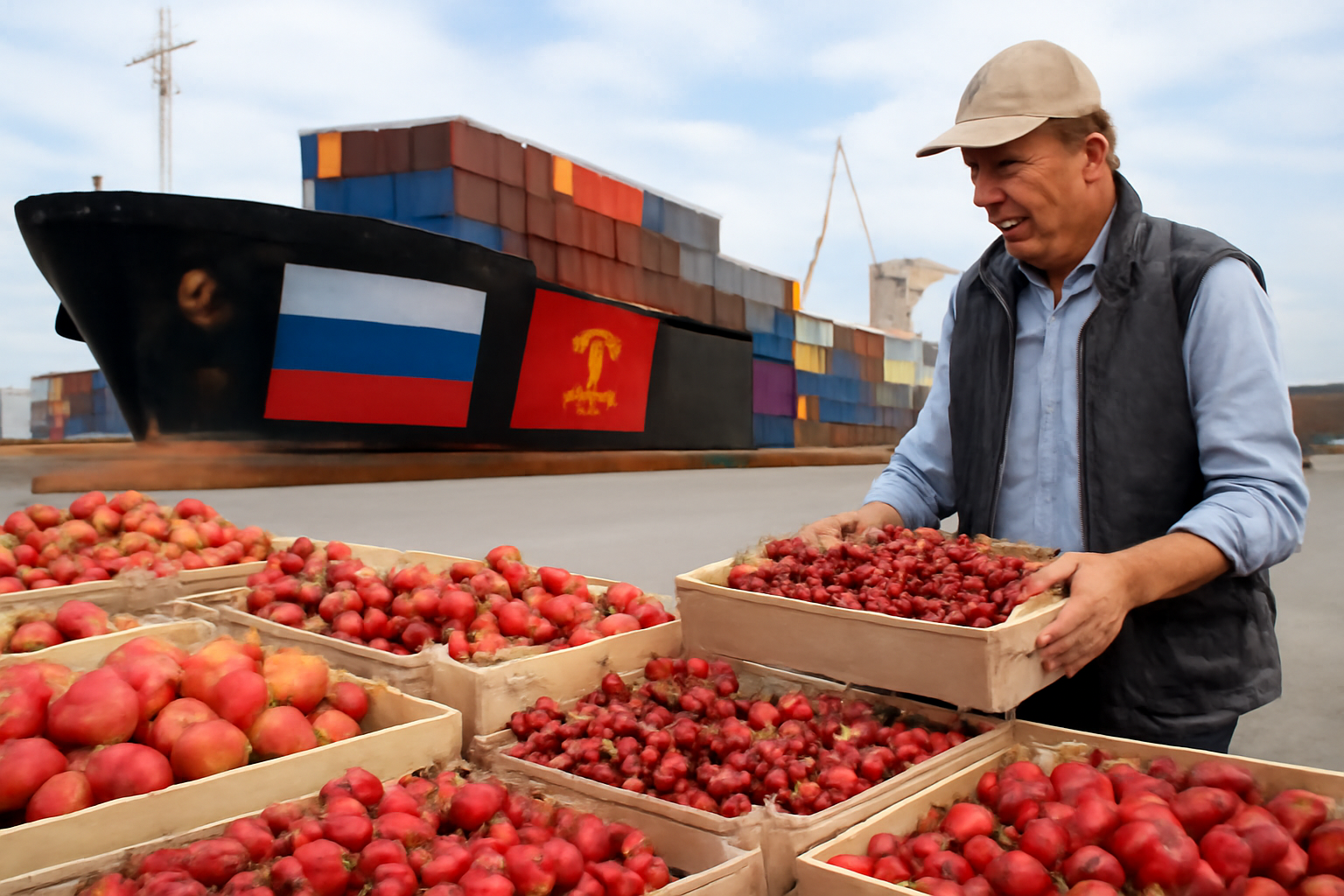
Food shipments grow despite the wider export decline
Russia remains the main buyer of fruit and berries exported from Kyrgyzstan, according to Rossiyskaya Gazeta. The position of the Russian market is especially significant because Kyrgyzstan is gradually increasing shipments of several food categories in 2026 even as the country’s total exports decline.
The products showing positive momentum include fruit, berries, dairy products, honey and certain types of vegetables. The report does not provide shipment volumes, export values or growth rates for these categories, but the contrast with the overall decline indicates that agricultural and food products are performing more strongly than some other parts of Kyrgyzstan’s export portfolio.
For Kyrgyz producers and processors, this divergence matters. Rising food shipments can support demand for farm output, collection, sorting, packaging, refrigeration and processing services. The breadth of the product list also shows that the expansion is not limited to one crop: it covers fresh produce as well as animal-origin products and processed dairy goods.
Russia anchors demand for fruit and berries
Russia’s role as the leading destination gives Kyrgyz fruit and berry suppliers access to a large nearby consumer market. Geography can be an advantage for perishable products, but commercial performance also depends on delivery times, cold-chain capacity, product quality and the ability to assemble consistent consignments from farms and traders.
The concentration of fruit and berry sales in one main destination also creates exposure. Producers, exporters and logistics companies remain sensitive to changes in Russian demand, wholesale prices and purchasing conditions. Without figures for Russia’s share of shipments, the degree of that dependence cannot be quantified from the available report, but its position as the main buyer makes developments in that market central to Kyrgyz suppliers.
Dairy products, honey and vegetables broaden the export base. These categories have different storage, certification and transport requirements, so growth across them can create opportunities for processors, laboratories, packaging companies and refrigerated logistics providers. At the same time, each additional product category requires suppliers to maintain stable quality and meet the buyer’s applicable food-safety standards.
Agriculture provides a counterweight
The increase in selected food exports does not reverse Kyrgyzstan’s broader export contraction. It does, however, identify a segment where suppliers are still finding external demand in 2026. For investors and lenders, the relevant question is whether the higher shipments are temporary or can be sustained through stronger production, processing and logistics capacity.
The absence of disclosed volumes and values limits any assessment of the sector’s contribution to national export revenue. More detailed trade data would be needed to distinguish price effects from physical shipment growth and to measure the relative performance of fruit, berries, dairy products, honey and vegetables.
For now, the available information points to a clear market pattern: food exports are expanding selectively while total exports weaken, and Russia remains the primary outlet for Kyrgyz fruit and berries. That makes continuity of supply, product quality and dependable access to the Russian market immediate priorities for companies operating along Kyrgyzstan’s agricultural value chain.