Land Degradation Threatens 33% of India’s Farmland Base
Around 33% of India’s land has been degraded in some form, News18 reported. The deterioration threatens agricultural productivity, farm incomes and the country’s long-term food security.
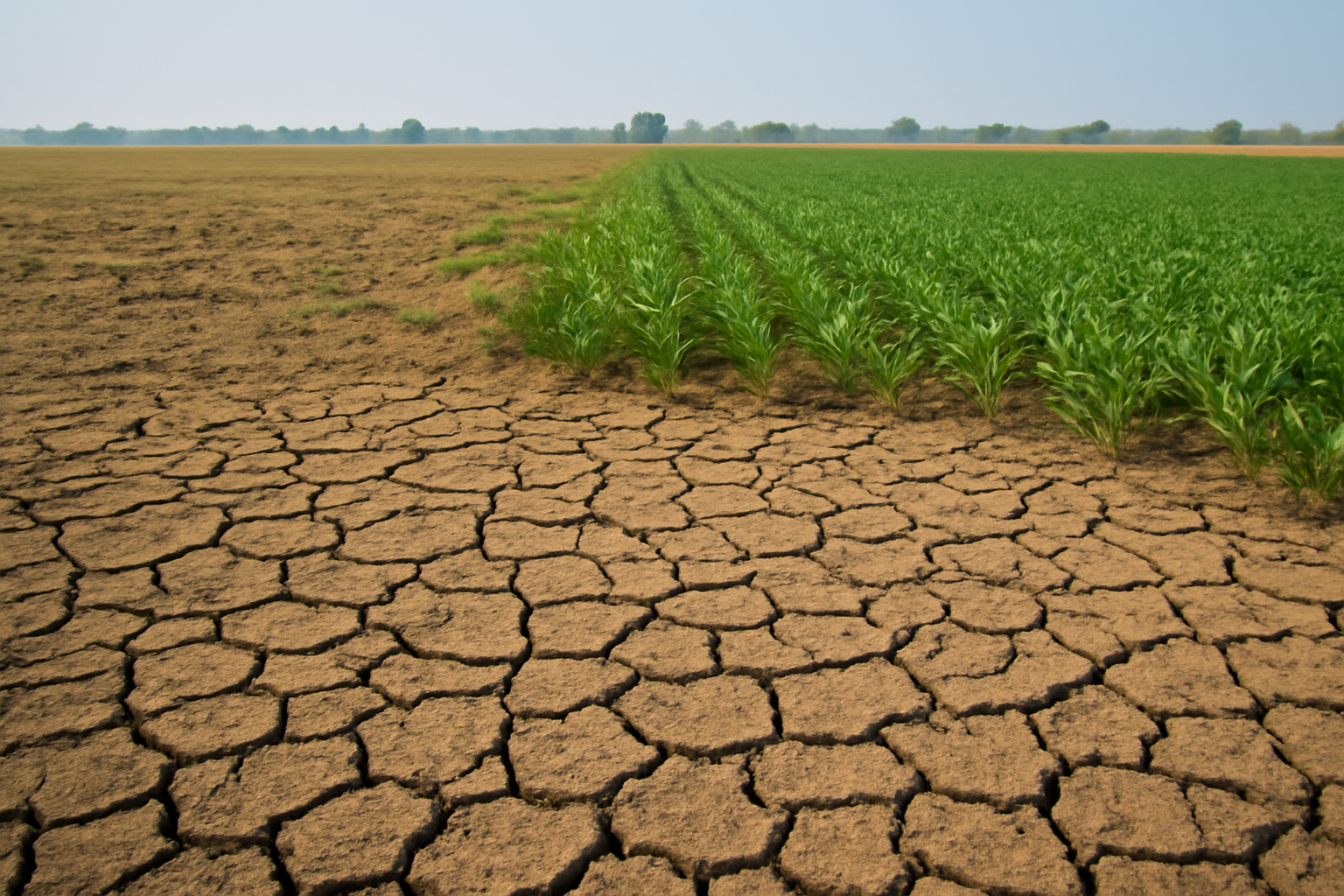
Land degradation raises risks for Indian agriculture
Around 33% of India’s land has been degraded in some form, according to News18. The scale of the problem represents a growing threat to Indian farmers because deteriorating soil can undermine agricultural productivity, weaken farm incomes and create longer-term risks for national food security.
The reported figure covers land affected by degradation in different forms; it should not be read as meaning that all of the affected area has become completely unusable. Even so, damage across roughly one-third of the country’s land base is significant for an economy in which crop production supports producers, processors and extensive agricultural supply chains.
Productivity and income pressures
Soil is a productive asset rather than merely a surface for planting. When its condition deteriorates, farmers face greater difficulty maintaining yields and the reliability of production. That directly affects the volume of crops available for sale and the income that producers can earn from their land.
The economic consequences can extend beyond the farm. Lower or less dependable output affects processors that need consistent supplies, traders managing procurement and buyers exposed to changes in domestic availability. The severity will vary by crop and location, and the available report does not provide regional or commodity-level estimates. The national figure nevertheless indicates that degradation is broad enough to be a sector-wide concern.
Land quality also influences input requirements. Farmers managing weakened soil may need to devote more attention and resources to restoring or sustaining productivity. Without supporting figures, it is not possible to quantify any change in fertilizer, irrigation or other input demand. The direction of risk is clear, however: declining soil health can make the same unit of land less productive and farming more costly or uncertain.
Food security implications
For India, the issue is not limited to current harvests. Continued degradation can reduce the resilience of domestic agriculture and make output more vulnerable over time. A country’s food security depends not only on how much it produces in a favorable season, but also on whether its land can continue producing reliably.
This creates a linked challenge for policymakers and the agricultural industry. Protecting farm incomes requires preserving the productive capacity of land, while protecting food supplies requires sufficient and stable crop output. Measures that improve soil condition would therefore affect producers as well as processors, traders and consumers.
Data gaps remain important
The material provided does not specify the period used for the 33% estimate, the number of hectares involved, the principal causes of degradation or the states most affected. It also gives no crop-loss, price or trade-flow estimates. Those details are necessary before calculating the likely impact on individual commodity markets or India’s import requirements.
What the available evidence does establish is the scale of exposure. With around one-third of India’s land reportedly degraded to some degree, soil condition has become a material production risk. The implications will depend on how much affected land remains under cultivation, how quickly its productivity is changing and whether restoration efforts can prevent further deterioration.