Georgia sets August record for peach exports to Russia at 8,300 tonnes
Georgia shipped 8,300 tonnes of peaches and nectarines to Russia in August 2026, worth $10.3 million and 18.6% more than a year earlier. The volume beats the previous August high of 8,200 tonnes set in 2022. Across the June–August season Russia took 20,100 tonnes worth $25.5 million, far ahead of Armenia, Ukraine and Belarus.
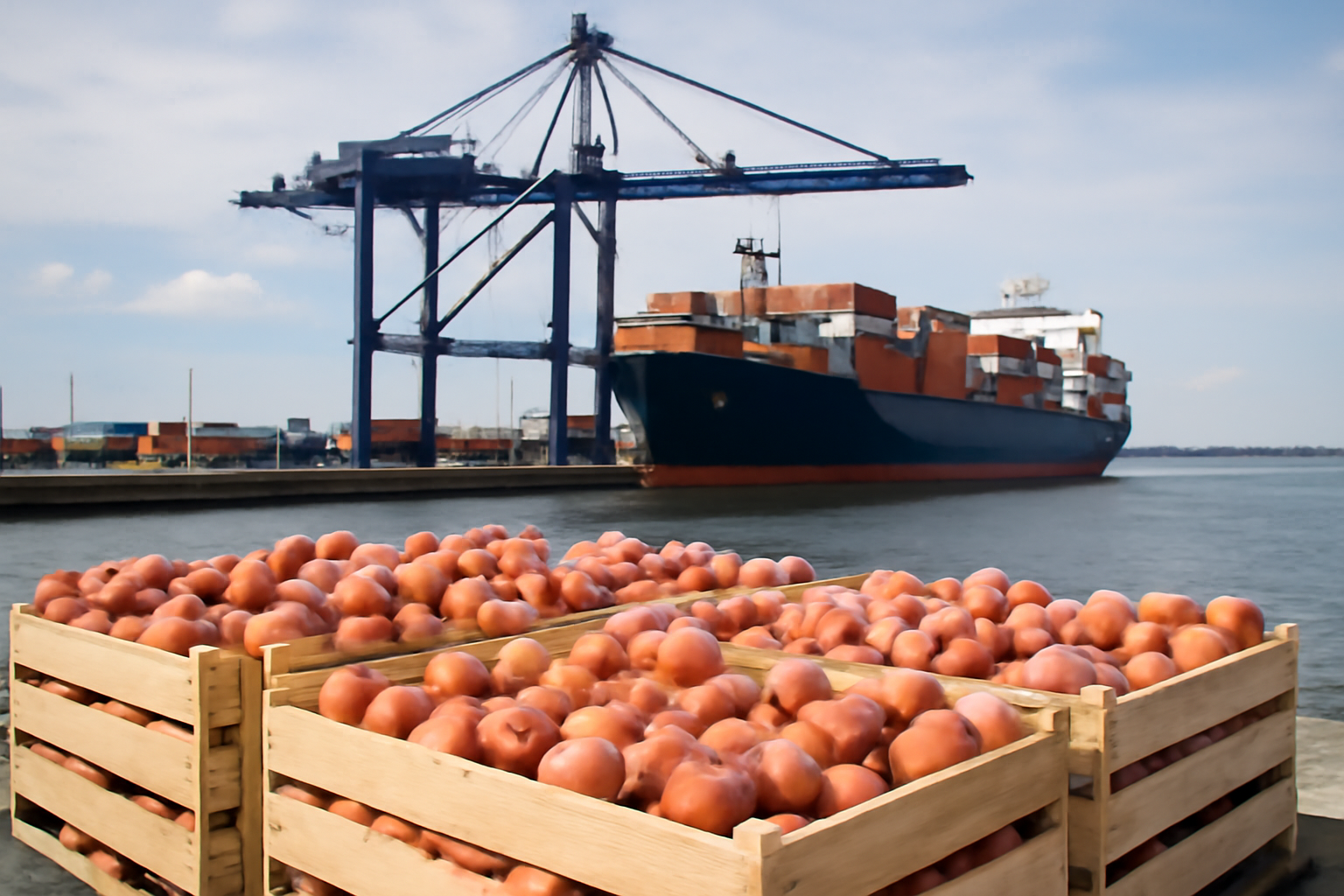
Georgia exported 8,300 tonnes of peaches and nectarines to Russia in August 2026, the largest August volume since records began, according to data from Georgia's National Statistics Office analysed by TASS. The shipments were worth $10.3 million.
August tops the 2022 peak
Export volumes in August were 18.6% higher than in the same month of 2025. That growth rate implies shipments of about 7,000 tonnes in August 2025, an increase of roughly 1,300 tonnes year on year. The previous August record dates to 2022, when Georgia sent 8,200 tonnes of peaches to Russia; this season's volume exceeds that mark by around 100 tonnes on the rounded figures published by the statistics office.
The declared value of the August consignments, $10.3 million against 8,300 tonnes, implies an average export price close to $1,240 per tonne, or about $1.24 per kilogram before customs clearance in Russia and domestic distribution costs. That is a border-level figure and does not reflect wholesale or retail pricing inside the importing market.
Summer season reaches 20,100 tonnes
Over the full June–August window Georgian suppliers delivered 20,100 tonnes of peaches and nectarines to Russia with a combined value of $25.5 million, the same statistics show. August alone accounted for about 41% of the seasonal volume and roughly 40% of its value, confirming that the bulk of Georgian stone fruit reaches the Russian market in the final month of the summer campaign.
The seasonal average price works out at close to $1,270 per tonne, marginally above the August level. The gap indicates that fruit shipped in June and July fetched somewhat higher prices than the peak-volume month — a standard pattern for stone fruit, where early-season scarcity supports unit values before harvest supply builds and averages down.
Russia absorbs the bulk of exports
Other destinations took far smaller quantities over the same three months:
- Armenia — 976.5 tonnes
- Ukraine — 259.1 tonnes
- Belarus — 178.3 tonnes
Together these three markets absorbed about 1,414 tonnes, under 7% of the combined summer total for the four destinations. Russia therefore accounted for roughly 93% of the reported Georgian peach and nectarine exports during the season. Armenia, the second-largest buyer, took around one-twentieth of the Russian volume, and neither Ukraine nor Belarus reached 300 tonnes.
Implications for growers and buyers
For Russian importers and wholesalers, the record August inflow adds imported supply at the height of the northern-hemisphere stone fruit season, when competing volumes from other suppliers are also at their annual maximum. An average import value near $1,240 per tonne sets the landed-cost benchmark against which domestic and alternative-origin fruit competes during those weeks.
For Georgian growers and exporters, the defining feature of the trade is concentration. A single market takes more than nine-tenths of summer output, and no alternative outlet of comparable scale appears in the statistics: the second, third and fourth buyers combined do not reach 1,500 tonnes. Changes in Russian phytosanitary controls, import demand or currency conditions would pass through directly to Georgian orchard revenue, and the short shelf life of peaches and nectarines leaves limited room to redirect volumes within a season.
The 2026 result also shows that the 2022 record was not a one-off spike. With August volumes above 8,000 tonnes in both years and a seasonal total above 20,000 tonnes, Georgian supply to the Russian market has established a level that logistics operators, cold-chain providers and wholesale buyers can plan against from year to year.