Concentrated Supply Shapes the $2.7 Billion Global Hazelnut Trade in 2025
Global hazelnut exports reached $2.7 billion in 2025, with five countries controlling 83.3% of the market. Turkey remained the leader despite a 29.3% export decline, while Chile more than doubled its sales and higher processed-kernel prices highlighted the value of processing.
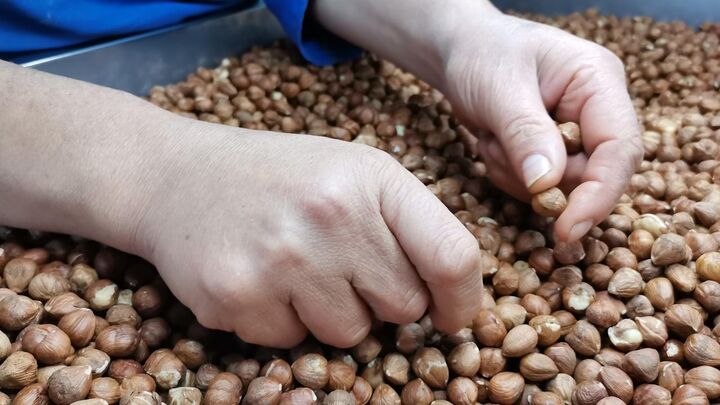
Five exporters control most global supply
Global hazelnut exports reached $2.7 billion in 2025, according to trade figures published by World’s Top Exports and reported by khodroyab24.ir. Shelled and processed hazelnuts generated about 91.7% of total export value, underlining the commercial weight of processing in a market serving chocolate, confectionery, dessert and other food manufacturers.
Supply remained highly concentrated. Turkey, Chile, the United States, Italy and Azerbaijan together accounted for 83.3% of global exports. This concentration leaves buyers exposed to production and market changes in a small group of origins, particularly Turkey, which remained the largest producer and exporter.
Turkey exported about $1.1 billion of hazelnuts, equivalent to 39.5% of the global total. However, its exports fell by approximately 29.3% from 2024. The report said the decline could reflect production volatility, weather conditions or changes in Turkey’s domestic market, without identifying a single cause.
Chile gains ground as export prices rise
Chile ranked second with exports of $505 million and an 18.7% market share. Its exports increased 113% year on year, the sharpest reported shift among the leading suppliers. The expansion reflects investment in modern orchards, mechanisation and access to international markets, strengthening Chile’s position against established exporters.
The United States followed with exports of $259 million, ahead of Italy at $249 million, Azerbaijan at $171 million and Georgia at $165 million. The results also point to a growing role for the Caucasus. Italy’s presence among both major exporters and importers reflects its position as a European processing and re-export centre.
Export prices rose strongly in 2025. The average price for in-shell hazelnuts reached $4,782 per tonne, up 33.9% from 2024, while shelled hazelnuts averaged $9,861 per tonne, an increase of 18.9%. The report linked the rise potentially to restricted supply in some producing countries, higher processing and transport costs, and stronger food-industry demand. The wide price gap shows why processing, packaging and semi-finished products capture more value than raw-nut exports.
Europe dominates imports while Iran seeks a larger role
European countries absorbed about 79.4% of global hazelnut imports. Germany was the largest importer at $794.5 million and represented more than 30% of the world total, reflecting its importance to Europe’s chocolate and confectionery supply chain. Italy imported $552.8 million, followed by France at $237 million, Canada at $165.8 million and Poland at $114.7 million.
Iran remained a medium-sized producer with cultivation concentrated in Gilan province, particularly Rudsar county, but its share of global trade was limited. The report cited modest production scale, weak industrial processing and packaging, the absence of an internationally recognised Iranian hazelnut brand, export constraints and restricted access to European markets. Iran nevertheless has proximity to Russia, Iraq and Central Asia, as well as scope to develop hazelnut paste, powder and confectionery ingredients. Capturing more regional trade will depend on investment in orchards, processing and market access; challenging Turkey and Chile globally remains difficult in the short term. Demand is expected to grow moderately in 2026, while prices may remain relatively high unless Turkish supply increases significantly.