Capesize vessels lead 2026 dry-bulk freight gains as long-haul iron ore supports demand
Average Capesize freight rates through mid-August rose 64.0% year on year, outpacing gains for Panamax, Supramax and Handysize vessels. Long-haul iron ore demand and limited new Capesize capacity could sustain the premium, while fleet growth constrains smaller segments.
Large vessels record the strongest recovery
Freight rates for large dry-bulk carriers have risen much faster than those for smaller vessels in 2026, reflecting stronger long-haul demand and differences in fleet supply. According to a mid-year market report from the Korea Ocean Business Corporation, average rates increased across every major vessel class from the start of the year through mid-August compared with the same period last year.
Capesize vessels of more than 100,000 tonnes, used mainly to carry iron ore and coal, posted the largest increase at 64.0%. Panamax rates rose 52.1%, followed by Supramax at 45.9% and Handysize at 38.3%. The figures show that the recovery has reached the entire dry-bulk market, but that its benefits are concentrated most heavily in the largest ships.
Low base explains only part of the increase
The year-on-year percentages partly reflect weak conditions in the previous year. Rates during the corresponding period last year were approximately 19% to 26% below their 2024 levels, depending on vessel class. However, the report found that current rates also remain above 2024 averages, indicating that the gains cannot be attributed solely to a statistical base effect.
Compared with 2024, average Capesize rates were 31.6% higher. Panamax rates were up 13.2%, Supramax 9.2% and Handysize 11.6%. All four vessel classes were also trading above their long-term averages. Capesize stood out again, with rates more than twice the long-term average, according to the corporation.
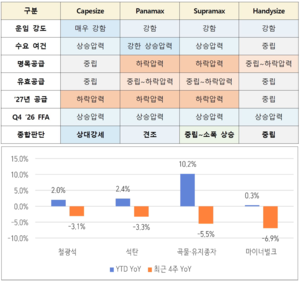
The divergence reflects the cargo and route exposure of each segment. Capesize vessels are particularly dependent on large iron ore movements, where long sailing distances can absorb more vessel capacity. The segment is also expected to receive relatively few new ships, strengthening the effect of continued long-haul iron ore demand on available tonnage and freight prices.
Fleet growth limits smaller-ship upside
The outlook is less supportive for Panamax and Supramax operators. Grain and coal demand should continue to provide cargoes for Panamax vessels, but the arrival of new ships is expected to limit further rate increases. For Supramax, higher grain volumes are a positive factor, while fleet additions and stagnant minor-bulk traffic remain significant constraints.
The Korea Ocean Business Corporation expects dry-bulk rates to remain above last year's levels through the end of 2026 if seasonal cargo volumes recover to some extent between September and December following the recent slowdown in shipments. It nevertheless expects performance to remain differentiated by vessel size, cargo mix and route structure rather than moving uniformly across the market.
Iron ore, grain and coal flows will set direction
The report identified iron ore shipments from Brazil, Australia and Guinea as key variables for the rest of the year. Grain exports from the United States and South America, coal demand in China and India, and the amount of capacity actually made available by newbuilding deliveries will also influence rates.
For shipowners, charterers and commodity traders, the central question is whether seasonal cargo recovery can absorb the expanding fleet. Capesize has the strongest position because long-distance iron ore cargoes coincide with comparatively limited vessel additions. Smaller classes face a more balanced market: cargo demand may improve, but additional capacity could prevent their rates from matching the gains recorded by the largest carriers.