Afghanistan Starts Sheep Meat Exports from Balkh to Uzbekistan and Tajikistan
Afghanistan's Taliban administration has begun exporting sheep meat from Balkh province to Uzbekistan and Tajikistan, with the Balkh slaughterhouse reporting meat from 20,000 to 30,000 head of sheep shipped monthly, mostly via the Hairatan crossing. Butchers in Mazar-i-Sharif say lamb prices have risen by up to 1,500 afghanis per head since exports began. Livestock and environmental specialists warn that slaughtering heavier, higher-grade animals for export could shrink the national flock.
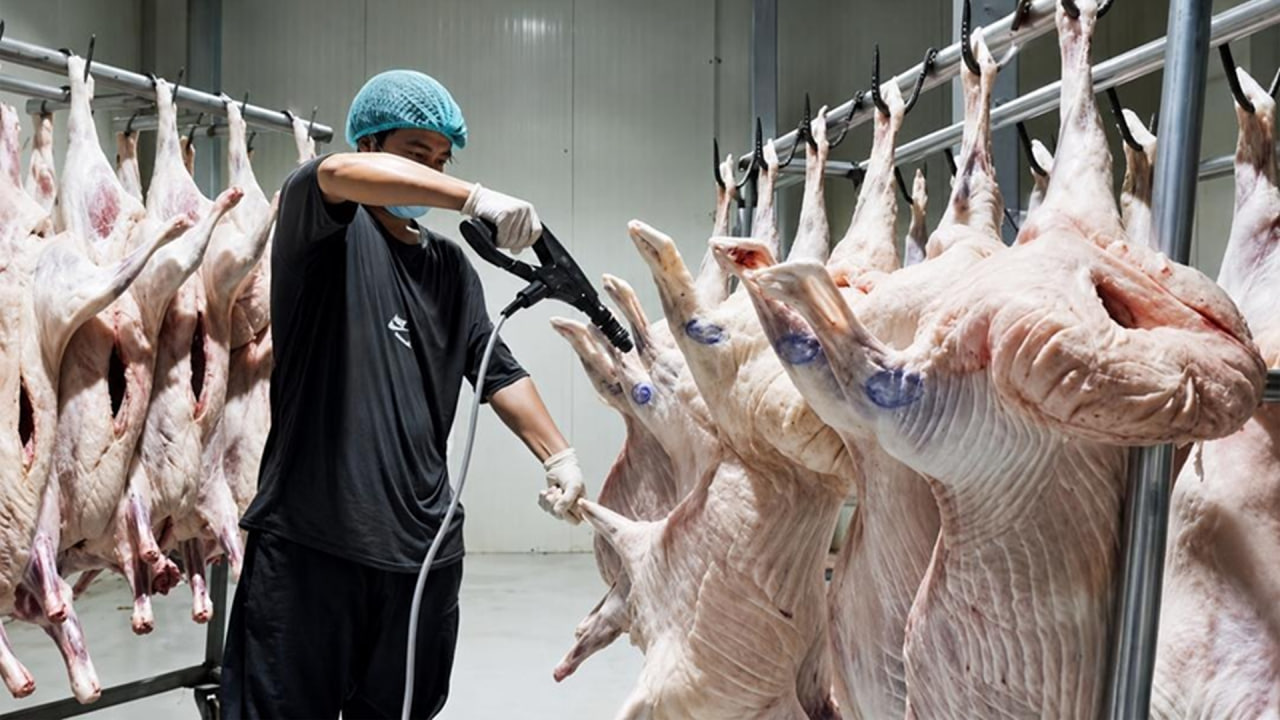
Afghanistan has begun commercial exports of sheep meat from the northern province of Balkh to Uzbekistan and Tajikistan, a trade the Taliban administration presents as evidence of broader export growth. According to the Kabul-based newspaper Etilaatroz, the state-run Balkh slaughterhouse started the shipments in the month of Jawza of the current year, marking the first time sheep meat has moved from the facility to the two Central Asian markets.
Most of the volume crosses at Hairatan, the main road and rail gateway between northern Afghanistan and Uzbekistan. Officials at the slaughterhouse told Etilaatroz that meat from 20,000 to 30,000 head of sheep is exported to the two countries each month after slaughter, although they did not specify the period the figure covers.
Slaughterhouse Says Breeding Stock Is Protected
Abdul Qahar Ahmadi, who runs the Balkh slaughterhouse, said animals are slaughtered under sanitary rules before the meat is shipped, a control intended to prevent low-quality product from leaving under the Afghan name. He said the operation follows Ministry of Agriculture standards and a memorandum of understanding signed between Afghanistan and Uzbekistan and Tajikistan.
"Under the standards of the Ministry of Agriculture and the memorandum of understanding signed between Afghanistan and the countries of Uzbekistan and Tajikistan, we do not slaughter female sheep, which are effective in increasing the flock," Ahmadi said, adding that the slaughterhouse also tries to ensure that the animals processed are of suitable weight. He said sheep breeds at risk of extinction are likewise excluded from slaughter for export, to avoid damaging the livestock base.
Domestic Prices Move Against Buyers
Butchers in Mazar-i-Sharif describe a different effect on the ground. Nematullah, a butcher in the city, told Etilaatroz that the price of a lamb has risen by as much as 1,500 afghanis per head since exports started, and that the higher meat price has cut his customer numbers.
"Most of our sales are lamb meat. Previously we did not pay more than four thousand afghanis for a lamb, but now we have to pay up to five thousand afghanis," he said. "When exports began, livestock prices went up and finding suitable sheep for the domestic market also became harder." In his assessment, without the meat exports the retail price of lamb could fall to around 370 afghanis per kilogram; with exports continuing, he does not expect that decline.
Hamidullah, another Mazar-i-Sharif butcher, said the fatter animals with better meat are being bought primarily for export, leaving thinner sheep in the local market. "Previously we bought a sheep for five to six thousand afghanis, but now the cheapest sheep is six thousand five hundred to seven thousand afghanis," he said, adding that well-fed animals are being taken to the state slaughterhouse for export to Uzbekistan and that the livestock market now mostly offers lean sheep.
Residents put retail lamb in Mazar-i-Sharif at 450 to 500 afghanis per kilogram. Qurbanshah, who shines shoes at a city intersection and earns up to 250 afghanis on a good day, said his family had not bought meat for six months. Atiqullah, a government school teacher in Balkh earning 8,000 afghanis a month, said he has also been unable to buy sheep or beef for more than six months.
Herd Capacity and Drought
Etilaatroz reported that exports have begun while Afghanistan has not reached self-sufficiency in sheep and beef production, and while successive droughts have weakened livestock farming and reduced animal numbers. Critics quoted by the paper said it is unclear how far domestic market demand and Afghanistan's livestock production capacity were assessed before the trade was opened.
An environmental specialist in Balkh, identified under the pseudonym Azizullah, said falling rainfall, less snow and declining groundwater levels have made fodder harder to obtain. "Our studies show that livestock birth rates have fallen and rebuilding flocks becomes harder every year," he said, warning that rising export demand could push more herders to sell animals that represent their core capital. He called for the government to establish the number of sheep, birth rates, annual losses and domestic demand before determining any exportable surplus.
A second livestock specialist in Balkh, using the pseudonym Ajmal, warned that slaughtering females or breeding animals for export would reduce animal numbers in the near term and cut meat production capacity in later years. Specialists cited by Etilaatroz recommended an annual export ceiling, a ban on slaughtering female and breeding animals, an accurate livestock census, yearly review of births and losses, support for herders on water and fodder, and restoration of degraded pasture.