






"Latin America and the Caribbean" region includes following countries:
 Argentina
 Bolivia
 Brazil
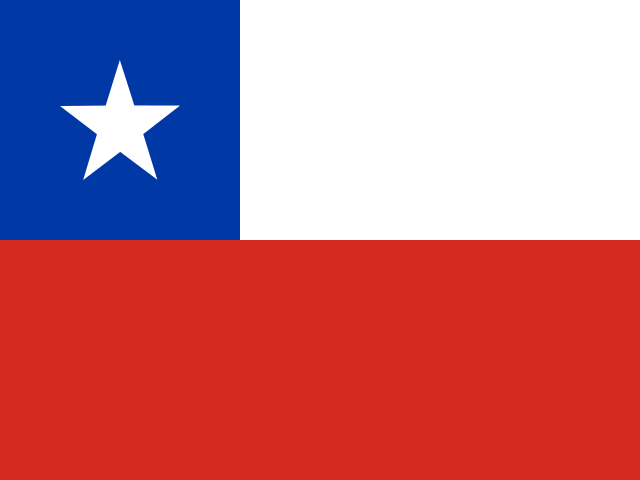 Chile
Chile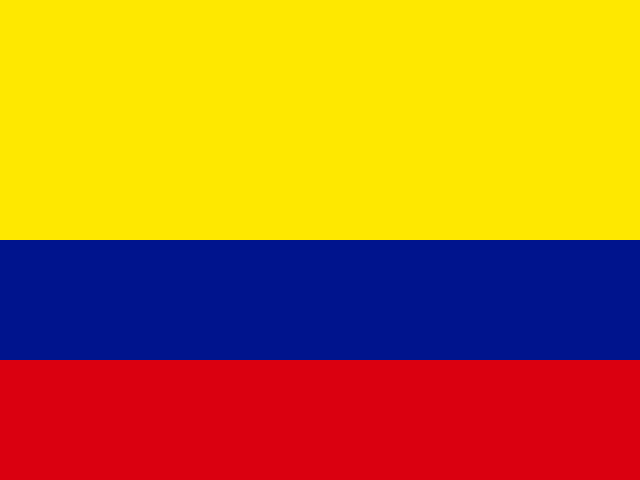 Colombia
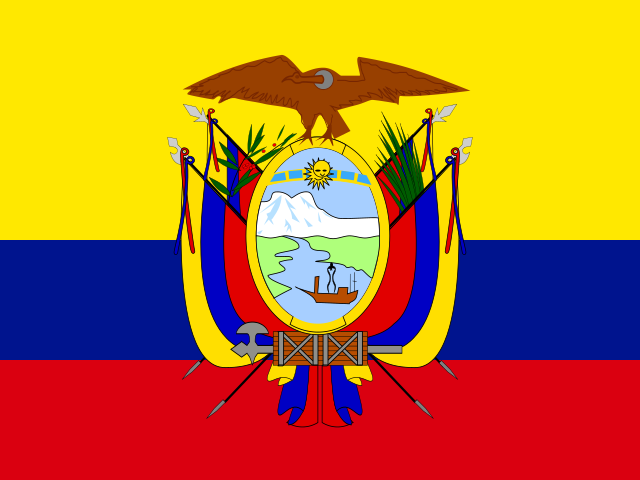 Ecuador
 Falkland Islands (Malvinas)
 French Guiana
 Guyana
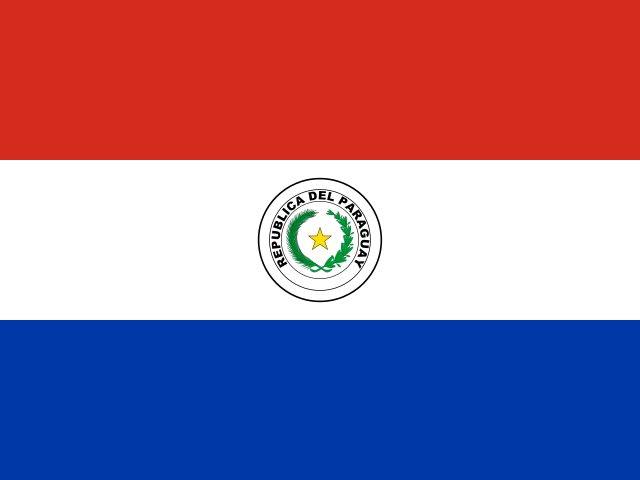 Paraguay
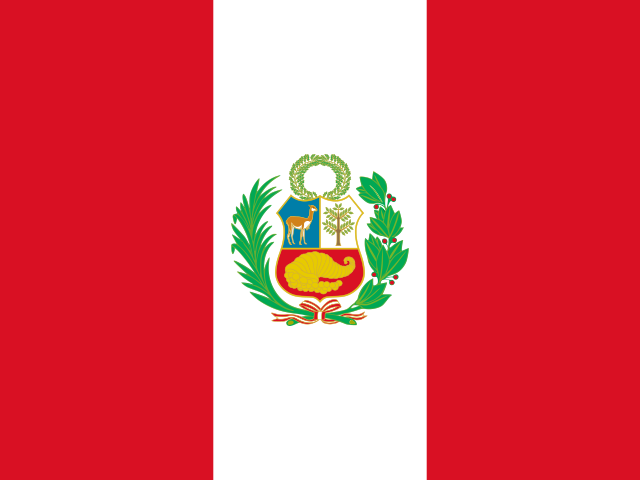 Peru
Peru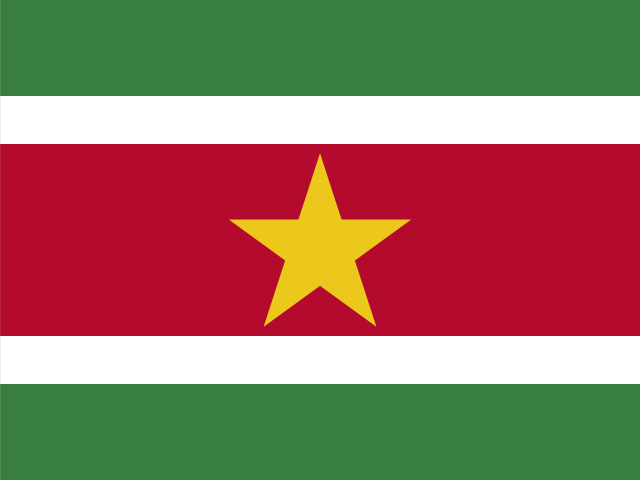 Suriname
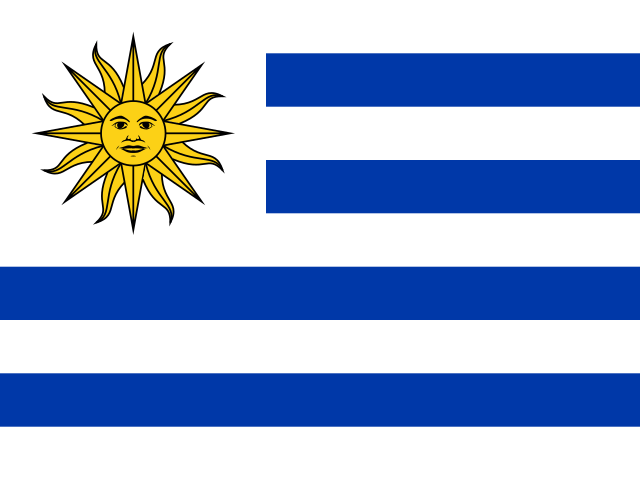 Uruguay
 Venezuela
 Belize
 Costa Rica
 El Salvador
 Guatemala
 Honduras
 Mexico
 Nicaragua
 Panama
 Antigua and Barbuda
 the Bahamas
 Barbados
 British Virgin Islands
 Cayman Islands
 Cuba
Cuba Dominica
 Dominican Republic
 Grenada
 Guadeloupe
 Haiti
Haiti Jamaica
 Martinique
 Montserrat
 Curacao
 Aruba
Aruba Saint Maarten (Dutch part)
 Bonaire
 Puerto Rico
 Saint Kitts and Nevis
 Anguilla
 Saint Lucia
 Saint-Martin (French Part)
 Saint Vincent and the Grenadines
 Trinidad and Tobago
 Turks and Caicos Islands
 United States Virgin Islands
Earlier Report Observations
From 2018 to 2020, the vanilla market in Latin America and the Caribbean expanded significantly, with volume rising from 333 thousand tons to 471 thousand tons. This growth was primarily driven by increasing demand from the food, beverage, and pharmaceutical industries, which consumed more vanilla for various products. Additionally, in Mexico, a key producer, widespread artificial pollination led to overproduction, boosting available supply and supporting market volume despite the onset of the COVID-19 pandemic, which initially dampened demand in some sectors.
After peaking in 2020, the market entered a period of contraction, falling to 353 thousand tons by 2023. Production challenges became prominent, as fungal infections and persistent drought in Mexican growing regions reduced harvests and affected quality. Global supply chain disruptions and volatility in availability further constrained trade flows, while shifting consumer preferences toward organic and natural vanilla began reshaping demand patterns within the region.
Throughout the period, the market was influenced by the broader trend toward natural ingredients, with major food companies like Nestlé and General Mills incorporating vanilla into their products. Although regulatory changes were not highlighted, the combination of agricultural constraints and evolving demand fundamentals defined the market's trajectory from growth to decline.
Table of content
- 1. Disclaimer
- 2. Terms of use of the report
- 3. Product codes in the statistical classifications used in the report
-
4. Key Market Indicators and Trends
-
4.1. Key Market Indicators
-
4.1.1. In kind
- 4.1.1.1. Production, 2018-2023
- 4.1.1.2. Imports, 2018-2024
- 4.1.1.3. Exports, 2018-2024
- 4.1.1.4. Market size, 2018-2023
-
4.1.1. In kind
- 4.2. Market Trends and Factors
-
4.1. Key Market Indicators
-
5. Production
-
5.1. Production in Latin America and the Caribbean
- 5.1.1. Annual dynamics of production in Latin America and the Caribbean in kind, 2018-2023, t
-
5.2. Global production by Country, 2018-2023
- 5.2.1. Annual dynamics of production by macroregions in kind, 2018-2023, t
- 5.2.2. Dynamics of production structure by macroregions in kind, 2018-2023
- 5.2.3. Annual dynamics of production by country in kind, 2018-2023, t
- 5.2.4. Structure of production by countries in kind, 2018-2023
- 5.2.5. Dynamics of peoduction structure by countries in kind, 2018-2023
-
5.1. Production in Latin America and the Caribbean
-
6. Imports
-
6.1. Imports (Direct Data*)
- 6.1.1. Imports - Total information
-
6.1.2. Imports in kind, t
- 6.1.2.1. Annual dynamics of product's imports to Argentina in kind, 2018-2024, t
- 6.1.2.2. Dynamics of product's imports in kind to Argentina by countries, 2018-2024, t
- 6.1.2.3. Structure of product's imports in kind by countries, 2018-2024
-
6.1.3. Imports in value, K $ US
- 6.1.3.1. Annual dynamics of product's imports to Argentina in value, 2018-2024, K $ US
- 6.1.3.2. Dynamics of product's imports in value to Argentina by countries, 2018-2024, K $ US
- 6.1.3.3. Structure of product's imports in value by countries, 2018-2024
-
6.1.4. Average price of product's imports, $ US/kg
- 6.1.4.1. Annual dynamics of average price of product's imports to Argentina, 2018-2024, $ US/kg
- 6.1.4.2. Dynamics of average price of product's imports to Argentina by countries, 2018-2024, $ US/kg
-
6.2. Imports (Mirror Data)
- 6.2.1. Imports - Total information
-
6.2.2. Imports in kind, t
- 6.2.2.1. Annual dynamics of product's imports to Argentina in kind, 2018-2024, t
- 6.2.2.2. Dynamics of product's imports in kind to Argentina by countries, 2018-2024, t
- 6.2.2.3. Structure of product's imports in kind by countries, 2018-2024
-
6.2.3. Imports in value, K $ US
- 6.2.3.1. Annual dynamics of product's imports to Argentina in value, 2018-2024, K $ US
- 6.2.3.2. Dynamics of product's imports in value to Argentina by countries, 2018-2024, K $ US
- 6.2.3.3. Structure of product's imports in value by countries, 2018-2024
-
6.2.4. Average price of product's imports, $ US/kg
- 6.2.4.1. Annual dynamics of average price of product's imports to Argentina, 2018-2024, $ US/kg
- 6.2.4.2. Dynamics of average price of product's imports to Argentina by countries, 2018-2024, $ US/kg
-
6.1. Imports (Direct Data*)
-
7. Exports
-
7.1. Exports (Direct Data*)
- 7.1.1. Exports - Total information
-
7.1.2. Exports in kind, t
- 7.1.2.1. Annual dynamics of product's exports from Argentina in kind, 2018-2024, t
- 7.1.2.2. Dynamics of product's exports in kind from Argentina by countries, 2018-2024, t
- 7.1.2.3. Structure of product's exports in kind by countries, 2018-2024
-
7.1.3. Exports in value, K $ US
- 7.1.3.1. Annual dynamics of product's exports from Argentina in value, 2018-2024, K $ US
- 7.1.3.2. Dynamics of product's exports in value from Argentina by countries, 2018-2024, K $ US
- 7.1.3.3. Structure of product's exports in value by countries, 2018-2024
-
7.1.4. Average price of product's exports, $ US/kg
- 7.1.4.1. Annual dynamics of average price of product's exports from Argentina, 2018-2024, $ US/kg
- 7.1.4.2. Dynamics of average price of product's exports from Argentina by countries, 2018-2024, $ US/kg
-
7.2. Exports (Mirror Data)
- 7.2.1. Exports - Total information
-
7.2.2. Exports in kind, t
- 7.2.2.1. Annual dynamics of product's exports from Argentina in kind, 2018-2024, t
- 7.2.2.2. Dynamics of product's exports in kind from Argentina by countries, 2018-2024, t
- 7.2.2.3. Structure of product's exports in kind by countries, 2018-2024
-
7.2.3. Exports in value, K $ US
- 7.2.3.1. Annual dynamics of product's exports from Argentina in value, 2018-2024, K $ US
- 7.2.3.2. Dynamics of product's exports in value from Argentina by countries, 2018-2024, K $ US
- 7.2.3.3. Structure of product's exports in value by countries, 2018-2024
-
7.2.4. Average price of product's exports, $ US/kg
- 7.2.4.1. Annual dynamics of average price of product's exports from Argentina, 2018-2024, $ US/kg
- 7.2.4.2. Dynamics of average price of product's exports from Argentina by countries, 2018-2024, $ US/kg
-
7.1. Exports (Direct Data*)
-
8. Trade balance
-
8.1. Trade balance (Direct Data)
- 8.1.1. In kind, t
- 8.1.2. In value, K $ US
-
8.2. Trade balance (Mirror Data)
- 8.2.1. In kind, t
- 8.2.2. In value, K $ US
-
8.1. Trade balance (Direct Data)
-
9. Top buying and selling countries, 2018-2024
-
9.1. Direct Data
- 9.1.1. Import in Value by Countries-buyers
- 9.1.2. Export in Value by Countries-suppliers
-
9.2. Mirror Data
- 9.2.1. Import in Value by Countries-buyers
- 9.2.2. Export in Value by Countries-suppliers
-
9.1. Direct Data
Production vanilla in Latin America and the Caribbean
In kind, 2017-2020, t
Top producers of vanilla, 2017-2020
World map of production of vanilla, 2017-2020
Vanilla production in Latin America and the Caribbean grew for the second year in a row. In 2020, the region produced 588.7 t of vanilla, marking a 12.8% increase from the previous year. Looking at the period from 2017 to 2020, production rose by 14.3%, which translates to an average annual growth rate of 4.6%. The lowest production level was recorded in 2018 at 494.7 t, with the largest decline that year being 3.9%.
Annual dynamics of production in Latin America and the Caribbean in kind, 2017-2020, t
| Parameter | 2018 | 2019 | 2020 | CAGR | |
|---|---|---|---|---|---|
| 1 | Change from last year | (3.9%) | 5.5% | 12.8% | 4.6% |
In value, 2017-2020, K $ US
Following a two-year decline, vanilla production in Latin America and the Caribbean rebounded. In 2020, the output was valued at 1 691 K $ US, representing a significant year-on-year increase of 30.5%. Over the 2017-2020 period, production grew by 5.4%, averaging an annualized rate of 1.8%. The minimum value occurred in 2019 at 1 295 K $ US, while the largest drop was in 2018 at 15.9%.
Annual dynamics of production in Latin America and the Caribbean in value, 2017-2020, K $ US
| Parameter | 2018 | 2019 | 2020 | CAGR | |
|---|---|---|---|---|---|
| 1 | Change from last year | (15.9%) | (4.0%) | 30.5% | 1.8% |
Exports vanilla from Latin America and the Caribbean
Exports in kind, t
Vanilla exports from Latin America and the Caribbean fell for the third consecutive year. In 2020, export volume reached 177.6 t, showing a substantial decrease of 17.3% compared to 2019. From 2017 to 2020, exports declined by 38.7%, with an average annual reduction rate of 15.1%.
Annual dynamics of product's exports from Latin America and the Caribbean in kind, 2017-2020, t
| Parameter | 2018 | 2019 | 2020 | CAGR | |
|---|---|---|---|---|---|
| 1 | Change from last year | (17.1%) | (10.7%) | (17.3%) | (15.1%) |
Between 2017 and 2020, the United States, Canada, and Spain were the primary markets for vanilla exports in kind. The United States accounted for 59.5% of exports, Canada for 2.7%, and Spain for 2.1%. Together, these three countries made up 64.3% of total export flows.
Structure of product's exports in kind by countries, 2017-2020
World map of product's exports from Latin America and the Caribbean in kind, 2017-2020
Exports in value, K $ US
Vanilla exports from Latin America and the Caribbean continued to decline for the third year in a row. In 2020, exports totaled 510 K $ US, down by 4.3% from the previous year. Over the 2017-2020 period, exports decreased by 43.5%, averaging an annualized decline of 17.3%.
Annual dynamics of product's exports from Latin America and the Caribbean in value, 2017-2020, K $ US
| Parameter | 2018 | 2019 | 2020 | CAGR | |
|---|---|---|---|---|---|
| 1 | Change from last year | (27.4%) | (18.7%) | (4.3%) | (17.3%) |
From 2017 to 2020, the United States, Japan, and Spain consistently served as the main destinations for vanilla exports in value terms. The United States represented 57.2% of exports, Japan 5.1%, and Spain 3.6%. Combined, these three countries accounted for 65.9% of total export flows.
Structure of product's exports in value by countries, 2017-2020
World map of product's exports from Latin America and the Caribbean in value, 2017-2020
Imports vanilla to Latin America and the Caribbean
Imports in kind, t
Vanilla imports into Latin America and the Caribbean dropped for the third consecutive year. In 2020, import volume stood at 59.4 t, a decrease of 13.1% compared to the previous year. Over the 2017-2020 period, imports fell by 37.4%, with a compound annual growth rate (CAGR) of -14.5%.
Annual dynamics of product's imports to Latin America and the Caribbean in kind, 2017-2020, t
| Parameter | 2018 | 2019 | 2020 | CAGR | |
|---|---|---|---|---|---|
| 1 | Change from last year | (17.2%) | (13.0%) | (13.1%) | (14.5%) |
During 2017-2020, the United States, France, and Spain were the largest suppliers of vanilla to Latin America and the Caribbean in kind, though they did not dominate the market. The United States contributed 30.9% of imports, France 1.5%, and Spain 1.1%. Together, these three countries represented 33.5% of total imports, with many smaller partners also involved.
Structure of product's imports in kind by countries, 2017-2020
World map of product's imports to Latin America and the Caribbean in kind, 2017-2020
Imports in value, K $ US
The market for vanilla imports in Latin America and the Caribbean experienced notable fluctuations over the period. Imports reached their lowest point in 2020 at 1 049 K $ US, down by 57.6% from the previous year. The peak occurred in 2018 at 5 621 K $ US, with the largest increase that year being 377.6%. Overall, imports in 2020 were 5.4 times lower than in 2018.
Annual dynamics of product's imports to Latin America and the Caribbean in value, 2017-2020, K $ US
| Parameter | 2018 | 2019 | 2020 | CAGR | |
|---|---|---|---|---|---|
| 1 | Change from last year | 377.6% | (55.9%) | (57.6%) | (3.8%) |
From 2017 to 2020, France, the United States, and Papua New Guinea consistently remained the main sources for vanilla imports in value terms. France accounted for 56.0% of imports, the United States for 12.9%, and Papua New Guinea for 8.4%. Together, these three countries made up 77.3% of total import flows.
Structure of product's imports in value by countries, 2017-2020
World map of product's imports to Latin America and the Caribbean in value, 2017-2020
Related Reports

Vanilla market in Cook Islands
2026-03-28
2026-03-28
Vanilla market in Eastern Asia
2026-03-28
2026-03-28




In-depth market research on this product
Global Vanilla Market 2021–2031: Size, Share, Trends and Forecast
Global market report: size, trends and forecast to 2031 · 192 pages
Why Choose Us?
Only Verified Data
No Hidden Costs or Separate Fees
Smarter Subscription Pricing
Contact Our Team
Submit your inquiry using the form below — our team will get back to you within 24 hours.