







"Latin America and the Caribbean" region includes following countries:
 Argentina
 Bolivia
 Brazil
 Chile
Chile Colombia
 Ecuador
 Falkland Islands (Malvinas)
 French Guiana
 Guyana
 Paraguay
 Peru
Peru Suriname
 Uruguay
 Venezuela
 Belize
 Costa Rica
 El Salvador
 Guatemala
 Honduras
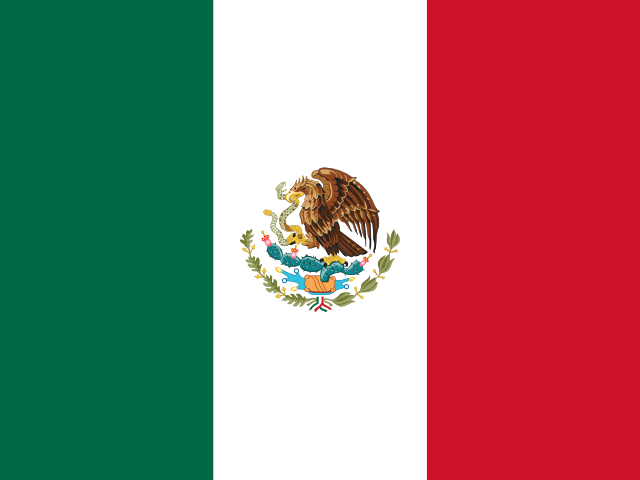 Mexico
 Nicaragua
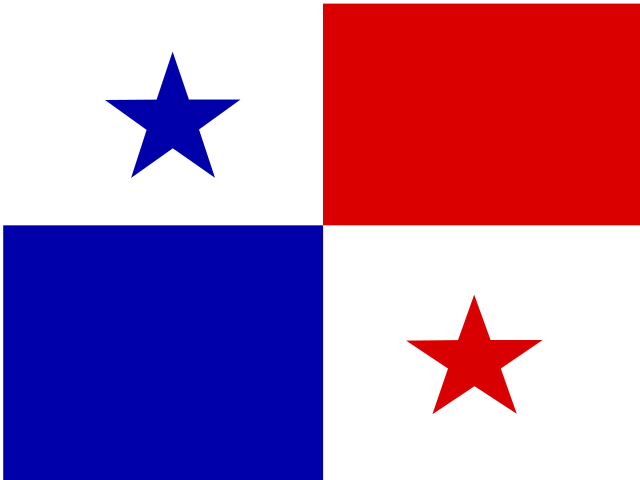 Panama
 Antigua and Barbuda
 the Bahamas
 Barbados
 British Virgin Islands
 Cayman Islands
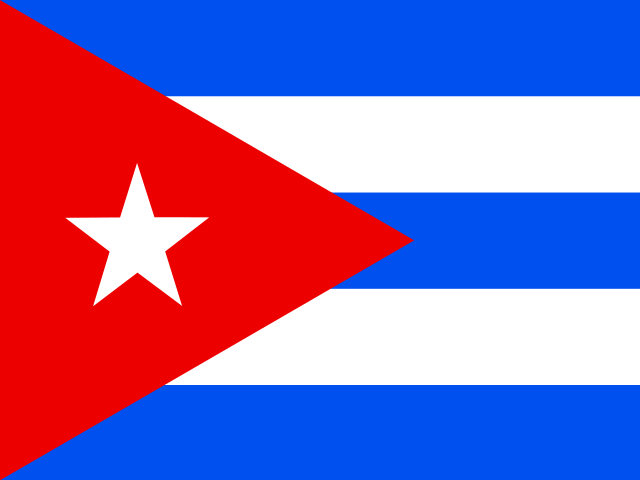 Cuba
Cuba Dominica
 Dominican Republic
 Grenada
 Guadeloupe
 Haiti
Haiti Jamaica
 Martinique
 Montserrat
 Curacao
 Aruba
Aruba Saint Maarten (Dutch part)
 Bonaire
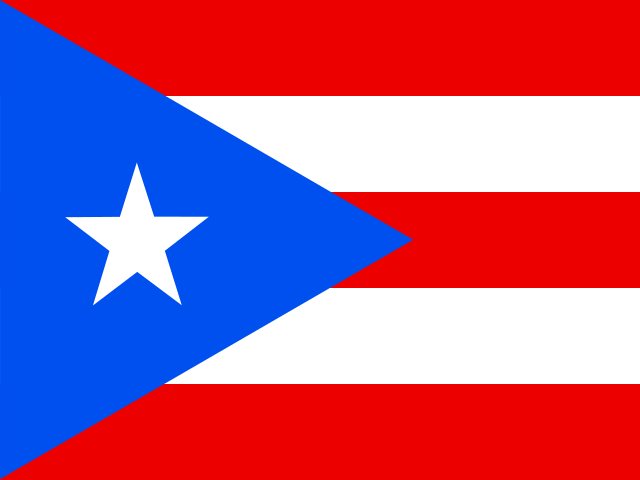 Puerto Rico
 Saint Kitts and Nevis
 Anguilla
 Saint Lucia
 Saint-Martin (French Part)
 Saint Vincent and the Grenadines
 Trinidad and Tobago
 Turks and Caicos Islands
 United States Virgin Islands
Earlier Report Observations
Between 2018 and 2021, the Latin American and Caribbean tea market volume gradually declined from 332 thousand tons to 313 thousand tons, reflecting a period of stabilization. The market expanded to 330 thousand tons in 2022, driven primarily by improvements in logistics and specialized distribution that ensured product freshness and quality, alongside growing consumer demand for sustainable packaging.
Shifts in consumer preferences toward healthier and functional beverages, accelerated by the pandemic, fueled the emergence of new segments such as bubble tea and kombucha. Innovation in flavors and formats, including ready-to-drink teas, further stimulated the market, with entry of new players and premium product launches, particularly in green tea varieties.
Regulatory changes promoting biodegradable packaging and the consolidation of major companies like Unilever (Lipton) and Tea Forte supported market trends. The rise of bubble tea, driven by urbanization and social media popularity, along with the growing kombucha market, contributed to the overall market evolution from 2018 to 2024.
Table of content
- 1. Disclaimer
- 2. Terms of use of the report
- 3. Product codes in the statistical classifications used in the report
-
4. Key Market Indicators and Trends
-
4.1. Key Market Indicators
-
4.1.1. In kind
- 4.1.1.1. Production, 2018-2023
- 4.1.1.2. Imports, 2018-2024
- 4.1.1.3. Exports, 2018-2024
- 4.1.1.4. Market size, 2018-2023
-
4.1.2. In value
- 4.1.2.1. Production, 2018-2023
- 4.1.2.2. Imports, 2018-2024
- 4.1.2.3. Exports, 2018-2024
- 4.1.2.4. Market size, 2018-2023
-
4.1.1. In kind
- 4.2. Market Trends and Factors
-
4.1. Key Market Indicators
-
5. Production
-
5.1. Production in Latin America and the Caribbean
- 5.1.1. Annual dynamics of production in Latin America and the Caribbean in kind, 2018-2023, K t
-
5.2. Global production by Country, 2018-2023
- 5.2.1. Annual dynamics of production by macroregions in kind, 2018-2023, K t
- 5.2.2. Dynamics of production structure by macroregions in kind, 2018-2023
- 5.2.3. Annual dynamics of production by country in kind, 2018-2023, K t
- 5.2.4. Structure of production by countries in kind, 2018-2023
- 5.2.5. Dynamics of peoduction structure by countries in kind, 2018-2023
-
5.1. Production in Latin America and the Caribbean
-
6. Exports
-
6.1. Exports (Direct Data*)
- 6.1.1. Exports - Total information
-
6.1.2. Exports in kind, t
- 6.1.2.1. Annual dynamics of product's exports from Argentina in kind, 2018-2024, t
- 6.1.2.2. Dynamics of product's exports in kind from Argentina by countries, 2018-2024, t
- 6.1.2.3. Structure of product's exports in kind by countries, 2018-2024
-
6.1.3. Exports in value, M $ US
- 6.1.3.1. Annual dynamics of product's exports from Argentina in value, 2018-2024, M $ US
- 6.1.3.2. Dynamics of product's exports in value from Argentina by countries, 2018-2024, M $ US
- 6.1.3.3. Structure of product's exports in value by countries, 2018-2024
-
6.1.4. Average price of product's exports, $ US/t
- 6.1.4.1. Annual dynamics of average price of product's exports from Argentina, 2018-2024, $ US/t
- 6.1.4.2. Dynamics of average price of product's exports from Argentina by countries, 2018-2024, $ US/t
-
6.2. Exports (Mirror Data)
- 6.2.1. Exports - Total information
-
6.2.2. Exports in kind, t
- 6.2.2.1. Annual dynamics of product's exports from Argentina in kind, 2018-2024, t
- 6.2.2.2. Dynamics of product's exports in kind from Argentina by countries, 2018-2024, t
- 6.2.2.3. Structure of product's exports in kind by countries, 2018-2024
-
6.2.3. Exports in value, M $ US
- 6.2.3.1. Annual dynamics of product's exports from Argentina in value, 2018-2024, M $ US
- 6.2.3.2. Dynamics of product's exports in value from Argentina by countries, 2018-2024, M $ US
- 6.2.3.3. Structure of product's exports in value by countries, 2018-2024
-
6.2.4. Average price of product's exports, $ US/t
- 6.2.4.1. Annual dynamics of average price of product's exports from Argentina, 2018-2024, $ US/t
- 6.2.4.2. Dynamics of average price of product's exports from Argentina by countries, 2018-2024, $ US/t
-
6.1. Exports (Direct Data*)
-
7. Imports
-
7.1. Imports (Direct Data*)
- 7.1.1. Imports - Total information
-
7.1.2. Imports in kind, t
- 7.1.2.1. Annual dynamics of product's imports to Argentina in kind, 2018-2024, t
- 7.1.2.2. Dynamics of product's imports in kind to Argentina by countries, 2018-2024, t
- 7.1.2.3. Structure of product's imports in kind by countries, 2018-2024
-
7.1.3. Imports in value, M $ US
- 7.1.3.1. Annual dynamics of product's imports to Argentina in value, 2018-2024, M $ US
- 7.1.3.2. Dynamics of product's imports in value to Argentina by countries, 2018-2024, M $ US
- 7.1.3.3. Structure of product's imports in value by countries, 2018-2024
-
7.1.4. Average price of product's imports, $ US/t
- 7.1.4.1. Annual dynamics of average price of product's imports to Argentina, 2018-2024, $ US/t
- 7.1.4.2. Dynamics of average price of product's imports to Argentina by countries, 2018-2024, $ US/t
-
7.2. Imports (Mirror Data)
- 7.2.1. Imports - Total information
-
7.2.2. Imports in kind, t
- 7.2.2.1. Annual dynamics of product's imports to Argentina in kind, 2018-2024, t
- 7.2.2.2. Dynamics of product's imports in kind to Argentina by countries, 2018-2024, t
- 7.2.2.3. Structure of product's imports in kind by countries, 2018-2024
-
7.2.3. Imports in value, M $ US
- 7.2.3.1. Annual dynamics of product's imports to Argentina in value, 2018-2024, M $ US
- 7.2.3.2. Dynamics of product's imports in value to Argentina by countries, 2018-2024, M $ US
- 7.2.3.3. Structure of product's imports in value by countries, 2018-2024
-
7.2.4. Average price of product's imports, $ US/t
- 7.2.4.1. Annual dynamics of average price of product's imports to Argentina, 2018-2024, $ US/t
- 7.2.4.2. Dynamics of average price of product's imports to Argentina by countries, 2018-2024, $ US/t
-
7.1. Imports (Direct Data*)
-
8. Trade balance
-
8.1. Trade balance (Direct Data)
- 8.1.1. In kind, t
- 8.1.2. In value, M $ US
-
8.2. Trade balance (Mirror Data)
- 8.2.1. In kind, t
- 8.2.2. In value, M $ US
-
8.1. Trade balance (Direct Data)
-
9. Top buying and selling countries, 2018-2024
-
9.1. Direct Data
- 9.1.1. Import in Value by Countries-buyers
- 9.1.2. Export in Value by Countries-suppliers
-
9.2. Mirror Data
- 9.2.1. Import in Value by Countries-buyers
- 9.2.2. Export in Value by Countries-suppliers
-
9.1. Direct Data
Production tea in Latin America and the Caribbean
In kind, 2017-2020, K t
Top producers of tea, 2017-2020
World map of production of tea, 2017-2020
Tea production in Latin America and the Caribbean saw a decline after two years of growth. In 2019, production reached its peak at 378.1 thousand tons, but by 2020 it had fallen to 351.5 thousand tons, representing a 7.0% decrease. Over the period from 2017 to 2020, production dropped by 5.2%, which translates to an average annual decline of 1.7%. The most significant increase occurred in 2018, with a rise of 1.4%.
Annual dynamics of production in Latin America and the Caribbean in kind, 2017-2020, K t
| Parameter | 2018 | 2019 | 2020 | CAGR | |
|---|---|---|---|---|---|
| 1 | Change from last year | 1.4% | 0.6% | (7.0%) | (1.7%) |
In value, 2017-2020, M $ US
The value of tea production in Latin America and the Caribbean declined for the second year in a row. In 2018, production value peaked at 637.6 million US dollars, but it fell by 9.5% in 2019 and further decreased by 2.9% in 2020 to 560.5 million US dollars. From 2017 to 2020, the overall decline was 10.7%, averaging 3.7% per year. The largest increase was recorded in 2018 at 1.5%.
Annual dynamics of production in Latin America and the Caribbean in value, 2017-2020, M $ US
| Parameter | 2018 | 2019 | 2020 | CAGR | |
|---|---|---|---|---|---|
| 1 | Change from last year | 1.5% | (9.5%) | (2.9%) | (3.7%) |
Exports tea from Latin America and the Caribbean
Exports in kind, t
Tea exports from Latin America and the Caribbean experienced a significant drop in 2020, falling by 12.8% to 59,000 tons compared to 2019, when exports peaked at 67,673 tons with a 7.3% increase. Over the four-year span from 2017 to 2020, exports decreased by 12.3%, equating to an annualized rate of 4.3%.
Annual dynamics of product's exports from Latin America and the Caribbean in kind, 2017-2020, t
| Parameter | 2018 | 2019 | 2020 | CAGR | |
|---|---|---|---|---|---|
| 1 | Change from last year | (6.2%) | 7.3% | (12.8%) | (4.3%) |
From 2017 to 2020, the United States remained the top buyer of tea from Latin America and the Caribbean, accounting for 64.7% of exports in volume. Poland followed with 3.5%, and Russia with 3.0%. Together, these three countries represented 71.2% of total tea exports in kind.
Structure of product's exports in kind by countries, 2017-2020
World map of product's exports from Latin America and the Caribbean in kind, 2017-2020
Exports in value, M $ US
Tea export value from Latin America and the Caribbean declined for the third consecutive year. In 2020, exports amounted to 94.1 million US dollars, marking an 8.9% decrease from 2019. Between 2017 and 2020, the overall decline was 17.5%, with an average annual rate of 6.2%.
Annual dynamics of product's exports from Latin America and the Caribbean in value, 2017-2020, M $ US
| Parameter | 2018 | 2019 | 2020 | CAGR | |
|---|---|---|---|---|---|
| 1 | Change from last year | (6.1%) | (3.5%) | (8.9%) | (6.2%) |
During 2017–2020, the United States dominated tea exports in value terms, representing 64.6% of the total. Poland contributed 3.2%, and Germany 2.9%. Collectively, these three countries accounted for 70.7% of all export flows in monetary terms.
Structure of product's exports in value by countries, 2017-2020
World map of product's exports from Latin America and the Caribbean in value, 2017-2020
Imports tea to Latin America and the Caribbean
Imports in kind, t
Tea imports into Latin America and the Caribbean surged in 2020, increasing by 33.6% to 23,307 tons from 2019, when imports hit their lowest point at 17,447 tons after an 11.6% decline. Over the period from 2017 to 2020, imports grew by 31.4%, averaging 9.5% per year.
Annual dynamics of product's imports to Latin America and the Caribbean in kind, 2017-2020, t
| Parameter | 2018 | 2019 | 2020 | CAGR | |
|---|---|---|---|---|---|
| 1 | Change from last year | 11.2% | (11.6%) | 33.6% | 9.5% |
Between 2017 and 2020, tea imports in kind to Latin America and the Caribbean were distributed among numerous countries. Sri Lanka led with 27.2% of imports, followed by the United States at 7.1% and China at 5.4%. Together, these three countries accounted for 39.6% of total import volume.
Structure of product's imports in kind by countries, 2017-2020
World map of product's imports to Latin America and the Caribbean in kind, 2017-2020
Imports in value, M $ US
Tea imports into Latin America and the Caribbean rose sharply in 2020, reaching 116.7 million US dollars, a 25.7% increase from 2019, when imports were at their lowest at 92.8 million US dollars after a 16.5% decline. From 2017 to 2020, imports increased by 19.1%, with an annualized rate of 6.0%.
Annual dynamics of product's imports to Latin America and the Caribbean in value, 2017-2020, M $ US
| Parameter | 2018 | 2019 | 2020 | CAGR | |
|---|---|---|---|---|---|
| 1 | Change from last year | 13.4% | (16.5%) | 25.7% | 6.0% |
From 2017 to 2020, Sri Lanka was the primary supplier of tea to Latin America and the Caribbean in value terms, making up 32.3% of imports. The United States followed with 13.6%, and China with 8.0%. Together, these three countries comprised 53.9% of total import value.
Structure of product's imports in value by countries, 2017-2020
World map of product's imports to Latin America and the Caribbean in value, 2017-2020
Related Reports

2026-03-28
2026-03-28
2026-03-28
2026-03-28




Why Choose Us?
Only Verified Data
No Hidden Costs or Separate Fees
Smarter Subscription Pricing
Contact Our Team
Submit your inquiry using the form below — our team will get back to you within 24 hours.