






"Central America" region includes following countries:
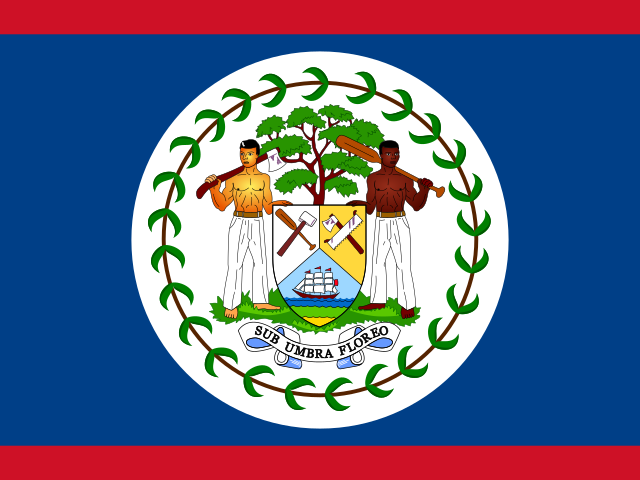 Belize
 Costa Rica
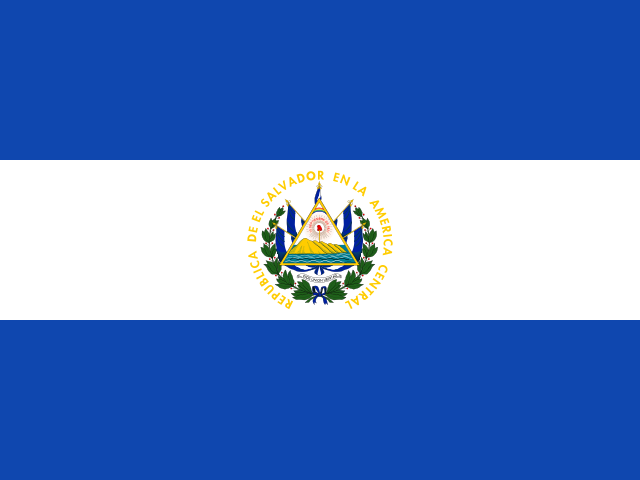 El Salvador
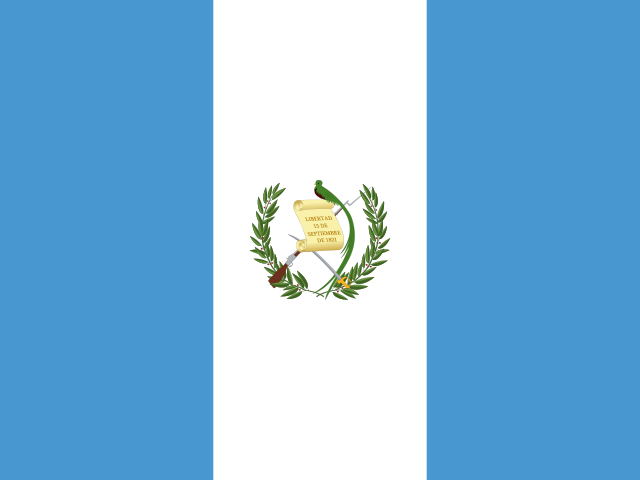 Guatemala
 Honduras
 Mexico
 Nicaragua
 Panama
Earlier Report Observations
The market for unroasted, not decaffeinated coffee in Central America stood at 235 thousand tons in 2018 but contracted to 201 thousand tons in 2019. This decline followed a 14.6% drop in regional coffee production during the 2017‑2018 agricultural cycle, which created a shortage of green beans and tightened supply. International coffee prices had also reached historically low levels in 2018, reducing producer incomes.
Market volume recovered to 238 thousand tons in 2020, aided by a Guatemalan government project that provided producers with storage, roasting modules, and machinery to add value to green beans, encouraging local processing. However, the market shrank again to 223 thousand tons in 2021 as unroasted coffee secured a place among Guatemala's top export commodities, reflecting strong external demand that diverted supply abroad. By 2022, the market expanded to 248 thousand tons, and growth continued to 276 thousand tons in 2023 when international coffee prices reached new highs, improving profitability and incentivizing production.
In 2024, legislative developments such as El Salvador's new coffee institute law modernized regulation to facilitate green bean trade, while Guatemalan supply expanded toward premium segments. International prices rose nearly 40% due to climate and supply‑chain factors, further benefiting regional exporters.
Table of content
- 1. Disclaimer
- 2. Terms of use of the report
- 3. Product codes in the statistical classifications used in the report
-
4. Key Market Indicators and Trends
-
4.1. Key Market Indicators
-
4.1.1. In kind
- 4.1.1.1. Production, 2018-2023
- 4.1.1.2. Imports, 2018-2024
- 4.1.1.3. Exports, 2018-2024
- 4.1.1.4. Market size, 2018-2023
-
4.1.1. In kind
- 4.2. Market Trends and Factors
-
4.1. Key Market Indicators
-
5. Production
-
5.1. Production in Central America
- 5.1.1. Annual dynamics of production in Central America in kind, 2018-2023, K t
-
5.2. Global production by Country, 2018-2023
- 5.2.1. Annual dynamics of production by macroregions in kind, 2018-2023, K t
- 5.2.2. Dynamics of production structure by macroregions in kind, 2018-2023
- 5.2.3. Annual dynamics of production by country in kind, 2018-2023, K t
- 5.2.4. Structure of production by countries in kind, 2018-2023
- 5.2.5. Dynamics of peoduction structure by countries in kind, 2018-2023
-
5.1. Production in Central America
-
6. Imports
-
6.1. Imports (Direct Data*)
- 6.1.1. Imports - Total information
-
6.1.2. Imports in kind, K t
- 6.1.2.1. Annual dynamics of product's imports to Belize in kind, 2018-2024, K t
- 6.1.2.2. Dynamics of product's imports in kind to Belize by countries, 2018-2024, K t
- 6.1.2.3. Structure of product's imports in kind by countries, 2018-2024
-
6.1.3. Imports in value, M $ US
- 6.1.3.1. Annual dynamics of product's imports to Belize in value, 2018-2024, M $ US
- 6.1.3.2. Dynamics of product's imports in value to Belize by countries, 2018-2024, M $ US
- 6.1.3.3. Structure of product's imports in value by countries, 2018-2024
-
6.1.4. Average price of product's imports, $ US/t
- 6.1.4.1. Annual dynamics of average price of product's imports to Belize, 2018-2024, $ US/t
- 6.1.4.2. Dynamics of average price of product's imports to Belize by countries, 2018-2024, $ US/t
-
6.2. Imports (Mirror Data)
- 6.2.1. Imports - Total information
-
6.2.2. Imports in kind, K t
- 6.2.2.1. Annual dynamics of product's imports to Belize in kind, 2018-2024, K t
- 6.2.2.2. Dynamics of product's imports in kind to Belize by countries, 2018-2024, K t
- 6.2.2.3. Structure of product's imports in kind by countries, 2018-2024
-
6.2.3. Imports in value, M $ US
- 6.2.3.1. Annual dynamics of product's imports to Belize in value, 2018-2024, M $ US
- 6.2.3.2. Dynamics of product's imports in value to Belize by countries, 2018-2024, M $ US
- 6.2.3.3. Structure of product's imports in value by countries, 2018-2024
-
6.2.4. Average price of product's imports, $ US/t
- 6.2.4.1. Annual dynamics of average price of product's imports to Belize, 2018-2024, $ US/t
- 6.2.4.2. Dynamics of average price of product's imports to Belize by countries, 2018-2024, $ US/t
-
6.1. Imports (Direct Data*)
-
7. Exports
-
7.1. Exports (Direct Data*)
- 7.1.1. Exports - Total information
-
7.1.2. Exports in kind, K t
- 7.1.2.1. Annual dynamics of product's exports from Belize in kind, 2018-2024, K t
- 7.1.2.2. Dynamics of product's exports in kind from Belize by countries, 2018-2024, K t
- 7.1.2.3. Structure of product's exports in kind by countries, 2018-2024
-
7.1.3. Exports in value, M $ US
- 7.1.3.1. Annual dynamics of product's exports from Belize in value, 2018-2024, M $ US
- 7.1.3.2. Dynamics of product's exports in value from Belize by countries, 2018-2024, M $ US
- 7.1.3.3. Structure of product's exports in value by countries, 2018-2024
-
7.1.4. Average price of product's exports, $ US/t
- 7.1.4.1. Annual dynamics of average price of product's exports from Belize, 2018-2024, $ US/t
- 7.1.4.2. Dynamics of average price of product's exports from Belize by countries, 2018-2024, $ US/t
-
7.2. Exports (Mirror Data)
- 7.2.1. Exports - Total information
-
7.2.2. Exports in kind, K t
- 7.2.2.1. Annual dynamics of product's exports from Belize in kind, 2018-2024, K t
- 7.2.2.2. Dynamics of product's exports in kind from Belize by countries, 2018-2024, K t
- 7.2.2.3. Structure of product's exports in kind by countries, 2018-2024
-
7.2.3. Exports in value, M $ US
- 7.2.3.1. Annual dynamics of product's exports from Belize in value, 2018-2024, M $ US
- 7.2.3.2. Dynamics of product's exports in value from Belize by countries, 2018-2024, M $ US
- 7.2.3.3. Structure of product's exports in value by countries, 2018-2024
-
7.2.4. Average price of product's exports, $ US/t
- 7.2.4.1. Annual dynamics of average price of product's exports from Belize, 2018-2024, $ US/t
- 7.2.4.2. Dynamics of average price of product's exports from Belize by countries, 2018-2024, $ US/t
-
7.1. Exports (Direct Data*)
-
8. Trade balance
-
8.1. Trade balance (Direct Data)
- 8.1.1. In kind, K t
- 8.1.2. In value, M $ US
-
8.2. Trade balance (Mirror Data)
- 8.2.1. In kind, K t
- 8.2.2. In value, M $ US
-
8.1. Trade balance (Direct Data)
-
9. Top buying and selling countries, 2018-2024
-
9.1. Direct Data
- 9.1.1. Import in Value by Countries-buyers
- 9.1.2. Export in Value by Countries-suppliers
-
9.2. Mirror Data
- 9.2.1. Import in Value by Countries-buyers
- 9.2.2. Export in Value by Countries-suppliers
-
9.1. Direct Data
Production unroasted, not decaffeinated coffee in Central America
In kind, 2017-2020, K t
Top producers of unroasted, not decaffeinated coffee, 2017-2020
World map of production of unroasted, not decaffeinated coffee, 2017-2020
Unroasted, non-decaffeinated coffee production in Central America declined for the second year in a row. In 2020, the region produced 1 069 thousand tons, marking a 5.4% decrease from 2019. Looking at the period from 2017 to 2020, production fell by 4.7%, which translates to an average annual decline of 1.6%. The highest production level was recorded in 2018 at 1 160 thousand tons, with the largest year-on-year increase of 3.5% also occurring that year.
Annual dynamics of production in Central America in kind, 2017-2020, K t
| Parameter | 2018 | 2019 | 2020 | CAGR | |
|---|---|---|---|---|---|
| 1 | Change from last year | 3.5% | (2.6%) | (5.4%) | (1.6%) |
In value, 2017-2020, M $ US
Following two years of decline, the value of unroasted, non-decaffeinated coffee production in Central America rebounded. In 2020, output was valued at 3 302 million US dollars, up 5.1% compared to 2019. However, over the broader period from 2017 to 2020, production value decreased by 12.6%, averaging an annual drop of 4.4%. The lowest value was recorded in 2019 at 3 141 million US dollars, which also saw the steepest decline of 10.8%.
Annual dynamics of production in Central America in value, 2017-2020, M $ US
| Parameter | 2018 | 2019 | 2020 | CAGR | |
|---|---|---|---|---|---|
| 1 | Change from last year | (6.7%) | (10.8%) | 5.1% | (4.4%) |
Exports unroasted, not decaffeinated coffee from Central America
Exports in kind, K t
Central America exported 849.8 thousand tons of unroasted, non-decaffeinated coffee in 2020, representing a significant 11.1% decline from 2019. From 2017 to 2020, exports decreased by 11.9%, with a compound annual growth rate of -4.1%. The largest increase occurred in 2019, when exports rose by 1.8%.
Annual dynamics of product's exports from Central America in kind, 2017-2020, K t
| Parameter | 2018 | 2019 | 2020 | CAGR | |
|---|---|---|---|---|---|
| 1 | Change from last year | (2.6%) | 1.8% | (11.1%) | (4.1%) |
Between 2017 and 2020, the United States, Germany, and Belgium remained the primary buyers of unroasted, non-decaffeinated coffee from Central America. The United States accounted for 34.8% of exports in volume, Germany for 13.8%, and Belgium for 12.1%. Together, these three countries represented 60.8% of total exports.
Structure of product's exports in kind by countries, 2017-2020
World map of product's exports from Central America in kind, 2017-2020
Exports in value, M $ US
The value of unroasted, non-decaffeinated coffee exports from Central America fell for the third consecutive year. In 2020, exports amounted to 2 626 million US dollars, showing a slight drop of 1.2% compared to 2019. Over the period from 2017 to 2020, export value decreased by 19.1%, equating to an average annual decline of 6.8%.
Annual dynamics of product's exports from Central America in value, 2017-2020, M $ US
| Parameter | 2018 | 2019 | 2020 | CAGR | |
|---|---|---|---|---|---|
| 1 | Change from last year | (12.2%) | (6.8%) | (1.2%) | (6.8%) |
From 2017 to 2020, the United States, Germany, and Belgium continued to be the key destinations for unroasted, non-decaffeinated coffee exports from Central America in value terms. The United States held a 36.7% share, Germany 12.9%, and Belgium 11.9%. Collectively, these three markets accounted for 61.6% of total export value.
Structure of product's exports in value by countries, 2017-2020
World map of product's exports from Central America in value, 2017-2020
Imports unroasted, not decaffeinated coffee to Central America
Imports in kind, K t
Import volumes of unroasted, non-decaffeinated coffee into Central America showed significant volatility during this period. In 2020, imports totaled 19.5 thousand tons, a sharp contraction of 28.3% from the previous year. The highest import volume was recorded in 2019 at 27.1 thousand tons, which also saw the largest increase of 89.1%. From 2017 to 2019, imports fluctuated widely, with a peak-to-trough amplitude of 3.3 times.
Annual dynamics of product's imports to Central America in kind, 2017-2020, K t
| Parameter | 2018 | 2019 | 2020 | CAGR | |
|---|---|---|---|---|---|
| 1 | Change from last year | 75.0% | 89.1% | (28.3%) | 33.4% |
Between 2017 and 2020, the country structure of imports in volume terms was highly diversified. Brazil was the largest source, accounting for 24.4% of imports, followed by Vietnam at 16.3% and Colombia at 4.7%. Together, these three countries represented 45.4% of total imports, with the remaining 54.6% coming from a wide range of smaller markets.
Structure of product's imports in kind by countries, 2017-2020
World map of product's imports to Central America in kind, 2017-2020
Imports in value, M $ US
The value of unroasted, non-decaffeinated coffee imports into Central America exhibited irregular changes, reflecting a volatile market. In 2020, imports were approximately 62 million US dollars, down 17.8% year-over-year. The highest import value was recorded in 2019 at 75 million US dollars, while the largest increase occurred in 2018 with an 88.6% rise. From 2017 to 2019, import values varied significantly, with a 3.2-fold difference between the peak in 2019 and the low in 2017.
Annual dynamics of product's imports to Central America in value, 2017-2020, M $ US
| Parameter | 2018 | 2019 | 2020 | CAGR | |
|---|---|---|---|---|---|
| 1 | Change from last year | 88.6% | 71.8% | (17.8%) | 38.6% |
From 2017 to 2020, three main markets—Brazil, Vietnam, and Colombia—together accounted for 54.2% of the total value of unroasted, non-decaffeinated coffee imports into Central America.
Structure of product's imports in value by countries, 2017-2020
World map of product's imports to Central America in value, 2017-2020
Related Reports



Why Choose Us?
Only Verified Data
No Hidden Costs or Separate Fees
Smarter Subscription Pricing
Contact Our Team
Submit your inquiry using the form below — our team will get back to you within 24 hours.