






"Middle Africa" region includes following countries:
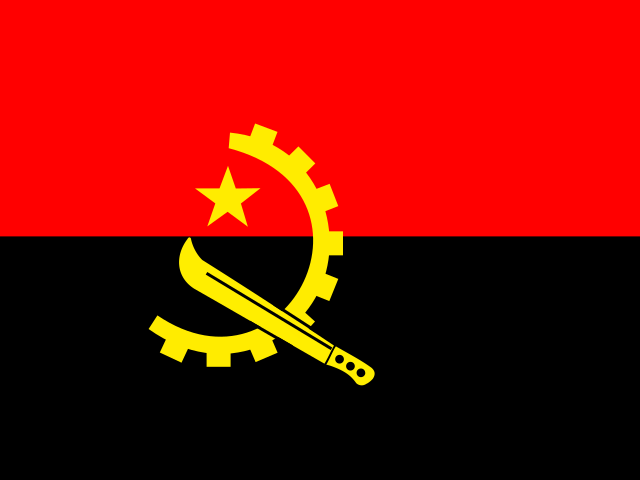 Angola
 Cameroon
 Central African Republic
 Chad
Chad Congo
Congo Democratic Republic of the Congo
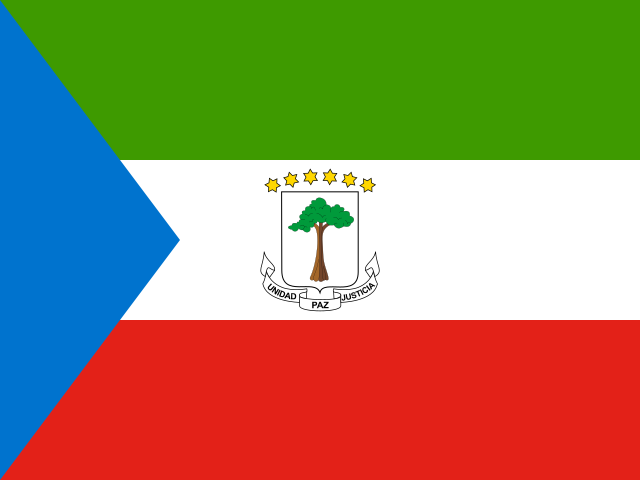 Equatorial Guinea
 Gabon
Gabon Sao Tome and Principe
Earlier Report Observations
The market for fresh, chilled, frozen or dried sweet potatoes in Middle Africa expanded consistently from 2018 to 2023, with total volume rising from 3 055 thousand tons to 3 547 thousand tons. This represents an overall increase of 16%, with growth accelerating to over 5% annually in 2022 and 2023.
Production entirely dictated market size as imports and exports were negligible. Sweet potato cultivation in the region is suited to the tropical climate but remains sensitive to drought and disease pressures, which can influence local output stability.
Table of content
- 1. Disclaimer
- 2. Terms of use of the report
- 3. Product codes in the statistical classifications used in the report
-
4. Key Market Indicators and Trends
-
4.1. Key Market Indicators
-
4.1.1. In kind
- 4.1.1.1. Production, 2018-2023
- 4.1.1.2. Imports, 2018-2024
- 4.1.1.3. Exports, 2018-2024
- 4.1.1.4. Market size, 2018-2023
-
4.1.1. In kind
- 4.2. Market Trends and Factors
-
4.1. Key Market Indicators
-
5. Production
-
5.1. Production in Middle Africa
- 5.1.1. Annual dynamics of production in Middle Africa in kind, 2018-2023, K t
-
5.2. Global production by Country, 2018-2023
- 5.2.1. Annual dynamics of production by macroregions in kind, 2018-2023, K t
- 5.2.2. Dynamics of production structure by macroregions in kind, 2018-2023
- 5.2.3. Annual dynamics of production by country in kind, 2018-2023, K t
- 5.2.4. Structure of production by countries in kind, 2018-2023
- 5.2.5. Dynamics of peoduction structure by countries in kind, 2018-2023
-
5.1. Production in Middle Africa
-
6. Exports
-
6.1. Exports (Direct Data*)
- 6.1.1. Exports - Total information
-
6.1.2. Exports in kind, t
- 6.1.2.1. Annual dynamics of product's exports from Angola in kind, 2018-2024, t
- 6.1.2.2. Dynamics of product's exports in kind from Angola by countries, 2018-2024, t
- 6.1.2.3. Structure of product's exports in kind by countries, 2018-2024
-
6.1.3. Exports in value, K $ US
- 6.1.3.1. Annual dynamics of product's exports from Angola in value, 2018-2024, K $ US
- 6.1.3.2. Dynamics of product's exports in value from Angola by countries, 2018-2024, K $ US
- 6.1.3.3. Structure of product's exports in value by countries, 2018-2024
-
6.1.4. Average price of product's exports, $ US/t
- 6.1.4.1. Annual dynamics of average price of product's exports from Angola, 2018-2024, $ US/t
- 6.1.4.2. Dynamics of average price of product's exports from Angola by countries, 2018-2024, $ US/t
-
6.2. Exports (Mirror Data)
- 6.2.1. Exports - Total information
-
6.2.2. Exports in kind, t
- 6.2.2.1. Annual dynamics of product's exports from Angola in kind, 2018-2024, t
- 6.2.2.2. Dynamics of product's exports in kind from Angola by countries, 2018-2024, t
- 6.2.2.3. Structure of product's exports in kind by countries, 2018-2024
-
6.2.3. Exports in value, K $ US
- 6.2.3.1. Annual dynamics of product's exports from Angola in value, 2018-2024, K $ US
- 6.2.3.2. Dynamics of product's exports in value from Angola by countries, 2018-2024, K $ US
- 6.2.3.3. Structure of product's exports in value by countries, 2018-2024
-
6.2.4. Average price of product's exports, $ US/t
- 6.2.4.1. Annual dynamics of average price of product's exports from Angola, 2018-2024, $ US/t
- 6.2.4.2. Dynamics of average price of product's exports from Angola by countries, 2018-2024, $ US/t
-
6.1. Exports (Direct Data*)
-
7. Imports
-
7.1. Imports (Direct Data*)
- 7.1.1. Imports - Total information
-
7.1.2. Imports in kind, t
- 7.1.2.1. Annual dynamics of product's imports to Angola in kind, 2018-2024, t
- 7.1.2.2. Dynamics of product's imports in kind to Angola by countries, 2018-2024, t
- 7.1.2.3. Structure of product's imports in kind by countries, 2018-2024
-
7.1.3. Imports in value, K $ US
- 7.1.3.1. Annual dynamics of product's imports to Angola in value, 2018-2024, K $ US
- 7.1.3.2. Dynamics of product's imports in value to Angola by countries, 2018-2024, K $ US
- 7.1.3.3. Structure of product's imports in value by countries, 2018-2024
-
7.1.4. Average price of product's imports, $ US/t
- 7.1.4.1. Annual dynamics of average price of product's imports to Angola, 2018-2024, $ US/t
- 7.1.4.2. Dynamics of average price of product's imports to Angola by countries, 2018-2024, $ US/t
-
7.2. Imports (Mirror Data)
- 7.2.1. Imports - Total information
-
7.2.2. Imports in kind, t
- 7.2.2.1. Annual dynamics of product's imports to Angola in kind, 2018-2024, t
- 7.2.2.2. Dynamics of product's imports in kind to Angola by countries, 2018-2024, t
- 7.2.2.3. Structure of product's imports in kind by countries, 2018-2024
-
7.2.3. Imports in value, K $ US
- 7.2.3.1. Annual dynamics of product's imports to Angola in value, 2018-2024, K $ US
- 7.2.3.2. Dynamics of product's imports in value to Angola by countries, 2018-2024, K $ US
- 7.2.3.3. Structure of product's imports in value by countries, 2018-2024
-
7.2.4. Average price of product's imports, $ US/t
- 7.2.4.1. Annual dynamics of average price of product's imports to Angola, 2018-2024, $ US/t
- 7.2.4.2. Dynamics of average price of product's imports to Angola by countries, 2018-2024, $ US/t
-
7.1. Imports (Direct Data*)
-
8. Trade balance
-
8.1. Trade balance (Direct Data)
- 8.1.1. In kind, t
- 8.1.2. In value, K $ US
-
8.2. Trade balance (Mirror Data)
- 8.2.1. In kind, t
- 8.2.2. In value, K $ US
-
8.1. Trade balance (Direct Data)
-
9. Top buying and selling countries, 2018-2024
-
9.1. Direct Data
- 9.1.1. Import in Value by Countries-buyers
- 9.1.2. Export in Value by Countries-suppliers
-
9.2. Mirror Data
- 9.2.1. Import in Value by Countries-buyers
- 9.2.2. Export in Value by Countries-suppliers
-
9.1. Direct Data
Production sweet potatoe in Middle Africa
In kind, 2017-2020, K t
Top producers of sweet potatoe, 2017-2020
World map of production of sweet potatoe, 2017-2020
Sweet potato production in Middle Africa has increased for the third consecutive year. In 2020, the region produced 3 148 thousand tonnes of sweet potatoes, marking a slight gain of 2.2% compared to the previous year. Over the period from 2017 to 2020, production grew by 6.5%, with a compound annual growth rate of 2.1%.
Annual dynamics of production in Middle Africa in kind, 2017-2020, K t
| Parameter | 2018 | 2019 | 2020 | CAGR | |
|---|---|---|---|---|---|
| 1 | Change from last year | 3.3% | 0.9% | 2.2% | 2.1% |
Exports sweet potatoe from Middle Africa
Exports in kind, t
The data reveals irregular changes, indicating a volatile market environment. Exports reached their lowest point in 2017 and peaked in 2020, with a 3.7-fold difference between these years. In 2020, sweet potato volumes exported from Middle Africa amounted to 99.1 tonnes, showing a sharp increase of 254.3% from 2019. The largest decline was recorded in 2019 at 64.8%.
Annual dynamics of product's exports from Middle Africa in kind, 2017-2020, t
| Parameter | 2018 | 2019 | 2020 | CAGR | |
|---|---|---|---|---|---|
| 1 | Change from last year | 197.9% | (64.8%) | 254.3% | 55.0% |
From 2017 to 2020, France, Namibia, and Belgium formed the core group of markets for exports in kind. France accounted for 8.8% of exports, Namibia for 1.2%, and Belgium for 1.1%, together representing 11.1% of total export flows.
Structure of product's exports in kind by countries, 2017-2020
World map of product's exports from Middle Africa in kind, 2017-2020
Exports in value, K $ US
The data reveals irregular changes, indicating a volatile market environment. The lowest exports in value were observed in 2017, with the highest in 2019, reflecting a 48-fold gap. In 2020, sweet potato exports from Middle Africa amounted to 76.6 thousand US dollars, equivalent to a sharp decline of 55.3% compared to 2019. The maximum value was recorded in 2019 at 171.4 thousand US dollars, while the largest increase occurred in 2018 at 1,340.6%.
Annual dynamics of product's exports from Middle Africa in value, 2017-2020, K $ US
| Parameter | 2018 | 2019 | 2020 | CAGR | |
|---|---|---|---|---|---|
| 1 | Change from last year | 1 340.6% | 235.5% | (55.3%) | 178.6% |
From 2017 to 2020, Namibia and France stood out as the main buyers of sweet potatoes from Middle Africa in value terms, together forming 5.0% of total exports.
Structure of product's exports in value by countries, 2017-2020
World map of product's exports from Middle Africa in value, 2017-2020
Imports sweet potatoe to Middle Africa
Imports in kind, t
Volatility characterized the market behavior during these years. Imports reached their peak in 2017 and fell to their lowest point in 2020, showing a 23-fold swing. In 2020, imported sweet potato volumes in Middle Africa came to 2.3 tonnes, equivalent to a steep decrease of 87.5% from the previous year. The largest increase was recorded in 2019 at 68.9%.
Annual dynamics of product's imports to Middle Africa in kind, 2017-2020, t
| Parameter | 2018 | 2019 | 2020 | CAGR | |
|---|---|---|---|---|---|
| 1 | Change from last year | (79.5%) | 68.9% | (87.5%) | (64.9%) |
From 2017 to 2020, the portfolio of suppliers for sweet potatoes to Middle Africa was broad. The Netherlands contributed 27.9% of imports in kind, South Africa 7.7%, and France 5.0%, together accounting for 40.7% of total imports, while many other countries had smaller but non-negligible shares.
Structure of product's imports in kind by countries, 2017-2020
World map of product's imports to Middle Africa in kind, 2017-2020
Imports in value, K $ US
There were noticeable fluctuations in market performance during the period. Import values climbed to their maximum in 2017 and dropped to a minimum in 2020, a 7.2-fold shift. In 2020, sweet potato deliveries to Middle Africa were recorded at 5.7 thousand US dollars, reflecting a drop of 73.2% compared with 2019. The largest increase was recorded in 2019 at 17.7%.
Annual dynamics of product's imports to Middle Africa in value, 2017-2020, K $ US
| Parameter | 2018 | 2019 | 2020 | CAGR | |
|---|---|---|---|---|---|
| 1 | Change from last year | (55.8%) | 17.7% | (73.2%) | (48.2%) |
From 2017 to 2020, South Africa, the Netherlands, and France were among the largest suppliers of sweet potatoes to Middle Africa in value terms. South Africa accounted for 15.9% of imports, the Netherlands for 15.4%, and France for 12.7%, but even together they represented just 44.0% of total imports, indicating a broadly diversified partner base.
Structure of product's imports in value by countries, 2017-2020
World map of product's imports to Middle Africa in value, 2017-2020
Related Reports

Sweet potatoe market in Morocco
2026-03-27
2026-03-27
Sweet potatoe market in MERCOSUR
2026-03-27
Sweet potatoe market in Venezuela
2026-03-27

Cabbages market in Middle Africa
2026-03-30

Frozen vegetables market in Middle Africa
2026-03-27


Aubergines market in Middle Africa
2026-03-27
Why Choose Us?
Only Verified Data
No Hidden Costs or Separate Fees
Smarter Subscription Pricing
Contact Our Team
Submit your inquiry using the form below — our team will get back to you within 24 hours.